
 Podgląd w skali 1:1
 Wyślij jako kartkę
 Udostępnij
 Szczegóły dzieła
 Przewodnik

 Pobierz obraz
 Podobne obiekty
 RTG
RTG Pokaz slajdów
 Q&A
Q&A Statystyki
A Dead Stag


 Rozwiń treść
Giclée / Wydruk artystyczny
Wydruki giclée lub płótna o jakości muzealnej, szybka realizacja i szeroki wybór opcji wykończenia. ( Zamów ręcznie malowaną reprodukcję Przejdź do wersji cyfrowej)




P118B zł10

P118H zł10

P118W zł10

P438Z zł10

P508JH zł12

P508YH zł12

P805H zł10

P805Z zł10

P919BZ zł10

P919G zł10

P919XJ zł10

P959ZH zł10

P968JZ zł12

W106C zł8

W218G zł10

W218JH zł8

W218Y zł10

W307PJ zł10

W316G zł10

W316PJ zł8

W316Y zł10

W398PJ zł8

W4111J zł10

W500HY zł15

W500JH zł15

W692G zł12

W849H zł8

W940BG zł15

W953PJ zł8




Wybierz spośród naszych standardowych rozmiarów, które zachowują oryginalne proporcje dzieła sztuki.

Wpisz wymaganą szerokość i wysokość, aby dopasować grafikę do ramy lub ściany. Wydruk można jedynie przyciąć, nigdy nie powiększając go poza oryginalny obraz, dlatego format o innych proporcjach spowoduje utratę części kompozycji. Przed rozpoczęciem druku prześlemy Ci cyfrowy podgląd do zatwierdzenia. Obraz wyświetlany na tej stronie nie pokazuje rzeczywistego przycięcia — jedynie podgląd oddaje ten efekt.
Dostawa na cały świat () w ciągu 2 tygodni zamiast standardowych 4/5 tygodni. (1 Listopad)

Bezpłatna ekspresowa wysyłka na cały świat

Wysokiej jakości płótno lniane

Pełne ubezpieczenie przesyłki

Gwarancja zwrotu należności celnych i podatków importowych

Gwarancja wiernego odwzorowania kolorów

100-dniowa polityka zwrotów (tylko w przypadku wad)

Gwarancja 100% zwrotu pieniędzy

Zniżka przy zakupie wielu sztuk
 Opcja ze szkłem jest dostępna wyłącznie w rozmiarach poniżej 110 cm

A Dead Stag
Giclée / Wydruk artystyczny
Wymiary reprodukcji
-


Cena całkowita
zł 311
A Poignant Meditation on Mortality and Nature
To gaze upon Sir Edwin Henry Landseer’s “A Dead Stag” is to encounter a moment suspended between life and memory. Created circa 1830, this evocative work stands as an enduring emblem of Victorian artistic sensibility—a profound meditation on mortality interwoven with a deep reverence for the natural world. The artwork does not merely depict the end of a life; it captures a quiet drama unfolding upon a rugged, rocky outcrop, inviting the viewer into a space of stillness and reflection. There is a heavy, palpable sense of weight in the stag’s repose, where vitality has finally yielded to gravity, presenting nature's cycle in its most somber and honest form.
The subject matter—a majestic red deer fallen upon the earth—evokes themes of transience and the inevitable passage of time. While the image carries an undeniable melancholy, it is balanced by a sense of nobility. The stag’s impressive antlers, reaching upward toward the top of the composition, suggest a lingering grandeur that even death cannot strip away. For the collector or the admirer of fine art, this piece offers more than just a study of anatomy; it provides a window into the Victorian soul, reflecting a period fascinated by natural history, the dignity of the wild, and the delicate balance between life and decay.
Mastery of Form and Texture
Landseer’s technical prowess is on full display through his meticulous use of graphite and fine-line techniques. As an animalier, Landseer possessed an unparalleled understanding of anatomy, a skill honed through rigorous study and even anatomical dissection. In this work, that scientific precision translates into breathtaking realism. Every strand of fur is rendered with such care that one can almost feel the coarse texture of the animal's coat against the cold, unyielding surface of the rocks. The artist employs sophisticated hatching and cross-hatching to build depth, creating a sense of three-dimensional volume that makes the stag appear truly present within its environment.
The composition is masterfully orchestrated to guide the eye through a landscape of subtle drama. By positioning the stag diagonally across the canvas, Landseer introduces a dynamic energy that prevents the scene from feeling static despite its subject matter. The monochromatic palette—a sophisticated arrangement of browns, beiges, and greys—focuses the viewer's attention on form and light rather than distracting color. The lighting is soft and diffused, casting gentle gradations across the musculature of the deer and the irregular surfaces of the stone, creating an atmosphere of quiet, atmospheric peace.
An Inspiring Addition to Refined Interiors
For interior designers and connoisseurs of classical art, “A Dead Stag” serves as a powerful focal point that brings a sense of history and gravitas to any space. Its muted, earthy tones allow it to integrate seamlessly into sophisticated decor, whether placed in a traditional library, a moody study, or a contemporary gallery-style living room. The artwork’s ability to evoke emotion—ranging from somber reflection to an appreciation for natural majesty—makes it a conversation piece of profound depth.
Choosing a high-quality reproduction of this masterpiece allows one to invite the spirit of the British Romantic movement into the home. It is an investment in a piece that transcends mere decoration, offering instead a window into the meticulous craftsmanship of the 19th century and a timeless reminder of the beauty found within the natural cycle of life.
Pytania i odpowiedzi
Jakie kolory dominują w „A Dead Stag” – Edwin Landseer?
„A Dead Stag” – Edwin Landseer wykorzystuje paletę w odcieniach Earthy, w której dominuje kolor Gray (#8a7b60).
Czy "A Dead Stag" charakteryzuje się silnym kontrastem światłocienia?
Kontrast jasności w dziele "A Dead Stag" wynosi Serene. Kontrast określa stopień zróżnicowania między obszarami jasnymi a ciemnymi.
Czy mogę zobaczyć podgląd „A Dead Stag” – Edwin Landseer przed złożeniem zamówienia?
Podgląd dzieła „A Dead Stag” – Edwin Landseer można znaleźć na stronie Podgląd w pomieszczeniu.
Biografia artysty
A Life Etched in Animal Form: The World of Sir Edwin Landseer
Sir Edwin Henry Landseer, born in London on March 7, 1802, was more than merely a painter of animals; he became a visual chronicler of the Victorian soul as reflected through them. His father, John Landseer, an accomplished engraver, instilled in young Edwin an early appreciation for art and technique, but it was the boy’s innate talent – a prodigious gift for capturing the essence of living creatures – that truly set him on his path. From a tender age, he demonstrated remarkable skill, exhibiting at the Royal Academy at just thirteen, a feat unheard of for most aspiring artists. This early success wasn't simply luck; it was the culmination of dedicated study, initially under his father and later with history painter Benjamin Robert Haydon, who uniquely encouraged anatomical dissection to fully understand animal musculature – a practice that would profoundly influence Landseer’s realism. He absorbed knowledge like a sponge, mastering not only form but also the subtle nuances of expression that breathed life into his canvases. This dedication to understanding the very structure of his subjects set him apart, allowing for an unparalleled level of authenticity in his depictions.From Highland Stags to Royal Commissions: A Flourishing Career
Landseer’s artistic career blossomed with an exceptional focus on animals – horses, dogs, and stags becoming his signature subjects. However, to categorize him solely as an “animal painter” would be a disservice. His work transcended mere representation; it imbued these creatures with human-like qualities, often laden with symbolic meaning that resonated deeply with Victorian sensibilities. A pivotal moment came with his travels to Scotland in 1824, where he encountered the majestic landscapes and wildlife that would forever shape his artistic vision. This experience birthed iconic works like *Monarch of the Glen*, completed in 1851, a breathtaking depiction of a stag embodying nobility, power, and the untamed beauty of the Highlands. The painting’s composition—the stag standing proudly on a rocky outcrop against a dramatic backdrop—became an enduring symbol of Scottish identity and romanticism. His ability to capture not just physical likeness but also character and emotion quickly garnered him widespread acclaim. This talent led to commissions from Queen Victoria herself, solidifying his position as a leading artist of the era. He painted portraits of the royal family alongside their beloved pets, further cementing his status within aristocratic circles. Perhaps his most enduring legacy are the lions that guard Nelson’s Column in Trafalgar Square – powerful testaments to his sculptural skill and national recognition; they were unveiled in 1867 after years of dedicated work. These monumental sculptures weren't simply decorative; they represented British strength and imperial power, further elevating Landseer to a position of national importance.A Master of Technique and Emotional Resonance
Landseer’s technical mastery was undeniable. He wasn’t simply replicating what he saw, but interpreting it through a lens of profound understanding. His paintings are characterized by meticulous detail, dramatic lighting, and a masterful use of color to evoke mood and atmosphere. He skillfully blended realism with romanticism, creating scenes that were both visually stunning and emotionally engaging. *Off to the Rescue*, painted in 1827, exemplifies this skill; the Newfoundland dog depicted isn’t just a canine rescuer but a symbol of loyalty, courage, and selfless devotion – qualities highly valued by Victorian society. The painting's composition—the dog bravely pulling a drowning child from the water—resonates with Victorian ideals of heroism and compassion. Even his more satirical works, such as *Laying Down the Law* (1840), featuring a group of dogs engaged in human-like legal proceedings, reveal a keen observational wit and a subtle commentary on societal norms. He wasn’t afraid to inject humor into his art, demonstrating a versatility that extended beyond grand landscapes and noble animal portraits. This ability to convey complex narratives through animal subjects was a hallmark of his style, appealing to a broad audience while simultaneously offering layers of intellectual engagement.Shadows and Legacy: A Complex Artistic Journey
Despite his immense success, Landseer’s life was not without its struggles. In his later years, he battled recurring bouts of depression and ill health, exacerbated by alcohol and drug use. A nervous breakdown in 1840 marked a turning point, casting a shadow over his final decades. Despite these personal demons, he continued to produce remarkable work, but a sense of melancholy often permeated his paintings. His declining mental state eventually led to him being declared insane in 1872, a tragic end for such a brilliant mind. Yet, his legacy remains firmly etched in the annals of British art history. The “Landseer” variety of Newfoundland dog – characterized by its distinctive black and white markings – stands as a living tribute to his influence. His paintings continue to captivate audiences with their beauty, emotional depth, and masterful technique. He wasn’t just an artist who painted animals; he was an interpreter of the natural world, a storyteller who used brushstrokes to reveal the hidden emotions and symbolic meanings within it, leaving behind a body of work that continues to inspire and resonate today.Further Exploration
- Museums: Tate Britain, London; Victoria and Albert Museum, London; Kenwood House, London; The Wallace Collection, London.
- Online Resources: OriginalUniqueArt.com; Wikipedia (Sir Edwin Landseer).

Edwin Landseer
1802 - 1873 , Wielka Brytania
Krótka nota
- Artistic Movement Or Style: Realizm wiktoriański
- Artists Or Movements Influenced By This Artist: ['Rasowy pies Nowofundland']
- Artists Who Influenced This Artist:
- John Landseer
- B.R. Haydon
- Date Of Birth: 7 marca 1802
- Date Of Death: 1 października 1873
- Full Name: Sir Edwin Henry Landseer
- Nationality: Brytyjski
- Notable Artworks:
- Monarch of the Glen
- Saved
- Laying Down the Law
- Place Of Birth: Londyn, Anglia
Powiązane artykuły

The Alchemy of Carbon: Mastering Depth, Texture, and Precision in the Art of Graphite Drawing
Discover the sophisticated mastery of graphite drawing. Explore expert techniques for achieving profound depth, intricate texture, and hyper-realistic detail through the alchemy of carbon, curated for the discerning art enthusiast and professional collector.
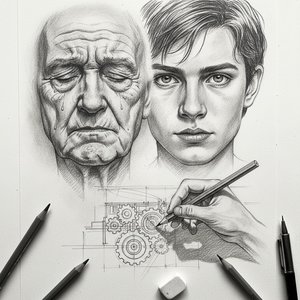
The Nuances of Graphite: Exploring Emotional Depth & Technical Mastery in Pencil Drawing
Explore the captivating world of graphite drawing! Discover its rich history, master essential techniques like chiaroscuro, and learn how artists evoke emotion through this timeless medium. Expert insights for art enthusiasts.

Mastering Graphite Pencil: The Art of Precision, Shadow, and the Alchemy of Carbon
Explore the profound mastery of graphite pencil art. From the historical alchemy of carbon to advanced chiaroscuro techniques, learn to navigate grades and shadows like a master. Discover the precision and depth that define the world's most iconic drawings.
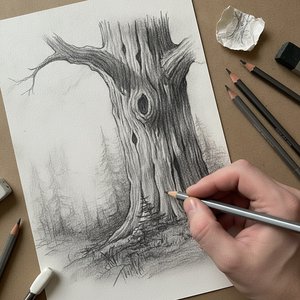
The Power of Graphite: Mastering Depth, Texture, and Detail in the Art of Pencil Drawing
Explore the profound artistry of graphite drawing. Discover professional techniques for mastering depth, texture, and detail through a lens of art history, from classical sketches to modern masterpieces. Elevate your understanding of the pencil medium with our expert guide.
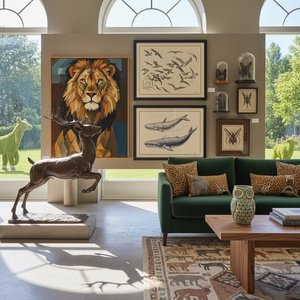
Zwierzęta w Sztuce: Wprowadzanie Życia do Twojej Przestrzeni
Odkryj fascynujący świat zwierząt w sztuce! Poznaj symbolikę, historię i współczesne interpretacje. Znajdź idealny obraz ze zwierzęciem do swojego wnętrza z .
