

 Zobacz w skali 1:1
 Wyślij
 Udostępnij
 Szczegóły
 Przewodnik

 Pobierz plik obrazu
 Podobne obiekty
 RTG
RTG Pokaz slajdów
 Statystyki
Edward Whitaker Gray
 Acrylic On Canvas
- WallArt
- Romantic Landscape
 1800
1800 75.0 x 63.0 cm
 Towarzystwo Królewskie
 Czytaj więcej
Giclée / Wydruk artystyczny
Wydruki giclée lub płótna o jakości muzealnej, szybka realizacja i szeroki wybór opcji wykończenia. ( Kup ręcznie malowany obraz Przełącz na wersję cyfrową)




P118B zł10

P118H zł10

P118W zł10

P438Z zł10

P508JH zł12

P508YH zł12

P805H zł10

P805Z zł10

P919BZ zł10

P919G zł10

P919XJ zł10

P959ZH zł10

P968JZ zł12

W106C zł8

W218G zł10

W218JH zł8

W218Y zł10

W307PJ zł10

W316G zł10

W316PJ zł8

W316Y zł10

W398PJ zł8

W4111J zł10

W500HY zł15

W500JH zł15

W692G zł12

W849H zł8

W940BG zł15

W953PJ zł8




Wybierz spośród naszych standardowych rozmiarów, które zachowują oryginalne proporcje dzieła sztuki.

Możesz wprowadzić własne wymiary, aby dopasować dzieło do konkretnej ramy lub przestrzeni. Jeśli wybrany rozmiar nie będzie odpowiadał proporcjom oryginalnego obrazu, przytniecie dzieło lub rozszerzymy obraz za pomocą odbicia lustrzanego lub jednolitego wypełnienia krawędzi. Przed rozpoczęciem produkcji prześlemy cyfrową wizualizację do Twojej akceptacji.
Prosimy pamiętać, że podgląd na ekranie nie odzwierciedla faktycznego przycinania ani rozszerzania. Tylko wizualizacja dokładnie pokaże końcową kompozycję.
Mimo dostępności niestandardowych rozmiarów, zalecamy wybór wymiaru z listy zdefiniowanej, aby zachować oryginalne proporcje.
Dostawa na cały świat () w ciągu 2 tygodni zamiast standardowych 4/5 tygodni. (2 Październik)

Bezpłatna ekspresowa wysyłka na cały świat

Wysokiej jakości płótno lniane

Pełne ubezpieczenie transportowe

Gwarancja zwrotu należności celnych i podatków importowych

Gwarancja idealnego odwzorowania barw

100-dniowy okres na zwrot dzieła w przypadku wykrycia wad produkcyjnych

Gwarancja 100% zwrotu pieniędzy

Oferta przy zakupie wielu sztuk
 Opcja ze szkłem jest dostępna wyłącznie w rozmiarach poniżej 110 cm

Edward Whitaker Gray
Giclée / Wydruk artystyczny
Rozmiar reprodukcji
-


Suma do zapłaty
zł 298
A Moment Frozen in Time: Exploring Sir Augustus Wall Callcott’s “The Entrance to the Pool of London”
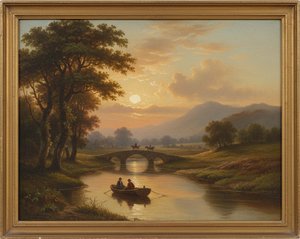
Sir Augustus Wall Callcott's "The Entrance to the Pool of London," completed in 1816, stands as a testament to Romantic landscape painting—a genre defined by its reverence for nature and its ability to evoke profound emotion. More than just a depiction of a riverside scene, this artwork embodies the spirit of its era, reflecting anxieties about industrialization alongside an enduring fascination with the sublime beauty of the English countryside. Callcott’s masterful use of tonal gradation and dramatic lighting elevates the painting beyond mere observation; it invites contemplation on the passage of time and the encroaching influence of progress upon traditional landscapes.Technical Brilliance: Impressionistic Touches Amidst Classical Form
Callcott employed a technique that skillfully blended elements of Romanticism with classical influences. While adhering to the conventions of academic portraiture—evident in the carefully constructed composition and balanced perspective—he infused his work with subtle impressionistic qualities. The artist meticulously layered thin washes of pigment, creating atmospheric haze and capturing fleeting effects of light on the water’s surface. This approach distinguishes “The Entrance to the Pool of London” from more rigid depictions of the period, demonstrating Callcott's innovative understanding of color theory and his dedication to conveying a sense of immediacy. The brushstrokes are visible yet controlled, contributing to the painting’s textural richness and enhancing its visual impact.Historical Context: Britain at the Crossroads
Painted during a pivotal moment in British history—the Industrial Revolution was rapidly transforming the nation's economy and society—Callcott’s landscape serves as a poignant counterpoint to the burgeoning factories and urban sprawl of the time. The Pool of London, once dominated by windmills and barges laden with goods, represented Britain’s maritime heritage and connection to the wider world. However, Callcott subtly conveys a feeling of melancholy, hinting at the inevitable loss of rural tranquility as industrial expansion pushed further into previously untouched territories. This duality—beauty juxtaposed against change—resonates powerfully within the artwork's narrative.Symbolism: Light and Shadow – Reflections of Inner Turmoil
The painting’s masterful use of light and shadow is laden with symbolic significance. The dominant illumination casts a cool, silvery glow upon the water, mirroring the stillness and serenity of the scene. Yet, darker patches delineate the shoreline and suggest hidden depths—representing anxieties about uncertainty and impending transformation. Callcott's deliberate manipulation of tonal values underscores the Romantic preoccupation with exploring psychological states alongside visual impressions. The light itself symbolizes hope and enlightenment, while the shadows embody fear and introspection – themes that extend beyond the confines of the landscape to engage viewers on a deeper emotional level.Emotional Resonance: Capturing the Sublime
Ultimately, “The Entrance to the Pool of London” succeeds in capturing the sublime—that elusive feeling of awe and terror experienced when confronted with overwhelming grandeur or beauty. Callcott’s depiction inspires contemplation about humanity's relationship with nature and its vulnerability before forces beyond our control. The painting lingers in the mind long after viewing, prompting reflection on themes of change, memory, and the enduring power of artistic vision. It remains a captivating example of Romantic landscape art—a timeless masterpiece that continues to resonate with audiences today.Pytania i odpowiedzi
Gdzie mogę zobaczyć oryginał „Edward Whitaker Gray” autorstwa Sir Augustus Wall Callcott?
Oryginał dzieła „Edward Whitaker Gray” autorstwa Sir Augustus Wall Callcott znajduje się w Towarzystwo Królewskie, Londyn, Wielka Brytania. Reprodukcja pozwala na eksponowanie pracy w domu.
Który artysta i jaki styl stoją za "Edward Whitaker Gray"?
"Edward Whitaker Gray" powstało autorstwa Sir Augustus Wall Callcott w stylu Romantic Landscape. Artysta oraz nurt definiują tradycję tego dzieła.
W jaki sposób mogę obejrzeć „Edward Whitaker Gray” autorstwa Sir Augustus Wall Callcott w formie pokazu slajdów?
Dzieło „Edward Whitaker Gray” autorstwa Sir Augustus Wall Callcott można obejrzeć w formie pokazu slajdów na stronie Pokaz slajdów danego dzieła.
Ile lat miał(a) Sir Augustus Wall Callcott, tworząc "Edward Whitaker Gray" w 1800 roku?
Sir Augustus Wall Callcott miał 21 lat, tworząc „Edward Whitaker Gray” w 1800. Wiek ten został obliczony na podstawie roku urodzenia artysty, 1779.
Któremu artyście przypisuje się "Edward Whitaker Gray"?
Dzieło "Edward Whitaker Gray" przypisuje się Sir Augustus Wall Callcott.
W którym roku powstało dzieło "Edward Whitaker Gray"?
Dzieło "Edward Whitaker Gray" pochodzi z 1800 roku. Data ta pozwala umiejscowić pracę w kontekście twórczości Sir Augustus Wall Callcott oraz epoki, w której powstała.
Jaki klimat wnosi „Edward Whitaker Gray” autorstwa Sir Augustus Wall Callcott do wnętrza?
Serene atmosfera dzieła „Edward Whitaker Gray” autorstwa Sir Augustus Wall Callcott idealnie współgra z polecaną przestrzenią: jest nią Living Room.
Biografia artysty
Early Life and Training
Augustus Wall Callcott (1779 – 1844) was a celebrated English landscape painter who achieved renown for his elegant compositions imbued with a captivating tonal quality. Born in Kensington Gravel Pits, London—a location reflecting the burgeoning industrial landscape of Victorian England—Callcott’s formative years were shaped by an innate musical inclination, fostering a lifelong appreciation for harmony and visual rhythm. He diligently pursued vocal training at Westminster Abbey, honing his artistic sensibilities alongside scholarly pursuits. Recognizing his talent for drawing and painting, he enrolled in the Royal Academy in 1804, where he received invaluable instruction from John Hoppner, establishing a foundational connection with the burgeoning Romantic movement.Rise to Prominence
Callcott swiftly distinguished himself within the Academy’s ranks as an artist dedicated exclusively to landscape painting—a deliberate choice that cemented his reputation and propelled him toward artistic recognition. His meticulous attention to detail combined with masterful use of light and color—characteristics emblematic of Turner's influence—created scenes of British rivers, coasts, and serene countryside that resonated deeply with the sensibilities of his time. The acclaim garnered for works like “The Entrance to the Pool of London” (1816) and “The Mouth of the Tyne” (1818) solidified his position as a leading voice in English Romanticism.Notable Works and Exhibitions
Callcott’s artistic output spanned several decades, producing iconic landscapes that continue to captivate audiences today. Among his most enduring achievements were "A Dead Calm on the Medway" (1820), capturing the tranquil beauty of the Thames estuary; “Rochester” (1824), depicting the picturesque environs surrounding Wordsworth’s home; and “Raffaelle and the Fornarina” (1837)—a rare foray into figurative painting housed in the South Kensington Museum's Sheepshanks Collection. These paintings exemplify Callcott’s ability to convey emotion through subtle tonal variations and masterful brushwork—techniques honed during his formative years under Hoppner’s guidance.Legacy and Later Life
Callcott received a knighthood from Queen Victoria in 1837, acknowledging his contribution to British art and culture. He served as Surveyor of the Queen's Pictures from 1843 until his untimely death in November 1844, overseeing the curation of royal artworks and upholding artistic standards during a period of significant cultural transformation. Callcott’s final resting place is Kensal Green Cemetery—a testament to his enduring legacy as one of England’s foremost landscape painters and a pivotal figure in shaping the Romantic aesthetic. His work continues to inspire admiration for its serene beauty and profound understanding of the natural world.
Sir Augustus Wall Callcott
1779 - 1844 , Wielka Brytania
Najważniejsze informacje
- Artistic Movement Or Style: Romanticizm pejzażowy
- Artists Or Movements Influenced By This Artist: ['Turner']
- Artists Who Influenced This Artist: ['John Hoppner']
- Date Of Birth: 20 lutego 1779
- Date Of Death: 25 listopada 1844
- Full Name: Augustus Wall Callcott
- Nationality: Brytyjczyk
- Notable Artworks:
- Entrata do Zatoki Tamy
- Usta Tamy
- Spokojna Zatoką Medway
- Rochester
- Raffaello i Fornarina
- Place Of Birth: Londyn, Wielka Brytania
Zobacz także powiązane artykuły

Sir Alfred James Munnings: 25 Arcydzieł Malarstwa Koni i Angielskiej Wsi | OriginalUniqueArt.com
Odkryj 25 arcydzieł Sir Alfreda Jamesa Munningsa – mistrza malarstwa koni i angielskiego krajobrazu. Poznaj historię, technikę i piękno jego obrazów. Reprodukcje najwyższej jakości na OriginalUniqueArt.com! Eksploruj pełną kolekcję online.
Sir Joshua Reynolds: 25 Arcydzieł Pełnych Elegancji i Historii | OriginalUniqueArt.com
Odkryj 25 arcydzieł Sir Joshua Reynoldsa – mistrza angielskiego rokoko i neoklasycyzmu. Poznaj historie portretów, techniki malarskie i inspiracje wnętrzarskie. Reprodukcje najwyższej jakości na OriginalUniqueArt.com! Eksploruj pełną kolekcję online.
Sir Augustus Wall Callcott: A Life Painted with Light & Atmosphere
Explore the life & art of Sir Augustus Wall Callcott, a celebrated British landscape painter known for his serene scenes and elegant compositions. Discover his Romantic influences & lasting legacy at OriginalUniqueArt.

Romantyczny Krajobraz w Malarstwie: 10 Arcydzieł, Które Zdefiniowały Epokę | OriginalUniqueArt.com
Odkryj 10 arcydzieł romantyzmu w malarstwie! Poznaj historie Caspara Davida Friedricha, Turnera i innych mistrzów. Inspiracje wnętrzarskie & reprodukcje obrazów najwyższej jakości na OriginalUniqueArt.com. Eksploruj kolekcję online!

John Constable: 25 Najlepszych Obrazów Mistrza Angielskiego Krajobrazu | OriginalUniqueArt
Odkryj 25 arcydzieł Johna Constable'a – mistrza angielskiego krajobrazu! Poznaj romantyczne pejzaże, technikę malarską i inspiracje z Dedham Vale. Reprodukcje obrazów najwyższej jakości na OriginalUniqueArt.com. Eksploruj pełną kolekcję online!
