 Przełącz na wydania drukowane
 Rozwiń treść







































 W przypadku dzieł sztuki lub reprodukcji, których którykolwiek z boków przekracza 105 cm (około 41 cali), rama zostanie wysłana w formie zestawu do samodzielnego montażu. Metoda ta zapewnia bezpieczną dostawę i zapobiega uszkodzeniom podczas transportu.


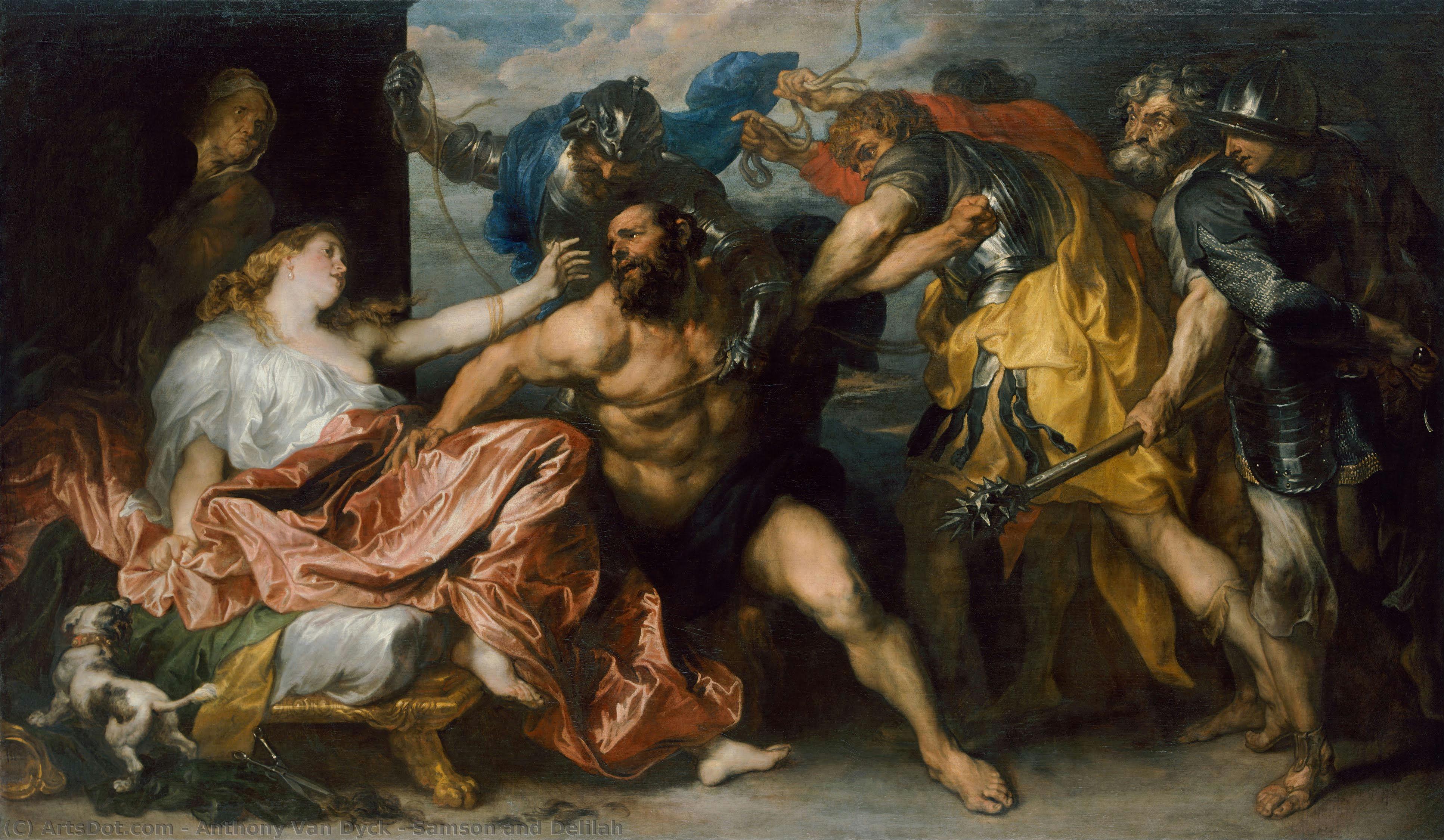
A Moment Suspended in Treachery
In the grand tapestry of the Flemish Baroque, few moments capture the tension between divine strength and human frailty as poignantly as Sir Anthony van Dyck’s Samson and Delilah. Executed around 1630, this masterpiece does not merely recount a biblical episode; it invites the viewer into a claustrophobic, high-stakes drama where every shadow holds a secret. The scene centers on the pivotal instant of betrayal: Samson, the legendary figure of immense power, sits in a state of vulnerable repose, while Delilah, driven by a complex mixture of resolve and perhaps a lingering remorse, prepares to sever the very source of his strength—his hair. It is a tableau of deceptive stillness, where the air seems heavy with the impending loss of liberty and the weight of a broken covenant.
Van Dyck’s technical mastery is on full display through his sophisticated use of chiaroscuro. The dramatic interplay of light and shadow does more than define the physical forms; it sculpts the psychological landscape of the characters. Light spills across the textures of the scene—the soft sheen of skin, the heavy weight of luxurious fabrics, and the intricate strands of hair—creating a luminous quality that is a hallmark of his style. By employing a pyramidal composition, Van Dyck directs our gaze inward toward the central interaction, ensuring that the emotional gravity of the encounter remains the undisputed heart of the work. The background, reminiscent of the expansive landscapes favored by his mentor Peter Paul Rubens, provides a breathtaking contrast to the intimate, almost suffocating intensity of the foreground drama.
Symbolism and the Baroque Soul
Beyond the literal narrative of the Book of Judges, this painting serves as a profound meditation on the human condition. The figures are laden with symbolic weight, representing the eternal struggle between faith and doubt, and strength and vulnerability. Samson’s physical prowess is rendered secondary to his emotional exposure; he is a titan brought low not by a sword, but by trust. Delilah, often portrayed in art as a mere temptress, is given here a more nuanced, psychological depth, embodying the devastating consequences of pride and the complexity of desire. Even the peripheral elements, such as the presence of watchful dogs or the sturdy furniture, ground this celestial tragedy in a tangible, earthly reality that resonates with any observer.
For the discerning collector or interior designer, a reproduction of this caliber offers more than just visual splendor; it provides a focal point of intellectual and emotional depth. The painting’s rich palette and dramatic lighting make it an extraordinary addition to a curated space, capable of commanding attention in a formal study, a grand salon, or a sophisticated gallery wall. It is a piece that invites long periods of contemplation, offering new layers of meaning with every glance. To possess such a work is to bring a fragment of the Golden Age of Flemish art into the modern home, celebrating a period where art was used to explore the very limits of the human spirit.
Pytania i odpowiedzi
W jaki sposób "Samson and Delilah" wpisuje się w tematykę i styl twórczości Antoni van Dyck?
W dorobku Antoni van Dyck, "Samson and Delilah" wpisuje się w styl Baroque, nawiązując do tematów takich jak rubens landscape style, biblical allegory, dramatic narrative, court portraiture, artistic legacy.
Co przedstawia „Samson and Delilah” – Antoni van Dyck?
Tematyka obecna w „Samson and Delilah” – Antoni van Dyck obejmuje biblical narrative, samson and delilah, hair cutting ritual, betrayal, loss of strength, biblical storytelling, flemish painting, rubens influence. Razem stanowią one podsumowanie tematyki dzieła.
Kto stworzył "Samson and Delilah" i w jakim stylu jest to dzieło?
Za dziełem "Samson and Delilah" stoi Antoni van Dyck oraz nurt Baroque.
 Podgląd w skali 1:1
 Wyślij jako kartkę
 Udostępnij
 Szczegóły dzieła
 Przewodnik

 Pobierz obraz
 Podobne obiekty
 RTG
RTG Pokaz slajdów
 Q&A
Q&A Statystyki