Podgląd w skali 1:1
 Wyślij jako kartkę
 Udostępnij
 Szczegóły dzieła
 Przewodnik

 Pobierz obraz
 Podobne obiekty
 RTG
RTG Pokaz slajdów
 Pytania i odpowiedzi
 Statystyki
Marchesa Elena Grimaldi


 Rozwiń treść
Giclée / Wydruk artystyczny
Wydruki giclée lub płótna o jakości muzealnej, szybka realizacja i szeroki wybór opcji wykończenia. ( Zamów ręcznie malowaną reprodukcję Przejdź do wersji cyfrowej)




P118B zł10

P118H zł10

P118W zł10

P438Z zł10

P508JH zł12

P508YH zł12

P805H zł10

P805Z zł10

P919BZ zł10

P919G zł10

P919XJ zł10

P959ZH zł10

P968JZ zł12

W106C zł8

W218G zł10

W218JH zł8

W218Y zł10

W307PJ zł10

W316G zł10

W316PJ zł8

W316Y zł10

W398PJ zł8

W4111J zł10

W500HY zł15

W500JH zł15

W692G zł12

W849H zł8

W940BG zł15

W953PJ zł8




Wybierz spośród naszych standardowych rozmiarów, które zachowują oryginalne proporcje dzieła sztuki.

Wpisz wymaganą szerokość i wysokość, aby dopasować grafikę do ramy lub ściany. Wydruk można jedynie przyciąć, nigdy nie powiększając go poza oryginalny obraz, dlatego format o innych proporcjach spowoduje utratę części kompozycji. Przed rozpoczęciem druku prześlemy Ci cyfrowy podgląd do zatwierdzenia. Obraz wyświetlany na tej stronie nie pokazuje rzeczywistego przycięcia — jedynie podgląd oddaje ten efekt.
Dostawa na cały świat () w ciągu 2 tygodni zamiast standardowych 4/5 tygodni. (9 Listopad)

Bezpłatna ekspresowa wysyłka na cały świat

Wysokiej jakości płótno lniane

Pełne ubezpieczenie przesyłki

Gwarancja zwrotu należności celnych i podatków importowych

Gwarancja wiernego odwzorowania kolorów

100-dniowa polityka zwrotów (tylko w przypadku wad)

Gwarancja 100% zwrotu pieniędzy

Zniżka przy zakupie wielu sztuk
 Opcja ze szkłem jest dostępna wyłącznie w rozmiarach poniżej 110 cm

Marchesa Elena Grimaldi
Giclée / Wydruk artystyczny
Wymiary reprodukcji
-


Cena całkowita
zł 317
A Moment of Quiet Command
The Marchesa Elena Grimaldi stands before us, caught in a stillness that feels both heavy and light. She occupies a space near stone pillars, perhaps on a private balcony where the air carries the weight of an afternoon in 1623. Her black dress absorbs the surrounding light, creating a deep, solid presence that anchors the entire composition. A single red scarf rests against her neck, providing a sharp, sudden pulse of color against the dark fabric. Behind her, the world continues in soft, blurred motions; distant figures move through the background, hinting at the life of a grand estate without breaking her focus. An open umbrella is held nearby, offering a shield from the elements and casting a subtle shadow that defines the space around her.
There is a sense of profound composure in her gaze. Her eyes hold an expression of serene confidence, looking out with a clarity that suggests a woman fully aware of her place within her social sphere. The way she holds herself conveys a quiet strength, as if the very architecture of the palace mirrors her own internal stability. Every detail, from the subtle tilt of her head to the way the light catches the edge of her features, speaks to a life lived with grace and intention.
The Language of Light and Texture
The brushwork reveals a meticulous devotion to the physical world. The artist uses chiaroscuro to sculpt the Marchesa’s face, pulling her features out of the shadows through dramatic contrasts. This manipulation of light brings a lifelike quality to her skin, making the soft textures of her countenance feel almost tangible. One can see the careful rendering of the gown, where the sheen of satin and the heavy folds of the dark fabric suggest a tactile luxury. The edges of the scene are softened by a hazy, dreamlike atmosphere, a technique that blurs the boundary between the subject and her environment.
Symbolic elements are woven into the very fabric of the portrait. The red umbrella, positioned prominently, acts as more than a practical object; it signals her status and her dominion over her surroundings. Even the height at which she is presented in the frame reinforces her social standing and intellectual presence. Through these deliberate choices, the painting captures the essence of an era where every visual detail was a carefully constructed piece of a larger identity. The result is a portrait that feels less like a static image and more like a living window into the aristocratic life of the seventeenth century.
Pytania i odpowiedzi
Jaka technika została użyta w przypadku "Marchesa Elena Grimaldi" i kiedy powstało to dzieło?
"Marchesa Elena Grimaldi" powstało w 1623 roku przy użyciu techniki Oil On Canvas. Materiał i data opisują, w jaki sposób oraz kiedy wykonano oryginał.
Czy mogę zobaczyć „Marchesa Elena Grimaldi” – Antoni van Dyck na własnej ścianie przed zakupem?
Strona Podgląd w AR dzieła „Marchesa Elena Grimaldi” – Antoni van Dyck wykorzystuje rozszerzoną rzeczywistość, aby dzięki kompatybilnemu urządzeniu pokazać obraz w Twojej własnej przestrzeni.
Jak zbudowana jest kompozycja kolorystyczna „Marchesa Elena Grimaldi” – Antoni van Dyck?
W "Marchesa Elena Grimaldi" Bold kontrast łączy się z Strong Color Unity harmonią.
Biografia artysty
A Flemish Master at the Courts of Europe
Sir Anthony van Dyck, born in Antwerp in 1599, emerged as one of the most celebrated and influential portraitists of the Baroque era. His life, though tragically cut short at just forty-two years old, was a whirlwind of artistic exploration and prestigious commissions that took him from his native Flanders to Italy and ultimately to the heart of the English court. From an early age, van Dyck displayed remarkable talent, entering Hendrick van Balen’s workshop as a young apprentice and quickly absorbing the prevailing styles of the time. However, it was his association with Peter Paul Rubens – not merely as a student but as a collaborator – that truly shaped his artistic foundation. He learned from Rubens' dynamic compositions, rich color palettes, and masterful handling of light and shadow, yet van Dyck soon began to forge his own distinct path, one characterized by an elegance and refinement that would become his signature. This early apprenticeship instilled in him a deep understanding of anatomy, perspective, and the dramatic use of color – elements he skillfully integrated into his later works.Italian Sojourns and the Birth of a Style
The years van Dyck spent in Italy, beginning around 1621, proved pivotal in his artistic development. He resided primarily in Genoa, where he found favor among the city’s aristocratic families. It was here that he began to cultivate the sophisticated style for which he would become renowned – a style marked by graceful poses, luxurious fabrics, and an almost palpable sense of nobility. Unlike the robust energy often found in Rubens' work, van Dyck’s Italian portraits exuded a refined composure, capturing not just physical likeness but also the inner character and social standing of his sitters. He meticulously studied the works of Titian and other Venetian masters, adopting their use of light and shadow to create dramatic effects and emphasizing the beauty of the human form. During this period, he also embarked on his *Iconography*, a series of meticulously rendered portrait etchings featuring prominent figures of his time – artists, scholars, and rulers alike. This project showcased his exceptional technical skill and established him as a leading printmaker; it was a deliberate effort to elevate the status of the artist himself, presenting portraits alongside works of art and literature. These etchings weren’t simply records; they were carefully constructed images designed to immortalize the subjects and convey their status and intellect.The King's Painter: Van Dyck in England
In 1632, van Dyck received an invitation that would forever alter his career trajectory – a summons from Charles I of England to become the court painter. This appointment marked a turning point, not only for van Dyck but also for English portraiture. He arrived in London with a considerable reputation and quickly became indispensable to the king, tasked with creating images that projected an aura of power, majesty, and divine right. Van Dyck’s portraits of Charles I are particularly noteworthy; he moved away from the stiff, formal representations favored by earlier artists, instead portraying the king as a dynamic, charismatic leader. He employed innovative techniques – dramatic lighting, sweeping gestures, and carefully chosen backgrounds – to create images that were both visually stunning and politically charged. His influence extended beyond the royal family, shaping the visual culture of the English aristocracy for generations to come. He didn’t just paint portraits; he crafted an image of kingship, influencing how royalty was perceived for over a century. The court demanded a new kind of portraiture – one that captured not just appearance but also character and authority, and van Dyck delivered precisely that.Legacy and Enduring Influence
Van Dyck's untimely death in 1641 robbed the art world of a prodigious talent, but his legacy endures to this day. His impact on English portraiture is immeasurable; he established a standard of elegance and sophistication that subsequent artists would strive to emulate.- Technical Innovation: He was a master of both oil painting and etching, constantly experimenting with new techniques – particularly in the use of light and shadow to create depth and drama.
- Stylistic Refinement: His portraits are characterized by their graceful poses, luxurious fabrics, and subtle psychological insights; he possessed an uncanny ability to capture the essence of his sitters.
- Courtly Influence: He transformed the image of the English monarchy, creating a visual language of power and prestige that resonated throughout the nation.
Key Influences
Van Dyck’s artistic development was shaped by a confluence of influences. Initially, he studied under Hendrick van Balen, absorbing the Northern Renaissance style characterized by detailed realism and meticulous observation. However, it was his association with Peter Paul Rubens that proved transformative. Rubens' dynamic compositions, rich color palettes, and masterful use of light and shadow profoundly impacted van Dyck’s approach to painting. Furthermore, his time in Italy exposed him to the Venetian masters, particularly Titian, whose loose brushwork and emphasis on atmospheric perspective influenced his later style. The influence of these diverse sources combined to create a unique artistic voice that would define van Dyck's legacy as one of the greatest portraitists of all time.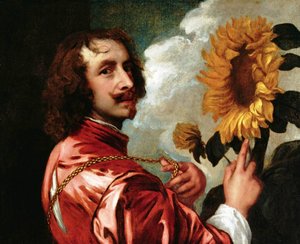
Antoni van Dyck
1599 - 1641 , Belgia
Krótka nota
- Artistic Movement Or Style: Barokowy
- Artists Or Movements Influenced By This Artist: ['Angielskie malarstwo']
- Artists Who Influenced This Artist: ['Rubens']
- Date Of Birth: 22 marca 1599
- Date Of Death: 9 grudnia 1641
- Full Name: Sir Anthony van Dyck
- Nationality: Flamandzki
- Notable Artworks:
- Portret kobiety
- Portret Karola I
- Lord John Stuart
- Place Of Birth: Antwerp, Belgia
Powiązane artykuły

Master of Elegance: The Top 25 Greatest Artworks by Sir Anthony van Dyck
Immerse yourself in the elegance of Baroque mastery with our curated list of Sir Anthony van Dyck's top 25 artworks. From royal portraits to exquisite oil techniques, explore timeless legends and find museum-quality art reproductions. Discover all masterpieces on OriginalUniqueArt.com.
Masterpieces of Emotion: The Top 25 Vincent van Gogh Artworks
Explore 25 iconic Van Gogh masterpieces and their stories. Discover museum-quality art at OriginalUniqueArt.com.

Masterpieces of Emotion: The Top 25 Essential Artworks by Vincent van Gogh
Explore 25 iconic Van Gogh masterpieces and their stories. Discover museum-quality art at OriginalUniqueArt.com.

25 Masterpieces by Sir Anthony van Dyck: The King of Baroque Portraiture
Immerse yourself in the elegance of Sir Anthony van Dyck. Explore 25 iconic Baroque masterpieces, from royal portraits to refined Flemish classics. Find inspiration for museum-quality art reproductions and luxury decor. Discover all masterpieces on OriginalUniqueArt.com.

25 Masterpieces by Sir Anthony van Dyck: The King of Baroque Portraiture
Immerse yourself in the elegance of Sir Anthony van Dyck. Explore 25 iconic Baroque masterpieces, from royal portraits to Flemish classics. Find inspiration for museum-quality art reproductions and timeless decor. Discover all masterpieces on OriginalUniqueArt.com.