Menu
BEZPŁATNA KONSULTACJA ARTYSTYCZNA
Podgląd w skaliPodgląd w skali Podgląd ARPodgląd AR Zamów wydruk Zamów wydrukKup obraz wysokiej rozdzielczości Kup obraz wysokiej rozdzielczości Wyślij jako kartkęWyślij jako kartkę
Szczegóły dziełaSzczegóły dzieła Dodaj do ulubionych Dodaj do ulubionych PobierzPobierz Podobne obiektyPodobne obiekty RTGRTG Pokaz slajdówPokaz slajdów

Cupid and Psyche

Experience the romance of Anthony van Dyck's 'Cupid and Psyche' (1640). This Baroque masterpiece, featuring a tender kiss amidst an angelic backdrop, captures the essence of mythological love in exquisite detail. Own a stunning hand-painted reproduction.

Antoni van Dyck, Van Dyck, malarstwo barokowe, portret, król Karol I, Rubens, XVII wiek, sztuka brytyjska

Ręcznie malowana reprodukcja olejowa

Ręcznie malowany obraz olejny na płótnie, wykonany na zamówienie przez naszych artystów w wybranym przez Ciebie wymiarze i oprawie. (Zamów wydruk Zamów wydrukKup obraz wysokiej rozdzielczości Kup obraz wysokiej rozdzielczości)

P118B $10
P118H $10
P118W $10
P438Z $10
P508JH $12
P508YH $12
P805H $10
P805Z $10
P919BZ $10
P919G $10
P919XJ $10
P959ZH $10
P968JZ $12
W106C $8
W218G $10
W218JH $8
W218Y $10
W307PJ $10
W316G $10
W316PJ $8
W316Y $10
W398PJ $8
W4111J $10
W500HY $15
W500JH $15
W692G $12
W849H $8
W940BG $15
W953PJ $8

Standard
custom
CM
INCH

Wybierz spośród naszych standardowych rozmiarów, które zachowują oryginalne proporcje dzieła sztuki.

szerokość
wysokość

Możesz wprowadzić własne wymiary, aby dopasować obraz do konkretnej ramy lub przestrzeni. Jeśli wybrany rozmiar nie będzie odpowiadał proporcjom oryginału, przytniecie dzieło sztuki lub rozszerzymy je o dodatkowe elementy, ręcznie domalowane przez artystę. Przed rozpoczęciem produkcji wyślemy projekt cyfrowy do Twojej akceptacji.
Należy pamiętać, że podgląd na ekranie nie odzwierciedla rzeczywistego przycinania ani rozszerzania obrazu. Tylko projekt dokładnie pokaże ostateczną kompozycję.
Choć oferujemy możliwość zamówienia niestandardowych rozmiarów, zalecamy wybór wymiaru z gotowej listy, aby zachować oryginalne proporcje dzieła.

Przykłady możliwych zmian: Zamień twarz na zdjęcie klienta; Dodaj zwierzę domowe (np. zamień kota na psa); Ukryj wiadomość w tle; Zmień krajobraz lub elementy tła.
Po złożeniu zamówienia zespół OriginalUniqueArt.com skontaktuje się z klientem drogą mailową w celu uzyskania instrukcji i prześle wizualizację projektu

Dostawa na całym świecie () w ciągu 3–4 tygodni zamiast standardowych 5 tygodni. (21 Sierpień). Bez kompromisów w kwestii jakości.

why_choose_icon
Bezpłatna ekspresowa wysyłka na cały świat
why_choose_icon
Wysokiej jakości płótno lniane
why_choose_icon
Pełne ubezpieczenie przesyłki
why_choose_icon
Gwarancja zwrotu należności celnych i podatków importowych
why_choose_icon
Gwarancja wiernego odwzorowania kolorów
why_choose_icon
Polityka 60-dniowego zwrotu (tylko w przypadku wad)
why_choose_icon
Gwarancja 100% zwrotu kosztów
why_choose_icon
Zniżka przy zamówieniu wielu produktów

Suma całkowita

$ 300

reproduction

Cupid and Psyche

Technika reprodukcji

Wymiary reprodukcji

-

Cena całkowita

$ 300

Szybki podgląd

  • Dimensions: 199 x 191 cm
  • Influences: Titian
  • Artistic style: Elegant, refined
  • Title: Cupid and Psyche
  • Subject or theme: Romantic love
  • Artist: Anthony van Dyck
  • Movement: Baroque

Quiz o sztuce

Do każdego pytania dotyczy tylko jedna poprawna odpowiedź.

Pytanie 1:
What is the primary artistic movement associated with Anthony van Dyck’s ‘Cupid and Psyche’?
Pytanie 2:
The painting is believed to have been commissioned for which event or location?
Pytanie 3:
What is a notable characteristic of Van Dyck's technique as demonstrated in this painting?
Pytanie 4:
Which artist significantly influenced Van Dyck's style, as evidenced in ‘Cupid and Psyche’?
Pytanie 5:
What element in the painting contributes to a sense of divine intervention?

Opis dzieła

A Baroque Embrace: Van Dyck’s “Cupid and Psyche”

Anthony van Dyck's "Cupid and Psyche," painted in 1640, is more than just a depiction of a mythological romance; it’s a distillation of the Baroque spirit – a moment suspended between earthly desire and divine grace. This exquisite work, nearing the end of Van Dyck’s tragically short life, reveals an artist at the peak of his powers, seamlessly blending influences from Titian with his own distinctive elegance. The painting immediately draws the eye to the tender interaction between Cupid and Psyche, rendered with a remarkable sensitivity rarely seen in works of such grand narrative. It's a scene brimming with quiet intimacy, yet charged with an underlying current of potent emotion.

Composition and Technique: A Dance of Light and Shadow

Van Dyck’s mastery lies not just in his subject matter but in the way he executes it. The composition is a carefully orchestrated diagonal, guiding the viewer's eye from the sleeping Psyche, bathed in soft light, towards the poised figure of Cupid. His technique is characterized by an astonishing delicacy – a thinly applied paint that allows subtle shifts in tone and texture to emerge. You can almost feel the artist’s hand moving across the canvas, creating a sense of immediacy and spontaneity. Notice how he uses broken color, layering hues rather than blending them completely, contributing to the painting's luminous quality. The background landscape, rendered with atmospheric perspective, subtly recedes into the distance, further emphasizing the intimacy of the central scene. The unfinished quality, perhaps reflecting the haste of its creation or Van Dyck’s untimely death, adds a poignant layer of vulnerability to this otherwise idealized portrayal.

Myth and Meaning: Echoes of Apuleius and Divine Intervention

“Cupid and Psyche” is rooted in Ovid's *Metamorphoses* and later retold by Apuleius in *The Golden Ass*, a tale of love, deception, and ultimately, reconciliation. The story itself speaks to the transformative power of affection and the overcoming of obstacles through devotion. Within the painting, the angel in the background serves as a potent symbol of divine approval – a silent witness to this sacred union. The tree behind the lovers is not merely decorative; it’s a traditional emblem of fertility and rebirth, mirroring the blossoming of their love. The act of Cupid gently kissing Psyche's forehead isn’t simply a romantic gesture; it represents the merging of earthly and divine realms, suggesting that true love transcends the limitations of mortality.

Historical Context and Artistic Legacy

Van Dyck created “Cupid and Psyche” during his time as court painter to Charles I of England. This commission highlights the painting’s significance within the broader context of royal celebrations, potentially linked to Princess Mary's marriage in 1641. The work stands as a testament to Van Dyck’s ability to translate the Italian *poesia* tradition – a focus on elegant storytelling and emotional depth – into a distinctly Northern European style. It exemplifies his unique approach to mythological subjects, prioritizing psychological realism and nuanced emotion over purely decorative elements. The painting's influence can be seen in subsequent generations of artists, solidifying Van Dyck’s place as one of the most important figures in Baroque art.

A hand-painted reproduction from OriginalUniqueArt.com offers a remarkable opportunity to experience the beauty and emotional resonance of this masterpiece firsthand. Its scale – 199 x 191 cm – ensures that every detail, from the delicate brushstrokes to the subtle shifts in light and shadow, is fully appreciated. Bring the timeless romance of “Cupid and Psyche” into your home or office—a captivating addition for any art lover.


O artyście

A Flemish Master at the Courts of Europe

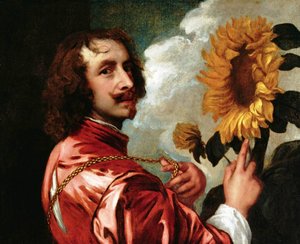
Sir Anthony van Dyck, born in Antwerp in 1599, emerged as one of the most celebrated and influential portraitists of the Baroque era. His life, though tragically cut short at just forty-two years old, was a whirlwind of artistic exploration and prestigious commissions that took him from his native Flanders to Italy and ultimately to the heart of the English court. From an early age, van Dyck displayed remarkable talent, entering Hendrick van Balen’s workshop as a young apprentice and quickly absorbing the prevailing styles of the time. However, it was his association with Peter Paul Rubens – not merely as a student but as a collaborator – that truly shaped his artistic foundation. He learned from Rubens' dynamic compositions, rich color palettes, and masterful handling of light and shadow, yet van Dyck soon began to forge his own distinct path, one characterized by an elegance and refinement that would become his signature. This early apprenticeship instilled in him a deep understanding of anatomy, perspective, and the dramatic use of color – elements he skillfully integrated into his later works.

Italian Sojourns and the Birth of a Style

The years van Dyck spent in Italy, beginning around 1621, proved pivotal in his artistic development. He resided primarily in Genoa, where he found favor among the city’s aristocratic families. It was here that he began to cultivate the sophisticated style for which he would become renowned – a style marked by graceful poses, luxurious fabrics, and an almost palpable sense of nobility. Unlike the robust energy often found in Rubens' work, van Dyck’s Italian portraits exuded a refined composure, capturing not just physical likeness but also the inner character and social standing of his sitters. He meticulously studied the works of Titian and other Venetian masters, adopting their use of light and shadow to create dramatic effects and emphasizing the beauty of the human form. During this period, he also embarked on his *Iconography*, a series of meticulously rendered portrait etchings featuring prominent figures of his time – artists, scholars, and rulers alike. This project showcased his exceptional technical skill and established him as a leading printmaker; it was a deliberate effort to elevate the status of the artist himself, presenting portraits alongside works of art and literature. These etchings weren’t simply records; they were carefully constructed images designed to immortalize the subjects and convey their status and intellect.

The King's Painter: Van Dyck in England

In 1632, van Dyck received an invitation that would forever alter his career trajectory – a summons from Charles I of England to become the court painter. This appointment marked a turning point, not only for van Dyck but also for English portraiture. He arrived in London with a considerable reputation and quickly became indispensable to the king, tasked with creating images that projected an aura of power, majesty, and divine right. Van Dyck’s portraits of Charles I are particularly noteworthy; he moved away from the stiff, formal representations favored by earlier artists, instead portraying the king as a dynamic, charismatic leader. He employed innovative techniques – dramatic lighting, sweeping gestures, and carefully chosen backgrounds – to create images that were both visually stunning and politically charged. His influence extended beyond the royal family, shaping the visual culture of the English aristocracy for generations to come. He didn’t just paint portraits; he crafted an image of kingship, influencing how royalty was perceived for over a century. The court demanded a new kind of portraiture – one that captured not just appearance but also character and authority, and van Dyck delivered precisely that.

Legacy and Enduring Influence

Van Dyck's untimely death in 1641 robbed the art world of a prodigious talent, but his legacy endures to this day. His impact on English portraiture is immeasurable; he established a standard of elegance and sophistication that subsequent artists would strive to emulate.
  • Technical Innovation: He was a master of both oil painting and etching, constantly experimenting with new techniques – particularly in the use of light and shadow to create depth and drama.
  • Stylistic Refinement: His portraits are characterized by their graceful poses, luxurious fabrics, and subtle psychological insights; he possessed an uncanny ability to capture the essence of his sitters.
  • Courtly Influence: He transformed the image of the English monarchy, creating a visual language of power and prestige that resonated throughout the nation.
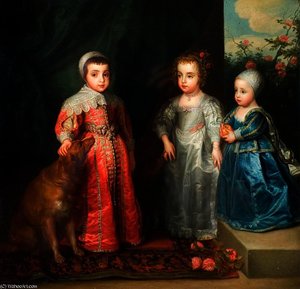
Beyond his technical prowess, van Dyck possessed an exceptional ability to capture the essence of his sitters – their personality, their social standing, and their aspirations. His works continue to captivate audiences with their beauty, elegance, and enduring psychological depth. The Balbi Children, Charles I in Three Positions, and countless other masterpieces stand as testaments to his genius, ensuring that Sir Anthony van Dyck remains one of the most celebrated artists of the Baroque period. His influence can still be seen today in fashion, photography, and contemporary portraiture, a testament to the timeless appeal of his art.

Key Influences

Van Dyck’s artistic development was shaped by a confluence of influences. Initially, he studied under Hendrick van Balen, absorbing the Northern Renaissance style characterized by detailed realism and meticulous observation. However, it was his association with Peter Paul Rubens that proved transformative. Rubens' dynamic compositions, rich color palettes, and masterful use of light and shadow profoundly impacted van Dyck’s approach to painting. Furthermore, his time in Italy exposed him to the Venetian masters, particularly Titian, whose loose brushwork and emphasis on atmospheric perspective influenced his later style. The influence of these diverse sources combined to create a unique artistic voice that would define van Dyck's legacy as one of the greatest portraitists of all time.
Antoni van Dyck

Antoni van Dyck

1599 - 1641 , Belgia

Krótka nota

  • Artistic Movement Or Style: Barokowy
  • Artists Or Movements Influenced By This Artist: ['Angielskie malarstwo']
  • Artists Who Influenced This Artist: ['Rubens']
  • Date Of Birth: 22 marca 1599
  • Date Of Death: 9 grudnia 1641
  • Full Name: Sir Anthony van Dyck
  • Nationality: Flamandzki
  • Notable Artworks:
    • Portret kobiety
    • Portret Karola I
    • Lord John Stuart
  • Place Of Birth: Antwerp, Belgia
Odkryj dzieła sztuki uporządkowane według tematów, stylów i cech charakterystycznych.