Baroque · 1615
Self-Portrait (Simon Vouet, 1615)
Simon Vouet (1590–1649) stworzył Self-Portrait. Dzieło pochodzi z 1615. Należy do nurtu Baroque. Wykonano w technice Oil On Canvas. Przechowywane jest w Musée Réattu w Arles, Francja. Wymiary to 64 × 48 cm.
- 1615
- Oil On Canvas
- 64 × 48 cm
- Musée Réattu, Arles

 Podgląd w skali 1:1

 Ręcznie malowany obraz olejny
 Wyślij jako kartkę
 Udostępnij
 Karta informacyjna


 Pobierz obraz
 Podobne obiekty
 RTG
 Pokaz slajdów
 Pytania i odpowiedzi

 Statystyki
Self-Portrait w skrócie
- Tytuł
- Self-Portrait
- Artysta
- Simon Vouet (1590–1649)
- Miejsce urodzenia artysty
- Paryż, Francja
- Data powstania
- 1615
- Technika wykonania
- Oil On Canvas
- Wymiary
- 64 × 48 cm
- Gdzie można je zobaczyć
- Musée Réattu, Arles, Francja
- Ruch
- Baroque
- Epoka
- Early Modern
- Temat
- self-portrait, bearded man, ruffled collar, 17th century art, baroque portrait, formal attire
Co przedstawia Self-Portrait?
A Glimpse into Baroque Grandeur: The Self-Portrait of Simon Vouet
To stand before this self-portrait is to encounter not merely paint on canvas, but a direct conduit to the vibrant, ambitious spirit of early 17th-century Paris. Painted around 1615, this work captures the artist at a pivotal moment in his career—a time when he was solidifying his reputation as a master painter navigating the transition from Mannerism into the dramatic sweep of the Baroque style. The subject gazes out with an intense, knowing directness; it is the gaze of a man acutely aware of his own artistic power.
The Allure of the Subject and Attire
The sitter presents himself in meticulous detail, commanding attention through both his bearing and his costume. His prominent beard, featuring a carefully sculpted mustache and goatee, speaks to the fashionable masculinity of the era. He is clad in rich browns, offset by the exquisite formality of a ruffled collar—a hallmark of period portraiture that speaks volumes about social standing. The artist has paid painstaking attention to rendering these textures; one can almost feel the crisp linen of the ruff against the depth of his woolen garments. This careful presentation suggests a man of means, an intellectual, and perhaps, most importantly, a celebrated artisan.
Mastery in Technique and Composition
Technically, the painting is a testament to Simon Vouet’s burgeoning skill. The handling of light against shadow—the dramatic chiaroscuro that defines so much of Baroque art—is masterful. The dark background serves not as an empty void, but rather as a velvet curtain drawn back to illuminate the subject. This technique forces the viewer's eye directly onto the face and hands, emphasizing psychological depth over mere physical likeness. Vouet’s ability to render skin tones with such luminosity, contrasted against the deep shadows, elevates this portrait beyond simple documentation into something deeply emotive.
Historical Echoes and Emotional Resonance
Considering Simon Vouet's own biography—a painter whose early travels took him from England through the Ottoman Empire to Venice—this self-portrait feels imbued with the spirit of a cosmopolitan artist. He is channeling the energy of those grand European journeys, bringing back influences that fuel his unique vision. Owning a reproduction of this piece allows one to bring home not just an image, but a tangible echo of Baroque ambition: a period defined by drama, emotional intensity, and unparalleled artistic self-regard. It serves as a powerful focal point for any space seeking historical gravitas and undeniable artistic flair.
W którym muzeum znajduje się Self-Portrait?
Musée Réattu
Arles, Francja
Musée Réattu: Sanktuarium Koloru i Pamięci Ukryte w historycznym Wielkim Przymierzu Maltańskim, Musée Réattu stanowi świadectwo artystycznego dziedzictwa Arles oraz wyjątkowe święto impresjonizmu. Założone przez samego Jacquesa Réatta – malarza, który potrafił uchwycić tętniącą życiem duszę Prowansji – muzeum nie jest jedynie skarbcem dzieł sztuki; to immersyjne doświadczenie, które przenosi odwiedzających do czasów Belle Élam i znacznie dalej. Jego mury szepczą opowieści o klasztornej pobożności, artystycznych eksperymentach oraz trwałym wpływie wizjonerskich twórców, takich jak Vincent van Gogh.


Zdjęcia w wysokiej rozdzielczości dzieła Self-Portrait

Domena publiczna: artysta zmarł w 1649.
Inne rozmiary, kadrowanie i cytowanie →Simon Vouet, Self-Portrait (1615), Musée Réattu. Domena publiczna
Odpowiedzi na pytania dotyczące Self-Portrait
Gdzie można zobaczyć oryginał „Self-Portrait” – Simon Vouet?
Oryginał dzieła „Self-Portrait” – Simon Vouet znajduje się w Musée Réattu, Arles, Francja. Reprodukcja pozwala na eksponowanie pracy w domu.
W którym roku powstało „Self-Portrait” – Simon Vouet?
"Self-Portrait" powstało w 1615 roku. Data ta pozwala umiejscowić dzieło w kontekście twórczości Simon Vouet oraz epoki, w której powstało.
W jakiej technice wykonano „Self-Portrait” – Simon Vouet?
„Self-Portrait” wykonano w technice Oil On Canvas.
Jakie są rzeczywiste wymiary dzieła „Self-Portrait” – Simon Vouet?
Oryginalny utwór „Self-Portrait” – Simon Vouet ma wymiary 64 x 48 cm.
Co przedstawia "Self-Portrait"?
Tematyka dzieła "Self-Portrait" to self-portrait, bearded man, ruffled collar, 17th century art, baroque portrait, formal attire.
Czy obraz „Self-Portrait” – Simon Vouet można swobodnie reprodukować?
Status praw autorskich dla „Self-Portrait” – Simon Vouet: dzieło znajduje się w należy do domeny publicznej – autorskie prawa majątkowe wygasły. Określa to, czy reprodukcje obrazu mogą być sporządzane swobodnie.
Kto jest autorem dzieła "Self-Portrait"?
Autorem dzieła „Self-Portrait” jest Simon Vouet. Praca ta figuruje w katalogu pod nazwiskiem Simon Vouet.
Do jakiego nurtu należy "Self-Portrait"?
Nurt związany z „Self-Portrait” – Simon Vouet to Baroque. Ta klasyfikacja sytuuje dzieło wśród pokrewnych artystów i dzieł sztuki.
Do którego okresu twórczości Simon Vouet należy dzieło "Self-Portrait"?
"Self-Portrait" reprezentuje Early Portraiture twórczości Simon Vouet.
O artyście: Simon Vouet

1590–1649, Francja
Simon Vouet
Simon Vouet: Francuski Pionier Baroku Simon Vouet, urodzony w Paryżu 9 stycznia 1590 roku i zmarły tamże 30 czerwca 1649 roku, to postać kluczowa w historii sztuki francuskiej. Jego twórczość stanowiła pomost pomiędzy manieryzmem a dynamicznym, pełnym ekspresji stylem barokowym, który na dobre wrył się w europejską kulturę artystyczną XVII wieku. Pochodząc z rodziny związanej ze sztuką – jego ojciec Laurent był malarzem, a brat Aubin również podążył śladami rodziny – Vouet od najmłodszych lat otoczony był środowiskiem artystycznym, co zaowocowało wczesnym talentem i niezwykłą wrażliwością na piękno. Wczesne lata jego kariery naznaczone były portreturami, które szybko przyniosły mu uznanie.
Inne prace Simon Vouet
 Venus i Adonis1642
 The Muses of Urania and Calliope1634
 Annunciation1640
 The Fortuneteller (detail)1617
Eseje o Self-Portrait
 Threads of History: Decoding Social Status and Identity Through the Language of PortraitureDiscover how historical fashion and portraiture reveal social status and identity. Explore the hidden language of art history with us.
 French baroque paintersMasterpieces by Poussin and de la Tour define French Baroque drama. Explore the full collection online at OriginalUniqueArt.com.
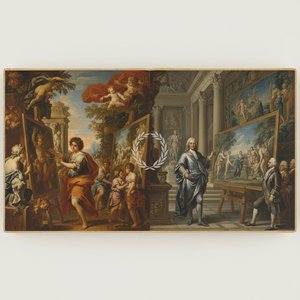 Simon Vouet: A Baroque Master's Journey from Italian Influence to French ClassicismExplore the life & art of Simon Vouet, a pivotal French Baroque painter who introduced Italian styles to France. Discover his masterpieces …