
 Zobacz w skali 1:1
 Wyślij
 Udostępnij
 Szczegóły
 Przewodnik

 Pobierz plik obrazu
 Podobne obiekty
 RTG
RTG Pokaz slajdów
 Statystyki
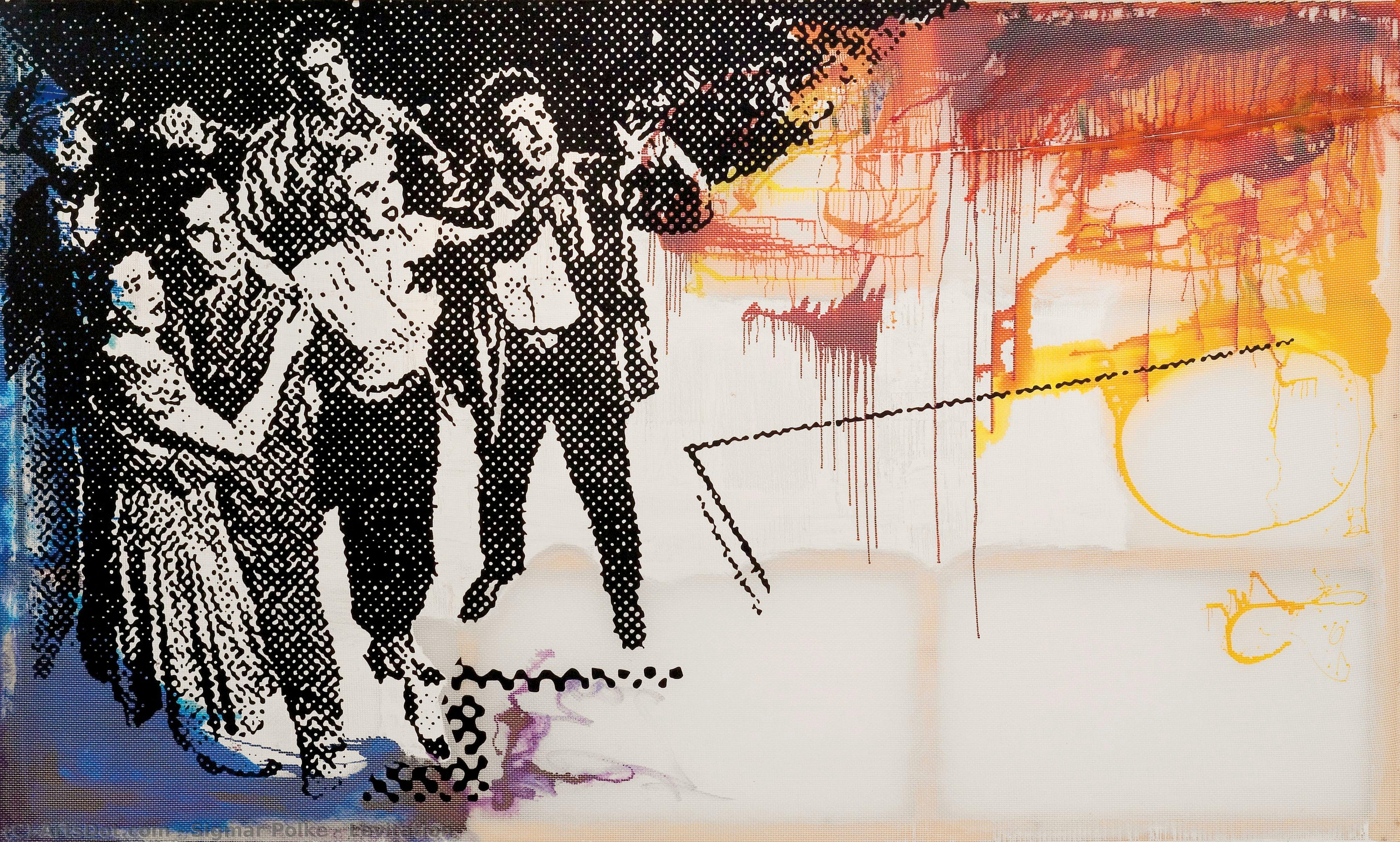
Levitation
 Encaustic
- WallArt
- Post-Impressionism
 2005
2005- Contemporary
 300.0 x 500.0 cm
 Kunsthaus Zürich
 Czytaj więcej
Dzieło sztuki prezentowane na tej stronie podlega ochronie prawem autorskim, co oznacza, że nie mamy prawa do tworzenia ani sprzedaży jego identycznej reprodukcji. Ochrona ta jest egzekwowana na mocy umów międzynarodowych, takich jak Konwencja berneńska oraz przez przepisy prawa krajowego, w tym te określone w Prawo autorskie USA – Tytuł 17.
Metoda ta jest w pełni zgodna z przepisami prawa autorskiego, ponieważ nie polega na kopiowaniu ani powielaniu chronionego dzieła. Stanowi ona kreatywną reinterpretację – nowy obraz, który czerpie inspirację z oryginału, ale nie jest z nim tożsamy.
Giclée / Wydruk artystyczny
Wydruki giclée lub płótna o jakości muzealnej, szybka realizacja i szeroki wybór opcji wykończenia. ( Kup ręcznie malowany obraz Przełącz na wersję cyfrową)




P118B zł10

P118H zł10

P118W zł10

P438Z zł10

P508JH zł12

P508YH zł12

P805H zł10

P805Z zł10

P919BZ zł10

P919G zł10

P919XJ zł10

P959ZH zł10

P968JZ zł12

W106C zł8

W218G zł10

W218JH zł8

W218Y zł10

W307PJ zł10

W316G zł10

W316PJ zł8

W316Y zł10

W398PJ zł8

W4111J zł10

W500HY zł15

W500JH zł15

W692G zł12

W849H zł8

W940BG zł15

W953PJ zł8




Wybierz spośród naszych standardowych rozmiarów, które zachowują oryginalne proporcje dzieła sztuki.

Wpisz wymaganą szerokość i wysokość, aby dopasować grafikę do ramy lub ściany. Wydruk można jedynie przyciąć, nigdy nie powiększając go poza oryginalny obraz, dlatego format o innym proporcji spowoduje utratę części kompozycji. Przed rozpoczęciem druku prześlemy Ci cyfrowy podgląd do zatwierdzenia. Obraz wyświetlany na tej stronie nie pokazuje rzeczywistego przycięcia — jedynie podgląd oddaje ten efekt.
Dostawa na cały świat () w ciągu 2 tygodni zamiast standardowych 4/5 tygodni. (23 Październik)

Bezpłatna ekspresowa wysyłka na cały świat

Wysokiej jakości płótno lniane

Pełne ubezpieczenie transportowe

Gwarancja zwrotu należności celnych i podatków importowych

Gwarancja idealnego odwzorowania barw

100-dniowy okres na zwrot dzieła w przypadku wykrycia wad produkcyjnych

Gwarancja 100% zwrotu pieniędzy

Oferta przy zakupie wielu sztuk
 Opcja ze szkłem jest dostępna wyłącznie w rozmiarach poniżej 110 cm

Levitation
Giclée / Wydruk artystyczny
Rozmiar reprodukcji
-


Suma do zapłaty
zł 308
A Vision Suspended in Time: The Enigmatic World of Sigmar Polke
In the vast landscape of contemporary art, few names resonate with as much mystery and technical audacity as Sigmar Polke. His masterpiece, Levitation, created in 2005, serves as a profound meditation on the very nature of perception. At first glance, the viewer is met with a seemingly banal tableau—a table laden with objects that ground the scene in reality—yet this familiarity is quickly subverted by an underlying sense of existential weight. A group of figures stands before this arrangement, their faces captured in a moment of shared perplexity and quiet observation. It is a scene that feels simultaneously frozen in a cinematic still and vibrating with the tension of an unfolding drama, inviting those who gaze upon it to question what is truly visible and what remains hidden beneath the surface of our daily lives.
The emotional resonance of Levitation lies in its ability to evoke a sense of profound displacement. Polke, whose early life was shaped by the tumultuous migrations of post-war Europe, infused his work with a lifelong skepticism toward fixed truths. In this monumental canvas, measuring an imposing 300 x 500 cm, that skepticism transforms into a haunting beauty. The artwork does not merely depict a moment; it captures the feeling of being suspended between memory and reality, between the tangible world we touch and the ephemeral shadows of history that haunt our collective consciousness.
The Alchemy of Decay: Technique and Texture
To encounter Levitation is to witness a masterclass in the manipulation of medium. Polke’s distinctive style is a breathtaking blend of photographic realism and painterly abstraction, achieved through the demanding technique of encaustic. By layering beeswax, resin, and pigment, he creates a surface that possesses an almost organic vitality. This process allows for a luminous quality that seems to glow from within, yet it is simultaneously interrupted by subtle distress and fractures. These intentional imperfections imbue the work with an inherent sense of decay, mirroring the artist's preoccupation with the passage of time and the inevitable transformation of all things.
For the discerning collector or interior designer, this texture offers an unparalleled sensory experience. The way light interacts with the resinous layers creates a dynamic visual field that changes as one moves around the piece. It is not a static image but a living entity. This layering process serves as a metaphor for memory itself—built upon layers of experience, some bright and clear, others obscured by the weathered patina of time. The result is a work of art that demands presence, offering a sophisticated depth that elevates any space it inhabits.
Historical Echoes and Symbolic Depth
The historical context of Levitation adds a layer of poignant gravity to its visual splendor. Produced in the wake of the September 11th attacks, the painting reflects Polke’s broader engagement with global instability and the fragility of established narratives. By drawing inspiration from filmic conventions, he utilizes the language of mass media to heighten the emotional impact, prompting viewers to consider how much of our "reality" is actually a construction of the images we consume. The figures in the painting, caught in their moment of observation, act as proxies for the viewer, reflecting our own anxieties and our search for meaning in an increasingly fractured world.
Symbolically, the artwork operates on multiple planes. The table, with its collection of objects, represents the material world, while the title Levitation suggests a spiritual or psychological transcendence—a lifting away from the mundane into the realm of pure thought and perception. For those seeking to bring a piece of art history into their homes, this reproduction offers more than mere decoration; it provides a gateway to a complex dialogue about existence, loss, and the enduring power of the human gaze. It is an investment in a profound intellectual and aesthetic experience that continues to challenge and inspire.
Pytania i odpowiedzi
Jak nasycona jest paleta kolorystyczna dzieła "Levitation"?
Kolory dzieła „Levitation” autorstwa Sigmar Polke charakteryzują się Subtle Color nasyceniem. Nasycenie określa, jak żywe lub stonowane są barwy.
W jaki sposób tematyka dzieła "Levitation" odnosi się do typowych motywów twórczości Sigmar Polke?
Wśród utrwalonych w twórczości Sigmar Polke motywów – experimentation, perception, surrealism, philosophical inquiry, critique, social commentary, protest, iconic image – dzieło „Levitation” wprowadza własne skupienie na painting, reflection, gravity, artist, witnesses, fabric, perspective.
W jakiej technice wykonano „Levitation” autorstwa Sigmar Polke?
„Levitation” wykonano w technice Encaustic.
Biografia artysty
Sigmar Polke (1941–2010) – A Life Forged in Displacement: The Early Years and Artistic Formation of Sigmar Polke
Sigmar Polke’s artistic journey was profoundly shaped by the tumultuous currents of 20th-century history, beginning with his birth in Olsztyn, Poland, in 1941. His early life was marked by displacement; as a child, he fled with his family first to Thuringia and then, seeking refuge from Communist rule, to West Germany in 1953. This experience of being uprooted, of existing between worlds, instilled within him a lifelong skepticism towards fixed ideologies and a fascination with the instability of perception – themes that would become central to his art. Before dedicating himself fully to painting, Polke underwent an apprenticeship as a stained glass worker in Düsseldorf (1959-1960), a formative experience that honed his technical skill and introduced him to the possibilities of manipulating light and color. He then formally studied at the Kunstakademie Düsseldorf (1961-1967) under a constellation of influential figures: Karl Otto Götz, Gerhard Hoehme, and most significantly, Joseph Beuys. It was within this environment that Polke began to forge his unique artistic voice, one characterized by experimentation, irony, and a relentless questioning of established norms.Early Influences and Artistic Beginnings
The Düsseldorf Kunstakademie proved to be a crucible for Polke’s burgeoning talent. His teachers—Karl Otto Götz, Gerhard Hoehme, and particularly Joseph Beuys—provided him with intellectual stimulation and encouraged him to explore unconventional approaches to artistic expression. Beuys's emphasis on shamanistic rituals and his belief in the transformative power of art profoundly impacted Polke’s worldview and informed his subsequent creative endeavors. This encounter ignited a passion for exploring the intersection between art, science, and spirituality—a preoccupation that would permeate much of his oeuvre. Simultaneously, he absorbed influences from Pop Art, recognizing its critique of consumer culture and its embrace of mass media imagery. However, unlike many of his contemporaries, Polke resisted easy categorization, preferring to develop his own distinctive style rooted in a deep engagement with German history and cultural traditions.Capitalist Realism: A Critique of Ideology
In 1963, alongside Gerhard Richter, Konrad Lueg, and Manfred Kuttner, Polke co-founded *Kapitalistischer Realismus* (Capitalist Realism), a movement that deliberately challenged the dominant artistic paradigms of the time. This wasn’t merely an aesthetic stance; it was a radical political statement—a critique of both Western capitalism and Soviet Socialist Realism. The founders recognized that both systems presented idealized versions of reality, obscuring underlying contradictions and perpetuating dogma. Polke's early paintings from this period skillfully appropriated imagery from advertising, comics, and popular media, presenting them with a detached irony that exposed their ideological distortions. He wasn’t simply rejecting capitalism; he was demonstrating its pervasive influence on perception itself—a concept central to Beuys’s philosophical explorations. This provocative gesture established Polke as a pioneer of conceptual art and signaled his commitment to confronting social issues through artistic intervention.Photography and Alchemy: Exploring Perception
The 1970s marked a pivotal shift in Polke's artistic trajectory toward photography. Driven by an unwavering curiosity, he embarked on extensive journeys—to Pakistan, Brazil, France, Afghanistan, and the United States—documenting everyday life with meticulous detail and capturing fleeting moments of absurdity. However, Polke didn’t treat photography as merely a recording device; he subjected his images to radical chemical manipulation—altering colors, textures, and meanings—pushing the boundaries of photographic representation. He embraced chance operations and deliberately introduced imperfections, mirroring Beuys's belief in embracing spontaneity and accepting the unpredictable nature of artistic creation. This period reflected Polke’s profound engagement with the concept of perception—how our understanding of the world is shaped by subjective experience and mediated through technology—a preoccupation that would continue throughout his career.Later Work: Material Alchemy and Historical Reflection
From 1983 onwards, Polke experimented with unconventional materials—arsenic, meteor dust, turquoise, beeswax—incorporating them into his canvases alongside traditional pigments. This alchemical approach was driven by a desire to unlock hidden properties within matter and to create works that were constantly evolving, defying easy categorization. He drew inspiration from medieval and Renaissance art techniques—particularly *sfumato*, the subtle blending of colors used by Leonardo da Vinci—demonstrating an intellectual rigor alongside his artistic intuition. Polke’s later paintings engaged with historical events—often portraying them through fragmented imagery and distorted perspectives—reflecting a deep skepticism toward grand narratives and celebrating the complexities of human experience. His art remains challenging, demanding active engagement from the viewer and resisting simplistic interpretations. Sigmar Polke died in Cologne in June 2010 after a long battle with cancer, leaving behind a legacy as one of Germany’s most influential artists—a figure who championed experimentation, questioned dogma, and explored the fundamental questions of artistic practice.
Sigmar Polke
1941 - 2010 , Polska
Najważniejsze informacje
- Artistic Movement Or Style:
- Kapitalistischer Realismus
- Neo-Expressionismus
- Artists Or Movements Influenced By This Artist: ['German Art Informel']
- Artists Who Influenced This Artist:
- Joseph Beuys
- Pop Art
- Date Of Birth: 1941
- Date Of Death: 2010
- Full Name: Sigmar Polke
- Nationality: Niemcy
- Notable Artworks:
- Large
- Hope is
- Alice in wonderland
- Place Of Birth (City And Country): Oels, Poland
Zobacz także powiązane artykuły
Timeless Shadows: The Artistry, History, and Emotional Resonance of Black and White Photography
Explore the profound artistry of black and white photography. From historical mastery to the interplay of light and shadow, discover how monochrome captures timeless emotion and form through a sophisticated lens of art history.

Beyond the Lens: Photography's Enduring Influence on Modern & Contemporary Art
Explore photography's pivotal role in shaping modern & contemporary art. Discover key movements, influential artists like Stieglitz, and expert collecting advice from OriginalUniqueArt.
Shadow & Soul: Why Black & White Photography Remains the Ultimate Power Move in Modern Art
Discover why black & white photography remains a powerful force in contemporary art. Explore the impact of light, shadow, and texture through a visual journey of monochrome mastery and learn how to elevate your space with timeless grayscale aesthetics.

Białe arcydzieła: Top 10 słynnych obrazów pełnych światła i emocji | OriginalUniqueArt.pl
Odkryj 10 najsłynniejszych obrazów, w których biel dominuje i tworzy wyjątkową atmosferę. Poznaj historie Moneta, Van Gogha i innych mistrzów! Reprodukcje najwyższej jakości na OriginalUniqueArt.com – inspiracje wnętrzarskie i kolekcjonerstwo sztuki online.

Monochromatyczne Wizje: Estetyka i Historyczne Znaczenie Fotografii Czarno-Białej
Odkryj fascynujący świat fotografii czarno-białej! Poznaj historię, techniki i arcydzieła monochromatycznej sztuki. Inspiracje, porady i analiza wpływu na współczesną estetykę. OriginalUniqueArt.com.