

 Zobacz w skali 1:1
 Wyślij
 Udostępnij
 Szczegóły
 Przewodnik

 Pobierz plik obrazu
 Podobne obiekty
 RTG
RTG Pokaz slajdów
 Statystyki
Baumhaus

 Czytaj więcej
Dzieło sztuki prezentowane na tej stronie podlega ochronie prawem autorskim, co oznacza, że nie mamy prawa do tworzenia ani sprzedaży jego identycznej reprodukcji. Ochrona ta jest egzekwowana na mocy umów międzynarodowych, takich jak Konwencja berneńska oraz przez przepisy prawa krajowego, w tym te określone w Prawo autorskie USA – Tytuł 17.
Metoda ta jest w pełni zgodna z przepisami prawa autorskiego, ponieważ nie polega na kopiowaniu ani powielaniu chronionego dzieła. Stanowi ona kreatywną reinterpretację – nowy obraz, który czerpie inspirację z oryginału, ale nie jest z nim tożsamy.
Giclée / Wydruk artystyczny
Wydruki giclée lub płótna o jakości muzealnej, szybka realizacja i szeroki wybór opcji wykończenia. ( Kup ręcznie malowany obraz Przełącz na wersję cyfrową)




P118B zł10

P118H zł10

P118W zł10

P438Z zł10

P508JH zł12

P508YH zł12

P805H zł10

P805Z zł10

P919BZ zł10

P919G zł10

P919XJ zł10

P959ZH zł10

P968JZ zł12

W106C zł8

W218G zł10

W218JH zł8

W218Y zł10

W307PJ zł10

W316G zł10

W316PJ zł8

W316Y zł10

W398PJ zł8

W4111J zł10

W500HY zł15

W500JH zł15

W692G zł12

W849H zł8

W940BG zł15

W953PJ zł8




Wybierz spośród naszych standardowych rozmiarów, które zachowują oryginalne proporcje dzieła sztuki.

Możesz wprowadzić własne wymiary, aby dopasować dzieło do konkretnej ramy lub przestrzeni. Jeśli wybrany rozmiar nie będzie odpowiadał proporcjom oryginalnego obrazu, przytniecie dzieło lub rozszerzymy obraz za pomocą odbicia lustrzanego lub jednolitego wypełnienia krawędzi. Przed rozpoczęciem produkcji prześlemy cyfrową wizualizację do Twojej akceptacji.
Prosimy pamiętać, że podgląd na ekranie nie odzwierciedla faktycznego przycinania ani rozszerzania. Tylko wizualizacja dokładnie pokaże końcową kompozycję.
Mimo dostępności niestandardowych rozmiarów, zalecamy wybór wymiaru z listy zdefiniowanej, aby zachować oryginalne proporcje.
Dostawa na cały świat () w ciągu 2 tygodni zamiast standardowych 4/5 tygodni. (13 Październik)

Bezpłatna ekspresowa wysyłka na cały świat

Wysokiej jakości płótno lniane

Pełne ubezpieczenie transportowe

Gwarancja zwrotu należności celnych i podatków importowych

Gwarancja idealnego odwzorowania barw

100-dniowy okres na zwrot dzieła w przypadku wykrycia wad produkcyjnych

Gwarancja 100% zwrotu pieniędzy

Oferta przy zakupie wielu sztuk
 Opcja ze szkłem jest dostępna wyłącznie w rozmiarach poniżej 110 cm

Baumhaus
Giclée / Wydruk artystyczny
Rozmiar reprodukcji
-


Suma do zapłaty
zł 301
Biografia artysty
Sigmar Polke (1941–2010) – A Life Forged in Displacement: The Early Years and Artistic Formation of Sigmar Polke
Sigmar Polke’s artistic journey was profoundly shaped by the tumultuous currents of 20th-century history, beginning with his birth in Olsztyn, Poland, in 1941. His early life was marked by displacement; as a child, he fled with his family first to Thuringia and then, seeking refuge from Communist rule, to West Germany in 1953. This experience of being uprooted, of existing between worlds, instilled within him a lifelong skepticism towards fixed ideologies and a fascination with the instability of perception – themes that would become central to his art. Before dedicating himself fully to painting, Polke underwent an apprenticeship as a stained glass worker in Düsseldorf (1959-1960), a formative experience that honed his technical skill and introduced him to the possibilities of manipulating light and color. He then formally studied at the Kunstakademie Düsseldorf (1961-1967) under a constellation of influential figures: Karl Otto Götz, Gerhard Hoehme, and most significantly, Joseph Beuys. It was within this environment that Polke began to forge his unique artistic voice, one characterized by experimentation, irony, and a relentless questioning of established norms.Early Influences and Artistic Beginnings
The Düsseldorf Kunstakademie proved to be a crucible for Polke’s burgeoning talent. His teachers—Karl Otto Götz, Gerhard Hoehme, and particularly Joseph Beuys—provided him with intellectual stimulation and encouraged him to explore unconventional approaches to artistic expression. Beuys's emphasis on shamanistic rituals and his belief in the transformative power of art profoundly impacted Polke’s worldview and informed his subsequent creative endeavors. This encounter ignited a passion for exploring the intersection between art, science, and spirituality—a preoccupation that would permeate much of his oeuvre. Simultaneously, he absorbed influences from Pop Art, recognizing its critique of consumer culture and its embrace of mass media imagery. However, unlike many of his contemporaries, Polke resisted easy categorization, preferring to develop his own distinctive style rooted in a deep engagement with German history and cultural traditions.Capitalist Realism: A Critique of Ideology
In 1963, alongside Gerhard Richter, Konrad Lueg, and Manfred Kuttner, Polke co-founded *Kapitalistischer Realismus* (Capitalist Realism), a movement that deliberately challenged the dominant artistic paradigms of the time. This wasn’t merely an aesthetic stance; it was a radical political statement—a critique of both Western capitalism and Soviet Socialist Realism. The founders recognized that both systems presented idealized versions of reality, obscuring underlying contradictions and perpetuating dogma. Polke's early paintings from this period skillfully appropriated imagery from advertising, comics, and popular media, presenting them with a detached irony that exposed their ideological distortions. He wasn’t simply rejecting capitalism; he was demonstrating its pervasive influence on perception itself—a concept central to Beuys’s philosophical explorations. This provocative gesture established Polke as a pioneer of conceptual art and signaled his commitment to confronting social issues through artistic intervention.Photography and Alchemy: Exploring Perception
The 1970s marked a pivotal shift in Polke's artistic trajectory toward photography. Driven by an unwavering curiosity, he embarked on extensive journeys—to Pakistan, Brazil, France, Afghanistan, and the United States—documenting everyday life with meticulous detail and capturing fleeting moments of absurdity. However, Polke didn’t treat photography as merely a recording device; he subjected his images to radical chemical manipulation—altering colors, textures, and meanings—pushing the boundaries of photographic representation. He embraced chance operations and deliberately introduced imperfections, mirroring Beuys's belief in embracing spontaneity and accepting the unpredictable nature of artistic creation. This period reflected Polke’s profound engagement with the concept of perception—how our understanding of the world is shaped by subjective experience and mediated through technology—a preoccupation that would continue throughout his career.Later Work: Material Alchemy and Historical Reflection
From 1983 onwards, Polke experimented with unconventional materials—arsenic, meteor dust, turquoise, beeswax—incorporating them into his canvases alongside traditional pigments. This alchemical approach was driven by a desire to unlock hidden properties within matter and to create works that were constantly evolving, defying easy categorization. He drew inspiration from medieval and Renaissance art techniques—particularly *sfumato*, the subtle blending of colors used by Leonardo da Vinci—demonstrating an intellectual rigor alongside his artistic intuition. Polke’s later paintings engaged with historical events—often portraying them through fragmented imagery and distorted perspectives—reflecting a deep skepticism toward grand narratives and celebrating the complexities of human experience. His art remains challenging, demanding active engagement from the viewer and resisting simplistic interpretations. Sigmar Polke died in Cologne in June 2010 after a long battle with cancer, leaving behind a legacy as one of Germany’s most influential artists—a figure who championed experimentation, questioned dogma, and explored the fundamental questions of artistic practice.
Sigmar Polke
1941 - 2010 , Polska
Najważniejsze informacje
- Artistic Movement Or Style:
- Kapitalistischer Realismus
- Neo-Expressionismus
- Artists Or Movements Influenced By This Artist: ['German Art Informel']
- Artists Who Influenced This Artist:
- Joseph Beuys
- Pop Art
- Date Of Birth: 1941
- Date Of Death: 2010
- Full Name: Sigmar Polke
- Nationality: Niemcy
- Notable Artworks:
- Large
- Hope is
- Alice in wonderland
- Place Of Birth (City And Country): Oels, Poland
Zobacz także powiązane artykuły
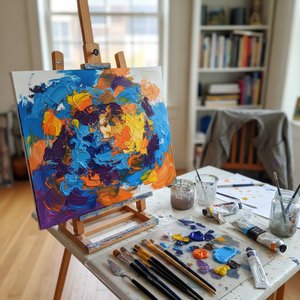
Akryl na płótnie: Nowoczesny medium dla ekspresji artystycznej – przewodnik dla studentów sztuki
Poznaj wszechstronność akrylu na płótnie! Przewodnik dla studentów sztuki z technikami, inspiracjami (Joanna Karpowicz) i wskazówkami ekspertów. Odkryj swój artystyczny potencjał!
Acrylic Paint Guide: Mastering the Versatile Medium of Modern Art through Chemistry and Technique
Master the versatile world of acrylic painting with our expert guide for art students. Explore the chemistry, historical evolution, and advanced techniques—from watercolor-like washes to bold impasto—to elevate your modern artistry and technical skill.
Mastering Acrylic on Paper: An Expert Guide to Texture, Color Theory, and Modern Techniques
Elevate your artistry with our expert guide to acrylic on paper. Master advanced techniques in texture, color theory, and layering to create professional-grade modern masterpieces. Perfect for art students seeking technical depth and creative excellence.
Akryl na papierze: Nowoczesny nośnik ekspresji artystycznej – historia, techniki i konserwacja dzieł
Poznaj historię, techniki i konserwację akrylu na papierze – nowoczesnego medium sztuki współczesnej. Poradnik dla kolekcjonerów i inwestorów. Eksperckie analizy i najlepsze praktyki ochrony dzieł.
The Art Student’s Definitive Guide to Acrylic Painting: Mastering the World’s Most Versatile Medium
Unlock your creative potential with this expert guide for art students. Master acrylic painting techniques, from fluid washes to textured impasto. Learn about essential brushes, surfaces, and advanced color theory to elevate your fine arts practice with professional precision.