 Przełącz na wydania drukowane
 Rozwiń treść







































 W przypadku dzieł sztuki lub reprodukcji, których którykolwiek z boków przekracza 105 cm (około 41 cali), rama zostanie wysłana w formie zestawu do samodzielnego montażu. Metoda ta zapewnia bezpieczną dostawę i zapobiega uszkodzeniom podczas transportu.


A Dramatic Tableau of Baroque Rebellion
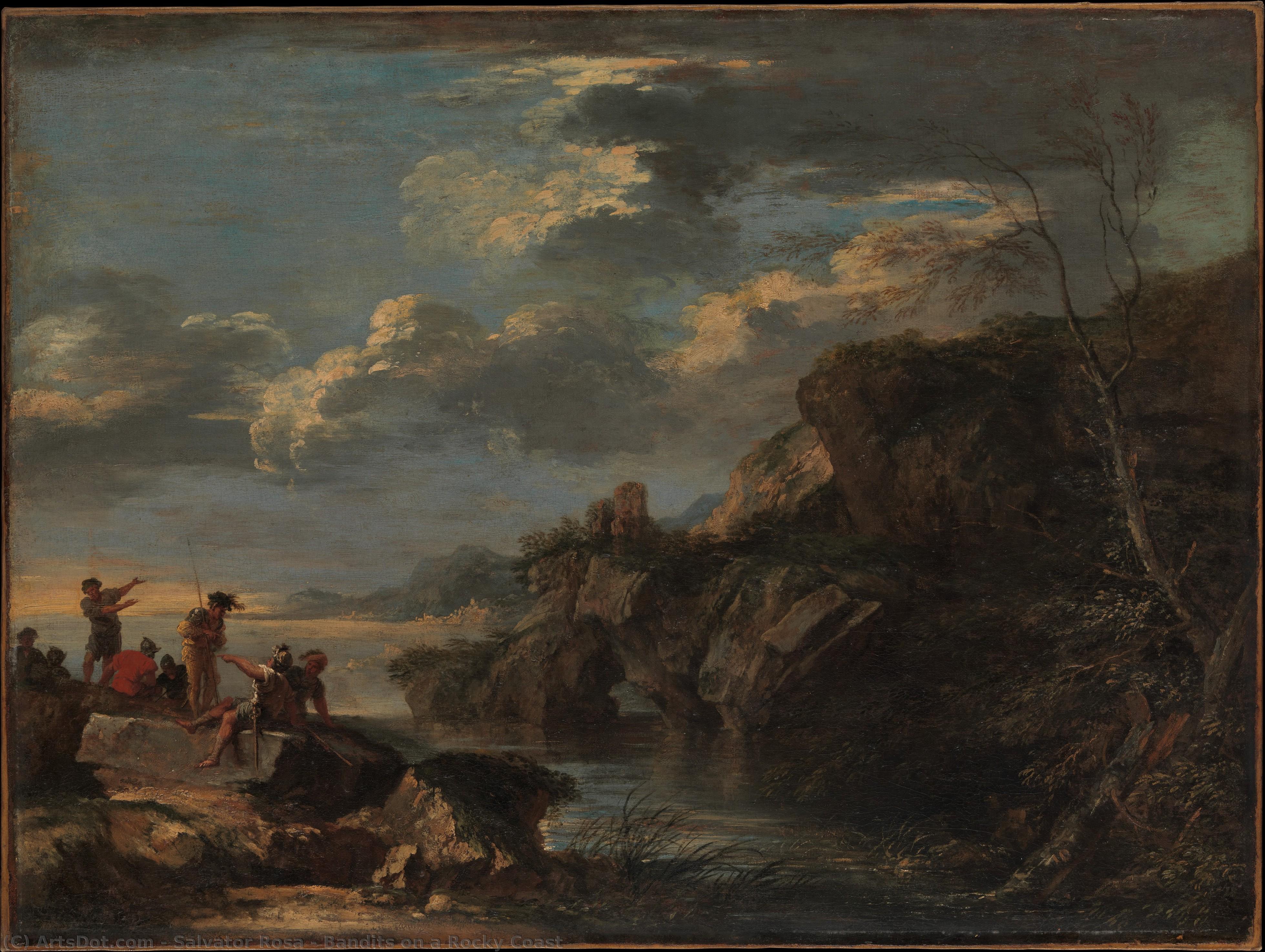
In the mid-17th century, the Italian Baroque era was defined by its thirst for drama, tension, and the sublime. Salvator Rosa’s “Bandits on a Rocky Coast,” painted around 1656, serves as a quintessential emblem of this movement. The scene does not merely present a landscape; it presents a moment frozen in time, where the ruggedness of nature meets the lawlessness of man. A group of bandits—perhaps mercenaries or rebels—perch precariously upon jagged, desolate cliffs that overlook a turbulent coastline. Their postures are heavy with defiance and readiness, capturing a palpable sense of impending confrontation. As one gazes upon this masterpiece, the viewer is drawn into a world of illicit activity and shadows, where every figure seems to hold a secret against the backdrop of an untamed wilderness.
The technical mastery behind this work is nothing short of breathtaking, making it a profound choice for collectors who value the visceral texture of classical oil painting. Rosa employs a masterful use of chiaroscuro, the stark and theatrical contrast between light and dark, to sculpt the figures from the gloom. This technique creates an immersive visual experience, pulling the eye toward the glint of weapons and the weathered faces of the outlaws. Through thick, expressive impasto, the artist lends a physical weight to the rocky terrain, while his use of atmospheric perspective subtly blurs the distant horizon, heightening the sense of isolation and vastness. For an interior designer, this painting offers a commanding presence, providing a focal point that brings depth, movement, and a sophisticated edge to any curated space.
Symbolism and the Turbulent Soul
Beyond its surface-level tension, “Bandits on a Rocky Coast” is deeply embedded with the philosophical anxieties of its time. Rosa was a man of immense intellect—a poet and polymath whose work often touched upon the darker aspects of the human condition. The painting reflects the turbulent political climate of 17th-century Italy, an era marked by instability and shifting power dynamics. There is a subtle, intellectual layer to the composition that hints at Pythagorean philosophy, specifically the concept of descent into darkness followed by rebirth. This theme of struggle and resilience is mirrored in the very landscape itself; the jagged rocks and heavy, clouded skies serve as metaphors for the internal conflicts of the human spirit.
To possess a reproduction of this work is to invite a conversation about strength, mystery, and the beauty found in the untamed. The emotional impact of the piece lies in its ability to evoke both awe and unease. It is a painting that refuses to be ignored, demanding contemplation of the boundary between civilization and chaos. Whether placed in a private study or a grand living hall, this artwork serves as a window into the rebellious spirit of Salvator Rosa, offering an enduring sense of drama and historical gravity that continues to captivate the modern eye.
Pytania i odpowiedzi
W którym roku powstało dzieło "Bandits on a Rocky Coast"?
„Bandits on a Rocky Coast” – Salvator Rosa powstało w 1656.
Czy dzieło „Bandits on a Rocky Coast” – Salvator Rosa, znajdujące się w zbiorach Metropolitan Museum of Art, może być legalnie reprodukowane?
Oryginał dzieła „Bandits on a Rocky Coast” znajduje się w Metropolitan Museum of Art, a utwór jest należy do domeny publicznej – autorskie prawa majątkowe wygasły.
Jak mogę odkryć dzieła podobne do „Bandits on a Rocky Coast” – Salvator Rosa?
Strona Podobne dzieła dzieła „Bandits on a Rocky Coast” – Salvator Rosa prezentuje powiązane utwory.
 Podgląd w skali 1:1
 Wyślij jako kartkę
 Udostępnij
 Szczegóły dzieła
 Przewodnik

 Pobierz obraz
 Podobne obiekty
 RTG
RTG Pokaz slajdów
 Pytania i odpowiedzi
 Statystyki