Podgląd w skali 1:1
 Wyślij jako kartkę
 Udostępnij
 Szczegóły dzieła
 Przewodnik

 Pobierz obraz
 Podobne obiekty
 RTG
RTG Pokaz slajdów
 Statystyki
Seascape


 Rozwiń treść
Dzieło sztuki prezentowane na tej stronie podlega ochronie prawem autorskim, co oznacza, że nie mamy prawa do tworzenia ani sprzedaży jego identycznej reprodukcji. Ochrona ta jest egzekwowana na mocy umów międzynarodowych, takich jak Konwencja berneńska oraz przez przepisy prawa krajowego, w tym te określone w Prawo autorskie USA – Tytuł 17.
Jako pełną szacunku i legalną alternatywę oferujemy personalizowane, malowane ręcznie dzieła sztuki inspirowane oryginałem. Nasi wykwalifikowani i profesjonalni artyści starannie analizują styl, nastrój oraz artystyczną esencję pierwowzoru, aby stworzyć nowe, unikalne dzieło, które przywołuje te same emocje – pozostając jednocześnie w pełni oryginalną kreacją.
Metoda ta jest w pełni zgodna z przepisami prawa autorskiego, ponieważ nie polega na kopiowaniu ani powielaniu chronionego dzieła. Stanowi ona kreatywną reinterpretację – nowy obraz, który czerpie inspirację z oryginału, ale nie jest z nim tożsamy.
Ręcznie malowana reprodukcja olejowa
Ręcznie malowany obraz olejny na płótnie, wykonany na zamówienie przez naszych artystów w wybranym przez Ciebie wymiarze i oprawie. ( Przełącz na wydania drukowane Przejdź do wersji cyfrowej)




P118B zł10

P118H zł10

P118W zł10

P438Z zł10

P508JH zł12

P508YH zł12

P805H zł10

P805Z zł10

P919BZ zł10

P919G zł10

P919XJ zł10

P959ZH zł10

P968JZ zł12

W106C zł8

W218G zł10

W218JH zł8

W218Y zł10

W307PJ zł10

W316G zł10

W316PJ zł8

W316Y zł10

W398PJ zł8

W4111J zł10

W500HY zł15

W500JH zł15

W692G zł12

W849H zł8

W940BG zł15

W953PJ zł8




Wybierz spośród naszych standardowych rozmiarów, które zachowują oryginalne proporcje dzieła sztuki.

Wpisz wymaganą szerokość i wysokość, aby obraz pasował do Twojej ramy lub ściany. Ponieważ jest to dzieło malowane ręcznie, w przypadku rozmiaru o innych proporcjach artysta może domalować nieco więcej wokół obrazu lub przyciąć jego fragmenty — wybór należy do Ciebie. Przed rozpoczęciem pracy prześlemy Ci cyfrową wizualizację do zatwierdzenia. Obraz widoczny na tej stronie nie przedstawia rzeczywistego efektu — jedynie wizualizacja oddaje realny rezultat.
Po złożeniu zamówienia zespół OriginalUniqueArt.com skontaktuje się z klientem drogą mailową w celu uzyskania instrukcji i prześle wizualizację projektu
Dostawa na całym świecie () w ciągu 3–4 tygodni zamiast standardowych 5 tygodni. (27 Październik). Bez kompromisów w kwestii jakości.

Bezpłatna ekspresowa wysyłka na cały świat

Wysokiej jakości płótno lniane

Pełne ubezpieczenie przesyłki

Gwarancja zwrotu należności celnych i podatków importowych

Gwarancja wiernego odwzorowania kolorów

100-dniowa polityka zwrotów (tylko w przypadku wad)

Gwarancja 100% zwrotu pieniędzy

Zniżka przy zakupie wielu sztuk
 Opcja ze szkłem jest dostępna wyłącznie w rozmiarach poniżej 110 cm

Seascape
Technika reprodukcji
Wymiary reprodukcji
-


Cena całkowita
zł 1153
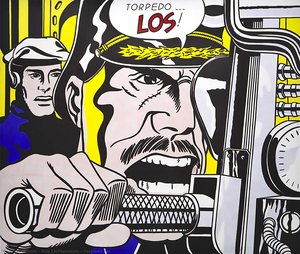
Seascape – A Frozen Moment of Tranquility by Roy Lichtenstein
Roy Lichtenstein’s “Seascape” isn't merely a depiction of the ocean; it’s an invitation into a carefully constructed, almost dreamlike state. Painted in 1964 as part of his "New York Ten" series, this work embodies the core tenets of Pop Art – a deliberate engagement with popular imagery and a playful deconstruction of traditional artistic conventions. The painting immediately draws the eye with its cool palette dominated by blues and whites, evoking a sense of serene stillness, yet beneath that surface lies a subtle tension, a hint of movement captured through Lichtenstein’s signature hard-edge technique.
The composition is deceptively simple: a vast expanse of blue ocean punctuated by the stark white forms of waves. These aren't rendered with realistic detail; instead, they are built up from a network of tiny, meticulously placed dots – a technique Lichtenstein adopted after studying Ben-Day printing processes. This method creates an illusion of depth and texture, mimicking the effect of halftone patterns found in comic books and advertising. The scattered white dots, like miniature stars against the blue canvas, add to the sense of distance and contribute to the painting’s overall ethereal quality. It's a masterful demonstration of how seemingly basic elements can be combined to achieve a remarkably sophisticated visual effect.
The Genesis of a Pop Visionary – Context and Influences
Understanding “Seascape” requires placing it within the broader context of Roy Lichtenstein’s artistic journey. Born in 1923, he initially pursued a more traditional path, studying drawing and painting at the Art Students League and later Ohio State University. However, his early work reflected a commitment to realism, influenced by artists like Reginald Marsh. It was during this period that he began experimenting with abstraction, ultimately finding his voice within the burgeoning Pop Art movement of the 1960s. This movement, reacting against the perceived elitism of Abstract Expressionism, embraced imagery from popular culture – advertising, comic books, and everyday objects – as legitimate subjects for art.
Lichtenstein’s upbringing in a cultured Jewish family instilled in him an appreciation for both high art (museum visits and concerts) and popular entertainment. This duality informed his work, allowing him to seamlessly blend the formal with the informal, the serious with the playful. The influence of jazz music is also palpable; the rhythmic repetition of dots mirrors the improvisational nature of a jazz solo, creating a sense of controlled spontaneity.
Decoding the Symbolism – Beyond the Surface
While “Seascape” appears to be a straightforward depiction of the ocean, it’s laden with symbolic meaning. The vastness of the blue expanse can be interpreted as representing the unknown, the subconscious, or perhaps even the limitations of human perception. The white waves, though seemingly serene, also carry an undercurrent of energy and movement – a reminder that beneath the surface lies constant change. The dots themselves, so meticulously placed, could symbolize the fragmented nature of modern experience, reflecting the way we perceive reality through a series of discrete elements.
Furthermore, the painting’s connection to comic book imagery is significant. Lichtenstein deliberately borrowed techniques from commercial art – halftone patterns, bold outlines, and simplified forms – to challenge traditional notions of artistic skill and beauty. He wasn't trying to create realistic representations; instead, he was exploring the relationship between fine art and popular culture, questioning what constituted “art” in a rapidly changing world.
A Timeless Reproduction – Bringing "Seascape" Home
OriginalUniqueArt offers meticulously hand-painted reproductions of Roy Lichtenstein’s “Seascape,” capturing the essence of this iconic work with unparalleled detail and fidelity. Each reproduction is created by skilled artists who understand Lichtenstein's unique technique, ensuring that every brushstroke faithfully replicates the original painting’s texture and vibrancy. Whether you are an art collector, a design enthusiast, or simply someone seeking to add a touch of Pop Art sophistication to your interior space, a OriginalUniqueArt reproduction of “Seascape” is a beautiful and enduring investment.
The choice of translucent Rowlux material for the original painting contributes significantly to its visual impact. The subtle shifts in color and light as you move before the artwork create an almost hypnotic effect, inviting viewers to lose themselves in its tranquil depths. Our reproductions faithfully recreate this captivating quality, bringing Lichtenstein’s vision to life with exceptional clarity and nuance.
Pytania i odpowiedzi
Kto jest autorem i z jakiego roku pochodzi "Seascape"?
"Seascape" – autorstwa Roy Lichtenstein, rok powstania: 1964.
Jaki klimat wnosi „Seascape” – Roy Lichtenstein do wnętrza?
Dzięki swojemu Spokój nastrojowi, "Seascape" idealnie sprawdzi się w Salon lub strefa dzienna.
Czy mogę zobaczyć „Seascape” – Roy Lichtenstein na własnej ścianie przed zakupem?
Dzieło „Seascape” – Roy Lichtenstein możesz zobaczyć na własnej ścianie dzięki stronie Podgląd w AR, wykorzystując rozszerzoną rzeczywistość na kompatybilnym urządzeniu.
Biografia artysty
The Genesis of a Pop Visionary
Roy Fox Lichtenstein, born in the vibrant metropolis of New York City on October 27, 1923, indelibly altered the landscape of twentieth-century art. Emerging as a pivotal figure within the Pop Art movement, Lichtenstein didn’t simply reflect his era; he actively interrogated it, transforming commonplace imagery into compelling artistic statements. His upbringing in an upper-middle-class Jewish family fostered both a cultural awareness and an early artistic inclination. Childhood exposure to museums and concerts, coupled with a deep appreciation for jazz music, laid the groundwork for a creative spirit that would challenge conventional notions of fine art. Though initially drawn to realistic drawing and painting during his formative years, Lichtenstein’s formal training commenced at the Art Students League in 1939 under Reginald Marsh, followed by studies at Ohio State University – interrupted briefly by wartime service in the Army. These experiences provided a robust technical foundation that would later be brilliantly re-contextualized through the lens of mass culture and commercial aesthetics. The seeds of his signature style weren’t sown within the hallowed halls of artistic tradition but rather in the often-overlooked world of everyday imagery, particularly comic books and advertising.From Abstraction to Appropriation: A Pivotal Shift
Lichtenstein's early work demonstrated a clear engagement with Abstract Expressionism, mirroring the dominant aesthetic trends of the post-war period. Figures like Jackson Pollock and Willem de Kooning were significant influences during this phase, reflecting the dynamism and emotional intensity that characterized the movement. However, this phase proved transitional, a stepping stone towards his revolutionary style. A crucial moment arrived during his tenure at Rutgers University where he encountered Allan Kaprow, whose influence reignited Lichtenstein’s interest in proto-pop imagery – artists like Robert Rauschenberg were already experimenting with collage and assemblage. This encounter sparked a critical shift in his artistic trajectory, leading him to question the established boundaries between “high” and “low” art. He began looking beyond the subjective expression of Abstract Expressionism towards the objective language of popular culture – specifically, comic books and advertising. The year 1961 marked a turning point with *Look Mickey*, a work that boldly appropriated characters from Disney comics, signaling the beginning of his signature style. This wasn’t mere imitation; it was an act of artistic re-evaluation, elevating commonplace imagery to the status of fine art. He didn't simply copy comic strips; he meticulously recreated them using techniques mimicking commercial printing processes, a deliberate blurring of the lines between original artwork and mass production. This appropriation wasn’t about celebrating consumerism uncritically but rather examining its pervasive influence on American society and challenging traditional artistic hierarchies.The Language of Ben-Day Dots and Bold Lines
Lichtenstein's artistic vocabulary is instantly recognizable: bold, primary colors, thick black outlines, and most famously, Ben-Day dots – a technique borrowed directly from the mechanical reproduction of comic books. These dots weren’t merely decorative; they were integral to his conceptual framework, representing the very process of mass production and challenging the traditional emphasis on the artist's hand. His paintings often enlarged details from comic strips to monumental scale, forcing viewers to confront the aesthetic qualities of an art form typically dismissed as trivial. Works like *Whaam!* (1963), *Drowning Girl* (1963), and *Oh, Jeff…I Love You, Too…But…* (1964) became iconic representations of Pop Art, capturing the anxieties and desires of a rapidly changing consumer culture. These weren’t simply depictions of comic book scenes; they were commentaries on themes of war, romance, and societal expectations, filtered through the visual language of mass media. He aimed to strip away any pretense of artistic subjectivity, presenting his work as objective reflections of American society – a mirror held up to its own manufactured reality. The deliberate flatness and lack of painterly gesture further emphasized this detachment, mimicking the impersonal nature of commercial printing.Major Achievements and Lasting Impact
Roy Lichtenstein’s influence extends far beyond the realm of painting. His innovative use of commercial techniques and appropriation paved the way for new generations of artists exploring themes of consumerism, media saturation, and cultural identity. The sale of *Masterpiece* in 2017 for $165 million solidified his position as one of the most commercially successful American artists of all time, but his legacy is not solely defined by monetary value. He challenged traditional notions of artistic authorship and originality, forcing a re-evaluation of what constitutes “art” itself. His work continues to inspire graphic designers, illustrators, and visual artists across various disciplines.- Major Achievements: Pioneered Pop Art style; achieved international recognition with groundbreaking exhibitions.
- Notable Works: *Whaam!*, *Drowning Girl*, *Oh, Jeff…I Love You, Too…But…*, *Masterpiece*.
- Teaching Career: Influenced aspiring artists at SUNY Oswego and Rutgers University.

Roy Lichtenstein
1923 - 1997 , Stany Zjednoczone
Krótka nota
- Artistic Movement Or Style: Pop Art
- Artists Or Movements Influenced By This Artist:
- Graficy
- Ilustratorzy
- Artists Who Influenced This Artist:
- Reginald Marsh
- Allan Kaprow
- Date Of Birth: 27 października 1923
- Date Of Death: 29 września 1997
- Full Name: Roy Fox Lichtenstein
- Nationality: Amerykański
- Notable Artworks:
- Whaam!
- Drowning Girl
- Oh, Jeff...
- Masterpiece
- Place Of Birth: Nowy Jork, USA
Powiązane artykuły
Roy Lichtenstein: 25 Arcydzieł Pop Artu dla Kolekcjonerów i Miłośników Sztuki
Odkryj 25 arcydzieł Roy Lichtensteina – ikony pop artu, które zrewolucjonizowały sztukę XX wieku. Poznaj historie, techniki i inspiracje za słynnymi obrazami. Reprodukcje najwyższej jakości na OriginalUniqueArt.com! Eksploruj pełną kolekcję online.

Beyond the Dot: Exploring the Bold Impact of Ben-Day Dots in Modern Art
Dive into the vibrant world of Ben-Day dots. Explore how Roy Lichtenstein transformed mass media imagery into high art, redefining modern aesthetics through the iconic textures of Pop Art and its enduring impact on contemporary visual culture.

Dots & Screens: The Industrial Secrets Behind 1960s Pop Art Masterpieces
Explore the industrial secrets of 1960s Pop Art. Discover how Ben-Day dots and silk screening transformed mass media into masterpieces by Roy Lichtenstein. An in-depth look at the intersection of mechanical printing and fine art history for students and collectors.
Beyond the Ben-Day Dots: Roy Lichtenstein's Pop Art Revolution & Enduring Legacy
Explore Roy Lichtenstein's revolutionary Pop Art! Discover the story behind Ben-Day dots, iconic works like 'Whaam!', and investment insights for collectors. Expert analysis & high-quality reproductions at OriginalUniqueArt.

The Psychology of the Palette: Decoding Roy Lichtenstein's Bold Color Theory
Explore the psychological depth of Roy Lichtenstein's color theory. An expert analysis for art students and collectors on Ben-Day dots, primary palettes, and the intersection of Pop Art with mass media history.