Wersja olejowa
 Wszystko o Brattata







































 W przypadku dzieł sztuki lub reprodukcji, których którykolwiek z boków przekracza 105 cm (około 41 cali), rama zostanie wysłana w formie zestawu do samodzielnego montażu. Metoda ta zapewnia bezpieczną dostawę i zapobiega uszkodzeniom podczas transportu.


Brattata – A Bold Statement of Combat Tension
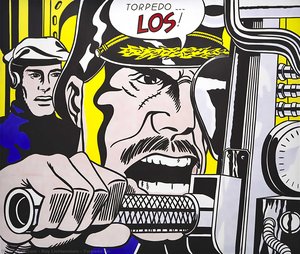
Roy Lichtenstein’s “Brattata,” completed in 1962, stands as a quintessential example of Pop Art's fascination with popular culture and its masterful manipulation of visual language. More than just a depiction of aerial combat—inspired by the All-American Men of War comic book issue #89—the painting embodies Lichtenstein’s signature style: a deliberately simplified aesthetic that prioritizes graphic impact over realistic representation.
The artwork centers around a lone pilot, positioned in a cockpit with an unbuckled mask revealing his lower face. He fires arrows towards what appears to be another aircraft, creating a dynamic scene brimming with tension and urgency. Lichtenstein’s meticulous attention to detail—evident in the graphite pencil sketch that served as the basis for this piece—captures the precise angle of the gun sight and cockpit control panel, mirroring Heath's original depiction.
The Ben-Day Dot Technique – A Revolutionary Approach
What distinguishes “Brattata” from traditional painting is Lichtenstein’s groundbreaking use of the Ben-Day dot technique. This method, borrowed directly from comic book printing, involves applying tiny colored dots to create an illusion of shading and texture—a deliberate departure from conventional artistic conventions. The resulting surface possesses a subtly rough quality, achieved through hatching and crosshatching, particularly noticeable in rendering skin tones and shadows.
This technique wasn’t merely stylistic; it reflected Lichtenstein's intellectual engagement with the visual culture of his time. By adapting printing methods to canvas, he challenged notions of artistic seriousness and embraced a playful exploration of color and pattern—a characteristic trait of Pop Art that sought to democratize art and engage audiences with familiar imagery.
Symbolism Within Simplification – An Examination of Narrative Tension
Beyond its technical prowess, “Brattata” resonates with symbolic significance. The pilot’s mask represents anonymity or menace, hinting at the psychological pressures inherent in military training and combat. Furthermore, Lichtenstein subtly alters the original comic panel by increasing the number of downed planes required for flying ace recognition by two—a gesture that speaks to his own experiences as a WWII pilot.
The stark white background punctuated by bold black outlines emphasizes the central figure’s action and contributes to the painting's overall sense of drama. The text bubbles, echoing the comic book format, convey dialogue and intent, furthering the narrative element and reinforcing Lichtenstein’s commentary on heroism and warfare.
A Legacy of Bold Color and Graphic Expression
“Brattata” exemplifies Lichtenstein’s masterful ability to distill complex ideas into visually arresting compositions. Dominated by black, white, and red—a palette designed for maximum impact—the artwork embodies the spirit of Pop Art's rejection of academic tradition and its embrace of vibrant color combinations. It remains a testament to Lichtenstein’s innovative approach to artmaking and his enduring influence on contemporary visual culture.
Pytania i odpowiedzi
Czy Brattata jest dziełem namalowanym ręcznie, czy wydrukiem?
Malowane ręcznie: wykwalifikowany artysta wykonuje olejną kopię Brattata na płótnie lnianym.
Jaki rozmiar wybrać dla Brattata?
Dostępne rozmiary obejmują zakres od 31.7 x 31.5 cm (zł782) do 240.3 x 239.0 cm (zł8097); tabela na tej stronie przedstawia główne warianty oraz ich ceny.
Ile trwa dostawa?
Czas dostawy wynosi od 4 do 5 tygodni, przy czym oferujemy bezpłatną ekspresową wysyłkę na cały świat; na tej stronie dostępna jest również opcja pilnej produkcji. Możesz dokonać zwrotu w ciągu 100 dni z pełnym zwrotem kosztów, bez żadnych dodatkowych warunków.
Czy oryginał Brattata to rysunek czy obraz?
Rysunek: Roy Lichtenstein wykonał go przy użyciu Tusz na papierze.
 Podgląd w skali 1:1

 Wyślij jako kartkę
 Udostępnij
 Szczegóły dzieła
 Karta informacyjna


 Pobierz obraz
 Podobne obiekty
 RTG
 Pokaz slajdów
 Pytania i odpowiedzi

 Statystyki