Menu

() ·

A painting made for you, by hand

The Green Coat

Ręcznie malowana reprodukcja olejowa

Ręcznie malowany obraz olejny na płótnie, wykonany na zamówienie przez naszych artystów w wybranym przez Ciebie wymiarze i oprawie. ( Przełącz na wydania drukowane Przejdź do wersji cyfrowej)

Opis obiektu

A whimsical bird perched upon a chair draped in vibrant fabric defines this 1916 masterpiece by British Modernist Robert Polhill Bevan, offering a unique opportunity to bring this elegant oil painting into your collection.

Biografia artysty

Robert Polhill Bevan (1865–1925): Brytyjski malarz i twórca Grupy Camden Town. Pionier Fauvizmu, znany z żywych krajobrazów oraz obrazów przedstawiających życie codzienne. Jego dzieła wpłynęły na rozwój sztuki nowoczesnej w Wielkiej Brytanii i stanowią ważną część historii sztuki XX wieku.

from ·

Chapter 1

How large should it be?

Slide to change the size; the picture on the left shows the frame at its real width. The proportions of the original are kept.

Standardowy format
personalizowane
CM
INCH

Wybierz spośród naszych standardowych rozmiarów, które zachowują oryginalne proporcje dzieła sztuki.

szerokość
wysokość

Wpisz wymaganą szerokość i wysokość, aby obraz pasował do Twojej ramy lub ściany. Ponieważ jest to dzieło malowane ręcznie, w przypadku rozmiaru o innych proporcjach artysta może domalować nieco więcej wokół obrazu lub przyciąć jego fragmenty — wybór należy do Ciebie. Przed rozpoczęciem pracy prześlemy Ci cyfrową wizualizację do zatwierdzenia. Obraz widoczny na tej stronie nie przedstawia rzeczywistego efektu — jedynie wizualizacja oddaje realny rezultat.

Chapter 2

How should it arrive?

Choose the edges of the stretched canvas

Choose your frame

Corner sample of the WhiteWrap canvas edge finish, stretched on lite drewno bars
White zł1
Corner sample of the BlurSideWrap canvas edge finish, stretched on lite drewno bars
Blurside zł1
Corner sample of the ExtendedWrap canvas edge finish, stretched on lite drewno bars
Extended zł1
Corner sample of the P118B picture frame: polistyren formowany, 5 cm wide and 3 cm thick
P118B zł10
Corner sample of the P118H picture frame: polistyren formowany, 5 cm wide and 3 cm thick
P118H zł10
Corner sample of the P118W picture frame: polistyren formowany, 5 cm wide and 3 cm thick
P118W zł10
Corner sample of the P438Z picture frame: polistyren formowany, 5.5 cm wide and 3.5 cm thick
P438Z zł10
Corner sample of the P508JH picture frame: polistyren formowany, 7 cm wide and 3.5 cm thick
P508JH zł12
Corner sample of the P508YH picture frame: polistyren formowany, 7 cm wide and 3.5 cm thick
P508YH zł12
Corner sample of the P805H picture frame: polistyren formowany, 5 cm wide and 3.5 cm thick
P805H zł10
Corner sample of the P805Z picture frame: polistyren formowany, 5 cm wide and 3.5 cm thick
P805Z zł10
Corner sample of the P919BZ picture frame: polistyren formowany, 7 cm wide and 3.5 cm thick
P919BZ zł10
Corner sample of the P919G picture frame: polistyren formowany, 7 cm wide and 3.5 cm thick
P919G zł10
Corner sample of the P919XJ picture frame: polistyren formowany, 7 cm wide and 3.5 cm thick
P919XJ zł10
Corner sample of the P959ZH picture frame: polistyren formowany, 5 cm wide and 3 cm thick
P959ZH zł10
Corner sample of the P968JZ picture frame: polistyren formowany, 6 cm wide and 4 cm thick
P968JZ zł12
Corner sample of the W106C picture frame: lite drewno, 5 cm wide and 3 cm thick
W106C zł8
Corner sample of the W218G picture frame: lite drewno, 5 cm wide and 3 cm thick
W218G zł10
Corner sample of the W218JH picture frame: lite drewno, 5 cm wide and 3 cm thick
W218JH zł8
Corner sample of the W218Y picture frame: lite drewno, 5 cm wide and 3 cm thick
W218Y zł10
Corner sample of the W307PJ picture frame: lite drewno, 6 cm wide and 3 cm thick
W307PJ zł10
Corner sample of the W316G picture frame: lite drewno, 6 cm wide and 3 cm thick
W316G zł10
Corner sample of the W316PJ picture frame: lite drewno, 6 cm wide and 3 cm thick
W316PJ zł8
Corner sample of the W316Y picture frame: lite drewno, 6 cm wide and 3 cm thick
W316Y zł10
Corner sample of the W398PJ picture frame: lite drewno, 5 cm wide and 3 cm thick
W398PJ zł8
Corner sample of the W4111J picture frame: lite drewno, 6.5 cm wide and 3.5 cm thick
W4111J zł10
Corner sample of the W500HY picture frame: lite drewno, 7 cm wide and 5 cm thick
W500HY zł15
Corner sample of the W500JH picture frame: lite drewno, 7 cm wide and 5 cm thick
W500JH zł15
Corner sample of the W692G picture frame: lite drewno, 8 cm wide and 4 cm thick
W692G zł12
Corner sample of the W849H picture frame: lite drewno, 5 cm wide and 3 cm thick
W849H zł8
Corner sample of the W940BG picture frame: lite drewno, 7.5 cm wide and 4.5 cm thick
W940BG zł15
Corner sample of the W953PJ picture frame: lite drewno, 6 cm wide and 3.5 cm thick
W953PJ zł8
Corner sample of the H24-GOLD picture frame: rzeźbione drewno pokryte gipsem, 10 cm wide and 6 cm thick
H24-GOLD zł30
Corner sample of the H24-SILVER picture frame: rzeźbione drewno pokryte gipsem, 10 cm wide and 6 cm thick
H24-SILVER zł30
Corner sample of the H36-GOLD picture frame: rzeźbione drewno pokryte gipsem, 15 cm wide and 6.5 cm thick
H36-GOLD zł45
Corner sample of the H36-SILVER picture frame: rzeźbione drewno pokryte gipsem, 15 cm wide and 6.5 cm thick
H36-SILVER zł45

Moulding: . Overall size with the frame: .

Chapter 3

Who paints it, and should anything change?

Examples of what can be changed: Replace face with customer photo; Add pet (e.g., replace cat with dog); Include hidden message in background; Change background landscape or elements.
After order, OriginalUniqueArt.com team will email client for instructions and provide a mockup preview

Dostawa na całym świecie () w ciągu 3–4 tygodni zamiast standardowych 5 tygodni. (30 Październik). Bez kompromisów w kwestii jakości.

Chapter 4

The finishing touches

A nameplate, as in a museum?

Szczegóły grawerowanej brązowej tabliczki

This elegant plaque features the artist's name and the title of the artwork, finely engraved for a timeless presentation.

It is made from bronze with a refined, elegant finish. The text is precisely laser-engraved for a sharp and permanent result. Measuring 9x2 cm, the plaque is compact yet easy to read. It's built to be durable and scratch-resistant, offering a professional, museum-quality look. Mounting is simple thanks to the included adhesive backing.

Szczegóły przezroczystej tabliczki akrylowej

The plaque includes essential engraved details such as the artist's name, the title of the artwork, the date it was created, the type of media used-like oil on canvas or watercolor-a brief description of the piece, and a QR code that links to the complete artwork information.

It is crafted from clear acrylic, offering a sleek, modern appearance. The text is UV-engraved in black to ensure strong visual contrast. With a size of 10x15 cm, it ensures optimal readability. It comes equipped with two metal hooks for secure wall mounting. The plaque is designed to be weather-resistant, making it suitable for various environments, and it includes interactive features that work seamlessly with smartphone scanning.

Szczegóły czarnej tabliczki akrylowej

This elegant plaque includes engraved information such as the artist's name, the title of the artwork, the date it was created, the type of media used (like oil on canvas or watercolor), a short description of the artwork, and a QR code for quick access to more information.

The plaque itself is made from refined black acrylic with a premium finish. The text is laser-engraved in white for high contrast and readability. Its size is 10x15 cm, designed to be easy to read. It comes with two metal hooks for professional mounting. The design is sleek and fits any interior style. It is also weather-resistant and durable, with built-in digital integration for mobile compatibility.

A protective varnish?

When do you need it?

Chapter 5

Your painting, as you ordered it

The Green Coat

Technika reprodukcji

Wymiary reprodukcji

-

Wybitny mistrz artystyczny

Większa szczegółowość, finezja i dodatkowy czas na realizację

-

Opcje oprawy reprodukcji

-

-

W przypadku dzieł sztuki lub reprodukcji, których którykolwiek z boków przekracza 105 cm (około 41 cali), rama zostanie wysłana w formie zestawu do samodzielnego montażu. Metoda ta zapewnia bezpieczną dostawę i zapobiega uszkodzeniom podczas transportu.

Wymagany profesjonalny montaż – nie jest to produkt typu DIY.
Zestaw musi zostać złożony, a płótno naciągnięte przez doświadczonego profesjonalnego ramiarza, przy użyciu kleju do drewna (brak w zestawie), kleszczy do naciągania płótna oraz ścisków, które utrzymają krosna w równej pozycji podczas schnięcia kleju. Nieprawidłowy montaż lub nierównomierne napięcie płótna może trwale uszkodzić dzieło sztuki i nie podlega naszej gwarancji.

  • W zestawie znajdują się wszystkie listwy z litego drewna, precyzyjnie docięte do wymiarów.

  • Montaż odbywa się przy użyciu dołączonych wkrętów oraz kleju do drewna do łączenia narożników, którego zestaw nie zawiera i który musi zostać dostarczony przez ramiarza.

  • Wymagane są profesjonalne narzędzia, których nie ma w zestawie: kleszcze do naciągania płótna (napinacz) oraz zaciski, które pozwolą utrzymać listwy w równej pozycji podczas schnięcia kleju.

Ważne:
Do połączenia narożników niezbędny jest klej do drewna, listwy należy unieruchomić za pomocą ścisków do momentu całkowitego wyschnięcia kleju, a naciągnięcie płótna na złożoną ramę wymaga użycia kleszczy do naciągania płótna. Żaden z tych elementów nie jest dołączony do zestawu. Przed zamówieniem tego rozmiaru zalecamy konsultację z doświadczonym ramiarzem.

Etykieta obiektu

-

-

Lakier ochronny

Lakier z połyskiem (pogłębia kolory, chroni przed światłem i wilgocią)

-

Personalizacja dzieła

Przykłady możliwości personalizacji: zastąp twarz zdjęciem klienta; dodaj zwierzę domowe (np. zamień kota na psa); umieść ukrytą wiadomość w tle; zmień krajobraz lub elementy tła.

-

Ekspresowa

Dostawa na cały świat () w ciągu 3–4 tygodni zamiast standardowych 5 tygodni. (30 Październik). Bez kompromisów w kwestii jakości.

-

Przesyłka ekspresowa

Dostawa na cały świat () w ciągu 5 tygodni. (6 Listopad).

W cenie

Cena całkowita

zł 1165

Suma całkowita zł 1165

Opcja ze szkłem jest dostępna wyłącznie w rozmiarach poniżej 110 cm

Included with every order

  • Bezpłatna ekspresowa wysyłka na cały świat
  • Wysokiej jakości płótno lniane
  • Pełne ubezpieczenie przesyłki
  • Gwarancja zwrotu należności celnych i podatków importowych
  • Gwarancja wiernego odwzorowania kolorów
  • 100-dniowa polityka zwrotów (tylko w przypadku wad)
  • Gwarancja 100% zwrotu pieniędzy
  • Zniżka przy zakupie wielu sztuk
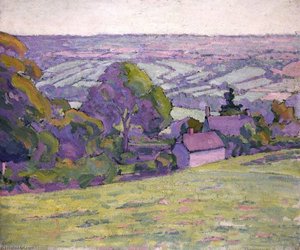
The painting The Green Coat by Robert Bevan is a fascinating piece of art that showcases the artist's unique style and technique. Created in 1916, this oil on canvas painting measures 56 x 46 cm and features a chair with a green coat draped over it, along with a bird perched on the back of the chair.

Artist Background

Robert Bevan was a British artist known for his contributions to the development of modern art in the UK. His work is characterized by its simplicity and elegance, often featuring everyday objects and scenes. Bevan's style is reminiscent of other notable artists, such as Kazimir Severinovich Malevich, who was a pioneer of the Cubism movement. You can find more information about Malevich's work on OriginalUniqueArt.com.

The Painting's Significance

The Green Coat is a significant piece in Bevan's oeuvre, as it showcases his ability to create complex and thought-provoking works using simple compositions. The painting features a range of bold colors and intricate details, making it a standout piece in any collection. You can find similar paintings by Bevan on OriginalUniqueArt.com, including his notable work Under the Hammer.
  • The painting is a great example of Bevan's use of color and composition to create a sense of depth and atmosphere.
  • The inclusion of the bird perched on the back of the chair adds a touch of whimsy and playfulness to the piece.
  • The Green Coat is a testament to Bevan's skill as an artist and his ability to create complex and thought-provoking works using simple compositions.
Handmade oil painting reproductions of The Green Coat are available on OriginalUniqueArt.com, allowing art lovers to own a piece of history. The Museum School of Oriental And African Studies in London, United Kingdom, is also home to a range of notable artworks, including pieces by Sir George Clausen. You can find more information about the museum and its collection on OriginalUniqueArt.com.
The Green Coat is a captivating painting that showcases Robert Bevan's unique style and technique. Its significance lies in its ability to create a sense of depth and atmosphere using simple compositions, making it a standout piece in any collection.

Pytania i odpowiedzi

Do jakiego nurtu i epoki zalicza się „The Green Coat” – Robert Polhill Bevan?

„The Green Coat” – Robert Polhill Bevan reprezentuje nurt Fauvism, powstały w epoce – Wiek XIX swojego twórcy.

Jakie inne pseudonimy lub nazwy stosuje Robert Polhill Bevan?

Robert Polhill Bevan jest znany/a również pod pseudonimami: Robert Bevan.

Gdzie mogę kupić cyfrową wersję dzieła „The Green Coat” – Robert Polhill Bevan?

„The Green Coat” jest dostępny jako wysokiej rozdzielczości cyfrowe zdjęcie do pobrania; można go nabyć bezpośrednio na stronie Cyfrowy obraz.

More about this painting

Podgląd w skali 1:1 Podgląd AR Przełącz na wydania drukowane Przejdź do wersji cyfrowej Wyślij jako kartkę
Szczegóły dzieła Przewodnik Dodaj do ulubionych Pobierz obraz Podobne obiekty RTG Pokaz slajdów Q&A Statystyki

In numbers

  • 1916the year it was painted
  • 29frames to choose from
  • standard sizes, in its own proportions
  • 5weeks to paint and deliver it
Robert Polhill Bevan

Robert Polhill Bevan

1865 - 1925, Wielka Brytania

Quick facts about Robert Polhill Bevan

  • Artistic Movement Or Style: Fauvism, Divisionism
  • Artists Who Influenced This Artist:
    • Paul Gauguin
    • Velázquez
    • Goya
    • Renoir
  • Date Of Birth: 1865
  • Date Of Death: 1925
  • Full Name: Robert Polhill Bevan
  • Nationality: British
  • Notable Artworks:
    • The Farmhouse
    • Ploughing on the Downs
    • Queen’s Grove
    • The Cab Horse
  • Place Of Birth: Hove, United Kingdom

Biografia artysty

Robert Polhill Bevan (1865–1925): British Painter & Camden Town Group Founder

Robert Polhill Bevan, born in Hove in 1865, occupies a pivotal yet often understated position within the narrative of early 20th-century British art. Emerging from a Quaker background steeped in banking connections – his parents were Richard Alexander Bevan and Laura Maria Polhill – he defied conventional expectations to become a daring innovator, a key figure in the transition from Impressionism towards more radical explorations of color and form. His journey was one of constant experimentation, absorbing influences from across Europe while forging a distinctly personal artistic vision that would profoundly impact the development of modern art in Britain. Bevan’s early education at Westminster School of Art under Fred Brown provided a solid foundation, but it was his subsequent studies at the Académie Julian in Paris that truly ignited his creative spark. There, he encountered a constellation of rising stars – Paul Sérusier, Pierre Bonnard, Édouard Vuillard, and Maurice Denis – artists who were challenging academic conventions and embracing new approaches to painting. These encounters proved formative, exposing Bevan to the principles of synthetism and laying the groundwork for his future explorations.

Early Influences & Artistic Formation

Bevan’s formative years instilled in him a deep appreciation for meticulous observation and disciplined technique—traits that would characterize his entire artistic career. The Westminster School of Art under Frederick Brown fostered these qualities, equipping him with foundational skills in draughtsmanship and composition. However, it was the Académie Julian in Paris that truly unlocked Bevan's potential, immersing him in the vibrant intellectual and artistic milieu of the Belle Époque. He benefited enormously from the tutelage of influential artists who championed a revolutionary vision of painting—a rejection of naturalistic representation in favor of expressive color and simplified forms. Artists like Paul Sérusier, Pierre Bonnard, Édouard Vuillard, and Maurice Denis actively questioned established aesthetic standards, advocating for a bold embrace of synthetism – a technique that prioritized symbolic content over accurate depiction. This exposure to avant-garde ideas profoundly shaped Bevan’s artistic sensibilities, propelling him toward experimentation with color and form that would distinguish him from many of his peers.

Brittany & The Fauvist Impulse

The allure of Brittany proved irresistible to Bevan, triggering two significant expeditions in 1890 and 1891. He found himself captivated by the landscape’s dramatic light and bold hues—a visual language powerfully articulated by artists like Gauguin who had pioneered a radically new approach to painting. The influence of Gauguin's expressive palette and simplified forms resonated deeply with Bevan, informing his early drawings and prints and establishing a cornerstone for his artistic development. Around 1904, Bevan embarked on a path of experimentation with pure color that anticipated the emergence of Fauvism on the continent—a movement characterized by unrestrained chromatic intensity and a deliberate disregard for traditional tonal values. His painting “Courtyard” stands as a remarkable testament to this proto-Fauvist impulse, demonstrating a willingness to abandon naturalistic representation in favor of emotive color harmonies – a boldness that cemented Bevan’s position at the forefront of British artistic innovation.

The Camden Town Group & Collaborative Vision

Bevan's artistic pursuits extended beyond individual experimentation; he actively sought connection with fellow artists who shared his conviction that art should engage with contemporary social realities. He joined forces with Charles Ginner, Spencer Gore and Joseph Crawhall to form the Camden Town Group—a collective dedicated to depicting urban life in Britain during the Edwardian era. This group’s members were united by a desire to challenge academic conventions and explore new artistic languages—particularly those inspired by Impressionism and Post-Impressionism. Bevan's participation in the Camden Town Group fostered a dynamic exchange of ideas, propelling him toward stylistic developments that reflected the broader cultural currents of his time. The Group’s focus on capturing the atmosphere of London’s industrial landscape—characterized by gritty textures and vibrant colors—represented a decisive break from traditional artistic traditions.

Legacy & Artistic Significance

Robert Polhill Bevan's contribution to British art history is undeniable. He remains a vital figure for understanding the complex evolution of British painting in the early twentieth century, embodying the spirit of innovation and experimentation that defined the era. His landscapes—particularly those depicting the Blackdown Hills and Luppitt—are celebrated for their expressive brushwork and masterful use of color—a legacy that continues to inspire artists today. Bevan’s paintings are housed in prestigious collections across Britain and internationally, ensuring that his artistic vision endures as a testament to his enduring influence on British art. His retrospective exhibition at Colnaghi’s in 1961 served as a crucial moment of recognition, solidifying his place among the foremost painters of his generation—a figure whose pioneering spirit continues to resonate with artists and scholars alike.

Najważniejsze informacje

  • Artist: Robert Polhill Bevan
  • Movement: British Modernism
  • Medium: Oil on canvas
  • Artistic style: Fauvism, simplicity, and elegance
  • Subject or theme: Still life with everyday objects
  • Dimensions: 56 x 46 cm