Minimalism · 1968
Untitled (Robert Morris, 1968)
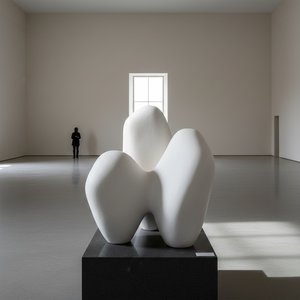
Robert Morris (1931–2018) stworzył Untitled. Dzieło pochodzi z 1968. Należy do nurtu Minimalism. Wykonano w technice Acrylic. Przechowywane jest w Tate Modern w Londyn, Wielka Brytania.
- 1968
- Acrylic
- Tate Modern, Londyn

 Podgląd w skali 1:1

 Ręcznie malowany obraz olejny
 Wyślij jako kartkę
 Udostępnij
 Przewodnik


 Pobierz obraz
 Podobne obiekty
 RTG
 Pokaz slajdów
 Pytania i odpowiedzi

 Statystyki
Untitled: najważniejsze informacje
- Tytuł
- Untitled
- Artysta
- Robert Morris (1931–2018)
- Miejsce urodzenia artysty
- Kansas City, United States
- Data powstania
- 1968
- Technika wykonania
- Acrylic
- Gdzie można je zobaczyć
- Tate Modern, Londyn, Wielka Brytania
- Ruch
- Minimalism
- Temat
- sculpture, minimalism, organic, form, space, suspension
Co przedstawia Untitled?
Robert Morris’s “Untitled”: A Meditation on Absence and Form
Robert Morris’s “Untitled,” created in 1968, stands as a cornerstone of Minimalism and a profound exploration into the very nature of perception within art. More than simply a sculpture, it's an invitation to contemplate the space between object and viewer, a deliberate rejection of representational imagery in favor of pure form and process. The piece, often realized in cast concrete or resin – though variations exist – presents a single, elongated form suspended from the ceiling, seemingly adrift within a stark white void. This simplicity is deceptive; it’s precisely this lack of overt narrative that generates such a powerful emotional response.
The sculpture's design deliberately avoids any immediately recognizable reference. It’s an organic curve, reminiscent perhaps of a fossilized stone or the attenuated form of a stretched root system – a subtle nod to the natural world without resorting to direct depiction. The surface is rarely smooth; instead, it bears the marks of its creation: subtle undulations, slight variations in tone, and even traces of the casting process itself. These imperfections aren’t flaws but integral elements of the work's philosophy, emphasizing the inherent materiality of the object and rejecting the illusionistic qualities of traditional sculpture. The deliberate roughness invites a tactile engagement, prompting us to consider the physicality of the piece and its relationship to our own bodies within the space.
The Philosophical Undercurrents of Minimalism
“Untitled” is deeply rooted in the burgeoning philosophical currents of the late 1960s. Minimalist artists like Morris were reacting against the perceived excesses of Abstract Expressionism, rejecting subjective emotion and personal expression in favor of a more objective approach to art-making. They sought to strip away all unnecessary elements – color, texture, narrative – leaving only the essential form and its relationship to space. Morris’s work directly engages with questions of perception: how do we see? How does our mind construct meaning from visual information? The sculpture's stark simplicity forces us to confront our own assumptions about art and representation.
Crucially, Morris wasn’t simply creating a visually pleasing object. He was interested in the *experience* of seeing – the way the form interacts with the surrounding space, the effect it has on the viewer’s perception of reality. The work's placement within a white room is deliberate; it isolates the sculpture and forces us to focus entirely on its shape and presence. This creates a sense of quiet contemplation, inviting viewers to slow down and engage with the artwork in a more mindful way.
Materiality and Process: A Key to Understanding
The choice of materials – typically cast concrete or resin – is significant. These durable, industrial substances lend an air of solidity and permanence to the sculpture, yet their inherent imperfections subtly undermine this sense of stability. The casting process itself becomes part of the artwork’s narrative; the marks left by the mold are not concealed but deliberately revealed, emphasizing the labor involved in its creation. This transparency – a key characteristic of Minimalism – invites us to consider the artist's hand and the physical processes that shaped the final form.
Morris often experimented with different casting techniques, manipulating the pour to create variations in texture and surface quality. These subtle differences contribute to the sculpture’s overall sense of ambiguity and complexity. The work is not about achieving a perfect, idealized form; it's about exploring the possibilities inherent within the materials and processes themselves.
Symbolism and Emotional Resonance
While “Untitled” resists easy interpretation, it evokes a powerful sense of stillness and contemplation. The elongated form suggests a reaching gesture – perhaps towards an unknown horizon or a deeper understanding – while its suspended position conveys a feeling of vulnerability and precariousness. The work’s simplicity can be surprisingly unsettling, prompting us to confront our own anxieties about the world and our place within it.
Ultimately, “Untitled” is not a statement but an experience. It's a reminder that art doesn't always need to tell a story; sometimes, its power lies in its ability to simply *be* – a quiet meditation on form, space, and the mysteries of perception. It remains a profoundly influential work, continuing to challenge our assumptions about what constitutes art and how we engage with it.
W którym muzeum znajduje się Untitled?
Tate Modern
Londyn, Wielka Brytania
Historia i korzenie Tate Modern Obecność Tate Modern w Londynie, w Wielkiej Brytanii, jest głęboko zakorzeniona w przemysłowej historii panoramy Southwark. Miejsce to zajmowała pierwotnie elektrownia Bankside – monumentalna konstrukcja, która funkcjonowała przez trzy dekady, zanim ostatecznie wyłączono ją z eksploatacji. Przemiany gospodarcze, a w szczególności gwałtowne wzrosty cen ropy naftowej, doprowadziły do zamknięcia elektrowni 31 października 1981 roku.


Untitled w wysokiej rozdzielczości

Chronione prawem autorskim: obraz przedstawiono wyłącznie w celach informacyjnych.
Więcej rozmiarów, kadrowania i cytowań →Robert Morris, Untitled (1968), Tate Modern.
Pytania o Untitled
W jaki sposób styl dzieła "Untitled" odnosi się do epoki jego twórcy?
"Untitled" należy do nurtu Minimalism, a jego twórca tworzył w epoce Modern.
Z jakiego kraju pochodzi dzieło Minimalism pt. "Untitled"?
Dzieło z nurtu Minimalism, zatytułowane "Untitled", zostało stworzone przez artystę urodzonego w United States.
Z czego wynika obecny status praw autorskich dzieła "Untitled"?
Status praw autorskich do dzieła „Untitled” – nadal objęte ochroną prawa autorskiego – wynika z faktu, że artysta zmarł w 2018.
Jakie emocje budzi "Untitled"?
Emocjonalny ton przypisany do „Untitled” – Robert Morris to Reflective. Oddaje on emocje, jakie wyraża to dzieło.
Jaka paleta i dominujący kolor definiują "Untitled"?
„Untitled” – Robert Morris wykorzystuje paletę w odcieniach Neutrals, w której dominuje kolor Celadon (#b3b5a7).
Czy mogę zobaczyć „Untitled” – Robert Morris w różnym oświetleniu?
"Untitled" można badać warstwa po warstwie na stronie Analiza rentgenowska, która oferuje interaktywny podgląd inspirowany stołem świetlnym konserwatora, prezentujący jedenaście optycznych odczytów obrazu.
Do czego zaleca się wykorzystanie wydruku "Untitled"?
Sugerowanym zastosowaniem dla „Untitled” – Robert Morris jest Reflective, choć może on służyć również do innych celów.
Jakie miejsce w dorobku twórczym Robert Morris zajmuje dzieło "Untitled"?
W dorobku Robert Morris, "Untitled" wpisuje się w styl Minimalism, nawiązując do tematów takich jak minimalist abstraction, process-oriented, conceptual space, perceptual inquiry, deconstructed form, reduced elements, systematic approach, formal exploration.
Czy mogę zobaczyć „Untitled” – Robert Morris na własnej ścianie przed zakupem?
„Untitled” posiada podgląd w rozszerzonej rzeczywistości: strona Podgląd w AR pozwala zobaczyć dzieło w Twojej własnej przestrzeni na kompatybilnym urządzeniu.
O artyście: Robert Morris

1931–2018, United States
Robert Morris
The Architect of Perception: The Life and Legacy of Robert Morris In the vast, often turbulent landscape of twentieth-century American art, few figures cast as long or as intellectually profound a shadow as Robert Morris. Born in 1931 in Kansas City, Missouri, Morris did not merely participate in the movements of his time; he provided the theoretical and physical scaffolding upon which much of contemporary art was built. His journey began with a rigorous multidisciplinary foundation, blending the precision of engineering with the expressive potential of fine art. This unique duality—the ability to dissect a form through a technical lens while simultaneously questioning its philosophical essence—became the hallmark of his career.
Inne prace Robert Morris
 Document
 Bull Wall
Eseje o Untitled
 Trzy płótna, trzy emocje: Rola wyboru w kształtowaniu odbioru dzieła sztukiOdkryj fascynujący świat sztuki! Poznaj neuroestetyczne podstawy odbioru dzieł, wpływ kontekstu i techniki malarskiej na emocje. Analiza ob…
 Subtelności Formy: Ewolucja Minimalizmu i Jego Trwały Wpływ na Sztukę WspółczesnąOdkryj fascynujący świat minimalizmu w sztuce! Poznaj historię, kluczowych artystów i inspiracje dla eleganckich wnętrz. Ekskluzywne reprod…
 The Subtlety of Form: Exploring Emotional Resonance in Minimalist ArtExplore the emotional depth of minimalist art with OriginalUniqueArt. Discover key artists like Agnes Martin & Donald Judd, investment pote…