Menu
Text size

() ·

A painting made for you, by hand

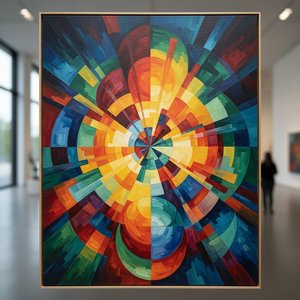
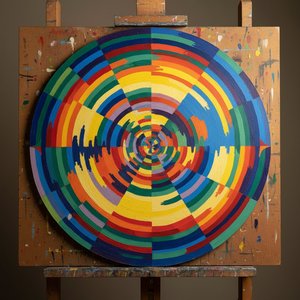
Simultaneous Contrasts Sun and Moon

Ręcznie malowana reprodukcja olejowa

Ręcznie malowany obraz olejny na płótnie, wykonany na zamówienie przez naszych artystów w wybranym przez Ciebie wymiarze i oprawie. ( Przełącz na wydania drukowane Przejdź do wersji cyfrowej)

Opis obiektu

Robert Delaunay's *Simultaneous Contrasts: Sun and Moon* (1913) embodies Orphism's revolutionary approach to color and form, influenced by Michel Eugène Chevreul's law of simultaneous contrast. This circular painting utilizes bold hues—blues, oranges, yellows—to represent the sun and moon, symbolizing unity amidst chaos. Inspired by August Macke’s *Three girls in yellow straw hats I*, Delaunay’s w

Biografia artysty

Poznaj Robert Delaunayego (1885-1941), pioniera Orfizmu i Kubizmu! Eksploruj jego żywe, abstrakcyjne obrazy – od Wieży Eiffla po "Kontrasty równoczesne" oraz jego trwały wpływ na sztukę nowoczesną.

from ·

Chapter 1

How large should it be?

Slide to change the size; the picture on the left shows the frame at its real width. The proportions of the original are kept.

Standardowy format
personalizowane
CM
INCH

Wybierz spośród naszych standardowych rozmiarów, które zachowują oryginalne proporcje dzieła sztuki.

szerokość
wysokość

Wpisz wymaganą szerokość i wysokość, aby obraz pasował do Twojej ramy lub ściany. Ponieważ jest to dzieło malowane ręcznie, w przypadku rozmiaru o innych proporcjach artysta może domalować nieco więcej wokół obrazu lub przyciąć jego fragmenty — wybór należy do Ciebie. Przed rozpoczęciem pracy prześlemy Ci cyfrową wizualizację do zatwierdzenia. Obraz widoczny na tej stronie nie przedstawia rzeczywistego efektu — jedynie wizualizacja oddaje realny rezultat.

Chapter 2

How should it arrive?

Choose the edges of the stretched canvas

Choose your frame

Corner sample of the WhiteWrap canvas edge finish, stretched on lite drewno bars
White zł1
Corner sample of the BlurSideWrap canvas edge finish, stretched on lite drewno bars
Blurside zł1
Corner sample of the ExtendedWrap canvas edge finish, stretched on lite drewno bars
Extended zł1
Corner sample of the P118B picture frame: polistyren formowany, 5 cm wide and 3 cm thick
P118B zł10
Corner sample of the P118H picture frame: polistyren formowany, 5 cm wide and 3 cm thick
P118H zł10
Corner sample of the P118W picture frame: polistyren formowany, 5 cm wide and 3 cm thick
P118W zł10
Corner sample of the P438Z picture frame: polistyren formowany, 5.5 cm wide and 3.5 cm thick
P438Z zł10
Corner sample of the P508JH picture frame: polistyren formowany, 7 cm wide and 3.5 cm thick
P508JH zł12
Corner sample of the P508YH picture frame: polistyren formowany, 7 cm wide and 3.5 cm thick
P508YH zł12
Corner sample of the P805H picture frame: polistyren formowany, 5 cm wide and 3.5 cm thick
P805H zł10
Corner sample of the P805Z picture frame: polistyren formowany, 5 cm wide and 3.5 cm thick
P805Z zł10
Corner sample of the P919BZ picture frame: polistyren formowany, 7 cm wide and 3.5 cm thick
P919BZ zł10
Corner sample of the P919G picture frame: polistyren formowany, 7 cm wide and 3.5 cm thick
P919G zł10
Corner sample of the P919XJ picture frame: polistyren formowany, 7 cm wide and 3.5 cm thick
P919XJ zł10
Corner sample of the P959ZH picture frame: polistyren formowany, 5 cm wide and 3 cm thick
P959ZH zł10
Corner sample of the P968JZ picture frame: polistyren formowany, 6 cm wide and 4 cm thick
P968JZ zł12
Corner sample of the W106C picture frame: lite drewno, 5 cm wide and 3 cm thick
W106C zł8
Corner sample of the W218G picture frame: lite drewno, 5 cm wide and 3 cm thick
W218G zł10
Corner sample of the W218JH picture frame: lite drewno, 5 cm wide and 3 cm thick
W218JH zł8
Corner sample of the W218Y picture frame: lite drewno, 5 cm wide and 3 cm thick
W218Y zł10
Corner sample of the W307PJ picture frame: lite drewno, 6 cm wide and 3 cm thick
W307PJ zł10
Corner sample of the W316G picture frame: lite drewno, 6 cm wide and 3 cm thick
W316G zł10
Corner sample of the W316PJ picture frame: lite drewno, 6 cm wide and 3 cm thick
W316PJ zł8
Corner sample of the W316Y picture frame: lite drewno, 6 cm wide and 3 cm thick
W316Y zł10
Corner sample of the W398PJ picture frame: lite drewno, 5 cm wide and 3 cm thick
W398PJ zł8
Corner sample of the W4111J picture frame: lite drewno, 6.5 cm wide and 3.5 cm thick
W4111J zł10
Corner sample of the W500HY picture frame: lite drewno, 7 cm wide and 5 cm thick
W500HY zł15
Corner sample of the W500JH picture frame: lite drewno, 7 cm wide and 5 cm thick
W500JH zł15
Corner sample of the W692G picture frame: lite drewno, 8 cm wide and 4 cm thick
W692G zł12
Corner sample of the W849H picture frame: lite drewno, 5 cm wide and 3 cm thick
W849H zł8
Corner sample of the W940BG picture frame: lite drewno, 7.5 cm wide and 4.5 cm thick
W940BG zł15
Corner sample of the W953PJ picture frame: lite drewno, 6 cm wide and 3.5 cm thick
W953PJ zł8
Corner sample of the H24-GOLD picture frame: rzeźbione drewno pokryte gipsem, 10 cm wide and 6 cm thick
H24-GOLD zł30
Corner sample of the H24-SILVER picture frame: rzeźbione drewno pokryte gipsem, 10 cm wide and 6 cm thick
H24-SILVER zł30
Corner sample of the H36-GOLD picture frame: rzeźbione drewno pokryte gipsem, 15 cm wide and 6.5 cm thick
H36-GOLD zł45
Corner sample of the H36-SILVER picture frame: rzeźbione drewno pokryte gipsem, 15 cm wide and 6.5 cm thick
H36-SILVER zł45

Moulding: . Overall size with the frame: .

Chapter 3

Who paints it, and should anything change?

Examples of what can be changed: Replace face with customer photo; Add pet (e.g., replace cat with dog); Include hidden message in background; Change background landscape or elements.
After order, OriginalUniqueArt.com team will email client for instructions and provide a mockup preview

Dostawa na całym świecie () w ciągu 3–4 tygodni zamiast standardowych 5 tygodni. (30 Październik). Bez kompromisów w kwestii jakości.

Chapter 4

The finishing touches

A nameplate, as in a museum?

Szczegóły grawerowanej brązowej tabliczki

This elegant plaque features the artist's name and the title of the artwork, finely engraved for a timeless presentation.

It is made from bronze with a refined, elegant finish. The text is precisely laser-engraved for a sharp and permanent result. Measuring 9x2 cm, the plaque is compact yet easy to read. It's built to be durable and scratch-resistant, offering a professional, museum-quality look. Mounting is simple thanks to the included adhesive backing.

Szczegóły przezroczystej tabliczki akrylowej

The plaque includes essential engraved details such as the artist's name, the title of the artwork, the date it was created, the type of media used-like oil on canvas or watercolor-a brief description of the piece, and a QR code that links to the complete artwork information.

It is crafted from clear acrylic, offering a sleek, modern appearance. The text is UV-engraved in black to ensure strong visual contrast. With a size of 10x15 cm, it ensures optimal readability. It comes equipped with two metal hooks for secure wall mounting. The plaque is designed to be weather-resistant, making it suitable for various environments, and it includes interactive features that work seamlessly with smartphone scanning.

Szczegóły czarnej tabliczki akrylowej

This elegant plaque includes engraved information such as the artist's name, the title of the artwork, the date it was created, the type of media used (like oil on canvas or watercolor), a short description of the artwork, and a QR code for quick access to more information.

The plaque itself is made from refined black acrylic with a premium finish. The text is laser-engraved in white for high contrast and readability. Its size is 10x15 cm, designed to be easy to read. It comes with two metal hooks for professional mounting. The design is sleek and fits any interior style. It is also weather-resistant and durable, with built-in digital integration for mobile compatibility.

A protective varnish?

When do you need it?

Chapter 5

Your painting, as you ordered it

Simultaneous Contrasts Sun and Moon

Technika reprodukcji

Wymiary reprodukcji

-

Wybitny mistrz artystyczny

Większa szczegółowość, finezja i dodatkowy czas na realizację

-

Opcje oprawy reprodukcji

-

-

W przypadku dzieł sztuki lub reprodukcji, których którykolwiek z boków przekracza 105 cm (około 41 cali), rama zostanie wysłana w formie zestawu do samodzielnego montażu. Metoda ta zapewnia bezpieczną dostawę i zapobiega uszkodzeniom podczas transportu.

Wymagany profesjonalny montaż – nie jest to produkt typu DIY.
Zestaw musi zostać złożony, a płótno naciągnięte przez doświadczonego profesjonalnego ramiarza, przy użyciu kleju do drewna (brak w zestawie), kleszczy do naciągania płótna oraz ścisków, które utrzymają krosna w równej pozycji podczas schnięcia kleju. Nieprawidłowy montaż lub nierównomierne napięcie płótna może trwale uszkodzić dzieło sztuki i nie podlega naszej gwarancji.

  • W zestawie znajdują się wszystkie listwy z litego drewna, precyzyjnie docięte do wymiarów.

  • Montaż odbywa się przy użyciu dołączonych wkrętów oraz kleju do drewna do łączenia narożników, którego zestaw nie zawiera i który musi zostać dostarczony przez ramiarza.

  • Wymagane są profesjonalne narzędzia, których nie ma w zestawie: kleszcze do naciągania płótna (napinacz) oraz zaciski, które pozwolą utrzymać listwy w równej pozycji podczas schnięcia kleju.

Ważne:
Do połączenia narożników niezbędny jest klej do drewna, listwy należy unieruchomić za pomocą ścisków do momentu całkowitego wyschnięcia kleju, a naciągnięcie płótna na złożoną ramę wymaga użycia kleszczy do naciągania płótna. Żaden z tych elementów nie jest dołączony do zestawu. Przed zamówieniem tego rozmiaru zalecamy konsultację z doświadczonym ramiarzem.

Etykieta obiektu

-

-

Lakier ochronny

Lakier z połyskiem (pogłębia kolory, chroni przed światłem i wilgocią)

-

Personalizacja dzieła

Przykłady możliwości personalizacji: zastąp twarz zdjęciem klienta; dodaj zwierzę domowe (np. zamień kota na psa); umieść ukrytą wiadomość w tle; zmień krajobraz lub elementy tła.

-

Ekspresowa

Dostawa na cały świat () w ciągu 3–4 tygodni zamiast standardowych 5 tygodni. (30 Październik). Bez kompromisów w kwestii jakości.

-

Przesyłka ekspresowa

Dostawa na cały świat () w ciągu 5 tygodni. (6 Listopad).

W cenie

Cena całkowita

zł 1165

Suma całkowita zł 1165

Opcja ze szkłem jest dostępna wyłącznie w rozmiarach poniżej 110 cm

Included with every order

  • Bezpłatna ekspresowa wysyłka na cały świat
  • Wysokiej jakości płótno lniane
  • Pełne ubezpieczenie przesyłki
  • Gwarancja zwrotu należności celnych i podatków importowych
  • Gwarancja wiernego odwzorowania kolorów
  • 100-dniowa polityka zwrotów (tylko w przypadku wad)
  • Gwarancja 100% zwrotu pieniędzy
  • Zniżka przy zakupie wielu sztuk

Simultaneous Contrasts: Sun and Moon – A Symphony of Color and Light

Robert Delaunay’s “Simultaneous Contrasts,” created in 1913, stands as an emblem of Orphism—a movement that irrevocably altered the trajectory of modern art. More than just a visual spectacle, it embodies a profound philosophical inquiry into perception itself, driven by groundbreaking scientific discoveries and fueled by the burgeoning spirit of artistic experimentation. This circular canvas pulsates with vibrant hues – fiery oranges juxtaposed against cool blues – reflecting Delaunay’s fascination with the interplay between color and light as articulated by Michel Eugène Chevreul's seminal treatise on the Law of Simultaneous Contrast.
  • Artist: Robert Delaunay (1885-1941)
  • Movement: Orphism
  • Year Created: 1913
  • Location: Museo Thyssen-Bornemisza, Madrid

The Theoretical Foundation – Chevreul’s Law and the Pursuit of Harmony

Delaunay wasn't merely captivated by aesthetics; he was fundamentally shaped by scientific rigor. Inspired by Chevreul’s meticulous observations regarding color perception—that the eye perceives a hue differently depending on its surroundings—he sought to translate these principles into artistic form. As Delaunay eloquently explained, “These colored planes are the structure of the picture, and nature is no longer a subject for description but a pretext”; abandoning traditional representational conventions in favor of an approach that prioritized pure color and its dynamic relationships. This intellectual underpinning underscores Orphism’s ambition to transcend mere imitation and delve into the very essence of visual experience.

Composition and Technique – Geometric Precision Meets Radiant Color

The painting's circular frame serves as a deliberate symbolic gesture—representing the cosmos and mirroring the cyclical rhythms of day and night. Delaunay employed a technique characterized by bold geometric shapes—primarily circles and squares—arranged in a manner that maximizes color saturation and visual impact. The artist meticulously blended pigments to achieve luminous tonal variations, capturing the ethereal quality of light filtering through the celestial sphere. This masterful execution exemplifies Orphism’s commitment to distilling artistic expression into its purest form, prioritizing color harmony over detailed depiction.

Symbolic Resonance – Representing Unity and Transformation

“Simultaneous Contrasts” transcends superficial beauty; it speaks to deeper themes of unity and transformation—concepts central to Delaunay's spiritual worldview. The juxtaposition of warm orange hues representing the sun and cool blue tones embodying moonlight symbolizes the harmonious coexistence of opposing forces, mirroring the dynamic processes inherent in natural phenomena. Furthermore, the circular composition reinforces this notion of cyclical renewal, suggesting that beauty emerges from embracing change and accepting the interconnectedness of all things—a sentiment powerfully conveyed through Delaunay’s masterful manipulation of color and form.

Emotional Impact – An Invitation to Contemplate Beauty and Perception

Ultimately, “Simultaneous Contrasts” invites viewers into a contemplative dialogue about beauty and perception. Its radiant colors evoke feelings of wonder and exhilaration—capturing the sublime grandeur of the universe while simultaneously stimulating intellectual curiosity. Delaunay’s pioneering approach to color—informed by scientific inquiry and driven by artistic intuition—continues to inspire artists and designers today, cementing “Simultaneous Contrasts”' place as a cornerstone of modern art history.

Pytania i odpowiedzi

Jaki układ ma „Simultaneous Contrasts Sun and Moon” – Robert Delaunay?

Dzieło „Simultaneous Contrasts Sun and Moon” – Robert Delaunay ma format Square. Format ten określa proporcje kompozycji.

Czy istnieje karta informacyjna o „Simultaneous Contrasts Sun and Moon” – Robert Delaunay przeznaczona dla studentów?

Strona Karta informacyjna dla uczniów dzieła „Simultaneous Contrasts Sun and Moon” – Robert Delaunay oferuje dwustronicową kartę informacyjną w formacie do druku: samo dzieło wraz z tabelą identyfikacyjną, oś czasu umieszczającą je w latach życia artysty, inne prace tego twórcy, zmierzoną paletę kolorystyczną oraz gotowe do skopiowania cytaty w czterech stylach.

W jaki sposób Orphism dzieła „Simultaneous Contrasts Sun and Moon” nawiązuje do kraju pochodzenia artysty?

"Simultaneous Contrasts Sun and Moon" powstało dzięki Robert Delaunay, urodzonemu w Francja, w ramach nurtu Orphism. Pochodzenie artysty wiąże to dzieło z Orphism w wydaniu twórców z Francja.

More about this painting

Podgląd w skali 1:1 Podgląd AR Przełącz na wydania drukowane Przejdź do wersji cyfrowej Wyślij jako kartkę
Szczegóły dzieła Przewodnik Dodaj do ulubionych Pobierz obraz Podobne obiekty RTG Pokaz slajdów Q&A Statystyki

In numbers

  • 29frames to choose from
  • standard sizes, in its own proportions
  • 5weeks to paint and deliver it
Robert Delaunay

Robert Delaunay

1885 - 1941, Francja

Quick facts about Robert Delaunay

  • Artistic Movement Or Style: Kubizm Orficzny
  • Artists Or Movements Influenced By This Artist: ['Der Blaue Reiter']
  • Artists Who Influenced This Artist:
    • Jean Metzinger
    • Paul Klee
  • Date Of Birth: 12 kwietnia 1885
  • Date Of Death: 25 października 1941
  • Full Name: Robert Delaunay
  • Nationality: Francuski
  • Notable Artworks:
    • Wieża Eiffla
    • Kontrasty Symultaniczne
    • Okna Otwierają Się Jednocześnie
  • Place Of Birth: Paryż, Francja

Biografia artysty

Robert Delaunay (1885–1941): A Pioneer of Abstract Color

Robert Delaunay, born in Paris on April 12, 1885, emerged as a pivotal figure in the radical artistic shifts of the early twentieth century. Though initially drawn to more traditional forms of painting—particularly decorative arts—his journey swiftly propelled him toward an exploration of color and light that would ultimately define his legacy and contribute significantly to the birth of abstract art. Delaunay wasn’t merely interested in *representing* the world; he sought to capture its very essence through a vibrant language of geometric shapes and luminous hues, co-founding the Orphism movement with his wife, Sonia Delaunay, and others who shared their vision. His formative years were marked by familial instability—his parents divorced when he was young—yet this perhaps fostered an independent spirit that would serve him well in challenging artistic conventions. He began his artistic education at the École Supérieure des Beaux-Arts in Paris, honing his skills in drawing and painting before venturing into theatrical design.

Early Influences and Divisionism

Delaunay’s initial artistic inclinations leaned toward Neo-Impressionism, or Divisionism, absorbing its principles of applying small, distinct dots of color to create a shimmering effect—a technique championed by Georges Seurat and Paul Signac. This fascination with optical phenomena profoundly impacted his early works, particularly landscapes bathed in diffused sunlight. However, Delaunay quickly moved beyond simply replicating visual sensations; he began to investigate the expressive potential of color itself, recognizing its capacity to convey emotion and rhythm. Crucially, his friendship with Jean Metzinger proved formative during this period, fostering collaborative explorations into fragmented forms and mosaic-like compositions—a precursor to Cubism’s analytical approach. These early collaborations established a bedrock for their later involvement in Cubism, though Delaunay would ultimately diverge from its more rigid dissection of objects into geometric components. He prioritized synthesizing disparate elements into dynamic arrangements of color and light, reflecting his belief that art could transcend mere visual imitation.

Cubism and the Birth of Orphism

Delaunay’s engagement with Cubism alongside Pablo Picasso and Georges Braque was marked by a distinctive perspective—he rejected the analytical fragmentation favored by his peers, opting instead for a more synthetic approach that aimed to unify disparate viewpoints into a single image. This stylistic choice distinguished him from many other artists of the time and solidified his commitment to experimentation. Yet, Delaunay’s artistic ambition extended beyond Cubism's confines; he sought to push boundaries even further, initiating Orphism—a term coined by poet Guillaume Apollinaire—which represented a radical departure from established conventions. Orphism prioritized pure abstraction, utilizing vibrant color palettes and geometric shapes to evoke musical harmony through visual art. The movement’s manifesto declared that “the painter must abandon the illusion of reality” in favor of “the expression of emotion.” Delaunay's exploration of simultaneity—the simultaneous perception of multiple colors and forms—became a cornerstone of Orphism’s theoretical framework, mirroring his conviction that color wasn’t merely descriptive but actively transformative.

Iconic Works and Lasting Legacy

Delaunay’s artistic output encompassed a diverse range of subjects, from monumental murals celebrating the 1937 Paris Exposition to intimate portraits capturing human emotion. However, he is undeniably remembered for his groundbreaking series depicting the Eiffel Tower—a masterful demonstration of how color could convey dynamism and movement while simultaneously dismantling the iconic structure into intersecting planes. His paintings exemplify Orphism’s core tenets: bold chromatic contrasts, geometric simplification, and a lyrical quality that transcends representational constraints. Furthermore, Delaunay's influence extended beyond his immediate contemporaries; he inspired artists like Paul Klee, Franz Marc, August Macke, and even Russian avant-garde movements—artists who embraced abstraction as a means of expressing profound emotional truths. Robert Delaunay’s untimely death in 1941 tragically curtailed his artistic career, but his pioneering work continues to resonate today, establishing him as one of the most important figures in the history of modern art. His legacy resides not merely in aesthetic innovation—but also in intellectual inquiry—a testament to the transformative power of art to reshape our understanding of existence itself.

Najważniejsze informacje

  • Medium: Oil on canvas
  • Dimensions: 53" (134.5 cm) diameter
  • Notable elements or techniques: Geometric shapes; Color fields; Simultaneous contrast
  • Title: Simultaneous Contrasts
  • Artistic style: Abstract Expressionism
  • Year: 1913

Quiz o sztuce

Do każdego pytania dotyczy tylko jedna poprawna odpowiedź.

Pytanie 1:
What art movement is Robert Delaunay primarily associated with?
Pytanie 2:
The painting 'Simultaneous Contrasts: Sun and Moon' exemplifies the concept of:
Pytanie 3:
Which scientist influenced Delaunay’s understanding of color theory?
Pytanie 4:
What is the dominant visual element in 'Simultaneous Contrasts'?
Pytanie 5:
How does Delaunay describe the role of color in his artwork?
Odkryj dzieła sztuki uporządkowane według tematów, stylów i cech charakterystycznych.