Orphism · 1939
Rythm (Robert Delaunay, 1939)
Robert Delaunay (1885–1941) stworzył Rythm. Dzieło pochodzi z 1939. Należy do nurtu Orphism. Wykonano w technice Oil On Canvas. Przechowywane jest w Musée d'Art Moderne de la Ville de Paris w Paryż, Francja.
- 1939
- Oil On Canvas
- Musée d'Art Moderne de la Ville de Paris, Paryż

 Podgląd w skali 1:1

 Ręcznie malowany obraz olejny
 Wyślij jako kartkę
 Udostępnij
 Karta informacyjna


 Pobierz obraz
 Podobne obiekty
 RTG
 Pokaz slajdów
 Pytania i odpowiedzi

 Statystyki
Rythm w skrócie
- Tytuł
- Rythm
- Artysta
- Robert Delaunay (1885–1941)
- Miejsce urodzenia artysty
- Paryż, Francja
- Data powstania
- 1939
- Technika wykonania
- Oil On Canvas
- Gdzie można je zobaczyć
- Musée d'Art Moderne de la Ville de Paris, Paryż, Francja
- Ruch
- Orphism
- Epoka
- Modern
- Temat
- circle, pattern, shapes, spiral, swirl, colors
Co przedstawia Rythm?
The Composition of Form and Color
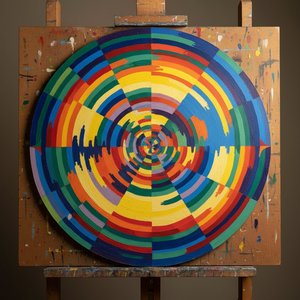
The painting Rythm, dated 1939, presents a central circular structure composed of intersecting geometric shapes and varied color segments. This primary circle is divided into multiple sections, each containing distinct patterns and internal designs. Smaller circles are nested within the larger circular framework, creating a layered effect of concentricity. Two additional circles appear in the periphery: one in the upper right corner and another in the lower left corner. The arrangement of these shapes suggests a spiral or a swirling motion. The surface is characterized by a variety of hues that interact through their proximity, creating a sense of movement across the canvas.
The technique relies on the application of color to define form rather than using line to outline recognizable objects. The artist utilizes the principles of Orphism, focusing on the interaction of light and chromatic intensity. The shapes are not static; they are organized to create a visual rhythm through the interplay of curves and counter-curves. This method uses the physical action of looking to activate the vision, as the eye moves between the contrasting colors and the varying thicknesses of the circular discs.
Historical Context and Artistic Intent
Created in 1939, this work belongs to a period when the artist had moved toward a more radical, non-objective form of abstraction. This phase of production followed a return to the circular forms that characterized earlier explorations of harmony. The composition reflects a departure from figurative subjects, focusing instead on the expressive potential of color alone. The organization of these shapes and their spatial relationships determine the visual tempo of the piece.
The work is situated within the School of Paris movement. It reflects a theoretical interest in how color functions as an active force capable of shaping perception. By utilizing contrasting complementary colors, such as red and green or blue and orange, the painting creates a synchromic effect. This approach seeks to move beyond the representation of the physical world, aiming instead to establish a direct connection between the viewer's eye and the agitation of light and color.
W którym muzeum znajduje się Rythm?
Musée d'Art Moderne de la Ville de Paris
Paryż, Francja
Wielkie Muzeum Miejskie w Paryżu Musée d'Art Moderne de la Ville de Paris to znaczące muzeum miejskie, położone przy 11 Avenue du Président Wilson w 16. dzielnicy Paryża. Instytucja ta jest w całości poświęcona badaniu i zachowaniu sztuki nowoczesnej oraz sztuki współczesnej pochodzącej z XX i XXI wieku.


Zdjęcia w wysokiej rozdzielczości dzieła Rythm

Domena publiczna: artysta zmarł w 1941.
Inne rozmiary, kadrowanie i cytowanie →Robert Delaunay, Rythm (1939), Musée d'Art Moderne de la Ville de Paris. Domena publiczna
Odpowiedzi na pytania dotyczące Rythm
Gdzie można zobaczyć oryginał „Rythm” – Robert Delaunay?
Oryginał dzieła „Rythm” można zobaczyć w Musée d'Art Moderne de la Ville de Paris, Paryż, Francja.
W którym roku powstało dzieło „Rythm” – Robert Delaunay?
„Rythm” – Robert Delaunay powstało w 1939.
W jakiej technice wykonano „Rythm” – Robert Delaunay?
Robert Delaunay wykorzystał/a technikę Oil On Canvas w pracy „Rythm”. Technika ta definiuje materię oryginalnego dzieła.
Co przedstawia „Rythm” – Robert Delaunay?
„Rythm” – Robert Delaunay przedstawia: circle, pattern, shapes, spiral, swirl, colors.
Czy „Rythm” – Robert Delaunay znajduje się w domenie publicznej?
„Rythm” – Robert Delaunay znajduje się w domenie publicznej (należy do domeny publicznej – autorskie prawa majątkowe wygasły). Status ten określa zasady reprodukcji obrazu tego dzieła.
Kto jest autorem dzieła "Rythm"?
Autorem dzieła „Rythm” jest Robert Delaunay. Praca ta figuruje w katalogu pod nazwiskiem Robert Delaunay.
Do jakiego nurtu należy "Rythm"?
„Rythm” – Robert Delaunay należy do nurtu Orphism. Nurt ten stanowi stylistyczny kontekst dzieła.
Do którego okresu twórczości Robert Delaunay należy dzieło "Rythm"?
"Rythm" reprezentuje Late Period twórczości Robert Delaunay.
Ile lat miał Robert Delaunay, gdy powstało dzieło „Rythm”?
Robert Delaunay stworzył/a "Rythm" w wieku 54 lat. Artysta urodził/a się w 1885, a datowanie dzieła to 1939.
O artyście: Robert Delaunay

1885–1941, Francja
Robert Delaunay
Robert Delaunay (1885–1941): A Pioneer of Abstract Color Robert Delaunay, born in Paris on April 12, 1885, emerged as a pivotal figure in the radical artistic shifts of the early twentieth century. Though initially drawn to more traditional forms of painting—particularly decorative arts—his journey swiftly propelled him toward an exploration of color and light that would ultimately define his legacy and contribute significantly to the birth of abstract art. Delaunay wasn’t merely interested in *representing* the world; he sought to capture its very essence through a vibrant language of geometric shapes and luminous hues, co-founding the Orphism movement with his wife, Sonia Delaunay, and others who shared their vision. His formative years were marked by familial instability—his parents divorced when he was young—yet this perhaps fostered an independent spirit that would serve him well in challenging artistic conventions.
Inne prace Robert Delaunay
 Miasto Paryż1912
 Wieża Eiffla1914
 The Eiffel Tower1910
 Window1912

Eseje o Rythm
 Orfizm: Symfonia Koloru i Formy – Geneza Abstrakcyjnych Korzeni Sztuki NowoczesnejOdkryj fascynujący świat orfizmu! Poznaj historię Roberta i Sonii Delaunay, teoretyczne podstawy tego ruchu oraz jego wpływ na sztukę XX wi…
 Mastering Abstraction: The Top 25 Essential Works by Wassily KandinskyExplore 25 iconic Kandinsky masterpieces and the birth of abstraction. Discover the full collection online at OriginalUniqueArt.com.
 Sonia Delaunay: A Life in Color – Exploring the Rhythms of Abstraction and SynesthesiaExplore the vibrant world of Sonia Delaunay, a pioneer of abstract art and co-founder of Orphism. Discover her revolutionary use of color, …