

 Zobacz w skali 1:1
 Wyślij
 Udostępnij
 Szczegóły
 Przewodnik

 Pobierz plik obrazu
 Podobne obiekty
 RTG
RTG Pokaz slajdów
 Statystyki
Poring


 Czytaj więcej
Giclée / Wydruk artystyczny
Wydruki giclée lub płótna o jakości muzealnej, szybka realizacja i szeroki wybór opcji wykończenia. ( Kup ręcznie malowany obraz Przełącz na wersję cyfrową)




P118B zł10

P118H zł10

P118W zł10

P438Z zł10

P508JH zł12

P508YH zł12

P805H zł10

P805Z zł10

P919BZ zł10

P919G zł10

P919XJ zł10

P959ZH zł10

P968JZ zł12

W106C zł8

W218G zł10

W218JH zł8

W218Y zł10

W307PJ zł10

W316G zł10

W316PJ zł8

W316Y zł10

W398PJ zł8

W4111J zł10

W500HY zł15

W500JH zł15

W692G zł12

W849H zł8

W940BG zł15

W953PJ zł8




Wybierz spośród naszych standardowych rozmiarów, które zachowują oryginalne proporcje dzieła sztuki.

Wpisz wymaganą szerokość i wysokość, aby dopasować grafikę do ramy lub ściany. Wydruk można jedynie przyciąć, nigdy nie powiększając go poza oryginalny obraz, dlatego format o innym proporcji spowoduje utratę części kompozycji. Przed rozpoczęciem druku prześlemy Ci cyfrowy podgląd do zatwierdzenia. Obraz wyświetlany na tej stronie nie pokazuje rzeczywistego przycięcia — jedynie podgląd oddaje ten efekt.
Dostawa na cały świat () w ciągu 2 tygodni zamiast standardowych 4/5 tygodni. (22 Październik)

Bezpłatna ekspresowa wysyłka na cały świat

Wysokiej jakości płótno lniane

Pełne ubezpieczenie transportowe

Gwarancja zwrotu należności celnych i podatków importowych

Gwarancja idealnego odwzorowania barw

100-dniowy okres na zwrot dzieła w przypadku wykrycia wad produkcyjnych

Gwarancja 100% zwrotu pieniędzy

Oferta przy zakupie wielu sztuk
 Opcja ze szkłem jest dostępna wyłącznie w rozmiarach poniżej 110 cm

Poring
Giclée / Wydruk artystyczny
Rozmiar reprodukcji
-


Suma do zapłaty
zł 307
Robert Delaunay's "Poring": A Symphony of Light and Color
Robert Delaunay’s “Poring,” painted in 1915, is far more than a depiction of fruit; it’s a pivotal moment in the birth of abstract art. This vibrant canvas explodes with color – rich oranges, deep reds, and luminous yellows – creating an atmosphere that pulsates with energy and optimism. The seemingly simple arrangement of apples, oranges, and bananas on a table becomes a carefully constructed composition, reflecting Delaunay's fascination with capturing not just what he saw, but the very essence of light and its transformative power.
The Orphism Movement & Delaunay’s Vision
Created during a period of immense artistic experimentation, “Poring” is inextricably linked to the movement Delaunay co-founded: Orphism. Rejecting traditional representational painting, Orphists like Delaunay sought to express emotions and ideas through pure color and geometric forms. Influenced by Post-Impressionism – particularly the work of Paul Cézanne – Delaunay believed that objects were merely a point of intersection for colors, and his goal was to depict this relationship directly on the canvas. The subtle presence of another figure in the background, partially obscured, adds an element of mystery and invites the viewer to contemplate the interplay between observation and perception.
Technique & Materials: A Pioneering Approach
Delaunay’s technique is characterized by loose, expressive brushstrokes applied with a vibrant palette knife. This method allowed him to build up layers of color rapidly, creating a sense of movement and dynamism. He employed a unique layering process – often applying thin glazes over thicker impasto – to achieve the painting's luminous quality. The use of unprimed canvas, a relatively new practice at the time, further enhanced the colors’ intensity and allowed them to vibrate against each other. This was a radical departure from the meticulous realism favored by many contemporary artists.
Symbolism & Emotional Resonance
"Poring," derived from the Cornish word for "a small stream," subtly suggests themes of renewal and flow. The abundance of fruit, symbols of fertility and prosperity, reinforces this idea. More broadly, the painting embodies Delaunay’s belief in the power of color to evoke emotion and transcend the limitations of objective reality. It's a celebration of light, joy, and the transformative potential of artistic vision – a testament to Delaunay’s pioneering role in shaping modern art and its enduring appeal.
Pytania i odpowiedzi
Do czego sugerowane jest wykorzystanie „Poring” autorstwa Robert Delaunay?
Reprodukcja dzieła „Poring” autorstwa Robert Delaunay jest polecana do Statement. Sugestia ta wynika z tematyki, nastroju oraz kolorystyki pracy.
Jaki klimat wprowadziłaby do wnętrza reprodukcja „Poring” autorstwa Robert Delaunay?
Dzięki swojemu Elegant nastrojowi, "Poring" idealnie sprawdzi się w Dining Room.
W jaki sposób mogę obejrzeć „Poring” autorstwa Robert Delaunay w formie pokazu slajdów?
Dzieło „Poring” autorstwa Robert Delaunay można obejrzeć w formie pokazu slajdów na stronie Pokaz slajdów danego dzieła.
Biografia artysty
Robert Delaunay (1885–1941): A Pioneer of Abstract Color
Robert Delaunay, born in Paris on April 12, 1885, emerged as a pivotal figure in the radical artistic shifts of the early twentieth century. Though initially drawn to more traditional forms of painting—particularly decorative arts—his journey swiftly propelled him toward an exploration of color and light that would ultimately define his legacy and contribute significantly to the birth of abstract art. Delaunay wasn’t merely interested in *representing* the world; he sought to capture its very essence through a vibrant language of geometric shapes and luminous hues, co-founding the Orphism movement with his wife, Sonia Delaunay, and others who shared their vision. His formative years were marked by familial instability—his parents divorced when he was young—yet this perhaps fostered an independent spirit that would serve him well in challenging artistic conventions. He began his artistic education at the École Supérieure des Beaux-Arts in Paris, honing his skills in drawing and painting before venturing into theatrical design.Early Influences and Divisionism
Delaunay’s initial artistic inclinations leaned toward Neo-Impressionism, or Divisionism, absorbing its principles of applying small, distinct dots of color to create a shimmering effect—a technique championed by Georges Seurat and Paul Signac. This fascination with optical phenomena profoundly impacted his early works, particularly landscapes bathed in diffused sunlight. However, Delaunay quickly moved beyond simply replicating visual sensations; he began to investigate the expressive potential of color itself, recognizing its capacity to convey emotion and rhythm. Crucially, his friendship with Jean Metzinger proved formative during this period, fostering collaborative explorations into fragmented forms and mosaic-like compositions—a precursor to Cubism’s analytical approach. These early collaborations established a bedrock for their later involvement in Cubism, though Delaunay would ultimately diverge from its more rigid dissection of objects into geometric components. He prioritized synthesizing disparate elements into dynamic arrangements of color and light, reflecting his belief that art could transcend mere visual imitation.Cubism and the Birth of Orphism
Delaunay’s engagement with Cubism alongside Pablo Picasso and Georges Braque was marked by a distinctive perspective—he rejected the analytical fragmentation favored by his peers, opting instead for a more synthetic approach that aimed to unify disparate viewpoints into a single image. This stylistic choice distinguished him from many other artists of the time and solidified his commitment to experimentation. Yet, Delaunay’s artistic ambition extended beyond Cubism's confines; he sought to push boundaries even further, initiating Orphism—a term coined by poet Guillaume Apollinaire—which represented a radical departure from established conventions. Orphism prioritized pure abstraction, utilizing vibrant color palettes and geometric shapes to evoke musical harmony through visual art. The movement’s manifesto declared that “the painter must abandon the illusion of reality” in favor of “the expression of emotion.” Delaunay's exploration of simultaneity—the simultaneous perception of multiple colors and forms—became a cornerstone of Orphism’s theoretical framework, mirroring his conviction that color wasn’t merely descriptive but actively transformative.Iconic Works and Lasting Legacy
Delaunay’s artistic output encompassed a diverse range of subjects, from monumental murals celebrating the 1937 Paris Exposition to intimate portraits capturing human emotion. However, he is undeniably remembered for his groundbreaking series depicting the Eiffel Tower—a masterful demonstration of how color could convey dynamism and movement while simultaneously dismantling the iconic structure into intersecting planes. His paintings exemplify Orphism’s core tenets: bold chromatic contrasts, geometric simplification, and a lyrical quality that transcends representational constraints. Furthermore, Delaunay's influence extended beyond his immediate contemporaries; he inspired artists like Paul Klee, Franz Marc, August Macke, and even Russian avant-garde movements—artists who embraced abstraction as a means of expressing profound emotional truths. Robert Delaunay’s untimely death in 1941 tragically curtailed his artistic career, but his pioneering work continues to resonate today, establishing him as one of the most important figures in the history of modern art. His legacy resides not merely in aesthetic innovation—but also in intellectual inquiry—a testament to the transformative power of art to reshape our understanding of existence itself.
Robert Delaunay
1885 - 1941 , Francja
Najważniejsze informacje
- Artistic Movement Or Style: Kubizm Orficzny
- Artists Or Movements Influenced By This Artist: ['Der Blaue Reiter']
- Artists Who Influenced This Artist:
- Jean Metzinger
- Paul Klee
- Date Of Birth: 12 kwietnia 1885
- Date Of Death: 25 października 1941
- Full Name: Robert Delaunay
- Nationality: Francuski
- Notable Artworks:
- Wieża Eiffla
- Kontrasty Symultaniczne
- Okna Otwierają Się Jednocześnie
- Place Of Birth: Paryż, Francja
Zobacz także powiązane artykuły
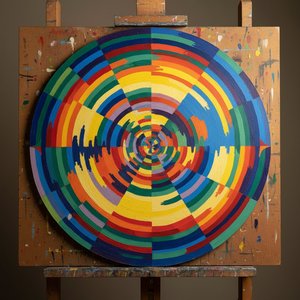
Sonia Delaunay: A Life in Color – Exploring the Rhythms of Abstraction and Synesthesia
Explore the vibrant world of Sonia Delaunay, a pioneer of abstract art and co-founder of Orphism. Discover her revolutionary use of color, geometric forms, and influence on modern design. A deep dive into her life & legacy.

Katsushika Hokusai: 25 Arcydzieł Sztuki Japońskiej dla Kolekcjonerów i Miłośników Dekoracji
Odkryj 25 arcydzieł Katsushika Hokusai, mistrza ukiyo-e! Poznaj historię Wielkiej Fali i innych ikonicznych drzeworytów. Inspiracje wnętrzarskie i reprodukcje obrazów najwyższej jakości na OriginalUniqueArt.com – sztuka japońska dla Twojego domu.
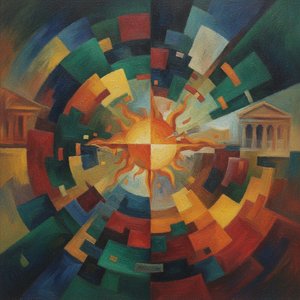
Orphism Unveiled: The Radiant Dance of Color and Light in the Evolution of Abstract Art
Discover the luminous world of Orphism. Explore how masters like Robert and Sonia Delaunay revolutionized art through a radiant dance of color, light, and geometric abstraction in this deep dive into modern art history.
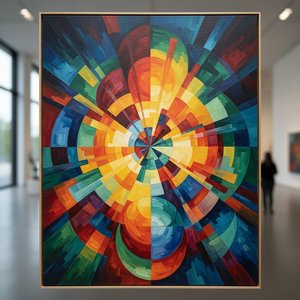
Orfizm: Symfonia Koloru i Formy – Geneza Abstrakcyjnych Korzeni Sztuki Nowoczesnej
Odkryj fascynujący świat orfizmu! Poznaj historię Roberta i Sonii Delaunay, teoretyczne podstawy tego ruchu oraz jego wpływ na sztukę XX wieku. Ekskluzywny artykuł dla miłośników sztuki nowoczesnej.
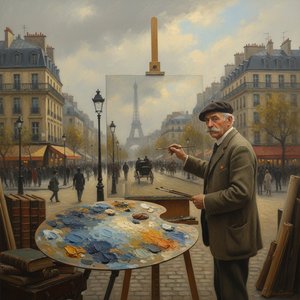
Édouard Cortès: Capturing Parisian Life – A Comprehensive Study of the 'Painter of Paris'
Explore the captivating world of Édouard Cortès, 'The Painter of Paris'. Discover his iconic street scenes, unique style & lasting legacy. Expert insights for collectors and art enthusiasts.

