Podgląd w skali 1:1
 Wyślij jako kartkę
 Udostępnij
 Szczegóły dzieła
 Przewodnik

 Pobierz obraz
 Podobne obiekty
 RTG
RTG Pokaz slajdów
 Q&A
Q&A Statystyki
Rouen
 Watercolor
- WallArt
- Romanticism
 1825
1825- 19th Century
 180.0 x 235.0 cm
 Wallace Collection
 Rozwiń treść
Ręcznie malowana reprodukcja olejowa
Ręcznie malowany obraz olejny na płótnie, wykonany na zamówienie przez naszych artystów w wybranym przez Ciebie wymiarze i oprawie. ( Przełącz na wydania drukowane Przejdź do wersji cyfrowej)




P118B zł10

P118H zł10

P118W zł10

P438Z zł10

P508JH zł12

P508YH zł12

P805H zł10

P805Z zł10

P919BZ zł10

P919G zł10

P919XJ zł10

P959ZH zł10

P968JZ zł12

W106C zł8

W218G zł10

W218JH zł8

W218Y zł10

W307PJ zł10

W316G zł10

W316PJ zł8

W316Y zł10

W398PJ zł8

W4111J zł10

W500HY zł15

W500JH zł15

W692G zł12

W849H zł8

W940BG zł15

W953PJ zł8




Wybierz spośród naszych standardowych rozmiarów, które zachowują oryginalne proporcje dzieła sztuki.

Wpisz wymaganą szerokość i wysokość, aby obraz pasował do Twojej ramy lub ściany. Ponieważ jest to dzieło malowane ręcznie, w przypadku rozmiaru o innych proporcjach artysta może domalować nieco więcej wokół obrazu lub przyciąć jego fragmenty — wybór należy do Ciebie. Przed rozpoczęciem pracy prześlemy Ci cyfrową wizualizację do zatwierdzenia. Obraz widoczny na tej stronie nie przedstawia rzeczywistego efektu — jedynie wizualizacja oddaje realny rezultat.
Po złożeniu zamówienia zespół OriginalUniqueArt.com skontaktuje się z klientem drogą mailową w celu uzyskania instrukcji i prześle wizualizację projektu
Dostawa na całym świecie () w ciągu 3–4 tygodni zamiast standardowych 5 tygodni. (28 Październik). Bez kompromisów w kwestii jakości.

Bezpłatna ekspresowa wysyłka na cały świat

Wysokiej jakości płótno lniane

Pełne ubezpieczenie przesyłki

Gwarancja zwrotu należności celnych i podatków importowych

Gwarancja wiernego odwzorowania kolorów

100-dniowa polityka zwrotów (tylko w przypadku wad)

Gwarancja 100% zwrotu pieniędzy

Zniżka przy zakupie wielu sztuk
 Opcja ze szkłem jest dostępna wyłącznie w rozmiarach poniżej 110 cm

Rouen
Technika reprodukcji
Wymiary reprodukcji
-


Cena całkowita
zł 1156
A Window into the Romantic Soul of France
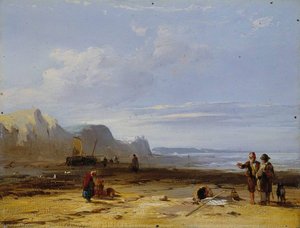
In the delicate, luminous strokes of Richard Parkes Bonington’s 1825 watercolor, Rouen, we are invited to step across the banks of the Seine and into a moment of profound serenity. This exquisite piece captures the historic cityscape of Rouen, France, not merely as a collection of stone and spire, but as a living, breathing entity bathed in the soft, melancholic light of the early nineteenth century. The composition draws the eye through a masterful layering of depth, beginning with the intimate details of the riverbank where moored fishing boats rest heavily upon the water. Here, the artist captures the tactile reality of maritime life—the weight of nets draped over wooden hulls and the solitary presence of a figure that provides a poignant sense of scale against the sprawling urban backdrop. It is a scene that feels both monumental and deeply personal, offering a quiet meditation on the passage of time and the enduring grace of the French landscape.
The technique employed by Bonington is nothing short of virtuosic, showcasing the brilliance that made him a leading figure of the Romantic movement. Using a palette dominated by warm earth tones, he achieves a remarkable sense of atmosphere, where the air itself feels thick with history and moisture. The water serves as a mirror to the soul of the city; its surface is rendered with such precision that the reflections of buildings and masts appear to ripple with life, creating a mesmerizing interplay of light and shadow. His use of watercolor allows for a transparency and fluidity that perfectly mimics the shifting clouds and the soft, pastel hues of a twilight sky. This mastery of medium ensures that every brushstroke contributes to a sense of movement—from the rhythmic flight of birds overhead to the gentle sway of the masts—preventing the static architecture from ever feeling lifeless.
For the discerning collector or interior designer, Rouen offers more than just aesthetic beauty; it provides an emotional anchor for a space. The painting carries a certain nostalgic weight, evoking the grandeur of an era defined by architectural splendor and a romanticized view of nature. The presence of the prominent church spire, rising above the rooftops, introduces a layer of spiritual symbolism, suggesting a world where the divine and the terrestrial are inextricably linked through the beauty of the natural landscape. As a high-quality reproduction, this work serves as a sophisticated centerpiece, capable of imparting a sense of timelessness and cultured elegance to any room. Whether placed in a sunlit gallery or a moody, library-style study, Bonington’s vision of Rouen continues to inspire awe, inviting viewers to lose themselves in the hazy, beautiful memories of a bygone age.
Pytania i odpowiedzi
Jaki format i orientacja druku są sugerowane dla „Rouen” – Richard Parkes Bonington?
Zalecany rozmiar wydruku dzieła „Rouen” – Richard Parkes Bonington to Large w orientacji Landscape.
Gdzie mogę znaleźć dzieła sztuki podobne do „Rouen” – Richard Parkes Bonington?
Dzieła podobne do „Rouen” można znaleźć na stronie Podobne dzieła danego dzieła.
Co przedstawia i jaką atmosferę oddaje „Rouen” – Richard Parkes Bonington?
"Rouen" przedstawia landscape, rouen cathedral, watercolor, reflection, architecture, tranquility, bonington, france, a jego nastrojowy charakter można określić jako Romantic.
Biografia artysty
A Fleeting Brilliance: The Life and Art of Richard Parkes Bonington
Richard Parkes Bonington, a name that resonates with a poignant sense of unrealized potential within the annals of Romantic painting, remains an artist whose brief career cast a long shadow across both British and French artistic landscapes. Born on October 25th, 1802, in Arnold, Nottinghamshire, England, his path to recognition was uniquely shaped by a blend of familial encouragement and geographical circumstance. His father, Richard Bonington senior, possessed a diverse skillset – gaoler, drawing master, and lace-maker – providing an unconventional yet stimulating upbringing for his son. It was from him that young Richard received his earliest instruction in watercolor painting, a talent quickly recognized and nurtured. Even as a boy of eleven, he exhibited work at the Liverpool Academy, signaling the emergence of a remarkable artistic sensibility. This early promise propelled him towards a destiny increasingly intertwined with the vibrant art world of France. In 1817, the Bonington family relocated to Calais seeking opportunity in the lace trade, but for Richard, this move proved transformative on an entirely different level. He came under the tutelage of François Louis Thomas Francia, a watercolorist deeply influenced by English masters like Thomas Girtin. Francia instilled in Bonington a profound appreciation for light and atmosphere – qualities that would become hallmarks of his distinctive style. The family subsequently moved to Paris in 1818, immersing Richard in the heart of French artistic life. Here, he forged a crucial friendship with Eugène Delacroix, a relationship that proved profoundly influential. He enrolled at the École des Beaux-Arts under Baron Antoine-Jean Gros, further honing his skills and absorbing the prevailing artistic currents.The Synthesis of Styles: English Sensibility & French Technique
Bonington’s early work beautifully reflects this synthesis of English watercolor traditions and French academic training. He didn't simply adopt techniques; he *absorbed* them, creating a style characterized by luminous landscapes and a delicate touch. His mastery of light was particularly striking, reminiscent of Girtin but infused with a distinctly Romantic sensibility. He excelled at capturing the fleeting effects of weather and the subtle nuances of nature, imbuing his scenes with an emotional resonance that went beyond mere representation. This ability to evoke feeling, rather than simply record observation, set him apart from many of his contemporaries. His landscapes often depicted coastal views or the serene beauty of Normandy, imbued with a sense of atmospheric perspective and masterful handling of light. Works like “Scene in Normandy” (1823) showcase this ability to capture the ephemeral qualities of nature. He didn’t merely depict what he saw; he evoked a feeling, an emotional response to the landscape. Simultaneously, Bonington ventured into historical painting, creating dramatic compositions such as "Charles V. visits François Ier after the Battle of Pavia" (c. 1827). These works reveal his fascination with narrative and his ability to translate historical events onto canvas with vibrant color and dynamic energy.A Rising Star: Recognition & Innovation
Bonington’s success was swift and undeniable. In 1824, he shared a gold medal at the Paris Salon alongside John Constable and Anthony Vandyke Copley Fielding – a testament to his burgeoning reputation. This recognition wasn't merely for technical skill; it acknowledged an innovative approach to color and composition that resonated with audiences and critics alike. He was lauded for his ability to blend English Romantic sensibilities with French academic rigor, creating something entirely new. His work also extended into lithography, illustrating Baron Taylor’s *Voyages pittoresques dans l'ancienne France* and his own architectural series *Restes et Fragmens*. This demonstrated a versatility that further solidified his position as a rising star in the art world. He was not confined to one medium or subject matter; he embraced experimentation and pushed the boundaries of artistic expression.A Legacy Cut Short: Influence & Enduring Appeal
Tragically, Richard Parkes Bonington succumbed to tuberculosis on September 23rd, 1828, bringing an abrupt end to a career brimming with potential. Despite his short life, his influence on the development of both British and French Romanticism was considerable. Delacroix himself paid tribute to Bonington’s “lightness of touch” and recognizing his innovative approach to color and composition. His work inspired a generation of artists, bridging the gap between English landscape traditions and the burgeoning Romantic movement in France. Today, his paintings are held in prestigious collections worldwide, including the Louvre and the Wallace Collection, which houses an impressive group of thirty-five works. In his hometown of Arnold, a theatre and primary school bear his name, while a statue at Nottingham School of Art serves as a lasting memorial to this exceptional artist. Bonington’s legacy endures not only through his captivating paintings but also as a symbol of artistic brilliance extinguished too soon, leaving an indelible mark on the history of art.Key Works & Lasting Recognition
- Rouen, Normandy (c. 1823): A quintessential example of Bonington’s atmospheric landscapes, capturing the essence of the Norman countryside.
- View of the Lagoon near Venice (1827): Demonstrates his ability to depict light and water with remarkable sensitivity, showcasing a Venetian scene filled with romantic allure.
- Charles V. visits François Ier after the Battle of Pavia (c. 1827): A dynamic historical painting that exemplifies his skill in narrative composition and vibrant color palette.
- Gold Medal at the Paris Salon (1824): Shared with esteemed artists like John Constable, marking a significant milestone in his career.
- Delacroix’s Tribute: Eugène Delacroix's posthumous praise of Bonington’s “lightness of touch” solidified his reputation as an innovative and influential artist.

Richard Parkes Bonington
1802 - 1828 , Wielka Brytania
Krótka nota
- Artistic Movement Or Style: Romantyzm
- Artists Or Movements Influenced By This Artist:
- Delacroix
- Angielski Romantyzm
- Artists Who Influenced This Artist:
- Thomas Girtin
- Delacroix
- Date Of Birth: 25 października 1802
- Date Of Death: 23 września 1828
- Full Name: Richard Parkes Bonington
- Nationality: Angielski
- Notable Artworks:
- Widok laguny Wenecji
- Charles V.
- Normandia
- Place Of Birth: Arnold, Anglia
Powiązane artykuły

10 Legendarnych Akwareli, Które Zmieniły Sztukę. Inspiracje do Dekoracji Domu.
Odkryj 10 legendarnych akwareli Turner'a, Monet'a i innych mistrzów! Poznaj historie, techniki i inspiracje tych ponadczasowych dzieł. Reprodukcje obrazów najwyższej jakości na OriginalUniqueArt.com – idealne do dekoracji wnętrz.

Ephemeral Visions: Exploring the Artistic Legacy & Nuances of Watercolor Painting
Explore the captivating world of watercolor painting! Discover its rich history, essential techniques, influential artists & collecting tips from art experts. A comprehensive guide for enthusiasts.

Romantyczny Krajobraz w Malarstwie: 10 Arcydzieł, Które Zdefiniowały Epokę | OriginalUniqueArt.com
Odkryj 10 arcydzieł romantyzmu w malarstwie! Poznaj historie Caspara Davida Friedricha, Turnera i innych mistrzów. Inspiracje wnętrzarskie & reprodukcje obrazów najwyższej jakości na OriginalUniqueArt.com. Eksploruj kolekcję online!

Efemeryczne Wizje: Historia i Emocjonalny Rezonans Malarstwa Akwarelowego
Odkryj fascynującą historię malarstwa akwarelowego! Poznaj techniki mistrzów, romantyczny nurt i współczesne trendy. Inspiracje do dekoracji wnętrz oraz możliwość personalizacji obrazów na OriginalUniqueArt.com.

Efemeryczne Wizje: Historia i Współczesna Praktyka Malarstwa Akwarelowego
Poznaj historię i techniki malarstwa akwarelowego! Odkryj inspiracje mistrzów, współczesne trendy oraz praktyczne porady dotyczące materiałów. Rozwiń swoją pasję z naszym przewodnikiem.