

 Zobacz w skali 1:1
 Wyślij
 Udostępnij
 Szczegóły
 Przewodnik

 Pobierz plik obrazu
 Podobne obiekty
 RTG
RTG Pokaz slajdów
 Statystyki
Berkeley No. 57
 Acrylic On Canvas
- WallArt
- Abstract Expressionism
 1955
1955 149.0 x 149.0 cm
 Muzeum Sztuki Nowoczesnej w San Francisco
 Czytaj więcej
Kup wysokiej rozdzielczości, ulepszony obraz cyfrowy o jakości znacznie przewyższającej podgląd online.
Każdy plik jest starannie przygotowywany przez naszych specjalistów przy użyciu zaawansowanych narzędzi oraz profesjonalnej, ręcznej retuszy. Dbamy o to, aby każdy obraz cechował się wyjątkową ostrością, precyzyjnym odwzorowaniem kolorów i subtelnymi detalami.
Ostateczny plik dostarczany jest drogą mailową w ciągu 72 godzin, zoptymalizowany do natychmiastowego wykorzystania w profesjonalnych zastosowaniach redakcyjnych i poligraficznych. To ta sama jakość, której ufają czołowe studia projektowe, wydawnictwa oraz galerie sztuki.
Obraz cyfrowy
Pobierz plik o wysokiej rozdzielczości do osobistego użytku, druku oraz projektów kreatywnych. ( Przełącz na wersję drukowaną Kup ręcznie malowany obraz)
W każdym zamówieniu na obraz cyfrowy znajduje się
Profesjonalna dostawa cyfrowa z gwarancją
Wybierając OriginalUniqueArt.com, nie otrzymujesz jedynie obrazu – otrzymujesz profesjonalnie udoskonalone cyfrowe dzieło sztuki, stworzone z najwyższą precyzją i objęte gwarancją satysfakcji. Oto wszystko, co automatycznie dołączane jest do Twojego zamówienia:

Błyskawiczna dostawa e-mailowa
Plik z obrazem cyfrowym w wysokiej rozdzielczości zostanie przesłany na Twój adres e-mail w ciągu 72 godzin od złożenia zamówienia – gotowy do natychmiastowego użycia.

Plik cyfrowy ulepszony przez AI
Twoja grafika została profesjonalnie zoptymalizowana przy użyciu zaawansowanych narzędzi AI oraz ręcznej edycji, co zapewnia maksymalną szczegółowość, klarowność i wierność kolorów.

Bezpłatna dożywotnia ponowna dostawa
Przypadkowo usunąłeś lub zgubiłeś swój plik? Bez obaw – prześlemy go Tobie ponownie w dowolnym momencie, bez żadnych opłat.

Bez opłat importowych – zawsze
Ciesz się swoją sztuką natychmiast, bez żadnych opłat celnych, należności ani kosztów dostawy – pliki cyfrowe są zawsze wolne od podatku.

Gwarancja odwzorowania kolorów
Dzięki zastosowaniu profesjonalnych narzędzi i procesów zarządzania barwą zapewniamy, że Twoje cyfrowe zdjęcie odzwierciedla oryginalne kolory tak wiernie, jak to tylko możliwe.

100 dni na satysfakcję
Jeśli nie będziesz zadowolony ze swojego cyfrowego obrazu, poprawimy go lub zwrócimy 100% kosztów w ciągu 100 dni – bez zbędnych pytań.

100% Gwarancja zwrotu pieniędzy
Nie jesteś zadowolony? Otrzymaj pełny zwrot kosztów w ciągu 100 dni od otrzymania pliku cyfrowego – bez zbędnych pytań.

Rabaty przy zamówieniach hurtowych
Kup 3 obrazy, oszczędź 10% - Kup 5, oszczędź 15% - Kup 10+, oszczędź 20%. Idealne do projektów kreatywnych, galerii i agencji.
Berkeley No. 57: A Quiet Resonance of California Light
Richard Diebenkorn’s Berkeley No. 57 stands as a cornerstone of postwar American painting, embodying the understated elegance and contemplative spirit that defined the San Francisco School. Painted in 1955, this monumental abstract expressionist canvas—measuring 149 x 149 cm—is housed at the San Francisco Museum of Modern Art (SFMOMA), where it continues to captivate audiences with its luminous palette and subtly textured surface.Style and Technique: Embracing Minimalism
Diebenkorn’s approach eschewed grand gestures or dramatic contrasts, prioritizing instead a disciplined exploration of form and color within a framework of geometric precision. He employed encaustic—a technique combining beeswax, resin, and pigment—to create an intensely durable surface that captures the nuances of light with remarkable fidelity. The resulting image is characterized by horizontal bands of muted yellow and orange interwoven with vertical streaks of blue and green, punctuated by occasional splashes of pink and red. These elements coalesce into amorphous shapes that suggest both solidity and fluidity simultaneously, mirroring the Californian landscape itself—a region known for its expansive vistas and shifting seasons.Historical Context: The Birth of California Cool
Berkeley No. 57 emerged during a period of significant artistic ferment following World War II, coinciding with the rise of Abstract Expressionism as a dominant force on the international stage. However, Diebenkorn’s vision diverged from the more overtly emotive tendencies of his contemporaries, favoring instead a quiet introspection that resonated deeply with the cultural ethos of postwar California—a movement dubbed “California Cool.” This aesthetic championed relaxed sophistication and understated beauty, rejecting ostentation in favor of refined taste and an appreciation for natural forms. SFMOMA’s acquisition of Berkeley No. 57 solidified its place within this influential artistic lineage.Symbolism: Reflections of Landscape and Inner Thought
The muted hues employed by Diebenkorn are not merely decorative; they serve as symbolic representations of the Californian environment—the golden light filtering through eucalyptus groves, the azure expanse of the Pacific Ocean. Furthermore, the geometric shapes incorporated into the composition can be interpreted as reflections of inner thought—a deliberate effort to distill complex emotions and ideas into visual form. The subtle variations in texture contribute to this sense of depth and resonance, inviting viewers to contemplate the interplay between observation and imagination.Emotional Impact: A Momentary Pause for Contemplation
Ultimately, Berkeley No. 57 transcends mere representation, offering instead a profound experience of aesthetic contemplation. Its stillness speaks volumes about Diebenkorn’s belief in the transformative power of art—a capacity to transport us beyond the everyday concerns of life and into realms of beauty and serenity. Viewing this masterpiece is akin to stepping into a sunlit grove, pausing for a moment to absorb the quiet grandeur of the natural world and allowing oneself to be carried away by its subtle emotional currents.Biografia artysty
Early Life and Artistic Foundations
Richard Diebenkorn, born in Portland, Oregon, in 1922, embarked on a journey that would establish him as one of the most significant American painters of the postwar era. His family’s relocation to San Francisco when he was just two years old proved formative, imbuing his artistic sensibility with the light and atmosphere of California—a landscape that would become inextricably linked to his work. Even in childhood, a profound inclination towards drawing manifested itself, signaling an early dedication to visual expression. This innate passion led him to Stanford University in 1940, where he encountered pivotal mentors like Victor Arnautoff, who instilled a rigorous classical discipline with oil paint, and Daniel Mendelowitz, who shared his admiration for the evocative realism of Edward Hopper. Hopper’s influence is readily apparent in Diebenkorn's early paintings, characterized by a quiet introspection and a masterful handling of light and shadow. These formative years laid the groundwork for a career defined by both technical skill and emotional depth.Navigating Abstraction and Figuration
The landscape of American art underwent a dramatic shift in the wake of World War II, with the center of artistic innovation moving from Paris to New York. Diebenkorn keenly felt this change, enrolling at the California School of Fine Arts (now the San Francisco Art Institute) and embracing abstract expressionism as his primary mode of self-expression. He found inspiration in the work of artists like Clyfford Still, Arshile Gorky, Hassel Smith, and Willem de Kooning, absorbing their bold experimentation with form and color. However, Diebenkorn was not content to simply follow established trends. Alongside Elmer Bischoff, Henry Villierme, David Park, and James Weeks, he became a leading figure in the Bay Area Figurative Movement—a conscious return to representational painting after the dominance of abstract expressionism. This transition wasn’t abrupt; it was a gradual process of reintroducing recognizable forms into his work, blending abstraction's emotional intensity with figuration’s narrative potential. He sought to bridge the gap between inner experience and external reality, creating paintings that were both deeply personal and universally resonant.The Ocean Park Series: A Defining Achievement
In 1967, Diebenkorn embarked on a series of paintings that would come to define his career—the *Ocean Park* series. Named after the Santa Monica neighborhood where he lived and worked, these geometric, lyrical abstract paintings represent a culmination of his artistic explorations. Unlike the gestural spontaneity of abstract expressionism or the direct representation of Bay Area Figurative work, the *Ocean Park* paintings are characterized by a carefully considered composition, subtle color palettes, and a sense of serene order. These weren’t depictions of Ocean Park itself, but rather distillations of its light, space, and atmosphere—evocations of place through abstract form. He explored printmaking alongside his painting, beginning with drypoint in 1961 at UCLA, and forging a long-lasting collaboration with Kathan Brown at Crown Point Press from 1965 to 1992, producing numerous prints that further expanded his artistic vocabulary. The *Ocean Park* series garnered widespread critical acclaim, establishing Diebenkorn as a major force in contemporary art.Influences and Artistic Development
Diebenkorn’s artistic development was shaped by a diverse range of influences. Early exposure to the works of Henri Matisse, Paul Cézanne, and Pablo Picasso at a young age instilled a deep appreciation for color, form, and composition. The paintings of Edward Hopper provided a model for capturing mood and atmosphere, while the abstract expressionists—particularly Clyfford Still—inspired him to explore the expressive potential of color and gesture. He also drew inspiration from the landscape of California, particularly the light and space of the Bay Area. His time in Albuquerque, New Mexico, exposed him to Southwestern art and architecture, which influenced his use of color and composition. Throughout his career, Diebenkorn remained open to new influences, constantly experimenting with different techniques and approaches.Legacy and Lasting Influence
Richard Diebenkorn’s influence on postwar American art is undeniable. His ability to synthesize abstract expressionism, lyrical abstraction, and figurative painting created a unique artistic voice that resonated with artists for generations. A significant retrospective at the Pasadena Art Museum in 1960—later shown at the California Palace of the Legion of Honor in San Francisco—cemented his reputation as a leading figure in the art world. He didn’t adhere to any single dogma, instead forging his own path by embracing experimentation and following his artistic intuition. His work continues to inspire artists and collectors alike, celebrated for its beauty, complexity, and emotional depth. Diebenkorn's passing in 1993 marked the end of a remarkable career, but his legacy lives on through the enduring power of his paintings—a testament to his innovative spirit and unwavering commitment to artistic vision. His work remains a poignant reminder of the transformative potential of art.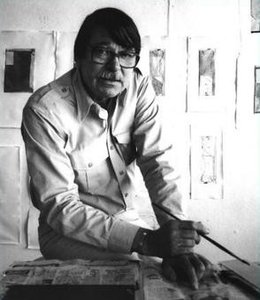
Richard Diebenkorn
1922 - 1993 , Stany Zjednoczone
Najważniejsze informacje
- Artistic Movement Or Style: Liryczna abstrakcja
- Artists Or Movements Influenced By This Artist:
- Bay Area Figurative
- Abstrakcja ekspresjonistyczna
- Artists Who Influenced This Artist:
- Edward Hopper
- Clyfford Still
- Date Of Birth: 22 kwietnia 1922
- Date Of Death: 30 marca 1993
- Full Name: Richard Clifford Diebenkorn
- Nationality: Amerykański
- Notable Artworks:
- Ocean Park No. 32
- A Day at the Races
- Place Of Birth: Portland, USA