Podgląd w skali 1:1
 Wyślij jako kartkę
 Udostępnij
 Szczegóły dzieła
 Przewodnik

 Pobierz obraz
 Podobne obiekty
 RTG
RTG Pokaz slajdów
 Q&A
Q&A Statystyki
Pamięć 1


 Rozwiń treść
Dzieło sztuki prezentowane na tej stronie podlega ochronie prawem autorskim, co oznacza, że nie mamy prawa do tworzenia ani sprzedaży jego identycznej reprodukcji. Ochrona ta jest egzekwowana na mocy umów międzynarodowych, takich jak Konwencja berneńska oraz przez przepisy prawa krajowego, w tym te określone w Prawo autorskie USA – Tytuł 17.
Metoda ta jest w pełni zgodna z przepisami prawa autorskiego, ponieważ nie polega na kopiowaniu ani powielaniu chronionego dzieła. Stanowi ona kreatywną reinterpretację – nowy obraz, który czerpie inspirację z oryginału, ale nie jest z nim tożsamy.
Giclée / Wydruk artystyczny
Wydruki giclée lub płótna o jakości muzealnej, szybka realizacja i szeroki wybór opcji wykończenia. ( Zamów ręcznie malowaną reprodukcję Przejdź do wersji cyfrowej)




P118B zł10

P118H zł10

P118W zł10

P438Z zł10

P508JH zł12

P508YH zł12

P805H zł10

P805Z zł10

P919BZ zł10

P919G zł10

P919XJ zł10

P959ZH zł10

P968JZ zł12

W106C zł8

W218G zł10

W218JH zł8

W218Y zł10

W307PJ zł10

W316G zł10

W316PJ zł8

W316Y zł10

W398PJ zł8

W4111J zł10

W500HY zł15

W500JH zł15

W692G zł12

W849H zł8

W940BG zł15

W953PJ zł8




Wybierz spośród naszych standardowych rozmiarów, które zachowują oryginalne proporcje dzieła sztuki.

Wpisz wymaganą szerokość i wysokość, aby dopasować grafikę do ramy lub ściany. Wydruk można jedynie przyciąć, nigdy nie powiększając go poza oryginalny obraz, dlatego format o innych proporcjach spowoduje utratę części kompozycji. Przed rozpoczęciem druku prześlemy Ci cyfrowy podgląd do zatwierdzenia. Obraz wyświetlany na tej stronie nie pokazuje rzeczywistego przycięcia — jedynie podgląd oddaje ten efekt.
Dostawa na cały świat () w ciągu 2 tygodni zamiast standardowych 4/5 tygodni. (30 Październik)

Bezpłatna ekspresowa wysyłka na cały świat

Wysokiej jakości płótno lniane

Pełne ubezpieczenie przesyłki

Gwarancja zwrotu należności celnych i podatków importowych

Gwarancja wiernego odwzorowania kolorów

100-dniowa polityka zwrotów (tylko w przypadku wad)

Gwarancja 100% zwrotu pieniędzy

Zniżka przy zakupie wielu sztuk
 Opcja ze szkłem jest dostępna wyłącznie w rozmiarach poniżej 110 cm

Pamięć 1
Giclée / Wydruk artystyczny
Wymiary reprodukcji
-


Cena całkowita
zł 311
Memory 1 – René Magritte: A Surrealist Exploration of Perception
René Magritte’s “Memory 1,” created in 1948, stands as a cornerstone of Surrealist art and continues to fascinate viewers with its deceptively simple composition and profound symbolic depth. More than just a depiction of a classical bust—a motif recurring throughout Magritte's oeuvre—the painting delves into the complexities of memory itself, questioning our ability to grasp reality and confronting us with unsettling juxtapositions that linger in the mind long after viewing. This essay aims to unravel the layers of meaning embedded within “Memory 1,” exploring its stylistic innovations, historical significance, and enduring emotional resonance.- Subject Matter: The artwork centers around a meticulously rendered marble bust of a woman’s head, positioned against a tranquil oceanic backdrop illuminated by a bright sky dotted with fluffy clouds. Beneath the bust rests a white sphere and a single green leaf—elements that contribute to the painting's overall atmosphere of serenity and contemplation.
- Style & Technique: Magritte masterfully blends realism with Surrealist symbolism, employing hyper-realistic detailing in the sculpture’s texture and form to capture the delicate intricacies of hair and facial features. His technique combines precise line work and subtle shading to evoke a three-dimensional presence, mirroring the classical tradition while simultaneously disrupting conventional visual expectations.
- Color Palette: The dominant hues are muted blues and whites—reflecting the calm ocean and sky—creating an ethereal quality that underscores the painting’s contemplative mood. However, a bold splash of red paint dominates one eye of the bust, injecting an element of jarring dissonance into the otherwise harmonious palette.
- Historical Context: “Memory 1” emerged during the fervent artistic experimentation of the Surrealist movement in France, spearheaded by André Breton. Surrealism sought to liberate thought from rational constraints and tap into the subconscious mind—a reaction against the anxieties of post-war Europe and a desire to challenge established norms of representation.
- Symbolism & Emotional Impact: The red eye serves as a potent symbol of pain, trauma, and repressed emotion—contrasting sharply with the serene beauty of the sculpture and its surroundings. Magritte’s deliberate use of color and form invites viewers to confront uncomfortable truths about human experience and to question their perceptions of reality. It encapsulates the Surrealist preoccupation with destabilizing familiar images and provoking emotional responses.
Magritte's Approach to Representation – Challenging Perception
Magritte’s artistic philosophy revolved around dismantling illusions and exposing the inherent contradictions within visual perception. He famously stated, “The painter’s art, as I see it, is about making poetic images visible.” This conviction fueled his relentless pursuit of stylistic innovations that defied conventional realism—a characteristic evident in "Memory 1." By juxtaposing seemingly disparate elements—the classical bust and the abstract red splash—Magritte compels viewers to reconsider their assumptions about how we interpret visual information. The sphere and leaf serve as grounding points, anchoring the unsettling focal point while simultaneously hinting at themes of fragility and renewal.The Influence of Surrealism – Breton’s Vision
“Memory 1” embodies the core tenets of Surrealist art—particularly André Breton's belief in automatism—a technique that aimed to bypass conscious control and access spontaneous creative impulses. Magritte’s meticulous rendering of detail, combined with his unsettling visual puzzles, aligns perfectly with this artistic ethos. Like other Surrealist painters, Magritte sought to tap into the unconscious mind and explore hidden realms of experience—resulting in artworks that resonate with a timeless quality and continue to provoke intellectual debate.Conclusion – An Enduring Legacy
René Magritte’s “Memory 1” remains an iconic masterpiece of Surrealist art, demonstrating his unparalleled ability to transform the commonplace into the extraordinary. Its evocative imagery—the serene bust juxtaposed against the jarring red eye—continues to captivate audiences and inspire artists today. As a testament to Magritte's enduring influence on modern art history, “Memory 1” stands as a powerful reminder of the transformative potential of artistic vision and its capacity to challenge our understanding of reality itself.Pytania i odpowiedzi
Czy dzieło "Pamięć 1" znajduje się w domenie publicznej?
„Pamięć 1” – René Magritte znajduje się w domenie publicznej (nadal objęte ochroną prawa autorskiego). Status ten określa zasady reprodukcji obrazu tego dzieła.
Jaki jest dominujący kolor dzieła „Pamięć 1” – René Magritte?
Dominującym odcieniem dzieła „Pamięć 1” – René Magritte jest Spektrum od zieleni do fioletu. Odcień ten stanowi bazową tonację palety barw.
Jak mogę odkryć dzieła podobne do „Pamięć 1” – René Magritte?
Strona Podobne dzieła dzieła „Pamięć 1” – René Magritte prezentuje powiązane utwory.
Biografia artysty
Early Life and the Seeds of Surrealism
René Magritte, born René François Ghislain Magritte on November 21, 1898, in Lessines, Belgium, emerged into a world that would profoundly shape his enigmatic artistic vision. His early years were marked by an unsettling event – the suicide of his mother when he was just thirteen. The image of her body being recovered from the River Sambre, with her dress obscuring her face, became a haunting motif that would subtly permeate his later work, manifesting in veiled figures and a persistent exploration of hidden realities. This early trauma instilled within him a fascination with mystery, loss, and the unsettling power of what remains unseen. While details of his childhood remain somewhat elusive, it’s clear this formative experience laid the groundwork for his lifelong questioning of perception and representation. He began drawing lessons at age ten, revealing an innate inclination towards visual expression, but initially explored Impressionism before embarking on a path that would lead him to become one of the most significant figures in Surrealist art.Artistic Development and Influences
Magritte’s artistic journey was not immediate or straightforward. He studied at the Académie Royale des Beaux-Arts in Brussels, yet found its traditional methods stifling. His early work experimented with Futurism and Cubism, absorbing elements of these avant-garde movements but ultimately rejecting their purely formal concerns. It wasn't until encountering Giorgio de Chirico’s painting *The Song of Love* in 1922 that Magritte discovered a resonance that would irrevocably alter his artistic course. De Chirico’s dreamlike landscapes and unsettling juxtapositions unlocked within Magritte a new way of seeing – a world where the familiar could be rendered strange, and the ordinary imbued with profound mystery. This encounter sparked his commitment to Surrealism, though he often maintained a unique distance from its more overtly psychological or automatic approaches. He preferred a meticulous, almost clinical precision in his painting, using realistic techniques to depict illogical scenarios.The Heart of Surrealism: Challenging Reality
By 1926, Magritte had fully embraced the tenets of Surrealism, producing *Le Jockey Perdu (The Lost Jockey)*, widely considered his first truly surrealist work. However, his brand of Surrealism was distinct. He wasn’t interested in exploring the subconscious through free association or dream imagery in the manner of some of his contemporaries. Instead, Magritte sought to challenge viewers' perceptions of reality by presenting ordinary objects in unexpected contexts, forcing them to question their assumptions about the world around them. Iconic works like *The Treachery of Images (This is not a pipe)* (1929) brilliantly deconstructs the relationship between image and object, reminding us that a representation is never the thing itself. *Les Amants (The Lovers)* (1927-1928), with its shrouded figures, echoes the trauma of his mother’s death while simultaneously exploring themes of concealment and intimacy. *Time Transfixed* (1938) presents a locomotive bursting through a brick wall, disrupting our sense of space and time. And *The Human Condition* (1933), a canvas within a canvas, blurs the boundaries between representation and reality, prompting us to consider how we perceive and interpret the world.Later Life, Recognition, and Enduring Legacy
Despite initial struggles for recognition, Magritte’s work gradually gained prominence, particularly in the United States with exhibitions in 1936 and later retrospective shows at the Museum of Modern Art (1965) and the Metropolitan Museum of Art (1992). He remained politically engaged throughout his life, advocating for artistic autonomy. He continued to refine his signature style, exploring themes of repetition, illusion, and the power of language in paintings that are both intellectually stimulating and visually arresting. Magritte died on August 15, 1967, leaving behind a body of work that continues to captivate and challenge audiences worldwide. His influence extends far beyond the realm of painting, impacting pop art, minimalist art, conceptual art, and even advertising and film. Today, his paintings are held in major museum collections around the globe, including the Musées royaux des beaux-arts de Belgique in Brussels, which houses the Magritte Museum – dedicated entirely to his work and boasting the world’s largest collection of his creations.- Museum Collections: Musées royaux des beaux-arts de Belgique, Brussels; Magritte Museum.
Magritte's enduring legacy lies in his ability to make us see the familiar anew, to question our assumptions about reality, and to appreciate the power of art to provoke thought and inspire wonder. He wasn’t simply painting images; he was crafting visual paradoxes that continue to resonate with viewers decades after their creation, solidifying his position as a true master of Surrealism and a pivotal figure in 20th-century art.
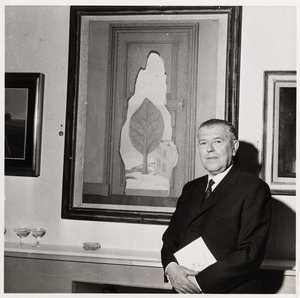
René Magritte
1898 - 1967 , Belgia
Krótka nota
- Artistic Movement Or Style: Surrealizm
- Artists Or Movements Influenced By This Artist:
- Pop art
- Minimalist sztuka
- Artists Who Influenced This Artist: ['Giorgio de Chirico']
- Date Of Birth: 21 listopada 1898
- Date Of Death: 15 sierpnia 1967
- Full Name: René François Ghislain Magritte
- Nationality: Belgijski
- Notable Artworks:
- Les Amants
- The Treachery of Images
- Time Transfixed
- Place Of Birth: Lessines, Belgia
Powiązane artykuły

Crimson Threads of Narrative: Exploring Symbolism & Representation in Artworks Featuring the Red Dress
Explore the rich symbolism of the red dress in art history! From ancient power displays to iconic portraits like Cézanne’s 'Madame Cezanne', discover the cultural and artistic significance behind this captivating color. Expert analysis & insights.
Ponadczasowy Rezonans: Badanie Klasycznej Estetyki w Sztuce – Historyczna i Akademicka Analiza
Odkryj fascynujący świat klasycznej estetyki! Analiza historyczna i akademicka sztuki antycznej, literatury oraz malarstwa. Poznaj kanony piękna i wpływ klasycyzmu na współczesną kulturę.
Surrealizm w sztuce: 10 arcydzieł, które zmieniły postrzeganie rzeczywistości | OriginalUniqueArt.com
Odkryj 10 arcydzieł surrealizmu! Poznaj historie Dalí, Magritte'a i innych mistrzów tego ruchu. Inspiracje wnętrzarskie i reprodukcje obrazów najwyższej jakości na OriginalUniqueArt.com. Eksploruj pełną kolekcję online!
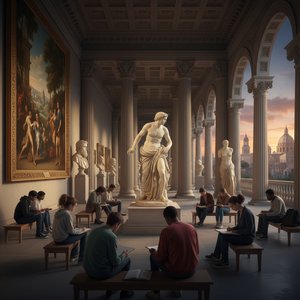
Trwała Spuścizna Klasycyzmu: Zasady, Ewolucja i Wpływ na Sztukę Zachodnią
Poznaj historię klasycyzmu w sztuce! Odkryj zasady estetyczne, wybitnych artystów i trwały wpływ tego nurtu na architekturę, malarstwo i rzeźbę. Ekspercka analiza i inspiracje od OriginalUniqueArt.

10 Arcydzieł Neoklasycyzmu: Sztuka, Historia i Inspiracje dla Twojego Domu
Poznaj 10 arcydzieł neoklasycyzmu! Odkryj historie Davida, Ingresa i Canovy. Inspiracje wnętrzarskie z malarstwem klasycznym i rzeźbą. Reprodukcje najwyższej jakości na OriginalUniqueArt.com – sztuka dla Twojego domu.