Podgląd w skali 1:1
 Wyślij jako kartkę
 Udostępnij
 Szczegóły dzieła
 Przewodnik

 Pobierz obraz
 Podobne obiekty
 RTG
RTG Pokaz slajdów
 Pytania i odpowiedzi
 Statystyki
Golconda


 Rozwiń treść
Dzieło sztuki prezentowane na tej stronie podlega ochronie prawem autorskim, co oznacza, że nie mamy prawa do tworzenia ani sprzedaży jego identycznej reprodukcji. Ochrona ta jest egzekwowana na mocy umów międzynarodowych, takich jak Konwencja berneńska oraz przez przepisy prawa krajowego, w tym te określone w Prawo autorskie USA – Tytuł 17.
Metoda ta jest w pełni zgodna z przepisami prawa autorskiego, ponieważ nie polega na kopiowaniu ani powielaniu chronionego dzieła. Stanowi ona kreatywną reinterpretację – nowy obraz, który czerpie inspirację z oryginału, ale nie jest z nim tożsamy.
Giclée / Wydruk artystyczny
Wydruki giclée lub płótna o jakości muzealnej, szybka realizacja i szeroki wybór opcji wykończenia. ( Zamów ręcznie malowaną reprodukcję Przejdź do wersji cyfrowej)




P118B zł10

P118H zł10

P118W zł10

P438Z zł10

P508JH zł12

P508YH zł12

P805H zł10

P805Z zł10

P919BZ zł10

P919G zł10

P919XJ zł10

P959ZH zł10

P968JZ zł12

W106C zł8

W218G zł10

W218JH zł8

W218Y zł10

W307PJ zł10

W316G zł10

W316PJ zł8

W316Y zł10

W398PJ zł8

W4111J zł10

W500HY zł15

W500JH zł15

W692G zł12

W849H zł8

W940BG zł15

W953PJ zł8




Wybierz spośród naszych standardowych rozmiarów, które zachowują oryginalne proporcje dzieła sztuki.

Wpisz wymaganą szerokość i wysokość, aby dopasować grafikę do ramy lub ściany. Wydruk można jedynie przyciąć, nigdy nie powiększając go poza oryginalny obraz, dlatego format o innych proporcjach spowoduje utratę części kompozycji. Przed rozpoczęciem druku prześlemy Ci cyfrowy podgląd do zatwierdzenia. Obraz wyświetlany na tej stronie nie pokazuje rzeczywistego przycięcia — jedynie podgląd oddaje ten efekt.
Dostawa na cały świat () w ciągu 2 tygodni zamiast standardowych 4/5 tygodni. (10 Listopad)

Bezpłatna ekspresowa wysyłka na cały świat

Wysokiej jakości płótno lniane

Pełne ubezpieczenie przesyłki

Gwarancja zwrotu należności celnych i podatków importowych

Gwarancja wiernego odwzorowania kolorów

100-dniowa polityka zwrotów (tylko w przypadku wad)

Gwarancja 100% zwrotu pieniędzy

Zniżka przy zakupie wielu sztuk
 Opcja ze szkłem jest dostępna wyłącznie w rozmiarach poniżej 110 cm

Golconda
Giclée / Wydruk artystyczny
Wymiary reprodukcji
-


Cena całkowita
zł 318
A Study in Urban Melancholy: René Magritte’s *Golconda*
René Magritte's Golconda (1949) is not merely a depiction of rain; it’s an immersion into a carefully constructed atmosphere of quiet unease and profound contemplation. The painting, rendered in Magritte’s signature meticulous style, presents a scene of ordinary individuals navigating a relentlessly rainy urban landscape. Men and women, shielded by umbrellas – some raised defensively, others lowered protectively – move with a deliberate slowness, their faces largely obscured, adding to the overall sense of detachment. Buildings loom in the background, solid and imposing, yet somehow distant, contributing to the painting’s feeling of alienation.
- Subject Matter: The central subject is the commonplace – a rainy day in an urban setting – elevated through Magritte's deliberate framing and unsettling composition.
- Style & Technique: Executed with his characteristic precise brushwork and a muted palette of grays, blues, and browns, Golconda exemplifies Magritte’s commitment to realistic representation combined with surrealist undertones. The meticulous detail in the rendering of the umbrellas and the wet pavement further emphasizes this juxtaposition.
The Weight of the Unseen: Symbolism and Context
Painted during a period of intense artistic experimentation, Golconda reflects Magritte’s ongoing exploration of perception, reality, and the subconscious. The umbrellas themselves are laden with symbolic weight; they offer protection from the rain, but also create a barrier between the figures and each other, reinforcing the theme of isolation. The obscured faces contribute to this sense of anonymity and detachment, echoing themes prevalent in Magritte’s work – particularly his fascination with the hidden aspects of human experience. The title itself, *Golconda*, referencing an ancient city famed for its diamonds, introduces a layer of enigmatic richness, perhaps suggesting wealth, value, or even the illusion of security amidst the pervasive gloom.
- Surrealist Influences: While Magritte rejected the overtly fantastical elements often associated with Surrealism, he shared the movement’s interest in challenging conventional perceptions and exploring the irrational.
- Historical Context: Created in 1949, *Golconda* was produced during a time of significant social and political upheaval following World War II. The painting's quiet despair can be interpreted as a reflection of the anxieties and uncertainties of the post-war era.
Emotional Resonance and Artistic Legacy
Golconda possesses a remarkable ability to evoke a powerful emotional response, prompting viewers to confront questions about identity, connection, and the nature of reality. The painting’s somber mood and ambiguous figures invite introspection, encouraging us to consider our own experiences within the broader context of human existence. Magritte's masterful manipulation of light, shadow, and composition creates a deeply atmospheric work that transcends its subject matter, becoming a timeless meditation on the human condition. Its enduring appeal lies in its ability to capture a universal feeling – the melancholy beauty of a rainy day, coupled with a subtle sense of unease.
- Art Decoration Potential: The painting’s strong composition and evocative mood make it an ideal choice for incorporating into interior design schemes, particularly those seeking a touch of intellectual sophistication and understated drama.
- Collector's Value: As a significant work by one of the 20th century’s most influential artists, *Golconda* holds considerable value within the art market, representing a unique opportunity to own a piece of artistic history.
Pytania i odpowiedzi
Czy "Golconda" to jedno z najpopularniejszych dzieł René Magritte?
"Golconda" jest klasyfikowane jako Recognized.
Skąd pochodzą odwiedzający „Golconda” – René Magritte?
Dla dzieła „Golconda” dostępna jest strona Statystyki wyświetleń. Przedstawia ona miesięczną liczbę odwiedzin tego dzieła oraz innych prac artysty, z podziałem na kraje i języki.
W jaki sposób kontrast i harmonia łączą się w "Golconda"?
Analiza kolorystyczna dzieła „Golconda” – René Magritte ukazuje Statement kontrast oraz Discordant Palette harmonię.
Biografia artysty
Early Life and the Seeds of Surrealism
René Magritte, born René François Ghislain Magritte on November 21, 1898, in Lessines, Belgium, emerged into a world that would profoundly shape his enigmatic artistic vision. His early years were marked by an unsettling event – the suicide of his mother when he was just thirteen. The image of her body being recovered from the River Sambre, with her dress obscuring her face, became a haunting motif that would subtly permeate his later work, manifesting in veiled figures and a persistent exploration of hidden realities. This early trauma instilled within him a fascination with mystery, loss, and the unsettling power of what remains unseen. While details of his childhood remain somewhat elusive, it’s clear this formative experience laid the groundwork for his lifelong questioning of perception and representation. He began drawing lessons at age ten, revealing an innate inclination towards visual expression, but initially explored Impressionism before embarking on a path that would lead him to become one of the most significant figures in Surrealist art.Artistic Development and Influences
Magritte’s artistic journey was not immediate or straightforward. He studied at the Académie Royale des Beaux-Arts in Brussels, yet found its traditional methods stifling. His early work experimented with Futurism and Cubism, absorbing elements of these avant-garde movements but ultimately rejecting their purely formal concerns. It wasn't until encountering Giorgio de Chirico’s painting *The Song of Love* in 1922 that Magritte discovered a resonance that would irrevocably alter his artistic course. De Chirico’s dreamlike landscapes and unsettling juxtapositions unlocked within Magritte a new way of seeing – a world where the familiar could be rendered strange, and the ordinary imbued with profound mystery. This encounter sparked his commitment to Surrealism, though he often maintained a unique distance from its more overtly psychological or automatic approaches. He preferred a meticulous, almost clinical precision in his painting, using realistic techniques to depict illogical scenarios.The Heart of Surrealism: Challenging Reality
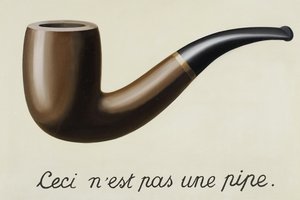
By 1926, Magritte had fully embraced the tenets of Surrealism, producing *Le Jockey Perdu (The Lost Jockey)*, widely considered his first truly surrealist work. However, his brand of Surrealism was distinct. He wasn’t interested in exploring the subconscious through free association or dream imagery in the manner of some of his contemporaries. Instead, Magritte sought to challenge viewers' perceptions of reality by presenting ordinary objects in unexpected contexts, forcing them to question their assumptions about the world around them. Iconic works like *The Treachery of Images (This is not a pipe)* (1929) brilliantly deconstructs the relationship between image and object, reminding us that a representation is never the thing itself. *Les Amants (The Lovers)* (1927-1928), with its shrouded figures, echoes the trauma of his mother’s death while simultaneously exploring themes of concealment and intimacy. *Time Transfixed* (1938) presents a locomotive bursting through a brick wall, disrupting our sense of space and time. And *The Human Condition* (1933), a canvas within a canvas, blurs the boundaries between representation and reality, prompting us to consider how we perceive and interpret the world.Later Life, Recognition, and Enduring Legacy
Despite initial struggles for recognition, Magritte’s work gradually gained prominence, particularly in the United States with exhibitions in 1936 and later retrospective shows at the Museum of Modern Art (1965) and the Metropolitan Museum of Art (1992). He remained politically engaged throughout his life, advocating for artistic autonomy. He continued to refine his signature style, exploring themes of repetition, illusion, and the power of language in paintings that are both intellectually stimulating and visually arresting. Magritte died on August 15, 1967, leaving behind a body of work that continues to captivate and challenge audiences worldwide. His influence extends far beyond the realm of painting, impacting pop art, minimalist art, conceptual art, and even advertising and film. Today, his paintings are held in major museum collections around the globe, including the Musées royaux des beaux-arts de Belgique in Brussels, which houses the Magritte Museum – dedicated entirely to his work and boasting the world’s largest collection of his creations.- Museum Collections: Musées royaux des beaux-arts de Belgique, Brussels; Magritte Museum.
Magritte's enduring legacy lies in his ability to make us see the familiar anew, to question our assumptions about reality, and to appreciate the power of art to provoke thought and inspire wonder. He wasn’t simply painting images; he was crafting visual paradoxes that continue to resonate with viewers decades after their creation, solidifying his position as a true master of Surrealism and a pivotal figure in 20th-century art.
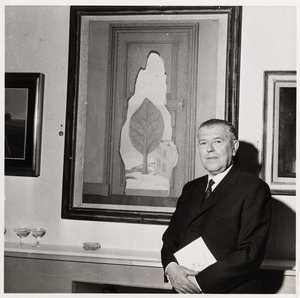
René Magritte
1898 - 1967 , Belgia
Krótka nota
- Artistic Movement Or Style: Surrealizm
- Artists Or Movements Influenced By This Artist:
- Pop art
- Minimalist sztuka
- Artists Who Influenced This Artist: ['Giorgio de Chirico']
- Date Of Birth: 21 listopada 1898
- Date Of Death: 15 sierpnia 1967
- Full Name: René François Ghislain Magritte
- Nationality: Belgijski
- Notable Artworks:
- Les Amants
- The Treachery of Images
- Time Transfixed
- Place Of Birth: Lessines, Belgia
Powiązane artykuły

OriginalUniqueArt.com F.A.Q.: Elevate Your Decor with Premium Textured Giclée Prints
Discover the distinction of OriginalUniqueArt.com premium textured Giclée prints. Expertly crafted with archival 12-color pigments and museum-grade substrates, our prints offer unparalleled vividness for the discerning collector seeking luxury, durability, and timeless elegance.