High Renaissance
St. Michael and Satan (Rafael Santi)
Rafael Santi (1483–1520) stworzył St. Michael and Satan. Należy do nurtu High Renaissance. Wykonano w technice Oil On Panel.
- Oil On Panel

 Podgląd w skali 1:1

 Ręcznie malowany obraz olejny
 Wyślij jako kartkę
 Udostępnij
 Przewodnik


 Pobierz obraz
 Podobne obiekty
 RTG
 Pokaz slajdów
 Pytania i odpowiedzi

 Statystyki
St. Michael and Satan: najważniejsze informacje
- Tytuł
- St. Michael and Satan
- Artysta
- Rafael Santi (1483–1520)
- Miejsce urodzenia artysty
- Urbino, Włochy
- Technika wykonania
- Oil On Panel
- Ruch
- High Renaissance
- Epoka
- Renaissance
- Temat
- christianity, mythology, angel, demon, victory, renaissance
Co przedstawia St. Michael and Satan?
St. Michael and Satan: A Triumph of Renaissance Faith
The painting St. Michael and Satan by Raphael, a cornerstone of High Renaissance art, transcends mere visual representation; it embodies the spiritual fervor and intellectual ambition that defined its era. Completed in 1518 during Pope Leo X’s reign, this monumental oil on wood panel resides within the Louvre Museum in Paris, continuing to captivate audiences centuries later with its masterful execution and profound symbolism. Raphael's initial inspiration stemmed from a smaller devotional piece – St. Michael – executed around 1504 or 1505—a testament to his unwavering commitment to exploring religious themes through artistic innovation. Commissioned by Francesco Maria I della Rovere, Urbino’s heir, this miniature served as an expression of gratitude for the papal honor bestowed upon him, foreshadowing Raphael's later ambition to tackle grand narratives with unparalleled artistry.- Composition and Narrative: Raphael skillfully employs a pyramidal structure, positioning St. Michael at its apex—a deliberate choice reflecting Christian theology’s emphasis on divine majesty. Beneath him lies Satan, depicted in contorted agony, symbolizing the defeat of evil by righteous force. The dynamic diagonal lines created by the figures propel the viewer's gaze across the canvas, intensifying the dramatic tension inherent in the biblical tale.
- Color Palette and Technique: Raphael’s palette is characterized by earthy browns and blues—muted hues that convey solemnity and grandeur—contrasting sharply with Satan’s darker tones of grey and brown. His meticulous brushwork achieves remarkable textural detail, capturing the musculature of St. Michael's body and the drapery of their garments with breathtaking realism. The use of oil paint on wood allows for subtle gradations of color and ensures exceptional durability, guaranteeing that Raphael’s vision persists through time.
- Symbolism and Spiritual Significance: Beyond its aesthetic beauty, St. Michael and Satan is laden with religious symbolism. St. Michael embodies divine protection and righteousness—a warrior angel battling the forces of darkness—while Satan represents temptation and despair. The bird soaring above symbolizes hope and ascension, reinforcing the overarching message of triumph over adversity.
- Influence and Legacy: Raphael’s artistic prowess profoundly impacted subsequent generations of painters, notably Charles Le Brun at Académie royale de peinture et de sculpture, establishing a foundational aesthetic for French classicism. His meticulous attention to detail and harmonious balance continue to inspire artists today, cementing St. Michael and Satan's place as an enduring masterpiece of Renaissance art.
Further Exploration & Inspiration
Consider commissioning a high-quality reproduction of Raphael’s St. Michael and Satan for your home or studio—a tangible connection to one of the most celebrated artworks in Western history. Explore similar pieces from other masters of the Renaissance, delving into themes of faith, heroism, and artistic excellence. Visit Michaelskirche in Munich or explore the Michael C. Carlos Museum in Atlanta for immersive experiences showcasing comparable artistic traditions.St. Michael and Satan w wysokiej rozdzielczości

Domena publiczna: artysta zmarł w 1520.
Więcej rozmiarów, kadrowania i cytowań →Rafael Santi, St. Michael and Satan. Domena publiczna
Ekspert ds. cyfrowych weryfikuje kolory względem oryginału i retuszuje plik, zachowując wierność pociągnięciom pędzla artysty.
Kup obraz w wysokiej rozdzielczościPytania o St. Michael and Satan
W jakiej technice wykonano „St. Michael and Satan” – Rafael Santi?
Rafael Santi wykorzystał/a technikę Oil On Panel w pracy „St. Michael and Satan”. Technika ta definiuje materię oryginalnego dzieła.
Co przedstawia „St. Michael and Satan” – Rafael Santi?
Tematyka dzieła "St. Michael and Satan" to christianity, mythology, angel, demon, victory, renaissance, allegory.
Czy dzieło "St. Michael and Satan" znajduje się w domenie publicznej?
„St. Michael and Satan” – Rafael Santi znajduje się w domenie publicznej (należy do domeny publicznej – autorskie prawa majątkowe wygasły). Status ten określa zasady reprodukcji obrazu tego dzieła.
Któremu artyście przypisuje się "St. Michael and Satan"?
Autorstwo dzieła "St. Michael and Satan" przypisuje się Rafael Santi.
Do jakiego nurtu w sztuce należy „St. Michael and Satan” – Rafael Santi?
„St. Michael and Satan” – Rafael Santi należy do nurtu High Renaissance. Nurt ten stanowi stylistyczny kontekst dzieła.
Do którego okresu twórczości Rafael Santi należy dzieło "St. Michael and Satan"?
W dorobku artystycznym Rafael Santi dzieło „St. Michael and Satan” przypada na Mature. Ten etap pozwala zestawić je z innymi pracami twórcy.
Z czego wynika obecny status praw autorskich dzieła "St. Michael and Satan"?
„St. Michael and Satan” – Rafael Santi jest należy do domeny publicznej – autorskie prawa majątkowe wygasły. Okres ochrony praw autorskich liczony jest od śmierci artysty, która nastąpiła w 1520.
Jakie miejsce w dorobku twórczym Rafael Santi zajmuje dzieło "St. Michael and Satan"?
W dorobku Rafael Santi, "St. Michael and Satan" wpisuje się w styl High Renaissance, nawiązując do tematów takich jak divine triumph, renaissance ideals, christian symbolism, patronage, artistic legacy.
Czy "St. Michael and Satan" wpisuje się w typową tematykę twórczości Rafael Santi?
Wśród motywów charakterystycznych dla twórczości Rafael Santi – takich jak divine triumph, renaissance ideals, christian symbolism, patronage, artistic legacy – dzieło „St. Michael and Satan” wprowadza własne skupienie na christianity, mythology, angel, demon, victory, renaissance, allegory.
O artyście: Rafael Santi

1483–1520, Włochy
Rafael Santi
Życie i tożsamość Rafaela Rafael, znany historii pod wieloma imionami, w tym jako Raffaello Sanzio, Raffaello Santi oraz Raffaello Sanzio da Urbino, był centralną postacią włoskiego dojrzałego renesansu. Jego życie definiowała podwójna biegłość w malarstwie i architekturze – wszechstronność, która pozwalała mu płynnie poruszać się między intymną skalą portretu a monumentalnymi wymaganiami papieskich budowli. Urodził się 6 kwietnia 1483 roku w Urbino, we Włoszech, w świecie tętniącym intelektualną i artystyczną aktywnością. Jego kariera charakteryzowała się niewyobrażalną wręcz płodnością twórczą, która wymagała zarządzania rozległym warsztatem, aby sprostać potrzebom licznych mecenasów.
Inne prace Rafael Santi
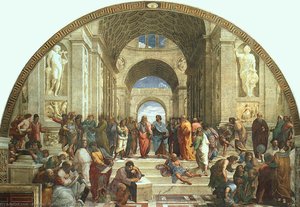 Szkoła Ateńska1511
 Madonna Sykstyńska1513
 Przemienienie1520
 Małżeństwo Maryjne1504
Eseje o St. Michael and Satan
 Masterpieces of Perfection: The Top 25 Greatest Artworks by RaphaelJourney through the sublime beauty of the High Renaissance with our curated list of Raphael's top 25 masterpieces. From iconic Madonnas to …
 Renesansowe Wizje: Tematyka i Techniki Malarstwa XVI Wieku – Przewodnik dla KoneserówOdkryj fascynujący świat malarstwa renesansowego XVI wieku! Przewodnik dla koneserów omawia techniki, tematykę i arcydzieła mistrzów. Pozna…
 25 Masterpieces of the Sistine Chapel: A Journey Through Michelangelo's Divine ArtStep into the divine beauty of the Sistine Chapel. Explore 25 iconic Renaissance masterpieces by Michelangelo and beyond. From breathtaking…