
 Podgląd w skali 1:1
 Wyślij jako kartkę
 Udostępnij
 Szczegóły dzieła
 Przewodnik

 Pobierz obraz
 Podobne obiekty
 RTG
RTG Pokaz slajdów
 Pytania i odpowiedzi
 Statystyki
Console With Two Windows


 Rozwiń treść
Giclée / Wydruk artystyczny
Wydruki giclée lub płótna o jakości muzealnej, szybka realizacja i szeroki wybór opcji wykończenia. ( Zamów ręcznie malowaną reprodukcję Przejdź do wersji cyfrowej)




P118B zł10

P118H zł10

P118W zł10

P438Z zł10

P508JH zł12

P508YH zł12

P805H zł10

P805Z zł10

P919BZ zł10

P919G zł10

P919XJ zł10

P959ZH zł10

P968JZ zł12

W106C zł8

W218G zł10

W218JH zł8

W218Y zł10

W307PJ zł10

W316G zł10

W316PJ zł8

W316Y zł10

W398PJ zł8

W4111J zł10

W500HY zł15

W500JH zł15

W692G zł12

W849H zł8

W940BG zł15

W953PJ zł8




Wybierz spośród naszych standardowych rozmiarów, które zachowują oryginalne proporcje dzieła sztuki.

Wpisz wymaganą szerokość i wysokość, aby dopasować grafikę do ramy lub ściany. Wydruk można jedynie przyciąć, nigdy nie powiększając go poza oryginalny obraz, dlatego format o innych proporcjach spowoduje utratę części kompozycji. Przed rozpoczęciem druku prześlemy Ci cyfrowy podgląd do zatwierdzenia. Obraz wyświetlany na tej stronie nie pokazuje rzeczywistego przycięcia — jedynie podgląd oddaje ten efekt.
Dostawa na cały świat () w ciągu 2 tygodni zamiast standardowych 4/5 tygodni. (16 Listopad)

Bezpłatna ekspresowa wysyłka na cały świat

Wysokiej jakości płótno lniane

Pełne ubezpieczenie przesyłki

Gwarancja zwrotu należności celnych i podatków importowych

Gwarancja wiernego odwzorowania kolorów

100-dniowa polityka zwrotów (tylko w przypadku wad)

Gwarancja 100% zwrotu pieniędzy

Zniżka przy zakupie wielu sztuk
 Opcja ze szkłem jest dostępna wyłącznie w rozmiarach poniżej 110 cm

Console With Two Windows
Giclée / Wydruk artystyczny
Wymiary reprodukcji
-


Cena całkowita
zł 315
A Symphony in Color: Exploring Dufy's Console With Two Windows
To stand before Raoul Dufy’s Console With Two Windows is to step directly into a sun-drenched moment of Parisian leisure, a breath of pure, unadulterated joy. This painting, executed in 1948, is not merely an depiction of an interior space; it is an immersion into the very spirit of French *joie de vivre*. Dufy, whose career was marked by an almost irresistible attraction to light and color, captures here a scene vibrating with energy yet steeped in serene balance. The composition immediately draws the eye across the central console table, flanked symmetrically by two inviting windows that frame glimpses of an imagined, vibrant world beyond.
The Luminous Language of Fauvism
Technically, this work is a masterful testament to Dufy’s enduring connection to the decorative arts while firmly rooting itself in the expressive power of Fauvism. The characteristic bold colors—the electric blues of the window panes, the warm glow emanating from the central yellow wall, and the contrasting accents of green and red on the flanking doors—do not simply decorate; they sing. Dufy employs loose brushstrokes that lend an undeniable sense of movement to every surface. One can almost hear the chatter and feel the warmth of the Mediterranean sun reflected in the paint. This vibrant application of pigment transforms what might be a static architectural study into a dynamic, breathing tableau.
Symbolism of Openings and Connection
The structure itself—the console mediating between two windows—is rich with subtle symbolism. Windows, universally understood as portals, here suggest the permeable boundary between private sanctuary and public life. The view through these panes offers tantalizing glimpses of a cityscape, hinting at stories unfolding just beyond the frame. Furthermore, the inclusion of distinct doors, one green and one red, adds layers of narrative possibility. These openings invite contemplation: what lies on the other side? Dufy masterfully uses color contrast to suggest choice, passage, and the continuous dialogue between interior comfort and exterior adventure.
Bringing Parisian Vibrancy Home
For the collector or designer seeking to infuse a space with artistic soul, this piece offers unparalleled emotional resonance. It is an antidote to muted modernism, demanding that one acknowledge color as both structure and emotion. Reproducing Dufy’s vision allows one to curate not just a wall hanging, but a mood—one of sophisticated exuberance. The combination of ornate detail on the console with the spontaneity of the brushwork ensures that the piece feels both timelessly classical and thrillingly contemporary. It is an artwork designed to be lived with, celebrated in conversation, and admired for its sheer, glorious chromatic energy.
Pytania i odpowiedzi
Jak zbudowana jest kompozycja kolorystyczna „Console With Two Windows” – Raoul Dufy?
W "Console With Two Windows" Bold kontrast łączy się z Discordant Palette harmonią.
Jak duży jest kontrast w „Console With Two Windows” – Raoul Dufy?
„Console With Two Windows” – Raoul Dufy prezentuje Bold kontrast między jasnymi a ciemnymi partiami dzieła.
Jaki jest format dzieła "Console With Two Windows"?
Format dzieła „Console With Two Windows” to Landscape. Jest to pomocna informacja podczas planowania miejsca, w którym zostanie umieszczona reprodukcja.
Biografia artysty
A Life Immersed in Color and Light
Raoul Dufy, born on June 3rd, 1877, in the bustling port city of Le Havre, Normandy, was an artist whose name became inextricably linked with joy, vibrancy, and a distinctly French *joie de vivre*. His artistic journey wasn’t one of solitary contemplation but began amidst the practical realities of life – he worked for a coffee-importing company after leaving school at just fourteen. Yet, even in this early stage, the undeniable pull towards creative expression proved too strong to resist. Evening classes at Le Havre's École des Beaux-Arts ignited a passion that would not only define his career but also shape his very being, forging lasting friendships with fellow artists Raimond Lecourt and Othon Friesz – companions who shared a studio in Montmartre and a deep commitment to exploring new visual languages. These formative years were steeped in the influence of Impressionism, particularly the luminous landscapes of Claude Monet and Camille Pissarro, providing him with a foundational understanding of light, color, and composition that would later inform his unique style. He received a prestigious scholarship to study at the École Nationale supérieure des Beaux-Arts in Paris, further honing his skills and immersing himself within the dynamic artistic environment of the capital city.Embracing Fauvism and Finding His Voice
The early 20th century presented Dufy with a rapidly evolving landscape of modern art. Initially, he experimented with Cubism, drawn to its fragmented forms and innovative approach to space. However, it was Henri Matisse’s groundbreaking *Luxe, Calme et Volupté* at the 1905 Salon des Indépendants that proved truly transformative. The sheer audacity of color and expressive freedom unleashed by Matisse – a declaration of vibrant hues divorced from traditional representation – resonated deeply with Dufy, propelling him towards a style characterized by bold colors and liberated brushwork. This wasn’t mere imitation; it was an absorption and distillation of Fauvism's energy into something uniquely his own. He deliberately moved away from the movement’s strict adherence to its tenets, developing a more decorative and fluid approach – a style that retained the boldness of Fauvism while injecting a sense of lightness and grace. This period witnessed a fascinating exploration of various mediums – illustration, textile design for Paul Poiret (a collaboration that significantly influenced his aesthetic), even ceramics – demonstrating a remarkable versatility that extended far beyond the confines of traditional painting. His designs weren’t merely decorative elements; they were integral expressions of his artistic vision, bringing color and dynamism to everyday objects, reflecting a deep appreciation for beauty in all its forms.A Stenographic Style: Capturing Modern Life
By the 1920s, Dufy had fully blossomed into a master of what became known as his “stenographic” style. This distinctive technique involved rapidly applying thin washes of color over skeletal structures – a method that created an impression of movement and spontaneity. It was a perfect fit for capturing the energy of modern life: yachting regattas, bustling city scenes, elegant social gatherings on the French Riviera. Dufy wasn’t interested in meticulous detail; he sought to convey atmosphere, emotion, and the fleeting beauty of a moment. His paintings became celebrations of leisure, pleasure, and the vibrant pulse of contemporary society. He painted orchestras, racecourses, and seascapes with an effervescent quality that captured the spirit of the Jazz Age. This period also saw him undertaking large-scale commissions, including the monumental *La Fée Electricité* for the 1937 Exposition Internationale in Paris – a vast work celebrating electricity’s impact on modern life, executed with remarkable speed and ingenuity using a new quick-drying medium. The sheer scale of this project showcased Dufy's ability to manage complex projects while maintaining his distinctive artistic vision.Key Characteristics of Dufy’s Art
- Vibrant Color Palette: Dufy was renowned for his use of bright, saturated colors, often applied in thin washes.
- Dynamic Composition: His paintings frequently feature energetic compositions that convey a sense of movement and spontaneity.
- Decorative Style: A strong decorative element is present throughout his work, influenced by his designs for textiles and ceramics.
- Celebration of Modern Life: Dufy’s art often depicts scenes of leisure, social gatherings, and the pleasures of contemporary society.
- Stenographic Technique: His signature style involved rapidly applying thin washes of color over skeletal structures.
Legacy and Enduring Appeal
Despite facing health challenges later in life due to rheumatoid arthritis, Dufy remained a dedicated artist until his death on March 23rd, 1953, in Forcalquier. His work continues to be celebrated worldwide, held in prestigious collections including the Musée d’Orsay in Paris, the Hermitage Museum in St. Petersburg, The Museum of Modern Art in New York, and the Art Institute of Chicago – a testament to his enduring artistic significance. Dufy's influence extends far beyond painting; his designs continue to inspire textile and decorative arts. He left behind an impressive body of work – thousands of paintings, watercolors, drawings, prints, and applied art pieces – that collectively represent a vibrant celebration of life, color, and the beauty of the everyday. Raoul Dufy wasn’t merely a painter; he was a chronicler of his time, capturing the spirit of an era with a unique blend of Fauvist energy, decorative flair, and a distinctly optimistic vision. His art remains profoundly relevant today, offering a vibrant escape and a reminder to embrace the *joie de vivre* that permeated his life and work.
Raoul Dufy
1877 - 1953 , Francja
Krótka nota
- Artistic Movement Or Style: Fauvizm
- Artists Or Movements Influenced By This Artist: ['Ceramika i tkaniny']
- Artists Who Influenced This Artist:
- Monet
- Matisse
- Date Of Birth: 3 czerwca 1877
- Date Of Death: 23 marca 1953
- Full Name: Raoul Dufy
- Nationality: Francuz
- Notable Artworks:
- Kasyno w Nicei
- Zatoka aniołów
- Wyścigi
- Place Of Birth: Le Havre, Francja
Powiązane artykuły

Masterpieces of Siena: Top 25 Artworks by Duccio di Buoninsegna
Journey through the Sienese School with our curated guide to the top 25 artworks by Duccio di Buoninsegna. Explore the divine beauty of Byzantine-inspired masterpieces and find museum-quality art reproductions for your decor. Discover all masterpieces on OriginalUniqueArt.com.

Art for Every Course: Using Visual Rhythm to Design Multi-Zone Dining Spaces
Master the art of multi-zone dining design with expert strategies for using visual rhythm and curated art. Learn to transform hotel and restaurant interiors through professional art procurement, custom oil reproductions, and strategic spatial storytelling.

Historical Resonance: Integrating Vintage Painting Reproductions into Modern Interiors
Master the art of blending classical reproductions with modern design. Discover expert tips to elevate your interior aesthetic today.
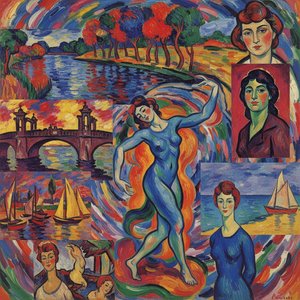
Top 10 arcydzieł Fauwizmu: Kolor i ekspresja w Twoim wnętrzu | OriginalUniqueArt.com
Odkryj 10 arcydzieł Fauwizmu! Poznaj historię Matisse'a, Deraina i innych artystów tego rewolucyjnego ruchu. Ekspresjonizm kolorystyczny w Twoim wnętrzu – reprodukcje najwyższej jakości na OriginalUniqueArt.com. Eksploruj kolekcję online!

Capturing the Storm: The Emotional Power of Revolution in Impressionist Art
Explore the emotional revolution of Impressionist art. From Monet's light to Renoir's warmth, discover how these masters redefined perception through hand-painted beauty and timeless technique.