

 Podgląd w skali
 Wyślij jako kartkę
 Udostępnij
 Szczegóły dzieła

 Pobierz
 Podobne obiekty
 RTG
RTG Pokaz slajdów
Before the Bath

 Rozwiń treść
Ręcznie malowana reprodukcja olejowa
Ręcznie malowany obraz olejny na płótnie, wykonany na zamówienie przez naszych artystów w wybranym przez Ciebie wymiarze i oprawie. ( Zamów wydruk Kup obraz wysokiej rozdzielczości)




































Wybierz spośród naszych standardowych rozmiarów, które zachowują oryginalne proporcje dzieła sztuki.

Możesz wprowadzić własne wymiary, aby dopasować obraz do konkretnej ramy lub przestrzeni. Jeśli wybrany rozmiar nie będzie odpowiadał proporcjom oryginału, przytniecie dzieło sztuki lub rozszerzymy je o dodatkowe elementy, ręcznie domalowane przez artystę. Przed rozpoczęciem produkcji wyślemy projekt cyfrowy do Twojej akceptacji.
Należy pamiętać, że podgląd na ekranie nie odzwierciedla rzeczywistego przycinania ani rozszerzania obrazu. Tylko projekt dokładnie pokaże ostateczną kompozycję.
Choć oferujemy możliwość zamówienia niestandardowych rozmiarów, zalecamy wybór wymiaru z gotowej listy, aby zachować oryginalne proporcje dzieła.
Po złożeniu zamówienia zespół OriginalUniqueArt.com skontaktuje się z klientem drogą mailową w celu uzyskania instrukcji i prześle wizualizację projektu
Dostawa na całym świecie () w ciągu 3–4 tygodni zamiast standardowych 5 tygodni. (26 Sierpień). Bez kompromisów w kwestii jakości.

Bezpłatna ekspresowa wysyłka na cały świat

Wysokiej jakości płótno lniane

Pełne ubezpieczenie przesyłki

Gwarancja zwrotu należności celnych i podatków importowych

Gwarancja wiernego odwzorowania kolorów

Polityka 60-dniowego zwrotu (tylko w przypadku wad)

Gwarancja 100% zwrotu kosztów

Zniżka przy zamówieniu wielu produktów
 Opcja ze szkłem jest dostępna wyłącznie w rozmiarach poniżej 110 cm

Before the Bath
Technika reprodukcji
Wymiary reprodukcji
-


Cena całkowita
$ 300
O artyście
A Chronicler of Catalan Modernisme: The Life and Art of Ramon Casas
Ramon Casas i Carbó, born in Barcelona on January 4th, 1866, was more than just a painter; he was a visual poet of his time, an artist who captured the spirit of a Catalonia undergoing profound transformation. Living through a period marked by both burgeoning artistic freedom and intense political and social upheaval, Casas became synonymous with Catalan Modernisme, a movement that sought to forge a unique cultural identity for the region. His life story is inextricably linked to the vibrant intellectual circles of Barcelona’s late 19th and early 20th centuries, and his art reflects not only his personal aesthetic but also the anxieties and aspirations of a society on the cusp of modernity. From an early age, Casas demonstrated a remarkable aptitude for drawing, initially receiving instruction from his mother, who herself possessed artistic inclinations. He later formally studied at the School of Fine Arts in Barcelona, and subsequently at the Académie Gleyre in Paris – a crucible where he encountered influences that would shape his evolving style.Early Influences and Artistic Development
Casas’s early work reveals a clear debt to Impressionism, particularly evident in his depictions of Parisian life during his time studying abroad. However, he quickly moved beyond mere imitation, developing a distinctive approach characterized by bold brushwork, a keen eye for capturing fleeting moments, and an increasing focus on portraiture. It was in Barcelona that Casas truly found his artistic voice, drawn to the city’s dynamic energy and its burgeoning bohemian scene. He became a central figure in the *Els Quatre Gats* (The Four Cats), a café-cabaret modeled after Le Chat Noir in Paris, which served as a hub for artists, writers, and intellectuals. This environment fostered a spirit of experimentation and collaboration, profoundly influencing Casas’s artistic direction. His portraits from this period are particularly noteworthy – not simply representations of physical likeness but insightful psychological studies that reveal the character and social standing of his subjects. He didn't shy away from depicting the elite of Barcelona society, yet he infused these commissions with a sense of realism and often subtle critique.The Power of the Portrait and Beyond
Casas’s mastery of portraiture established him as one of Catalonia’s most sought-after artists. His subjects included prominent figures in politics, literature, and business, but his artistic vision extended far beyond the confines of conventional society. He was equally captivated by scenes of everyday life – bullfights, executions, street riots – capturing the raw energy and often brutal realities of urban existence. El garrot* (The Cudgel), a series of paintings depicting a violent crackdown on Catalan protestors, stands as a powerful testament to his social consciousness and willingness to confront difficult subjects. Beyond painting, Casas was also a gifted graphic designer, creating striking posters and postcards that helped to disseminate the ideals of Modernisme and promote Catalan culture. His poster designs were innovative for their time, employing bold typography and evocative imagery to capture the attention of a rapidly expanding audience. He understood the power of visual communication and used it effectively to shape public opinion and champion his artistic beliefs.Major Achievements and Lasting Legacy
Throughout his career, Casas exhibited widely both in Spain and internationally, gaining recognition for his unique style and insightful depictions of Catalan life. His work played a crucial role in establishing Barcelona as a major center of Modernist art, influencing generations of artists to come. Estudi d'estiu o Primero pasarás sobre mi cadáver* (Summer Study or First You Shall Pass Over My Body) is perhaps one of his most iconic paintings, showcasing his ability to blend symbolism and realism in a hauntingly beautiful composition. The painting’s ambiguous narrative invites multiple interpretations, reflecting the complexities of Catalan identity during a period of political unrest. Casas's influence extended beyond the realm of fine art; he was also involved in theater design and journalism, demonstrating a remarkable versatility and commitment to artistic expression in all its forms. He died on February 29th, 1932, leaving behind a rich legacy that continues to inspire artists and captivate audiences today. His work remains a vital record of a pivotal moment in Catalan history, offering a glimpse into the soul of a nation grappling with questions of identity, modernity, and social change.A Symbol of Catalan Identity
Ramon Casas’s art is not merely a reflection of his time; it *is* that time – a vibrant, complex, and often contradictory portrait of Catalonia at the turn of the 20th century. He was a master observer, capable of capturing both the beauty and brutality of urban life with equal skill and sensitivity. His portraits are more than just likenesses; they are windows into the souls of his subjects, revealing their character, social standing, and inner lives.- His graphic designs helped to define the aesthetic of Catalan Modernisme.
- His willingness to confront difficult social issues set him apart from many of his contemporaries.
- His legacy continues to inspire artists and captivate audiences today.
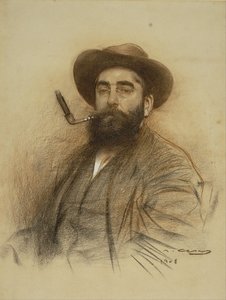
Krótka nota
- Artistic Movement Or Style: Catalan Modernisme
- Date Of Birth: January 4, 1866
- Date Of Death: February 29, 1932
- Full Name: Ramon Casas i Carbó
- Nationality: Spanish
- Notable Artworks:
- Self-portrait
- Estudi d'estiu
- El garrot
- Place Of Birth: Barcelona, Spain

