Rozmiar tekstu

() ·

Obraz stworzony dla Ciebie, własnoręcznie

Still Life with a Coffeepot

Ręcznie malowana reprodukcja olejowa

Ręcznie malowany obraz olejny na płótnie, wykonany na zamówienie przez naszych artystów w wybranym przez Ciebie wymiarze i oprawie. ( Przełącz na wydania drukowane Przejdź do wersji cyfrowej)

Opis obiektu

Experience Konchalovsky's 'Still Life with a Coffeepot,' a vibrant 1919 Fauvist masterpiece! Bold colors & Cubist influences create a harmonious, balanced scene.

Biografia artysty

Pyotr Konchalovsky (1876-1956) – rosyjski malarz, łączący impresjonizm z fauwizmem i realizmem socjalistycznym. Odkryj jego pejzaże, portrety i ikoniczne dzieła sztuki.

od ·

Rozdział 1

Jak duży powinien być ten format?

Przesuń suwak, aby zmienić rozmiar; obraz po lewej stronie przedstawia ramę w jej rzeczywistej szerokości. Zachowano proporcje oryginału.

Standardowy format
personalizowane
CM
INCH

Wybierz spośród naszych standardowych rozmiarów, które zachowują oryginalne proporcje dzieła sztuki.

szerokość
wysokość

Wpisz wymaganą szerokość i wysokość, aby obraz pasował do Twojej ramy lub ściany. Ponieważ jest to dzieło malowane ręcznie, w przypadku rozmiaru o innych proporcjach artysta może domalować nieco więcej wokół obrazu lub przyciąć jego fragmenty — wybór należy do Ciebie. Przed rozpoczęciem pracy prześlemy Ci cyfrową wizualizację do zatwierdzenia. Obraz widoczny na tej stronie nie przedstawia rzeczywistego efektu — jedynie wizualizacja oddaje realny rezultat.

Rozdział 2

W jaki sposób ma zostać dostarczone?

Wybierz krawędzie płótna naciągniętego na ramę

Wybierz ramę

Corner sample of the WhiteWrap canvas edge finish, stretched on lite drewno bars
Białe krawędzie zł1
Corner sample of the BlurSideWrap canvas edge finish, stretched on lite drewno bars
rozmyte krawędzie zł1
Corner sample of the ExtendedWrap canvas edge finish, stretched on lite drewno bars
Przedłużony zł1
Corner sample of the P118B picture frame: polistyren formowany, 5 cm wide and 3 cm thick
P118B zł10
Corner sample of the P118H picture frame: polistyren formowany, 5 cm wide and 3 cm thick
P118H zł10
Corner sample of the P118W picture frame: polistyren formowany, 5 cm wide and 3 cm thick
P118W zł10
Corner sample of the P438Z picture frame: polistyren formowany, 5.5 cm wide and 3.5 cm thick
P438Z zł10
Corner sample of the P508JH picture frame: polistyren formowany, 7 cm wide and 3.5 cm thick
P508JH zł12
Corner sample of the P508YH picture frame: polistyren formowany, 7 cm wide and 3.5 cm thick
P508YH zł12
Corner sample of the P805H picture frame: polistyren formowany, 5 cm wide and 3.5 cm thick
P805H zł10
Corner sample of the P805Z picture frame: polistyren formowany, 5 cm wide and 3.5 cm thick
P805Z zł10
Corner sample of the P919BZ picture frame: polistyren formowany, 7 cm wide and 3.5 cm thick
P919BZ zł10
Corner sample of the P919G picture frame: polistyren formowany, 7 cm wide and 3.5 cm thick
P919G zł10
Corner sample of the P919XJ picture frame: polistyren formowany, 7 cm wide and 3.5 cm thick
P919XJ zł10
Corner sample of the P959ZH picture frame: polistyren formowany, 5 cm wide and 3 cm thick
P959ZH zł10
Corner sample of the P968JZ picture frame: polistyren formowany, 6 cm wide and 4 cm thick
P968JZ zł12
Corner sample of the W106C picture frame: lite drewno, 5 cm wide and 3 cm thick
W106C zł8
Corner sample of the W218G picture frame: lite drewno, 5 cm wide and 3 cm thick
W218G zł10
Corner sample of the W218JH picture frame: lite drewno, 5 cm wide and 3 cm thick
W218JH zł8
Corner sample of the W218Y picture frame: lite drewno, 5 cm wide and 3 cm thick
W218Y zł10
Corner sample of the W307PJ picture frame: lite drewno, 6 cm wide and 3 cm thick
W307PJ zł10
Corner sample of the W316G picture frame: lite drewno, 6 cm wide and 3 cm thick
W316G zł10
Corner sample of the W316PJ picture frame: lite drewno, 6 cm wide and 3 cm thick
W316PJ zł8
Corner sample of the W316Y picture frame: lite drewno, 6 cm wide and 3 cm thick
W316Y zł10
Corner sample of the W398PJ picture frame: lite drewno, 5 cm wide and 3 cm thick
W398PJ zł8
Corner sample of the W4111J picture frame: lite drewno, 6.5 cm wide and 3.5 cm thick
W4111J zł10
Corner sample of the W500HY picture frame: lite drewno, 7 cm wide and 5 cm thick
W500HY zł15
Corner sample of the W500JH picture frame: lite drewno, 7 cm wide and 5 cm thick
W500JH zł15
Corner sample of the W692G picture frame: lite drewno, 8 cm wide and 4 cm thick
W692G zł12
Corner sample of the W849H picture frame: lite drewno, 5 cm wide and 3 cm thick
W849H zł8
Corner sample of the W940BG picture frame: lite drewno, 7.5 cm wide and 4.5 cm thick
W940BG zł15
Corner sample of the W953PJ picture frame: lite drewno, 6 cm wide and 3.5 cm thick
W953PJ zł8
Corner sample of the H24-GOLD picture frame: rzeźbione drewno pokryte gipsem, 10 cm wide and 6 cm thick
H24-GOLD zł30
Corner sample of the H24-SILVER picture frame: rzeźbione drewno pokryte gipsem, 10 cm wide and 6 cm thick
H24-SILVER zł30
Corner sample of the H36-GOLD picture frame: rzeźbione drewno pokryte gipsem, 15 cm wide and 6.5 cm thick
H36-GOLD zł45
Corner sample of the H36-SILVER picture frame: rzeźbione drewno pokryte gipsem, 15 cm wide and 6.5 cm thick
H36-SILVER zł45

Profil: . Wymiar całkowity w ramie: .

Rozdział 3

Kto go maluje i czy coś powinno ulec zmianie?

Przykłady możliwych zmian: Zastąpienie twarzy zdjęciem klienta; Dodanie zwierzęcia (np. zamiana kota na psa); Ukrycie wiadomości w tle; Zmiana krajobrazu lub elementów tła.
Po złożeniu zamówienia zespół OriginalUniqueArt.com skontaktuje się z klientem drogą mailową w celu uzyskania instrukcji i prześle podgląd projektu

Dostawa na całym świecie () w ciągu 3–4 tygodni zamiast standardowych 5 tygodni. (3 Listopad). Bez kompromisów w kwestii jakości.

Rozdział 4

Ostatnie szlify

Tabliczka informacyjna, jak w muzeum?

Szczegóły grawerowanej brązowej tabliczki

This elegant plaque features the artist's name and the title of the artwork, finely engraved for a timeless presentation.

It is made from bronze with a refined, elegant finish. The text is precisely laser-engraved for a sharp and permanent result. Measuring 9x2 cm, the plaque is compact yet easy to read. It's built to be durable and scratch-resistant, offering a professional, museum-quality look. Mounting is simple thanks to the included adhesive backing.

Szczegóły przezroczystej tabliczki akrylowej

The plaque includes essential engraved details such as the artist's name, the title of the artwork, the date it was created, the type of media used-like oil on canvas or watercolor-a brief description of the piece, and a QR code that links to the complete artwork information.

It is crafted from clear acrylic, offering a sleek, modern appearance. The text is UV-engraved in black to ensure strong visual contrast. With a size of 10x15 cm, it ensures optimal readability. It comes equipped with two metal hooks for secure wall mounting. The plaque is designed to be weather-resistant, making it suitable for various environments, and it includes interactive features that work seamlessly with smartphone scanning.

Szczegóły czarnej tabliczki akrylowej

This elegant plaque includes engraved information such as the artist's name, the title of the artwork, the date it was created, the type of media used (like oil on canvas or watercolor), a short description of the artwork, and a QR code for quick access to more information.

The plaque itself is made from refined black acrylic with a premium finish. The text is laser-engraved in white for high contrast and readability. Its size is 10x15 cm, designed to be easy to read. It comes with two metal hooks for professional mounting. The design is sleek and fits any interior style. It is also weather-resistant and durable, with built-in digital integration for mobile compatibility.

Werniks ochronny?

Kiedy potrzebujesz dostawy?

Rozdział 5

Twoje dzieło, dokładnie tak, jak zamówiłeś

Still Life with a Coffeepot

Technika reprodukcji

Wymiary reprodukcji

-

Wybitny mistrz artystyczny

Większa szczegółowość, finezja i dodatkowy czas na realizację

-

Opcje oprawy reprodukcji

-

-

W przypadku dzieł sztuki lub reprodukcji, których którykolwiek z boków przekracza 105 cm (około 41 cali), rama zostanie wysłana w formie zestawu do samodzielnego montażu. Metoda ta zapewnia bezpieczną dostawę i zapobiega uszkodzeniom podczas transportu.

Wymagany profesjonalny montaż – nie jest to produkt typu DIY.
Zestaw musi zostać złożony, a płótno naciągnięte przez doświadczonego profesjonalnego ramiarza, przy użyciu kleju do drewna (brak w zestawie), kleszczy do naciągania płótna oraz ścisków, które utrzymają krosna w równej pozycji podczas schnięcia kleju. Nieprawidłowy montaż lub nierównomierne napięcie płótna może trwale uszkodzić dzieło sztuki i nie podlega naszej gwarancji.

  • W zestawie znajdują się wszystkie listwy z litego drewna, precyzyjnie docięte do wymiarów.

  • Montaż odbywa się przy użyciu dołączonych wkrętów oraz kleju do drewna do łączenia narożników, którego zestaw nie zawiera i który musi zostać dostarczony przez ramiarza.

  • Wymagane są profesjonalne narzędzia, których nie ma w zestawie: kleszcze do naciągania płótna (napinacz) oraz zaciski, które pozwolą utrzymać listwy w równej pozycji podczas schnięcia kleju.

Ważne:
Do połączenia narożników niezbędny jest klej do drewna, listwy należy unieruchomić za pomocą ścisków do momentu całkowitego wyschnięcia kleju, a naciągnięcie płótna na złożoną ramę wymaga użycia kleszczy do naciągania płótna. Żaden z tych elementów nie jest dołączony do zestawu. Przed zamówieniem tego rozmiaru zalecamy konsultację z doświadczonym ramiarzem.

Etykieta obiektu

-

-

Lakier ochronny

Lakier z połyskiem (pogłębia kolory, chroni przed światłem i wilgocią)

-

Personalizacja dzieła

Przykłady możliwości personalizacji: zastąp twarz zdjęciem klienta; dodaj zwierzę domowe (np. zamień kota na psa); umieść ukrytą wiadomość w tle; zmień krajobraz lub elementy tła.

-

Ekspresowa

Dostawa na cały świat () w ciągu 3–4 tygodni zamiast standardowych 5 tygodni. (3 Listopad). Bez kompromisów w kwestii jakości.

-

Przesyłka ekspresowa

Dostawa na cały świat () w ciągu 5 tygodni. (10 Listopad).

W cenie

Cena całkowita

zł 1173

Suma całkowita zł 1173

Opcja ze szkłem jest dostępna wyłącznie w rozmiarach poniżej 110 cm

W każdym zamówieniu

  • Bezpłatna ekspresowa wysyłka na cały świat
  • Wysokiej jakości płótno lniane
  • Pełne ubezpieczenie przesyłki
  • Gwarancja zwrotu należności celnych i podatków importowych
  • Gwarancja wiernego odwzorowania kolorów
  • 100-dniowa polityka zwrotów (tylko w przypadku wad)
  • Gwarancja 100% zwrotu pieniędzy
  • Zniżka przy zakupie wielu sztuk

Still Life with a Coffeepot: A Fauvist Celebration of Everyday Objects

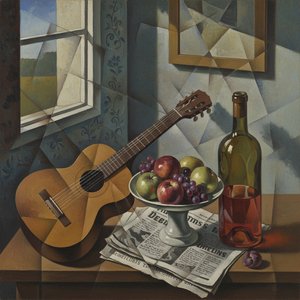
Pyotr Konchalovsky’s Still Life with a Coffeepot, painted in 1919, is a vibrant and captivating example of the Fauvist movement. Measuring 105 x 108 cm, this artwork transcends a simple depiction of domestic items; it's an exploration of color, form, and the expressive potential of paint itself.

Composition and Subject Matter

The painting presents a carefully arranged still life set upon a table draped with a warm yellow cloth. The scene is populated with familiar objects: a blue vase brimming with flowers, a small white bowl holding green fruits (likely limes), and the titular yellow teapot. These elements are not rendered with photographic realism but rather simplified and stylized to emphasize their inherent shapes and colors. The background, painted in varying shades of blue, provides a cool counterpoint to the warmer tones dominating the foreground, creating visual balance and depth. The arrangement isn't haphazard; it demonstrates Konchalovsky’s skill in orchestrating a harmonious composition that guides the viewer's eye across the canvas.

Fauvist Style and Influences

Konchalovsky was deeply influenced by French Impressionism and, most notably, Fauvism. The term "Fauve" (meaning “wild beast”) was applied to artists who utilized bold, non-naturalistic colors and expressive brushstrokes. Still Life with a Coffeepot exemplifies these characteristics. The colors are not used to accurately represent the objects but rather to evoke emotion and create visual impact. The visible brushwork adds texture and dynamism to the painting, further distancing it from traditional realism. One can also detect echoes of Paul Cézanne’s influence in Konchalovsky's approach to form and structure, particularly in the way he simplifies shapes and explores spatial relationships.

Historical Context and Artistic Significance

Created in 1919, shortly after the Russian Revolution, this painting reflects a period of significant social and artistic upheaval. Konchalovsky was a member of the Jack of Diamonds group, a collective of artists who actively challenged traditional representational art forms. This group sought to introduce modern European trends – particularly Fauvism and Cubism – into the Russian art scene. Still Life with a Coffeepot stands as a testament to this artistic rebellion, showcasing Konchalovsky’s contribution to the development of Fauvism within the context of Russian art. It represents a move away from academic conventions towards a more expressive and subjective approach to painting.

Emotional Impact and Lasting Appeal

Beyond its historical significance, Still Life with a Coffeepot possesses an undeniable emotional appeal. The vibrant colors and dynamic brushstrokes create a sense of energy and vitality. While the subject matter is commonplace – everyday objects found in a home – Konchalovsky elevates it to something extraordinary through his artistic vision. The painting evokes feelings of warmth, comfort, and perhaps even a touch of nostalgia. It’s a celebration of the beauty that can be found in the ordinary, rendered with an exuberance that continues to captivate viewers today.

Pytania i odpowiedzi

Czy dzieło "Still Life with a Coffeepot" jest w ogólnym rozrachunku jaśniejsze czy ciemniejsze?

Jasność dzieła „Still Life with a Coffeepot” – Piotr Konchalowski wynosi bright, przy luminancji na poziomie Gentle Luminance.

Gdzie można kupić ręcznie malowane reprodukcje dzieła „Still Life with a Coffeepot” – Piotr Konchalowski?

Ręcznie malowaną reprodukcję dzieła „Still Life with a Coffeepot” – Piotr Konchalowski można zamówić bezpośrednio na stronie Ręcznie malowana reprodukcja: ręcznie malowana reprodukcja olejowa na płótnie lnianym, tworzoną na specjalne zamówienie.

Jak kolory w dziele "Still Life with a Coffeepot" współgrają ze sobą?

„Still Life with a Coffeepot” – Piotr Konchalowski prezentuje Softly Mixed Palette harmonię kolorystyczną.

Więcej o tym obrazie

Podgląd w skali 1:1 Podgląd AR Przełącz na wydania drukowane Przejdź do wersji cyfrowej Wyślij jako kartkę
Szczegóły dzieła Przewodnik Dodaj do ulubionych Pobierz obraz Podobne obiekty RTG Pokaz slajdów Pytania i odpowiedzi Statystyki

W liczbach

  • 1919rok powstania dzieła
  • 29dostępne ramy do wyboru
  • standardowe formaty, w ich własnych proporcjach
  • 5tygodni na namalowanie i dostarczenie dzieła
Piotr Konchalowski

Piotr Konchalowski

1876 - 1956, Rosja

Krótkie informacje o Piotr Konchalowski

  • Artistic Movement Or Style: Postimpresjonizm, Realizm
  • Artists Or Movements Influenced By This Artist: ['Mir Iskusstva']
  • Artists Who Influenced This Artist:
    • Paul Cézanne
    • Van Gogh
  • Date Of Birth: 21 lutego 1876
  • Date Of Death: 2 lutego 1956
  • Full Name: Pyotr Petrovich Konchalovsky
  • Nationality: Rosyjski
  • Notable Artworks:
    • Niebory
    • Kawałek
    • Portret
  • Place Of Birth: Charków, Rosja

Biografia artysty

A Life Immersed in the Russian Artistic Spirit

Pyotr Petrovich Konchalovsky, born February 21, 1876, in the village of Slavianka near Kharkiv, was more than just a painter; he was a visual chronicler of a Russia undergoing profound transformation. His artistic journey mirrored the nation’s own tumultuous passage through revolution and ideological shifts, marked by a relentless search for new forms of expression. Konchalovsky's upbringing steeped him in an atmosphere rich with intellectual and creative currents. His father, Petr Petrovich Konchalovsky, was a respected translator and art publisher whose Moscow home became a vibrant hub frequented by leading artists of the era—Valentin Serov, Mikhail Vrubel, Vasily Surikov all graced their residence after the family’s move to the capital in 1889. This early exposure wasn't merely observational; it instilled within young Pyotr a deep appreciation for artistic expression and laid the foundation for his future path. Weekends spent absorbing the masterpieces at the Tretyakov Gallery proved formative, shaping his aesthetic sensibilities with the power of Russian masters.

From Parisian Influences to Avant-Garde Innovation

Konchalovsky’s formal training began at the Moscow School of Painting, Sculpture and Architecture, but a pivotal period followed in Paris from 1896 to 1898 at the Académie Julian. This immersion in the French art world proved transformative. He encountered the groundbreaking work of Paul Cézanne and Vincent van Gogh, artists who challenged conventional representation and explored new ways of perceiving form and color. A subsequent journey to Arles allowed him a deeper understanding of Van Gogh’s artistic vision—a pilgrimage into the heart of expressive intensity. Returning to Russia, he continued his studies at the Imperial Academy of Arts in Saint Petersburg, graduating in 1907. However, it was upon his return that Konchalovsky truly began to forge his own distinctive style. He became a central figure in the Russian avant-garde movement, co-founding the influential “Jack of Diamonds” (Knave of Diamonds) society in 1910. This group rejected academic traditions and championed experimentation, seeking inspiration not only from Western European modernism but also from Russia’s own folk art traditions—icons, tavern signs, and colorful popular prints known as *lubok*. The society aimed to break free from the constraints of traditional artistic conventions and explore new possibilities in composition, color, and subject matter. Konchalovsky's role as its chairman was crucial in shaping its direction and promoting its radical ideas.

Navigating Shifting Ideologies: Style and Subject Matter

Konchalovsky’s artistic style evolved throughout his career, reflecting both personal exploration and the changing political climate of Russia. Initially influenced by Fauvism and Cézanne, his early works were characterized by bold colors, simplified forms, and a focus on structure. Paintings like “Still Life with a Coffeepot” exemplify this period, showcasing a vibrant palette and a dynamic composition. He was particularly drawn to the expressive potential of color, often employing intense hues and contrasting tones to create visual drama. Following service in the Russian army during World War I, Konchalovsky’s style began to shift. The rise of Socialist Realism under the Soviet regime demanded art that served ideological purposes, celebrating socialist ideals and portraying prominent figures. While this represented a departure from his earlier avant-garde explorations, Konchalovsky adapted, becoming known for his ceremonial portraits. Despite these changes, he maintained a distinctive artistic voice, infusing even his more politically charged works with a sense of solidity and monumentality. He skillfully blended elements of traditional Russian painting techniques with the demands of the new regime, creating images that were both aesthetically pleasing and ideologically aligned. His work during this period often featured grand compositions and heroic figures, reflecting the Soviet emphasis on collective effort and national pride.

A Prolific Output: Key Themes & Subjects

Konchalovsky’s vast body of work reveals recurring themes and subjects that demonstrate his artistic preoccupations. Still lifes were a constant throughout his career, allowing him to explore form, color, and composition in a controlled environment. He often depicted everyday objects—fruits, flowers, dishes—imbuing them with a sense of weight and presence. His still lifes weren’t merely representations of objects; they were carefully constructed arrangements designed to evoke specific emotions and ideas. Landscapes, particularly those inspired by his travels, also held a special place in his oeuvre, capturing the beauty and grandeur of the natural world. However, it was perhaps in portraiture that Konchalovsky truly excelled, creating compelling likenesses of his contemporaries, often imbued with psychological depth. His portraits ranged from intimate depictions of family members to grand ceremonial representations of Soviet officials. He also experimented with genre scenes and historical subjects, demonstrating a willingness to tackle diverse artistic challenges. The sheer volume of his work—over 5,000 pieces—is a testament to his tireless dedication and unwavering commitment to the art of painting. He was a master of observation, capable of transforming the mundane into something extraordinary through the power of his vision.

Legacy and Enduring Significance

Pyotr Konchalovsky’s contribution to Russian art is undeniable. He bridged the gap between early modernism and Socialist Realism, navigating complex political currents while remaining a significant artistic force. His first solo exhibition at the Tretyakov Gallery in 1922 solidified his reputation as one of Russia's leading artists. Beyond his own work, Konchalovsky fostered a family deeply involved in the arts; his son, Mikhail Petrovich Konchalovsky, became a renowned film director, and his daughter, Natalia Konchalovskaya, was an accomplished artist herself. His paintings are not merely aesthetically pleasing objects but historical documents, reflecting the tumultuous period in which they were created. They offer valuable insights into the evolution of Russian art and the challenges faced by artists operating within a rapidly changing society. Konchalovsky’s ability to adapt while maintaining a distinctive style cemented his place as a key figure in Russian art history, leaving behind a legacy that continues to inspire and captivate audiences today. His work stands as a testament to the resilience of artistic expression in the face of political upheaval, and his influence can still be seen in contemporary Russian art.

Najważniejsze informacje

  • Year: 1919
  • Subject or theme: Still life composition
  • Influences:
    • French Impressionism
    • Paul Cezanne
  • Artist: Pyotr Konchalovsky
  • Movement: Fauvism

Quiz o sztuce

Do każdego pytania dotyczy tylko jedna poprawna odpowiedź.

Pytanie 1:
What artistic movement is Pyotr Konchalovsky’s ‘Still Life with a Coffeepot’ most closely associated with?
Pytanie 2:
Which of the following best describes the color palette used in ‘Still Life with a Coffeepot’?
Pytanie 3:
What is a key characteristic of the Cubist influence evident in this painting?
Pytanie 4:
Pyotr Konchalovsky was a member of which artistic collective?
Odkryj dzieła sztuki uporządkowane według tematów, stylów i cech charakterystycznych.