
 Podgląd w skali 1:1
 Wyślij jako kartkę
 Udostępnij
 Szczegóły dzieła
 Przewodnik

 Pobierz obraz
 Podobne obiekty
 RTG
RTG Pokaz slajdów
 Pytania i odpowiedzi
 Statystyki
Abramtsevo. Oak Grove.

- 98.0 x 106.0 cm


 Rozwiń treść
Otrzymaj plik gotowy do druku, którego jakość znacznie przewyższa podgląd internetowy. Każdy sprzedawany przez nas obraz cyfrowy pochodzi z wysokorozdzielczego pliku wzorcowego w naszej bazie — zazwyczaj o szerokości od 5 000 do 15 000 pikseli — dzięki czemu możesz drukować w dużym formacie, mocno kadrować lub z pełnym przekonaniem odwzorowywać najdrobniejsze detale.
Żaden plik nie opuszcza naszego studia bez odpowiedniej obróbki. Ekspert ds. cyfrowej edycji sprawdza zgodność kolorów z oryginałem i w razie potrzeby je koryguje, a następnie za pomocą profesjonalnych narzędzi do retuszu poprawia ostrość oraz szczegółowość — zawsze zachowując wierność pociągnięciom pędzla i stylowi artysty. Rezultatem jest obraz, który wygląda jak prawdziwe dzieło, a nie jak przefiltrowany skan.
Zatwierdzasz przed finalizacją zamówienia: nasz ekspert prześle obraz drogą mailową w ciągu 72 godzin do Twojego wglądu. Nie jesteś zadowolony? Poproś o poprawki lub korektę, bądź o zwrot kosztów, jeśli jakość nie spełnia oczekiwań.
To jakość, na której polegają wydawcy, studia projektowe, galerie oraz drukarnie.
Obraz cyfrowy
Pobierz plik o wysokiej rozdzielczości do osobistego użytku, druku oraz projektów kreatywnych. ( Przełącz na wydania drukowane Zamów ręcznie malowaną reprodukcję)
W każdym zamówieniu na obraz cyfrowy znajduje się
Profesjonalna dostawa cyfrowa z gwarancją
Wybierając OriginalUniqueArt.com, nie otrzymujesz jedynie obrazu – otrzymujesz profesjonalnie udoskonalone cyfrowe dzieło sztuki, stworzone z najwyższą precyzją i objęte gwarancją satysfakcji. Oto wszystko, co automatycznie dołączane jest do Twojego zamówienia:

Błyskawiczna wysyłka e-mailowa
Plik z obrazem cyfrowym w wysokiej rozdzielczości zostanie przesłany na Twój adres e-mail w ciągu 72 godzin od złożenia zamówienia – gotowy do natychmiastowego użycia.

Plik cyfrowy wzbogacony przez AI
Twoja grafika została profesjonalnie zoptymalizowana przy użyciu zaawansowanych narzędzi AI oraz ręcznej edycji, co zapewnia maksymalną szczegółowość, klarowność i wierność kolorów.

Darmowe ponowne przesyłki dożywotnio
Przypadkowo usunąłeś lub zgubiłeś swój plik? Bez obaw – prześlemy go Tobie ponownie w dowolnym momencie, bez żadnych opłat.

Bez opłat importowych – zawsze
Ciesz się swoją sztuką natychmiast, bez żadnych opłat celnych, należności ani kosztów dostawy – pliki cyfrowe są zawsze wolne od podatku.

Gwarancja wierności kolorów
Dzięki zastosowaniu profesjonalnych narzędzi i procesów zarządzania barwą zapewniamy, że Twoje cyfrowe zdjęcie odzwierciedla oryginalne kolory tak wiernie, jak to tylko możliwe.

Gwarancja satysfakcji przez 100 dni
Jeśli nie będziesz zadowolony ze swojego cyfrowego obrazu, dokonamy jego poprawki lub zwrócimy 100% kosztów w ciągu 100 dni – bez zbędnych pytań.

100% Gwarancja zwrotu pieniędzy
Nie jesteś zadowolony? Otrzymaj pełny zwrot kosztów w ciągu 100 dni od otrzymania pliku cyfrowego – bez zbędnych pytań.

Rabaty przy zamówieniach hurtowych
Kup 3 obrazy, oszczędź 10% - Kup 5, oszczędź 15% - Kup 10+, oszczędź 20%. Idealne do projektów kreatywnych, galerii i agencji.
A Verdant Echoes of Russian Nature
To gaze upon Pyotr Konchalovsky's "Abramtsevo. Oak Grove." is to step through a veil and into the deep, resonant heart of the Russian countryside. This painting is not merely a depiction of trees; it is an immersion into memory, a celebration of enduring life force captured at the cusp of profound historical change. The composition immediately draws the eye into a lush tapestry of greens, dominated by the majestic presence of a central oak—a veritable patriarch among foliage. Surrounding this focal point, smaller groves and varied greenery weave a sense of depth and wild abundance. It speaks to that timeless Russian connection with the forest, a place simultaneously sheltering and sublime.
Mastery in Light and Leaf
Konchalovsky’s technique here is nothing short of masterful. While the subject matter—the oak grove—is rooted deeply in naturalism, his handling elevates it to the realm of high art. One can almost feel the dappled sunlight filtering through the canopy, illuminating patches of moss and vibrant undergrowth. The brushwork, characteristic of his later period, possesses a wonderful blend of academic solidity and expressive freedom. It is detailed enough to convince the viewer of its reality, yet imbued with an atmospheric quality that suggests movement even in stillness. The inclusion of two figures—one near the center-left and another toward the right—serves not as mere filler, but as vital anchors. They are witnesses to this natural grandeur, lending a human scale and narrative breath to the otherwise overwhelming vitality of the woods.
Historical Resonance and Symbolism
Painted in 1920, "Abramtsevo. Oak Grove." carries the weight of its time. Konchalovsky’s life spanned one of Russia's most tumultuous eras, a period where art itself was forced to confront revolution and radical societal shifts. In such an environment, the enduring strength of nature—the steadfast oak, the persistent greenery—becomes profoundly symbolic. The grove represents permanence amidst flux; it is a quiet testament to beauty that persists regardless of the political storms raging outside its painted borders. The figures within are perhaps contemplating this very resilience, finding solace or reflection within the timeless cycle of growth and decay.
Bringing the Grove Home
For the collector or designer seeking an artwork that speaks of depth, history, and enduring beauty, this piece offers unparalleled emotional resonance. Reproducing such a work allows one to bring not just a painting, but an entire atmosphere into a modern space. Imagine this vibrant scene anchoring a drawing-room or gallery—the deep greens providing a rich counterpoint to polished wood or neutral textiles. It invites contemplation, encouraging the viewer to pause and breathe deeply, much like standing beneath those ancient oaks in Abramtsevo itself. It is art that nourishes the soul while decorating the walls.
Pytania i odpowiedzi
Czy Abramtsevo. Oak Grove. jest w ogólnym ujęciu jasny?
Postrzegana jasność dzieła „Abramtsevo. Oak Grove.” – Piotr Konchalowski wynosi balanced. Można ją dopasować do oświetlenia w docelowym pomieszczeniu.
Jaką harmonię kolorów prezentuje „Abramtsevo. Oak Grove.” – Piotr Konchalowski?
Harmonia kolorystyczna dzieła "Abramtsevo. Oak Grove." została określona jako Discordant Palette.
Jakie są rzeczywiste wymiary dzieła „Abramtsevo. Oak Grove.” – Piotr Konchalowski?
Oryginalny utwór „Abramtsevo. Oak Grove.” – Piotr Konchalowski ma wymiary 98 x 106 cm.
Biografia artysty
A Life Immersed in the Russian Artistic Spirit
Pyotr Petrovich Konchalovsky, born February 21, 1876, in the village of Slavianka near Kharkiv, was more than just a painter; he was a visual chronicler of a Russia undergoing profound transformation. His artistic journey mirrored the nation’s own tumultuous passage through revolution and ideological shifts, marked by a relentless search for new forms of expression. Konchalovsky's upbringing steeped him in an atmosphere rich with intellectual and creative currents. His father, Petr Petrovich Konchalovsky, was a respected translator and art publisher whose Moscow home became a vibrant hub frequented by leading artists of the era—Valentin Serov, Mikhail Vrubel, Vasily Surikov all graced their residence after the family’s move to the capital in 1889. This early exposure wasn't merely observational; it instilled within young Pyotr a deep appreciation for artistic expression and laid the foundation for his future path. Weekends spent absorbing the masterpieces at the Tretyakov Gallery proved formative, shaping his aesthetic sensibilities with the power of Russian masters.From Parisian Influences to Avant-Garde Innovation
Konchalovsky’s formal training began at the Moscow School of Painting, Sculpture and Architecture, but a pivotal period followed in Paris from 1896 to 1898 at the Académie Julian. This immersion in the French art world proved transformative. He encountered the groundbreaking work of Paul Cézanne and Vincent van Gogh, artists who challenged conventional representation and explored new ways of perceiving form and color. A subsequent journey to Arles allowed him a deeper understanding of Van Gogh’s artistic vision—a pilgrimage into the heart of expressive intensity. Returning to Russia, he continued his studies at the Imperial Academy of Arts in Saint Petersburg, graduating in 1907. However, it was upon his return that Konchalovsky truly began to forge his own distinctive style. He became a central figure in the Russian avant-garde movement, co-founding the influential “Jack of Diamonds” (Knave of Diamonds) society in 1910. This group rejected academic traditions and championed experimentation, seeking inspiration not only from Western European modernism but also from Russia’s own folk art traditions—icons, tavern signs, and colorful popular prints known as *lubok*. The society aimed to break free from the constraints of traditional artistic conventions and explore new possibilities in composition, color, and subject matter. Konchalovsky's role as its chairman was crucial in shaping its direction and promoting its radical ideas.Navigating Shifting Ideologies: Style and Subject Matter
Konchalovsky’s artistic style evolved throughout his career, reflecting both personal exploration and the changing political climate of Russia. Initially influenced by Fauvism and Cézanne, his early works were characterized by bold colors, simplified forms, and a focus on structure. Paintings like “Still Life with a Coffeepot” exemplify this period, showcasing a vibrant palette and a dynamic composition. He was particularly drawn to the expressive potential of color, often employing intense hues and contrasting tones to create visual drama. Following service in the Russian army during World War I, Konchalovsky’s style began to shift. The rise of Socialist Realism under the Soviet regime demanded art that served ideological purposes, celebrating socialist ideals and portraying prominent figures. While this represented a departure from his earlier avant-garde explorations, Konchalovsky adapted, becoming known for his ceremonial portraits. Despite these changes, he maintained a distinctive artistic voice, infusing even his more politically charged works with a sense of solidity and monumentality. He skillfully blended elements of traditional Russian painting techniques with the demands of the new regime, creating images that were both aesthetically pleasing and ideologically aligned. His work during this period often featured grand compositions and heroic figures, reflecting the Soviet emphasis on collective effort and national pride.A Prolific Output: Key Themes & Subjects
Konchalovsky’s vast body of work reveals recurring themes and subjects that demonstrate his artistic preoccupations. Still lifes were a constant throughout his career, allowing him to explore form, color, and composition in a controlled environment. He often depicted everyday objects—fruits, flowers, dishes—imbuing them with a sense of weight and presence. His still lifes weren’t merely representations of objects; they were carefully constructed arrangements designed to evoke specific emotions and ideas. Landscapes, particularly those inspired by his travels, also held a special place in his oeuvre, capturing the beauty and grandeur of the natural world. However, it was perhaps in portraiture that Konchalovsky truly excelled, creating compelling likenesses of his contemporaries, often imbued with psychological depth. His portraits ranged from intimate depictions of family members to grand ceremonial representations of Soviet officials. He also experimented with genre scenes and historical subjects, demonstrating a willingness to tackle diverse artistic challenges. The sheer volume of his work—over 5,000 pieces—is a testament to his tireless dedication and unwavering commitment to the art of painting. He was a master of observation, capable of transforming the mundane into something extraordinary through the power of his vision.Legacy and Enduring Significance
Pyotr Konchalovsky’s contribution to Russian art is undeniable. He bridged the gap between early modernism and Socialist Realism, navigating complex political currents while remaining a significant artistic force. His first solo exhibition at the Tretyakov Gallery in 1922 solidified his reputation as one of Russia's leading artists. Beyond his own work, Konchalovsky fostered a family deeply involved in the arts; his son, Mikhail Petrovich Konchalovsky, became a renowned film director, and his daughter, Natalia Konchalovskaya, was an accomplished artist herself. His paintings are not merely aesthetically pleasing objects but historical documents, reflecting the tumultuous period in which they were created. They offer valuable insights into the evolution of Russian art and the challenges faced by artists operating within a rapidly changing society. Konchalovsky’s ability to adapt while maintaining a distinctive style cemented his place as a key figure in Russian art history, leaving behind a legacy that continues to inspire and captivate audiences today. His work stands as a testament to the resilience of artistic expression in the face of political upheaval, and his influence can still be seen in contemporary Russian art.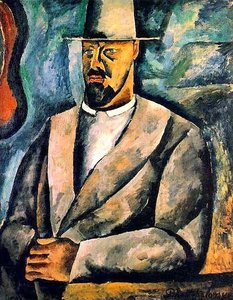
Piotr Konchalowski
1876 - 1956 , Rosja
Krótka nota
- Artistic Movement Or Style: Postimpresjonizm, Realizm
- Artists Or Movements Influenced By This Artist: ['Mir Iskusstva']
- Artists Who Influenced This Artist:
- Paul Cézanne
- Van Gogh
- Date Of Birth: 21 lutego 1876
- Date Of Death: 2 lutego 1956
- Full Name: Pyotr Petrovich Konchalovsky
- Nationality: Rosyjski
- Notable Artworks:
- Niebory
- Kawałek
- Portret
- Place Of Birth: Charków, Rosja