() ·

A painting made for you, by hand

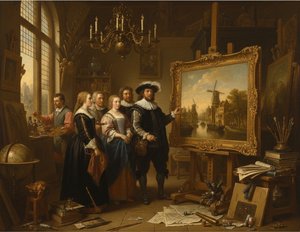
At the Forge

Ręcznie malowana reprodukcja olejowa

Ręcznie malowany obraz olejny na płótnie, wykonany na zamówienie przez naszych artystów w wybranym przez Ciebie wymiarze i oprawie. ( Przełącz na wydania drukowane Przejdź do wersji cyfrowej)

Opis obiektu

Witness rural life & labor in Pieter van Bloemen's 'At the Forge.' This Dutch Golden Age genre painting captures a bustling workshop scene with masterful realism and dramatic lighting. Explore now!

Biografia artysty

Discover Pieter van Bloemen (1657-1720), the Flemish painter celebrated for his dynamic animal & equestrian scenes, Italian landscapes, and Roman motifs. Explore his art!

from ·

Chapter 1

How large should it be?

Slide to change the size; the picture on the left shows the frame at its real width. The proportions of the original are kept.

Standardowy format
personalizowane
CM
INCH

Wybierz spośród naszych standardowych rozmiarów, które zachowują oryginalne proporcje dzieła sztuki.

szerokość
wysokość

Wpisz wymaganą szerokość i wysokość, aby obraz pasował do Twojej ramy lub ściany. Ponieważ jest to dzieło malowane ręcznie, w przypadku rozmiaru o innych proporcjach artysta może domalować nieco więcej wokół obrazu lub przyciąć jego fragmenty — wybór należy do Ciebie. Przed rozpoczęciem pracy prześlemy Ci cyfrową wizualizację do zatwierdzenia. Obraz widoczny na tej stronie nie przedstawia rzeczywistego efektu — jedynie wizualizacja oddaje realny rezultat.

Chapter 2

How should it arrive?

Choose the edges of the stretched canvas

Choose your frame

Corner sample of the WhiteWrap canvas edge finish, stretched on lite drewno bars
White zł1
Corner sample of the BlurSideWrap canvas edge finish, stretched on lite drewno bars
Blurside zł1
Corner sample of the ExtendedWrap canvas edge finish, stretched on lite drewno bars
Extended zł1
Corner sample of the P118B picture frame: polistyren formowany, 5 cm wide and 3 cm thick
P118B zł10
Corner sample of the P118H picture frame: polistyren formowany, 5 cm wide and 3 cm thick
P118H zł10
Corner sample of the P118W picture frame: polistyren formowany, 5 cm wide and 3 cm thick
P118W zł10
Corner sample of the P438Z picture frame: polistyren formowany, 5.5 cm wide and 3.5 cm thick
P438Z zł10
Corner sample of the P508JH picture frame: polistyren formowany, 7 cm wide and 3.5 cm thick
P508JH zł12
Corner sample of the P508YH picture frame: polistyren formowany, 7 cm wide and 3.5 cm thick
P508YH zł12
Corner sample of the P805H picture frame: polistyren formowany, 5 cm wide and 3.5 cm thick
P805H zł10
Corner sample of the P805Z picture frame: polistyren formowany, 5 cm wide and 3.5 cm thick
P805Z zł10
Corner sample of the P919BZ picture frame: polistyren formowany, 7 cm wide and 3.5 cm thick
P919BZ zł10
Corner sample of the P919G picture frame: polistyren formowany, 7 cm wide and 3.5 cm thick
P919G zł10
Corner sample of the P919XJ picture frame: polistyren formowany, 7 cm wide and 3.5 cm thick
P919XJ zł10
Corner sample of the P959ZH picture frame: polistyren formowany, 5 cm wide and 3 cm thick
P959ZH zł10
Corner sample of the P968JZ picture frame: polistyren formowany, 6 cm wide and 4 cm thick
P968JZ zł12
Corner sample of the W106C picture frame: lite drewno, 5 cm wide and 3 cm thick
W106C zł8
Corner sample of the W218G picture frame: lite drewno, 5 cm wide and 3 cm thick
W218G zł10
Corner sample of the W218JH picture frame: lite drewno, 5 cm wide and 3 cm thick
W218JH zł8
Corner sample of the W218Y picture frame: lite drewno, 5 cm wide and 3 cm thick
W218Y zł10
Corner sample of the W307PJ picture frame: lite drewno, 6 cm wide and 3 cm thick
W307PJ zł10
Corner sample of the W316G picture frame: lite drewno, 6 cm wide and 3 cm thick
W316G zł10
Corner sample of the W316PJ picture frame: lite drewno, 6 cm wide and 3 cm thick
W316PJ zł8
Corner sample of the W316Y picture frame: lite drewno, 6 cm wide and 3 cm thick
W316Y zł10
Corner sample of the W398PJ picture frame: lite drewno, 5 cm wide and 3 cm thick
W398PJ zł8
Corner sample of the W4111J picture frame: lite drewno, 6.5 cm wide and 3.5 cm thick
W4111J zł10
Corner sample of the W500HY picture frame: lite drewno, 7 cm wide and 5 cm thick
W500HY zł15
Corner sample of the W500JH picture frame: lite drewno, 7 cm wide and 5 cm thick
W500JH zł15
Corner sample of the W692G picture frame: lite drewno, 8 cm wide and 4 cm thick
W692G zł12
Corner sample of the W849H picture frame: lite drewno, 5 cm wide and 3 cm thick
W849H zł8
Corner sample of the W940BG picture frame: lite drewno, 7.5 cm wide and 4.5 cm thick
W940BG zł15
Corner sample of the W953PJ picture frame: lite drewno, 6 cm wide and 3.5 cm thick
W953PJ zł8
Corner sample of the H24-GOLD picture frame: rzeźbione drewno pokryte gipsem, 10 cm wide and 6 cm thick
H24-GOLD zł30
Corner sample of the H24-SILVER picture frame: rzeźbione drewno pokryte gipsem, 10 cm wide and 6 cm thick
H24-SILVER zł30
Corner sample of the H36-GOLD picture frame: rzeźbione drewno pokryte gipsem, 15 cm wide and 6.5 cm thick
H36-GOLD zł45
Corner sample of the H36-SILVER picture frame: rzeźbione drewno pokryte gipsem, 15 cm wide and 6.5 cm thick
H36-SILVER zł45

Moulding: . Overall size with the frame: .

Chapter 3

Who paints it, and should anything change?

Examples of what can be changed: Replace face with customer photo; Add pet (e.g., replace cat with dog); Include hidden message in background; Change background landscape or elements.
After order, OriginalUniqueArt.com team will email client for instructions and provide a mockup preview

Dostawa na całym świecie () w ciągu 3–4 tygodni zamiast standardowych 5 tygodni. (1 Listopad). Bez kompromisów w kwestii jakości.

Chapter 4

The finishing touches

A nameplate, as in a museum?

Szczegóły grawerowanej brązowej tabliczki

This elegant plaque features the artist's name and the title of the artwork, finely engraved for a timeless presentation.

It is made from bronze with a refined, elegant finish. The text is precisely laser-engraved for a sharp and permanent result. Measuring 9x2 cm, the plaque is compact yet easy to read. It's built to be durable and scratch-resistant, offering a professional, museum-quality look. Mounting is simple thanks to the included adhesive backing.

Szczegóły przezroczystej tabliczki akrylowej

The plaque includes essential engraved details such as the artist's name, the title of the artwork, the date it was created, the type of media used-like oil on canvas or watercolor-a brief description of the piece, and a QR code that links to the complete artwork information.

It is crafted from clear acrylic, offering a sleek, modern appearance. The text is UV-engraved in black to ensure strong visual contrast. With a size of 10x15 cm, it ensures optimal readability. It comes equipped with two metal hooks for secure wall mounting. The plaque is designed to be weather-resistant, making it suitable for various environments, and it includes interactive features that work seamlessly with smartphone scanning.

Szczegóły czarnej tabliczki akrylowej

This elegant plaque includes engraved information such as the artist's name, the title of the artwork, the date it was created, the type of media used (like oil on canvas or watercolor), a short description of the artwork, and a QR code for quick access to more information.

The plaque itself is made from refined black acrylic with a premium finish. The text is laser-engraved in white for high contrast and readability. Its size is 10x15 cm, designed to be easy to read. It comes with two metal hooks for professional mounting. The design is sleek and fits any interior style. It is also weather-resistant and durable, with built-in digital integration for mobile compatibility.

A protective varnish?

When do you need it?

Chapter 5

Your painting, as you ordered it

At the Forge

Technika reprodukcji

Wymiary reprodukcji

-

Wybitny mistrz artystyczny

Większa szczegółowość, finezja i dodatkowy czas na realizację

-

Opcje oprawy reprodukcji

-

-

W przypadku dzieł sztuki lub reprodukcji, których którykolwiek z boków przekracza 105 cm (około 41 cali), rama zostanie wysłana w formie zestawu do samodzielnego montażu. Metoda ta zapewnia bezpieczną dostawę i zapobiega uszkodzeniom podczas transportu.

Wymagany profesjonalny montaż – nie jest to produkt typu DIY.
Zestaw musi zostać złożony, a płótno naciągnięte przez doświadczonego profesjonalnego ramiarza, przy użyciu kleju do drewna (brak w zestawie), kleszczy do naciągania płótna oraz ścisków, które utrzymają krosna w równej pozycji podczas schnięcia kleju. Nieprawidłowy montaż lub nierównomierne napięcie płótna może trwale uszkodzić dzieło sztuki i nie podlega naszej gwarancji.

  • W zestawie znajdują się wszystkie listwy z litego drewna, precyzyjnie docięte do wymiarów.

  • Montaż odbywa się przy użyciu dołączonych wkrętów oraz kleju do drewna do łączenia narożników, którego zestaw nie zawiera i który musi zostać dostarczony przez ramiarza.

  • Wymagane są profesjonalne narzędzia, których nie ma w zestawie: kleszcze do naciągania płótna (napinacz) oraz zaciski, które pozwolą utrzymać listwy w równej pozycji podczas schnięcia kleju.

Ważne:
Do połączenia narożników niezbędny jest klej do drewna, listwy należy unieruchomić za pomocą ścisków do momentu całkowitego wyschnięcia kleju, a naciągnięcie płótna na złożoną ramę wymaga użycia kleszczy do naciągania płótna. Żaden z tych elementów nie jest dołączony do zestawu. Przed zamówieniem tego rozmiaru zalecamy konsultację z doświadczonym ramiarzem.

Etykieta obiektu

-

-

Lakier ochronny

Lakier z połyskiem (pogłębia kolory, chroni przed światłem i wilgocią)

-

Personalizacja dzieła

Przykłady możliwości personalizacji: zastąp twarz zdjęciem klienta; dodaj zwierzę domowe (np. zamień kota na psa); umieść ukrytą wiadomość w tle; zmień krajobraz lub elementy tła.

-

Ekspresowa

Dostawa na cały świat () w ciągu 3–4 tygodni zamiast standardowych 5 tygodni. (1 Listopad). Bez kompromisów w kwestii jakości.

-

Przesyłka ekspresowa

Dostawa na cały świat () w ciągu 5 tygodni. (8 Listopad).

W cenie

Cena całkowita

zł 1556

Suma całkowita zł 1556

Opcja ze szkłem jest dostępna wyłącznie w rozmiarach poniżej 110 cm

Included with every order

  • Bezpłatna ekspresowa wysyłka na cały świat
  • Wysokiej jakości płótno lniane
  • Pełne ubezpieczenie przesyłki
  • Gwarancja zwrotu należności celnych i podatków importowych
  • Gwarancja wiernego odwzorowania kolorów
  • 100-dniowa polityka zwrotów (tylko w przypadku wad)
  • Gwarancja 100% zwrotu pieniędzy
  • Zniżka przy zakupie wielu sztuk

A Glimpse into Rural Life: "At the Forge" by Pieter van Bloemen

Step into a vibrant snapshot of 17th-century rural life with Pieter van Bloemen’s captivating genre painting, “At the Forge.” This dynamic scene transports viewers to a bustling workshop or stable, likely situated in the Dutch countryside. The artwork is a testament to the everyday labor and social interactions that defined the era, offering a fascinating window into the lives of ordinary people during the Dutch Golden Age. Van Bloemen masterfully captures a moment centered around a shoemaker diligently attending to his horses, surrounded by observing figures – a scene brimming with activity and a palpable sense of community.

Style & Technique: Baroque Realism with Dramatic Flair

Van Bloemen’s style is firmly rooted in the principles of Baroque realism, yet infused with a dramatic flair characteristic of the period. The painting showcases meticulous attention to detail, evident in the rendering of horses, figures, and architectural elements. Oil paint on canvas allows for rich layering of colors and visible brushstrokes that contribute to the artwork's textural depth. Notice how light streams through an arched doorway, dramatically illuminating key areas while casting deep shadows – a technique employed to create a sense of spatial depth and heighten the emotional impact. While grounded in realism, Van Bloemen subtly idealizes proportions and employs dramatic lighting to elevate the scene beyond mere documentation, transforming it into a compelling narrative.

Historical Context & Symbolism

“At the Forge” provides valuable insight into the social fabric of 17th-century Dutch society. The painting reflects the importance of agriculture and craftsmanship in the economy, highlighting the role of skilled laborers like the shoemaker. The presence of animals – horses being essential for transportation and labor – further underscores this connection to rural life. Symbolically, the scene speaks to themes of hard work, community, and perhaps even a subtle commentary on social hierarchy within the village setting. The tools scattered throughout the composition are not merely props but represent the tangible fruits of human effort and ingenuity. Van Bloemen’s work aligns with the broader Dutch Golden Age tradition of genre painting, which sought to depict everyday life with honesty and detail.

Emotional Impact & Artistic Legacy

Beyond its historical significance, “At the Forge” evokes a powerful emotional response. The bustling activity, combined with the dramatic lighting, creates a sense of immediacy and vitality. The viewer is drawn into the scene, almost able to hear the sounds of the forge and feel the energy of the workshop. Pieter van Bloemen (1657-1720), hailing from an artistic family in Antwerp, was influenced by earlier masters and traveled extensively, including journeys to Rome that shaped his style. His ability to capture dynamic animal scenes and everyday life established him as a significant figure within Flemish art, and this painting exemplifies his skill in blending realism with dramatic storytelling – a legacy that continues to resonate with audiences today.

Pytania i odpowiedzi

Czy kolory w "At the Forge" są intensywne czy stonowane?

Kolory w „At the Forge” – Pieter van Bloemen charakteryzują się Monochromatic intensywnością.

Gdzie mogę zobaczyć podgląd dzieła "At the Forge"?

Aby podglądnąć reprodukcję dzieła „At the Forge” – Pieter van Bloemen, otwórz stronę Podgląd w pomieszczeniu danego utworu.

Czy mogę zobaczyć „At the Forge” – Pieter van Bloemen na własnej ścianie przed zakupem?

Strona Podgląd w AR dzieła „At the Forge” – Pieter van Bloemen wykorzystuje rozszerzoną rzeczywistość, aby dzięki kompatybilnemu urządzeniu pokazać obraz w Twojej własnej przestrzeni.

More about this painting

Podgląd w skali 1:1 Podgląd AR Przełącz na wydania drukowane Przejdź do wersji cyfrowej Wyślij jako kartkę
Szczegóły dzieła Przewodnik Dodaj do ulubionych Pobierz obraz Podobne obiekty RTG Pokaz slajdów Q&A Statystyki

In numbers

  • 29frames to choose from
  • standard sizes, in its own proportions
  • 5weeks to paint and deliver it

About the original

Wymiary
47.0 x 55.0 cm
Pieter van Bloemen

Pieter van Bloemen

1657 - 1720, Belgium

Quick facts about Pieter van Bloemen

  • Full Name: Pieter van Bloemen
  • Nationality: Flemish
  • Date Of Birth: 1657
  • Date Of Death: 1720
  • Place Of Birth: Antwerp, Belgium
  • Notable Artworks:
    • Military Encampment
    • At the Forge
    • Mules Halting by the Wayside
    • Landscape with Herdsmen and Animals
  • Artistic Movement Or Style: Baroque
  • Artists Who Influenced This Artist: ['Simon Johannes van Douw']

Biografia artysty

Pieter van Bloemen (1657-1720): A Flemish Painter of Animals, Landscapes, and Roman Scenes

Early Life and Training

  • Born: Antwerp, Belgium, January 17, 1657
  • Died: Antwerp, Belgium, March 6, 1720
  • Apprenticed to Simon Johannes van Douw from a young age (possibly as early as age 10), receiving foundational training in artistic techniques.
  • Became a master of the Guild of Saint Luke in Antwerp in 1674, demonstrating his proficiency and acceptance within the established art community.
  • Family Background: Pieter came from an artistic family; both his younger brothers, Jan Frans and Norbert, were also painters.

Travels and Artistic Development

  • Early Travels (1674 & 1689): Initial journeys to Rome likely influenced his later style, exposing him to Italian landscapes and artistic trends.
  • Lyon Period (1684): Collaboration with Dutch painters Adriaen van der Cabel and Gillis Weenix in Lyon broadened his exposure to different painting styles and techniques. His brother Jan Frans joined him during this time.
  • Rome & the Bentvueghels (1688-1694): A significant period spent in Rome, registered with the parish of Sant’Andrea delle Fratte alongside his brothers. Became a member of the *Bentvueghels*, an association of foreign artists in Rome, earning the nickname "Standaart" likely referencing banners depicted in his military scenes.
  • Travels within Italy: Explored Naples, Sicily, and Malta, further enriching his understanding of Italian landscapes and culture.
  • Collaboration with Jan Frans: A fruitful partnership where Pieter focused on figures while Jan Frans specialized in landscape (vedute) painting.

Artistic Style and Major Works

  • Subject Matter: Known for dynamic depictions of animals, equestrian scenes, market life, military encampments, and genre paintings set within Italianate landscapes.
  • Italianizing Landscapes: Adopted the tradition of representing the Roman Campagna with inns, ruins, and animals, creating a distinctive "Roman" atmosphere.
  • Bamboccianti Influence: Incorporated elements of the *bamboccianti* style, depicting everyday scenes and trivial subjects, often with meticulous detail.
  • Distinctive Features: Characterized by lively coloring in figures' costumes contrasting with the more subdued tones of animals and ruins; a focus on groups of animals presented as "still-lifes" within landscapes.
  • Notable Works: The Duke of Marlborough and the Earl of Cadogan at Blenheim (Hochstadt) (where he painted the horses), *Military Encampment*, *At the Forge*, *Mules Halting by the Wayside*, and *Landscape with Herdsmen and Animals in front of the Baths of Diocletian, Rome*.
  • Drawing Practice: Produced numerous drawings depicting landscapes, figure studies, and animal observations from life.

Legacy and Historical Significance

  • Prolific Output: A highly productive artist with a diverse body of work spanning various genres.
  • Dean of the Guild of Saint Luke (1699): Held a prestigious position within the Antwerp art community, demonstrating his respect and influence.
  • Teacher: Mentored his younger brothers Jan Frans and Norbert, as well as other artists like Peeter van Aken and Frans van Alter.
  • Collaboration & Recognition: Frequently sought after for his skill in painting horses, collaborating with prominent artists like Balthasar van den Bossche.
  • Contribution to Baroque Art: Van Bloemen’s work exemplifies the dynamism and detail characteristic of Baroque art, particularly within the Flemish tradition. His Italian experiences infused his paintings with a unique blend of Northern European realism and Southern European landscape aesthetics.

Najważniejsze informacje

  • Influences: Simon Johannes van Douw
  • Movement: Dutch Golden Age
  • Dimensions: 47 x 55 cm
  • Notable elements or techniques:
    • Dramatic lighting
    • Visible brushstrokes
  • Medium: Oil on canvas

Quiz o sztuce

Do każdego pytania dotyczy tylko jedna poprawna odpowiedź.

Pytanie 1:
What is the most likely period to which this artwork belongs, based on its style and subject matter?
Pytanie 2:
The lighting in 'At the Forge' primarily serves what purpose within the composition?
Pytanie 3:
Pieter van Bloemen's artistic training initially took place under which artist?
Pytanie 4:
What is a prominent characteristic of the painting's technique, contributing to its tactile quality?
Pytanie 5:
The scene depicted in 'At the Forge' primarily represents which theme(s)?