() ·

A painting made for you, by hand

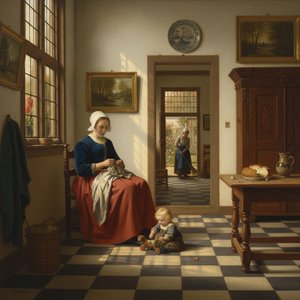
The Visit

Ręcznie malowana reprodukcja olejowa

Ręcznie malowany obraz olejny na płótnie, wykonany na zamówienie przez naszych artystów w wybranym przez Ciebie wymiarze i oprawie. ( Przełącz na wydania drukowane Przejdź do wersji cyfrowej)

Opis obiektu

Pieter de Josselin de Jong (1861-1694) was a Dutch painter known for his portraits, genre scenes & industrial landscapes. Trained in Den Bosch, Antwerp & Paris, he captured Dutch society and the rise of industry with skill.

Biografia artysty

Pieter de Hooch (1629-1684) był holenderskim malarzem okresu Złotego Wieku znanym z łagodnych obrazów codziennego życia i wnętrz domowych oraz spokojnych dziedzińców. Eksploruj jego realistyczny styl i wpływ na impresjonizm.

from ·

Chapter 1

How large should it be?

Slide to change the size; the picture on the left shows the frame at its real width. The proportions of the original are kept.

Standardowy format
personalizowane
CM
INCH

Wybierz spośród naszych standardowych rozmiarów, które zachowują oryginalne proporcje dzieła sztuki.

szerokość
wysokość

Wpisz wymaganą szerokość i wysokość, aby obraz pasował do Twojej ramy lub ściany. Ponieważ jest to dzieło malowane ręcznie, w przypadku rozmiaru o innych proporcjach artysta może domalować nieco więcej wokół obrazu lub przyciąć jego fragmenty — wybór należy do Ciebie. Przed rozpoczęciem pracy prześlemy Ci cyfrową wizualizację do zatwierdzenia. Obraz widoczny na tej stronie nie przedstawia rzeczywistego efektu — jedynie wizualizacja oddaje realny rezultat.

Chapter 2

How should it arrive?

Choose the edges of the stretched canvas

Choose your frame

Corner sample of the WhiteWrap canvas edge finish, stretched on lite drewno bars
White zł1
Corner sample of the BlurSideWrap canvas edge finish, stretched on lite drewno bars
Blurside zł1
Corner sample of the ExtendedWrap canvas edge finish, stretched on lite drewno bars
Extended zł1
Corner sample of the P118B picture frame: polistyren formowany, 5 cm wide and 3 cm thick
P118B zł10
Corner sample of the P118H picture frame: polistyren formowany, 5 cm wide and 3 cm thick
P118H zł10
Corner sample of the P118W picture frame: polistyren formowany, 5 cm wide and 3 cm thick
P118W zł10
Corner sample of the P438Z picture frame: polistyren formowany, 5.5 cm wide and 3.5 cm thick
P438Z zł10
Corner sample of the P508JH picture frame: polistyren formowany, 7 cm wide and 3.5 cm thick
P508JH zł12
Corner sample of the P508YH picture frame: polistyren formowany, 7 cm wide and 3.5 cm thick
P508YH zł12
Corner sample of the P805H picture frame: polistyren formowany, 5 cm wide and 3.5 cm thick
P805H zł10
Corner sample of the P805Z picture frame: polistyren formowany, 5 cm wide and 3.5 cm thick
P805Z zł10
Corner sample of the P919BZ picture frame: polistyren formowany, 7 cm wide and 3.5 cm thick
P919BZ zł10
Corner sample of the P919G picture frame: polistyren formowany, 7 cm wide and 3.5 cm thick
P919G zł10
Corner sample of the P919XJ picture frame: polistyren formowany, 7 cm wide and 3.5 cm thick
P919XJ zł10
Corner sample of the P959ZH picture frame: polistyren formowany, 5 cm wide and 3 cm thick
P959ZH zł10
Corner sample of the P968JZ picture frame: polistyren formowany, 6 cm wide and 4 cm thick
P968JZ zł12
Corner sample of the W106C picture frame: lite drewno, 5 cm wide and 3 cm thick
W106C zł8
Corner sample of the W218G picture frame: lite drewno, 5 cm wide and 3 cm thick
W218G zł10
Corner sample of the W218JH picture frame: lite drewno, 5 cm wide and 3 cm thick
W218JH zł8
Corner sample of the W218Y picture frame: lite drewno, 5 cm wide and 3 cm thick
W218Y zł10
Corner sample of the W307PJ picture frame: lite drewno, 6 cm wide and 3 cm thick
W307PJ zł10
Corner sample of the W316G picture frame: lite drewno, 6 cm wide and 3 cm thick
W316G zł10
Corner sample of the W316PJ picture frame: lite drewno, 6 cm wide and 3 cm thick
W316PJ zł8
Corner sample of the W316Y picture frame: lite drewno, 6 cm wide and 3 cm thick
W316Y zł10
Corner sample of the W398PJ picture frame: lite drewno, 5 cm wide and 3 cm thick
W398PJ zł8
Corner sample of the W4111J picture frame: lite drewno, 6.5 cm wide and 3.5 cm thick
W4111J zł10
Corner sample of the W500HY picture frame: lite drewno, 7 cm wide and 5 cm thick
W500HY zł15
Corner sample of the W500JH picture frame: lite drewno, 7 cm wide and 5 cm thick
W500JH zł15
Corner sample of the W692G picture frame: lite drewno, 8 cm wide and 4 cm thick
W692G zł12
Corner sample of the W849H picture frame: lite drewno, 5 cm wide and 3 cm thick
W849H zł8
Corner sample of the W940BG picture frame: lite drewno, 7.5 cm wide and 4.5 cm thick
W940BG zł15
Corner sample of the W953PJ picture frame: lite drewno, 6 cm wide and 3.5 cm thick
W953PJ zł8
Corner sample of the H24-GOLD picture frame: rzeźbione drewno pokryte gipsem, 10 cm wide and 6 cm thick
H24-GOLD zł30
Corner sample of the H24-SILVER picture frame: rzeźbione drewno pokryte gipsem, 10 cm wide and 6 cm thick
H24-SILVER zł30
Corner sample of the H36-GOLD picture frame: rzeźbione drewno pokryte gipsem, 15 cm wide and 6.5 cm thick
H36-GOLD zł45
Corner sample of the H36-SILVER picture frame: rzeźbione drewno pokryte gipsem, 15 cm wide and 6.5 cm thick
H36-SILVER zł45

Moulding: . Overall size with the frame: .

Chapter 3

Who paints it, and should anything change?

Examples of what can be changed: Replace face with customer photo; Add pet (e.g., replace cat with dog); Include hidden message in background; Change background landscape or elements.
After order, OriginalUniqueArt.com team will email client for instructions and provide a mockup preview

Dostawa na całym świecie () w ciągu 3–4 tygodni zamiast standardowych 5 tygodni. (1 Listopad). Bez kompromisów w kwestii jakości.

Chapter 4

The finishing touches

A nameplate, as in a museum?

Szczegóły grawerowanej brązowej tabliczki

This elegant plaque features the artist's name and the title of the artwork, finely engraved for a timeless presentation.

It is made from bronze with a refined, elegant finish. The text is precisely laser-engraved for a sharp and permanent result. Measuring 9x2 cm, the plaque is compact yet easy to read. It's built to be durable and scratch-resistant, offering a professional, museum-quality look. Mounting is simple thanks to the included adhesive backing.

Szczegóły przezroczystej tabliczki akrylowej

The plaque includes essential engraved details such as the artist's name, the title of the artwork, the date it was created, the type of media used-like oil on canvas or watercolor-a brief description of the piece, and a QR code that links to the complete artwork information.

It is crafted from clear acrylic, offering a sleek, modern appearance. The text is UV-engraved in black to ensure strong visual contrast. With a size of 10x15 cm, it ensures optimal readability. It comes equipped with two metal hooks for secure wall mounting. The plaque is designed to be weather-resistant, making it suitable for various environments, and it includes interactive features that work seamlessly with smartphone scanning.

Szczegóły czarnej tabliczki akrylowej

This elegant plaque includes engraved information such as the artist's name, the title of the artwork, the date it was created, the type of media used (like oil on canvas or watercolor), a short description of the artwork, and a QR code for quick access to more information.

The plaque itself is made from refined black acrylic with a premium finish. The text is laser-engraved in white for high contrast and readability. Its size is 10x15 cm, designed to be easy to read. It comes with two metal hooks for professional mounting. The design is sleek and fits any interior style. It is also weather-resistant and durable, with built-in digital integration for mobile compatibility.

A protective varnish?

When do you need it?

Chapter 5

Your painting, as you ordered it

The Visit

Technika reprodukcji

Wymiary reprodukcji

-

Wybitny mistrz artystyczny

Większa szczegółowość, finezja i dodatkowy czas na realizację

-

Opcje oprawy reprodukcji

-

-

W przypadku dzieł sztuki lub reprodukcji, których którykolwiek z boków przekracza 105 cm (około 41 cali), rama zostanie wysłana w formie zestawu do samodzielnego montażu. Metoda ta zapewnia bezpieczną dostawę i zapobiega uszkodzeniom podczas transportu.

Wymagany profesjonalny montaż – nie jest to produkt typu DIY.
Zestaw musi zostać złożony, a płótno naciągnięte przez doświadczonego profesjonalnego ramiarza, przy użyciu kleju do drewna (brak w zestawie), kleszczy do naciągania płótna oraz ścisków, które utrzymają krosna w równej pozycji podczas schnięcia kleju. Nieprawidłowy montaż lub nierównomierne napięcie płótna może trwale uszkodzić dzieło sztuki i nie podlega naszej gwarancji.

  • W zestawie znajdują się wszystkie listwy z litego drewna, precyzyjnie docięte do wymiarów.

  • Montaż odbywa się przy użyciu dołączonych wkrętów oraz kleju do drewna do łączenia narożników, którego zestaw nie zawiera i który musi zostać dostarczony przez ramiarza.

  • Wymagane są profesjonalne narzędzia, których nie ma w zestawie: kleszcze do naciągania płótna (napinacz) oraz zaciski, które pozwolą utrzymać listwy w równej pozycji podczas schnięcia kleju.

Ważne:
Do połączenia narożników niezbędny jest klej do drewna, listwy należy unieruchomić za pomocą ścisków do momentu całkowitego wyschnięcia kleju, a naciągnięcie płótna na złożoną ramę wymaga użycia kleszczy do naciągania płótna. Żaden z tych elementów nie jest dołączony do zestawu. Przed zamówieniem tego rozmiaru zalecamy konsultację z doświadczonym ramiarzem.

Etykieta obiektu

-

-

Lakier ochronny

Lakier z połyskiem (pogłębia kolory, chroni przed światłem i wilgocią)

-

Personalizacja dzieła

Przykłady możliwości personalizacji: zastąp twarz zdjęciem klienta; dodaj zwierzę domowe (np. zamień kota na psa); umieść ukrytą wiadomość w tle; zmień krajobraz lub elementy tła.

-

Ekspresowa

Dostawa na cały świat () w ciągu 3–4 tygodni zamiast standardowych 5 tygodni. (1 Listopad). Bez kompromisów w kwestii jakości.

-

Przesyłka ekspresowa

Dostawa na cały świat () w ciągu 5 tygodni. (8 Listopad).

W cenie

Cena całkowita

zł 1167

Suma całkowita zł 1167

Opcja ze szkłem jest dostępna wyłącznie w rozmiarach poniżej 110 cm

Included with every order

  • Bezpłatna ekspresowa wysyłka na cały świat
  • Wysokiej jakości płótno lniane
  • Pełne ubezpieczenie przesyłki
  • Gwarancja zwrotu należności celnych i podatków importowych
  • Gwarancja wiernego odwzorowania kolorów
  • 100-dniowa polityka zwrotów (tylko w przypadku wad)
  • Gwarancja 100% zwrotu pieniędzy
  • Zniżka przy zakupie wielu sztuk

A Moment Frozen in Delft Light

In the quiet, sun-drenched interiors of the seventeenth century, moments of profound connection were often found in the most mundane settings. Pieter de Hooch's "The Visit," painted in 1657, stands as a quintessential emblem of Dutch Baroque artistry—a deceptively simple tableau that speaks volumes about the social fabric and artistic sensibilities of its era. Captured in muted tones of ochre, ivory, and charcoal gray, this masterpiece transports us back to Delft during the zenith of the Dutch Golden Age, offering an intimate glimpse into the daily life of a bourgeois household. The painting’s enduring appeal lies not merely in its visual beauty but also in its masterful execution and subtle symbolic resonance, inviting viewers to step through a doorway into a world of domestic tranquility.

The scene unfolds with a palpable sense of realism, as de Hooch captures a group of individuals gathered around a dining table. There is a quiet drama in the way the figures are positioned; some stand while others sit, their presence suggesting a convivial conversation and shared enjoyment. The table itself is laden with details that ground the scene in reality—multiple wine glasses catch the light, hinting at a celebratory or social meal, while a book rests near one of the guests, perhaps a remnant of a shared intellectual pursuit before dinner began. Even the subtle inclusion of a clock on the wall serves as a poignant reminder of the passage of time, anchoring this fleeting social interaction within the eternal flow of history.

Mastery of Light and Texture

De Hooch's style embodies the Baroque preoccupation with illusionism and chiaroscuro—the dramatic interplay between light and shadow. Unlike the overtly theatrical compositions of his contemporaries, "The Visit" achieves grandeur through the meticulous observation of natural light filtering into a domestic interior. The artist skillfully renders textures with remarkable accuracy; one can almost feel the grain of the worn wooden bench and the crispness of the linen tablecloth. Through subtle gradations of tone, de Hooch sculpts form and conveys a profound sense of depth, drawing the viewer’s eye into the room's corners and through its architectural layers.

This technical precision makes the work an extraordinary subject for high-quality reproductions. For the art collector or interior designer, the painting offers a sophisticated palette that complements a variety of decor styles. Its monochrome-leaning tones of gray and earth colors provide a neutral yet emotionally resonant anchor for a room, bringing a sense of historical weight and calm sophistication to any space. The way de Hooich utilizes light creates an atmospheric quality that can transform a modern living area into a sanctuary of classical elegance.

A Reflection of Golden Age Prosperity

Beyond its aesthetic brilliance, "The Visit" reflects a pivotal moment in Dutch history—the burgeoning prosperity fueled by global trade and exploration. During this era, Delft was a thriving center for craftsmanship and commerce, attracting affluent families eager to establish their social standing through the cultivation of refined domestic environments. De Hooch’s depiction captures the aspirational ideal of bourgeois comfort: a world where peace, plenty, and companionship are the ultimate markers of success.

To possess a reproduction of this work is to invite the spirit of the Dutch Golden Age into one's home. It serves as more than just decoration; it is a window into a vanished era of stability and grace. Whether placed in a sunlit study or a formal dining room, "The Visit" continues to inspire awe through its ability to find the extraordinary within the ordinary, reminding us that true beauty often resides in the quietest moments of human connection.

Pytania i odpowiedzi

Co łączy "The Visit" z resztą twórczości Pieter de Hooch?

W dorobku Pieter de Hooch, "The Visit" wpisuje się w styl Baroque, nawiązując do tematów takich jak baroque realism, domestic tranquility, dutch society, light’s subtle grace, artistic legacy.

W jaki sposób mogę uzyskać plik cyfrowy dzieła „The Visit” – Pieter de Hooch?

Cyfrową wersję dzieła „The Visit” – Pieter de Hooch można zakupić na stronie Cyfrowy obraz: wysokiej rozdzielczości cyfrowe zdjęcie do pobrania.

Kto jest autorem dzieła "The Visit"?

Autorem dzieła „The Visit” jest Pieter de Hooch. Praca ta figuruje w katalogu pod nazwiskiem Pieter de Hooch.

More about this painting

Podgląd w skali 1:1 Podgląd AR Przełącz na wydania drukowane Przejdź do wersji cyfrowej Wyślij jako kartkę
Szczegóły dzieła Przewodnik Dodaj do ulubionych Pobierz obraz Podobne obiekty RTG Pokaz slajdów Q&A Statystyki

In numbers

  • 1657the year it was painted
  • 29frames to choose from
  • standard sizes, in its own proportions
  • 5weeks to paint and deliver it
Pieter de Hooch

Pieter de Hooch

1629 - 1694, Holandia

Quick facts about Pieter de Hooch

  • Artistic Movement Or Style: Holenderski Złoty Wiek
  • Artists Or Movements Influenced By This Artist: ['Jan Vermeer']
  • Artists Who Influenced This Artist:
    • Nicolaes Berchem
    • Hendrik Sorgh
  • Date Of Birth: 20 grudnia 1629
  • Date Of Death: po 1683
  • Full Name: Pieter Hendricksz de Hooch
  • Nationality: Holender
  • Notable Artworks:
    • Korytarz z kobietą i dzieckiem
    • Paczka
    • Żołnierze w tawernie
  • Place Of Birth: Rotterdam, Holandia

Biografia artysty

wczesne lata i edukacja

pieter de hooch, wybitna postać holenderskiego złotego wieku, przyszedł na świat 20 grudnia 1629 roku w rotterdamie, w niderlandach. był najstarszym z pięciorga dzieci hendricka hendricksza de hooch, murarza, oraz annetge pieters, położnej. choć mało wiemy o jego początkach, przypuszcza się, że tworzył w rotterdamie, delfcie i amsterdamie. artystyczne szlify de hooch zdobywał w haarlem pod okiem malarza pejzaży nicolaesa berchema, współpracując jednocześnie z jacobem ochterveltem. ten kluczowy okres położył fundament pod jego przyszły sukces jako mistrza cichych scen domowych, często przełamywanych widokiem przez otwarte drzwi.

styl artystyczny i tematyka

twórczość de hooch charakteryzuje się niezwykłą dbałością o detal, naturalizmem oraz poetyckim wykorzystaniem światła. jego płótna często stawały się zwierciadłem codzienności, odzwierciedlając wartości i aspiracje rodzącej się klasy średniej. znamiennym przykładem tego stylu jest dzieło "dziedziniec domu w delfcie" (1658), które ukazuje jego niezwykłą zdolność do chwytania prozaicznych detali zwyczajnego życia. choć de hooch dzielił tematykę i kompozycję z emanuelem de witte, to właśnie skupienie na ludziach i ich wzajemnych relacjach wyróżnia go na tle innych. widać to wyraźnie w obrazach takich jak "karmiąca kobieta" (1658) oraz "kobieta z niemowlęciem na kolanach" (1658), które stanowią świadectwo jego głębokiego zainteresowania intymnością domowego zacisza.

najważniejsze dzieła i dziedzictwo

wśród najbardziej znaczących dokonań de hooch można wymienić: dziedzictwo de hooch odnajdujemy w jego wpływie na kolejne pokolenia artystów, szczególnie w nurtach impresjonizmu i realizmu. jego mistrzowskie operowanie światłem i cieniem położyło podwaliny pod malarstwo barokowe.

muzea i kolekcje

dzieła de hooch można podziwiać w wielu muzeach, w tym w koninklijk museum voor schone kunsten w antwerpii, w belgii, które skrywa ogromną kolekcję sztuki europejskiej od XV do XX wieku. odkryj więcej o pieter de hooch i jego dziełach na OriginalUniqueArt: [https://OriginalUniqueArt.com/@/pieter-de-hooch](https://OriginalUniqueArt.com/@/pieter-de-hooch) /pl/art/show/art-d3b4kt-pl/ (odkryj arcydzieła znajdujące się w koninklijk museum voor schone kunsten, belgia)

Najważniejsze informacje

  • Influences: Nicolas Berchem
  • Subject or theme: Social interaction; Dining scene
  • Medium: Oil on canvas
  • Location: Private Collection
  • Movement: Dutch Baroque
  • Artist: Pieter de Hooch