

 Podgląd w skali 1:1
 Wyślij jako kartkę
 Udostępnij
 Szczegóły dzieła
 Przewodnik

 Pobierz obraz
 Podobne obiekty
 RTG
RTG Pokaz slajdów
 Statystyki
Holy Trinity
 Oil On Panel
- Northern Renaissance
 Renaissance
 98.0 x 84.0 cm
 Muzeum Prado
 Rozwiń treść
Ręcznie malowana reprodukcja olejowa
Ręcznie malowany obraz olejny na płótnie, wykonany na zamówienie przez naszych artystów w wybranym przez Ciebie wymiarze i oprawie. ( Przełącz na wydania drukowane Przejdź do wersji cyfrowej)




P118B zł10

P118H zł10

P118W zł10

P438Z zł10

P508JH zł12

P508YH zł12

P805H zł10

P805Z zł10

P919BZ zł10

P919G zł10

P919XJ zł10

P959ZH zł10

P968JZ zł12

W106C zł8

W218G zł10

W218JH zł8

W218Y zł10

W307PJ zł10

W316G zł10

W316PJ zł8

W316Y zł10

W398PJ zł8

W4111J zł10

W500HY zł15

W500JH zł15

W692G zł12

W849H zł8

W940BG zł15

W953PJ zł8




Wybierz spośród naszych standardowych rozmiarów, które zachowują oryginalne proporcje dzieła sztuki.

Wpisz wymaganą szerokość i wysokość, aby obraz pasował do Twojej ramy lub ściany. Ponieważ jest to dzieło malowane ręcznie, w przypadku rozmiaru o innych proporcjach artysta może domalować nieco więcej wokół obrazu lub przyciąć jego fragmenty — wybór należy do Ciebie. Przed rozpoczęciem pracy prześlemy Ci cyfrową wizualizację do zatwierdzenia. Obraz widoczny na tej stronie nie przedstawia rzeczywistego efektu — jedynie wizualizacja oddaje realny rezultat.
Po złożeniu zamówienia zespół OriginalUniqueArt.com skontaktuje się z klientem drogą mailową w celu uzyskania instrukcji i prześle wizualizację projektu
Dostawa na całym świecie () w ciągu 3–4 tygodni zamiast standardowych 5 tygodni. (27 Październik). Bez kompromisów w kwestii jakości.

Bezpłatna ekspresowa wysyłka na cały świat

Wysokiej jakości płótno lniane

Pełne ubezpieczenie przesyłki

Gwarancja zwrotu należności celnych i podatków importowych

Gwarancja wiernego odwzorowania kolorów

100-dniowa polityka zwrotów (tylko w przypadku wad)

Gwarancja 100% zwrotu pieniędzy

Zniżka przy zakupie wielu sztuk
 Opcja ze szkłem jest dostępna wyłącznie w rozmiarach poniżej 110 cm

Holy Trinity
Technika reprodukcji
Wymiary reprodukcji
-


Cena całkowita
zł 1153
A Divine Tapestry from the Northern Renaissance
To gaze upon Pieter Coecke van Aelst's depiction of the Holy Trinity is to step directly into the luminous heart of the Northern Renaissance. This panel painting does not merely illustrate a theological concept; it envelops the viewer in an atmosphere of profound, divine mystery. The composition itself is a masterful orchestration of figures, light, and symbolic weight. At its core stands the venerable figure of God the Father, robed in rich reds, holding the symbols of wisdom and authority—a book and a staff—while radiating an ancient, benevolent power. Flanking this central pillar are representations of Christ, identifiable by his halo and the cross he bears, and the Holy Spirit, delicately rendered as an infant upon a cushion to the right. The sheer detail in the rendering of these sacred forms speaks volumes about the devotion and skill of its creator.
Mastery of Flemish Technique and Detail
Technically, this work is a breathtaking testament to the period's dedication to meticulous realism combined with spiritual grandeur. Executed on panel, the artist utilized rich, vibrant pigments—deep blues, opulent golds, and commanding reds—that were hallmarks of high-end religious art in Flanders during the sixteenth century. Observe how the light plays across the voluminous folds of the drapery; it is not merely illumination but a palpable force that grants every garment and every face a three-dimensional presence. The surrounding angels and cherubs are not mere filler; they are integral participants, their varied poses and gazes guiding the eye through the narrative complexity. This commitment to observable detail, characteristic of Northern European painting, elevates the sacred subject matter into something almost tangible for the modern observer.
Symbolism Woven into Sacred Narrative
The symbolism within the Holy Trinity is both profound and deeply accessible. The grouping itself represents the doctrine of the three persons in one Godhead—a concept given visual weight through artistic genius. Beyond the central figures, the inclusion of a detailed landscape background, complete with distant mountains and swirling clouds, suggests that this divine event transcends earthly boundaries, placing it within an eternal, otherworldly realm. Every element, from the book held by the Father to the cross carried by Christ, serves as a visual sermon, inviting contemplation on themes of divinity, sacrifice, and omnipresence. It is art designed not just for viewing, but for spiritual communion.
Bringing Renaissance Majesty Home
For the collector or designer seeking an anchor piece imbued with history and artistry, this reproduction offers an unparalleled connection to the golden age of Flemish painting. While the original panel by Pieter Coecke van Aelst carries the weight of centuries, owning a high-quality hand-painted rendition allows you to integrate that majesty into your contemporary space. Imagine the rich glow of these colors against modern decor—a focal point that speaks volumes about an appreciation for enduring craftsmanship and profound artistic narrative. It is more than decoration; it is a conversation piece steeped in history, devotion, and unparalleled aesthetic beauty.
Pytania i odpowiedzi
Jak duży jest kontrast w „Holy Trinity” – Pieter Coecke van Aelst?
„Holy Trinity” – Pieter Coecke van Aelst prezentuje Statement kontrast między jasnymi a ciemnymi partiami dzieła.
W którym muzeum znajduje się oryginał "Holy Trinity"?
Oryginał dzieła „Holy Trinity” można zobaczyć w Muzeum Prado, Madryt, Spain.
Jaki kształt i wymiary ma „Holy Trinity” – Pieter Coecke van Aelst?
Format dzieła "Holy Trinity" to Portrait, a wymiary oryginału wynoszą 98 x 84 cm. Obie te informacje są przydatne przy planowaniu reprodukcji.
Biografia artysty
A Renaissance Polymath: The Life and Legacy of Pieter Coecke van Aelst
Pieter Coecke van Aelst, born in Aalst, Belgium, in 1502, stands as a captivating embodiment of the Northern Renaissance’s vibrant intellectual spirit. He wasn't merely a painter—though his brushwork was undeniably masterful—but an architect, sculptor, author, designer, translator, and a pivotal figure in spreading Renaissance ideals far beyond Italy’s borders. Rooted in a family of considerable civic standing – his father held the esteemed position of Deputy Mayor – Coecke van Aelst benefited from an upbringing that nurtured both artistic inclination and worldly engagement. While precise documentation remains somewhat scarce, tradition firmly attributes his early training to Bernard van Orley, a leading Brussels painter, and stylistic similarities strongly suggest a profound connection with this influential master. This foundational education in Flemish artistry was profoundly shaped by what appears to be exposure to the burgeoning Renaissance aesthetic, perhaps through journeys to Italy, particularly Rome. There, he is believed to have immersed himself in classical sculpture and architecture, absorbing the principles of proportion, harmony, and idealized form that defined the Italian High Renaissance. Crucially, the availability of Raphael’s tapestry cartoons in Brussels served as an invaluable resource, providing readily accessible models of artistic excellence—a direct conduit to the innovations originating in Florence.Artistic Innovation and a Diverse Range of Talents
Coecke van Aelst's artistic output was remarkably diverse, reflecting his multifaceted talents and a willingness to explore multiple disciplines. He produced religious paintings that skillfully blended the meticulous realism characteristic of Flemish painting with the emerging Renaissance emphasis on classical composition and anatomical accuracy. His *Last Supper* is particularly noteworthy, demonstrating a mastery of perspective and narrative detail—a testament to his technical skill and artistic vision. However, it was in tapestry design that Coecke van Aelst truly distinguished himself, achieving widespread recognition for his ambitious and intricate creations. Series like *The Seven Deadly Sins* and the monumental *Julius Caesar* cycle showcased his ability to translate complex narratives into visually compelling imagery woven with extraordinary detail and a sophisticated understanding of color and texture. Beyond painting and tapestry, Coecke van Aelst’s architectural designs reveal a keen appreciation for classical principles. He wasn't content merely to practice these arts; he actively sought to make the theoretical underpinnings of Renaissance design accessible to a broader audience. This led him to undertake translations of key Italian architectural treatises – works by Serlio and Vitruvius, among others – into Dutch, French, and German. These translations were revolutionary, breaking down linguistic barriers and allowing Northern European architects and artists to engage directly with the foundational texts of Renaissance design. He also designed stained-glass windows for cathedrals, further demonstrating his versatility as an artist capable of working across multiple mediums. His civic engagement extended even to creating designs for a large papier-mâché figure known as the “Giant of Antwerp,” which became a prominent feature in local processions, highlighting his role within the cultural life of the city.A Bridge Between Worlds: Disseminating Renaissance Knowledge
The true significance of Pieter Coecke van Aelst lies not solely in his individual artistic creations but in his crucial role as a cultural translator. His fluency in multiple languages—Dutch, French, and German—was instrumental in bridging the gap between Italian Renaissance art and architecture and the artistic practices of Northern Europe. Before Coecke van Aelst, access to the theoretical underpinnings of Renaissance design was largely limited to those within Italy. By making these texts available in vernacular languages, he empowered a generation of artists and architects to embrace classical principles and move away from the late Gothic styles that had previously dominated the region. This shift wasn’t merely aesthetic; it represented a fundamental change in artistic thinking—a move towards greater emphasis on proportion, perspective, and anatomical accuracy. His translations directly impacted architectural design, contributing to the adoption of classical elements – columns, pilasters, arches – in Northern European buildings. He facilitated a dialogue between cultures, ensuring that the innovations of the Italian Renaissance were not confined to Italy but became part of a broader European artistic conversation.Family Connections and Lasting Influence
Coecke van Aelst’s influence extended beyond his direct artistic and intellectual contributions through his family connections. His marriage to Mayken Verhulst connected him to prominent figures in the art world, including Hubertus Goltzius, a renowned printmaker. More significantly, his daughter Maria married Pieter Bruegel the Elder, arguably one of the most important painters of the Northern Renaissance. This union solidified Coecke van Aelst’s place within the artistic landscape of the time and ensured that his legacy would continue through subsequent generations. Bruegel's own work—with its keen observation of everyday life and masterful use of landscape—bears traces of the intellectual curiosity and humanist spirit fostered by his father-in-law.Historical Significance: A Catalyst for Change
Pieter Coecke van Aelst’s significance extends far beyond his individual achievements. He served as a crucial intermediary in the transmission of Renaissance ideas to Northern Europe, acting as a catalyst for artistic and architectural change. His translations and designs helped shape the cultural development of the region, leaving an indelible mark on its heritage. He represents a fascinating intersection of art, scholarship, and civic engagement during a period of significant transition—a time when traditional medieval ways of thinking were giving way to new humanist ideals. He was a true Renaissance polymath, whose legacy continues to resonate today in the architecture, art, and intellectual landscape of Northern Europe. *His work reminds us that artistic innovation is rarely born in isolation but often thrives through exchange, translation, and a willingness to embrace new ideas.*
Pieter Coecke van Aelst
1502 - 1550 , Belgia
Krótka nota
- Artistic Movement Or Style: Renesans
- Artists Or Movements Influenced By This Artist: ['Pieter Bruegel']
- Artists Who Influenced This Artist:
- Bernard van Orley
- Rafael
- Date Of Birth: 1502
- Date Of Death: 1550
- Full Name: Pieter Coecke van Aelst
- Nationality: Flamandzki
- Notable Artworks:
- Ołtarz z Madonny
- Kazanie św. Jana
- Place Of Birth: Aalst, Belgia
Powiązane artykuły

Rembrandt van Rijn: 25 Najwybitniejszych Dzieł Sztuki – Reprodukcje i Inspiracje do Wnętrz
Poznaj 25 arcydzieł Rembrandta van Rijn! Odkryj fascynujące historie, techniki i wpływ holenderskiego mistrza baroku na świat sztuki. Reprodukcje obrazów najwyższej jakości – inspiracje do wnętrz na OriginalUniqueArt.com

Charles-André van Loo: A Study in Rococo Portraiture & the French Court's Artistic Dynamics
Explore the elegant world of Charles-André van Loo, a master of Rococo portraiture at the French court. Discover his life, techniques, and enduring influence on 18th-century art. Hand-painted reproductions available.
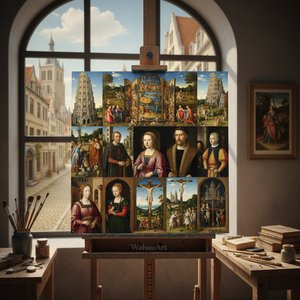
Arcydzieła Północnego Renesansu: 10 Obrazów, które Zmieniły Sztukę | OriginalUniqueArt.com
Poznaj 10 arcydzieł Północnego Renesansu! Odkryj historie van Eycka, Dürera i Holbeina. Reprodukcje obrazów najwyższej jakości dla Twojego wnętrza. Inspiracje i zakup dzieł sztuki na OriginalUniqueArt.com.

10 Arcydzieł Wczesnego Renesansu Niderlandzkiego: Sztuka i Dekoracja Domu
Odkryj 10 arcydzieł wczesnego renesansu niderlandzkiego! Poznaj historie van Eycka, Rogiera van der Weydena i innych mistrzów. Reprodukcje obrazów najwyższej jakości dla Twojego wnętrza – OriginalUniqueArt.com

10 Arcydzieł Wczesnoniderlandzkiego Malarstwa, które Zdefiniowały Epokę | Reprodukcje Obrazów
Odkryj 10 arcydzieł wczesnoniderlandzkiego malarstwa! Poznaj historie van Eycka, Weydena i Memlinga. Reprodukcje obrazów najwyższej jakości dla Twojego wnętrza. Inspiracje i dekoracje ścienne na OriginalUniqueArt.com