

 Zobacz w skali 1:1
 Wyślij
 Udostępnij
 Szczegóły
 Przewodnik

 Pobierz plik obrazu
 Podobne obiekty
 RTG
RTG Pokaz slajdów
 Statystyki
Chrystus na krzyżu
 Akryl na płótnie
- Sztuka ścienna
- Northern Mannerism
 71.0 x 90.0 cm
 Art Museum RIGA BOURSE
 Czytaj więcej
Giclée / Wydruk artystyczny
Wydruki giclée lub płótna o jakości muzealnej, szybka realizacja i szeroki wybór opcji wykończenia. ( Kup ręcznie malowany obraz Przełącz na wersję cyfrową)




P118B zł10

P118H zł10

P118W zł10

P438Z zł10

P508JH zł12

P508YH zł12

P805H zł10

P805Z zł10

P919BZ zł10

P919G zł10

P919XJ zł10

P959ZH zł10

P968JZ zł12

W106C zł8

W218G zł10

W218JH zł8

W218Y zł10

W307PJ zł10

W316G zł10

W316PJ zł8

W316Y zł10

W398PJ zł8

W4111J zł10

W500HY zł15

W500JH zł15

W692G zł12

W849H zł8

W940BG zł15

W953PJ zł8




Wybierz spośród naszych standardowych rozmiarów, które zachowują oryginalne proporcje dzieła sztuki.

Wpisz wymaganą szerokość i wysokość, aby dopasować grafikę do ramy lub ściany. Wydruk można jedynie przyciąć, nigdy nie powiększając go poza oryginalny obraz, dlatego format o innym proporcji spowoduje utratę części kompozycji. Przed rozpoczęciem druku prześlemy Ci cyfrowy podgląd do zatwierdzenia. Obraz wyświetlany na tej stronie nie pokazuje rzeczywistego przycięcia — jedynie podgląd oddaje ten efekt.
Dostawa na cały świat () w ciągu 2 tygodni zamiast standardowych 4/5 tygodni. (25 Październik)

Bezpłatna ekspresowa wysyłka na cały świat

Wysokiej jakości płótno lniane

Pełne ubezpieczenie transportowe

Gwarancja zwrotu należności celnych i podatków importowych

Gwarancja idealnego odwzorowania barw

100-dniowy okres na zwrot dzieła w przypadku wykrycia wad produkcyjnych

Gwarancja 100% zwrotu pieniędzy

Oferta przy zakupie wielu sztuk
 Opcja ze szkłem jest dostępna wyłącznie w rozmiarach poniżej 110 cm

Chrystus na krzyżu
Giclée / Wydruk artystyczny
Rozmiar reprodukcji
-


Suma do zapłaty
zł 307
The Architect of Domestic Narrative: Pieter Aertsen’s ‘Christ on the Cross’
Pieter Aertsen, a name often whispered in the halls of art history, stands as a pivotal figure bridging the gap between Northern Mannerism and the burgeoning realism of the Dutch Golden Age. Born in Amsterdam around 1508 and tragically dying in the same city in 1575, Aertsen’s legacy isn't defined by grand religious commissions or heroic portraits, but rather by his revolutionary approach to genre painting – a deliberate elevation of everyday life, imbued with layers of symbolism and narrative depth. He wasn’t merely depicting scenes; he was constructing miniature worlds, inviting viewers into a complex tapestry of human experience. This singular vision distinguishes him from many of his contemporaries and cemented his place as one of the most innovative artists of his time. Aertsen's early training under Allaert Claesz provided him with a solid foundation in traditional Flemish techniques. However, it was his relocation to Antwerp, the vibrant heart of artistic innovation during the mid-16th century, that truly shaped his distinctive style. Antwerp’s bustling atmosphere, fueled by burgeoning trade and intellectual ferment, fostered an environment where artists dared to challenge conventions and explore new expressive possibilities. This shift towards realism wasn't simply about accurate representation; it was about capturing the psychological complexities of human behavior within familiar domestic settings—a technique that would profoundly influence subsequent generations of painters. The painting itself – “Christ on the Cross” – exemplifies this groundbreaking approach. Executed in oil paint, a medium favored for its luminosity and ability to render intricate detail, Aertsen’s masterpiece transcends mere visual depiction. It's a meticulously crafted tableau populated by figures engaged in seemingly mundane activities—Roman soldiers gambling for Christ’s cloak, St. Veronica presenting Christ’s shroud, Mary Magdalene weeping with grief – yet these actions are interwoven with profound religious symbolism. The artist skillfully utilizes contrasting colors to heighten drama and emotion, mirroring the turbulent spiritual landscape of the era. Consider the deliberate positioning of the figures; each gesture conveys a palpable sense of sorrow, contemplation, and faith. Furthermore, Aertsen’s compositional genius extends beyond individual elements. He arranges his subjects within a carefully constructed space that feels remarkably convincing—almost as if stepping into a living room. The inclusion of animals – a horse near the bottom-right corner and birds circling above Jesus – adds another layer of symbolic significance, referencing biblical narratives and conveying themes of humility and divine providence. The meticulous rendering of textures—the rough stone of the cross, the folds of Veronica’s robe, the glistening sheen of Christ’s wounds—further enhances the painting's immersive quality. The artwork’s historical context is crucial to understanding its impact. Painted during a period marked by religious upheaval and artistic experimentation, “Christ on the Cross” represents a decisive break from Mannerist formalism. While retaining stylistic elements characteristic of that movement – elongated figures, stylized drapery—Aertsen injects them with an unprecedented level of psychological realism. He anticipates the Baroque aesthetic, prioritizing emotional expression over intellectual contemplation, establishing himself as a precursor to Bruegel the Elder and securing his place as one of the most influential artists of the Dutch Golden Age. Its enduring appeal lies in its ability to resonate with viewers across centuries, prompting reflection on faith, compassion, and the human condition.Pytania i odpowiedzi
Jakie są proporcje oraz wymiary dzieła „Chrystus na krzyżu” autorstwa Pieter Aertsen?
Format dzieła "Chrystus na krzyżu" to Portret, a wymiary oryginału to 71 x 90 cm. Obie te informacje są przydatne przy planowaniu reprodukcji.
Jaki jest ogólny nastrój dzieła „Chrystus na krzyżu” autorstwa Pieter Aertsen?
Ogólny nastrój dzieła „Chrystus na krzyżu” autorstwa Pieter Aertsen to Dramatyczny. Nastrój ten oddaje ogólną atmosferę pracy.
Jaka paleta barw została wykorzystana w „Chrystus na krzyżu” autorstwa Pieter Aertsen?
Kolory dzieła "Chrystus na krzyżu" tworzą Barwy ziemi paletę barw. Klasyfikacja ta opisuje dominujące rodziny kolorystyczne.
Biografia artysty
Pieter Aertsen: The Architect of Domestic Narrative
Pieter Aertsen, a name often whispered in the halls of art history, stands as a pivotal figure bridging the gap between Northern Mannerism and the burgeoning realism of the Dutch Golden Age. Born in Amsterdam around 1508 and tragically dying in the same city in 1575, Aertsen’s legacy isn't defined by grand religious commissions or heroic portraits, but rather by his revolutionary approach to genre painting – a deliberate elevation of everyday life, imbued with layers of symbolism and narrative depth. He wasn’t merely depicting scenes; he was constructing miniature worlds, inviting viewers into a complex tapestry of human experience.
Aertsen's early training under Allaert Claesz provided him with a solid foundation in traditional Flemish techniques. However, it was his relocation to Antwerp, the vibrant heart of artistic innovation during the mid-16th century, that truly shaped his distinctive style. Antwerp’s bustling atmosphere, its diverse population, and its position as a crossroads of European trade fostered an environment ripe for experimentation – a stark contrast to the more rigidly defined religious conventions of the time. Here, he joined the esteemed Guild of Saint Luke, earning the moniker “Langhe Peter,” or Tall Peter, reflecting his imposing stature, a detail often incorporated into his portraits.
The Invention of Monumental Genre
Aertsen’s most significant contribution to art lies in his pioneering work – the creation of what is now recognized as monumental genre scenes. Unlike earlier depictions of domestic life that were relegated to smaller, secondary spaces within religious compositions, Aertsen placed everyday activities – market scenes, butcher shops, still lifes – squarely at the forefront of his canvases. This wasn’t simply a shift in subject matter; it represented a fundamental change in artistic priorities. He deliberately blurred the lines between different genres – still life, landscape, and narrative – creating complex compositions that demanded active engagement from the viewer.
His most famous example, the *Butcher's Shop with the Flight into Egypt* (1551), exemplifies this revolutionary approach. The scene is dominated by a meticulously rendered butcher’s stall overflowing with meat, vegetables, and tools – an astonishingly detailed still life that immediately grabs the viewer’s attention. Yet, subtly interwoven within this seemingly mundane setting are elements of biblical narrative: the Holy Family fleeing into Egypt, depicted in miniature on a small panel above the counter. This layering of realities – the tangible world of commerce juxtaposed with the spiritual realm of faith – became a hallmark of Aertsen's work and profoundly influenced generations of artists to come.
Symbolism and the Language of Objects
Aertsen’s scenes are not merely visually arresting; they are rich in symbolic meaning. Each object, each gesture, carries weight and contributes to a larger narrative or moral commentary. The arrangement of items within a still life, for instance, could represent earthly pleasures versus spiritual rewards, wealth versus poverty, or even the fleeting nature of time. The *Butcher’s Shop* is particularly laden with symbolism: the abundance of food represents worldly prosperity, while the presence of oysters and mussels – associated with lust – serves as a cautionary tale.
Furthermore, Aertsen drew inspiration from earlier artists like Joachim Patinir, who had pioneered the use of landscape elements within religious scenes to create atmospheric depth and visual interest. Aertsen adopted this technique, integrating miniature landscapes – a church window, a pastoral scene – into his genre compositions, further expanding the scope of his narratives and inviting viewers to contemplate multiple realities simultaneously.
Influences and Artistic Development
Initially trained in the traditional Flemish style under Allaert Claesz, Aertsen’s time in Antwerp proved transformative. He absorbed the dynamism and experimentation of the city's artistic milieu, moving beyond purely religious subjects. His early works demonstrate a meticulous attention to detail and a growing interest in depicting everyday life, foreshadowing his later innovations. The influence of Jan Sanders van Hemessen is evident in Aertsen’s early genre scenes, particularly in their compositional complexity and use of perspective.
Aertsen's work evolved over time, reflecting the changing artistic landscape of the Netherlands. He moved away from purely religious subjects to focus on domestic scenes, still lifes, and market places. His later works are characterized by a greater sense of realism and a more sophisticated understanding of symbolism. The *Butcher’s Shop*, completed in 1551, represents a culmination of these developments, showcasing Aertsen's mastery of composition, detail, and narrative.
Legacy and Historical Significance
Pieter Aertsen’s influence on subsequent generations of artists is undeniable. His innovative approach to genre painting paved the way for the rise of Dutch still life as a distinct artistic genre, influencing figures like Jan Sanders van Hemessen and, crucially, his son, Pieter Pietersz the Elder. Aertsen's emphasis on realistic detail, combined with his masterful use of symbolism and narrative layering, set a precedent for later artists who sought to capture the complexities of everyday life.
Even more remarkably, Aertsen’s work anticipated developments in Italian painting. The Renaissance humanist Hadrianus Junius (Adriaen de Jonghe) compared Aertsen to Peiraikos, an ancient Greek painter celebrated for his ability to depict ordinary subjects with extraordinary realism and symbolic depth. This comparison underscored Aertsen's pioneering role in challenging traditional artistic conventions and elevating the status of genre painting.
Despite the destruction of many of his works during the iconoclasm of the Beeldenstorm (the Protestant Reformation’s icon-smashing movement) in Amsterdam, Aertsen’s legacy endures. His paintings continue to fascinate art historians and viewers alike, offering a glimpse into a world where the mundane becomes profound and everyday life is transformed into a rich tapestry of meaning.

Pieter Aertsen
1508 - 1575 , Holandia
Najważniejsze informacje
- Artistic Movement Or Style: Manneryzm Północny
- Artists Or Movements Influenced By This Artist: ['Joachim Patinir']
- Artists Who Influenced This Artist: ['Allaert Claesz']
- Date Of Birth: 1508, Amsterdam
- Date Of Death: 1575, Amsterdam
- Full Name: Pieter Aertsen
- Nationality: Niderlandczyk
- Notable Artworks:
- Kucharka
- Widok miasta
- Place Of Birth: Amsterdam, Netherlands
Zobacz także powiązane artykuły

Golden Light & Dutch Skies: The Timeless Magic of Dutch Golden Age Landscapes
Discover the breathtaking beauty of Dutch Golden Age landscapes. Explore the mastery of light, chiaroscuro, and 17th-century realism through an expert art history lens, celebrating the enduring legacy of the Dutch Masters for discerning collectors and art lovers.
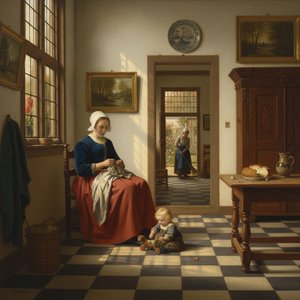
Pieter de Hooch: Illuminating Dutch Domestic Life & Golden Age Charm
Explore the captivating world of Pieter de Hooch, a master of Dutch Golden Age painting. Discover his innovative use of light, intimate domestic scenes, and lasting influence on art history. Learn more at OriginalUniqueArt.

Złoty Wiek Niderlandów: Światło, Realizm i Kulturowe Innowacje w Malarstwie Barokowym
Odkryj fascynujący świat malarstwa holenderskiego Złotego Wieku! Poznaj arcydzieła Rembrandta, Vermeera i innych mistrzów. Analiza technik, gatunków i wpływu na sztukę europejską.
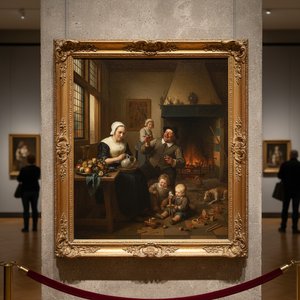
Obraz Życia Codziennego w Złotym Wieku Holandii: Malarstwo Rodzajowe i Społeczne Wartości
Odkryj fascynujący świat malarstwa rodzajowego Złotego Wieku Holandii! Poznaj mistrzów takich jak Rembrandt i Vermeer oraz wpływ ich dzieł na społeczeństwo. Ekskluzywne reprodukcje w OriginalUniqueArt.
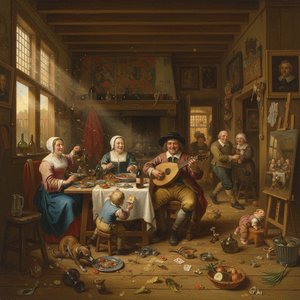
Jan Steen: A Master of Dutch Genre Painting & the Golden Age
Explore the life & art of Jan Steen, a leading Dutch Golden Age painter renowned for his humorous genre scenes & insightful social commentary. Discover his techniques, legacy, and collecting tips.

