 Przełącz na wydania drukowane
 Rozwiń treść







































 W przypadku dzieł sztuki lub reprodukcji, których którykolwiek z boków przekracza 105 cm (około 41 cali), rama zostanie wysłana w formie zestawu do samodzielnego montażu. Metoda ta zapewnia bezpieczną dostawę i zapobiega uszkodzeniom podczas transportu.


Pierre-Auguste Renoir: Capturing Fleeting Moments of Parisian Elegance
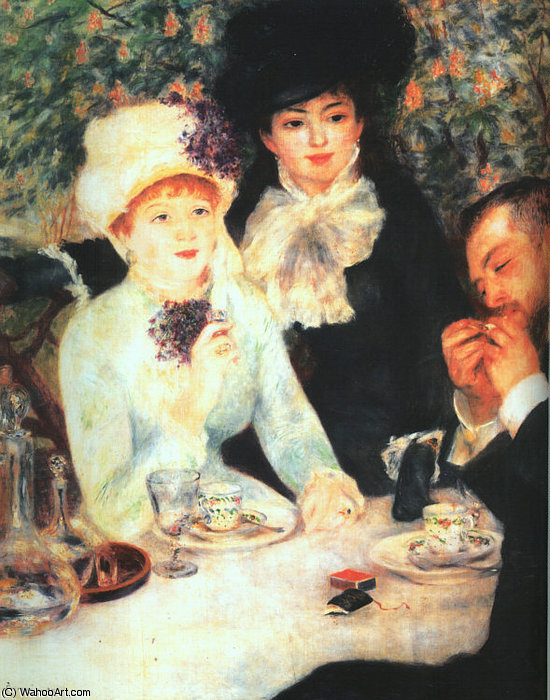
“The End of the Lunch,” painted in 1879, is arguably one of Pierre-Auguste Renoir’s most celebrated portraits – a luminous snapshot of bourgeois life at the cusp of Impressionism. More than just a depiction of three women enjoying a meal, it embodies Renoir's masterful ability to distill emotion and atmosphere onto canvas, cementing his place as a pioneer of capturing fleeting impressions.
A Window into Parisian Society
The painting transports us directly to a Parisian salon circa 1879. The scene unfolds with remarkable detail: three women seated around a table laden with delectable pastries – cakes adorned with delicate icing and garnished with fruit – bathed in the soft, diffused light characteristic of Impressionist technique. This wasn’t merely an observation; Renoir meticulously researched his subjects and surroundings to authentically portray the social milieu of his time.
Renoir's Technique: Light and Color as Narrative
Renoir’s signature style—characterized by loose brushstrokes and a vibrant palette—is immediately apparent. He eschewed academic precision for an expressive approach, prioritizing the sensation of light and color over meticulous representation. Notice how Renoir skillfully blends shades of ochre, lemon yellow, and rose pink to illuminate the faces of the women and the table setting. The dappled sunlight filtering through the window creates a shimmering effect that enhances the overall feeling of warmth and conviviality.
Symbolism Beyond Surface Beauty
Beyond its visual splendor, “The End of the Lunch” carries subtle symbolic weight. The abundance of food represents indulgence and pleasure – a celebration of sensory experience. However, Renoir’s gaze isn't solely focused on material possessions; he captures the unspoken connection between the women as they engage in conversation. Their expressions convey warmth, companionship, and perhaps even a hint of melancholy—a poignant reminder that beauty resides not only in outward appearances but also in the intangible realm of human emotion.
Emotional Resonance: A Timeless Impression
Ultimately, “The End of the Lunch” succeeds in conveying an enduring impression of Parisian elegance and feminine grace. Renoir’s masterful use of light and color elevates this seemingly simple scene into a profound meditation on beauty, connection, and the ephemeral nature of life itself. It remains a testament to his genius—a painting that continues to captivate viewers with its luminous quality and evocative portrayal of human experience.
Pytania i odpowiedzi
Czy „Koniec Lunchu” – Pierre-Auguste Renoir to obraz, rysunek czy grafika?
„Koniec Lunchu” – Pierre-Auguste Renoir jest klasyfikowane jako Sztuka ścienna. Kategoria ta określa rodzaj dzieła, jakim jest oryginał.
Kiedy i z jakich materiałów wykonano "Koniec Lunchu"?
Technika wykonania dzieła „Koniec Lunchu” – Pierre-Auguste Renoir to Obraz olejny na płótnie, a datowanie pracy pochodzi z 1879.
Jaki format i orientacja druku są sugerowane dla „Koniec Lunchu” – Pierre-Auguste Renoir?
W przypadku "Koniec Lunchu" zalecanym formatem wydruku jest rozmiar Duży format w orientacji Orientacja pionowa.
 Podgląd w skali 1:1
 Wyślij jako kartkę
 Udostępnij
 Szczegóły dzieła
 Przewodnik

 Pobierz obraz
 Podobne obiekty
 RTG
RTG Pokaz slajdów
 Pytania i odpowiedzi
 Statystyki