

 Podgląd w skali 1:1
 Wyślij jako kartkę
 Udostępnij
 Szczegóły dzieła
 Przewodnik

 Pobierz obraz
 Podobne obiekty
 RTG
RTG Pokaz slajdów
 Statystyki
Path through the Dunes
 Oil
Oil- WallArt
- Dutch Golden Age
 Early Modern
 35.0 x 43.0 cm
 Staatliche Museen zu Berlin
 Rozwiń treść
Ręcznie malowana reprodukcja olejowa
Ręcznie malowany obraz olejny na płótnie, wykonany na zamówienie przez naszych artystów w wybranym przez Ciebie wymiarze i oprawie. ( Przełącz na wydania drukowane Przejdź do wersji cyfrowej)




P118B zł10

P118H zł10

P118W zł10

P438Z zł10

P508JH zł12

P508YH zł12

P805H zł10

P805Z zł10

P919BZ zł10

P919G zł10

P919XJ zł10

P959ZH zł10

P968JZ zł12

W106C zł8

W218G zł10

W218JH zł8

W218Y zł10

W307PJ zł10

W316G zł10

W316PJ zł8

W316Y zł10

W398PJ zł8

W4111J zł10

W500HY zł15

W500JH zł15

W692G zł12

W849H zł8

W940BG zł15

W953PJ zł8




Wybierz spośród naszych standardowych rozmiarów, które zachowują oryginalne proporcje dzieła sztuki.

Wpisz wymaganą szerokość i wysokość, aby obraz pasował do Twojej ramy lub ściany. Ponieważ jest to dzieło malowane ręcznie, w przypadku rozmiaru o innych proporcjach artysta może domalować nieco więcej wokół obrazu lub przyciąć jego fragmenty — wybór należy do Ciebie. Przed rozpoczęciem pracy prześlemy Ci cyfrową wizualizację do zatwierdzenia. Obraz widoczny na tej stronie nie przedstawia rzeczywistego efektu — jedynie wizualizacja oddaje realny rezultat.
Po złożeniu zamówienia zespół OriginalUniqueArt.com skontaktuje się z klientem drogą mailową w celu uzyskania instrukcji i prześle wizualizację projektu
Dostawa na całym świecie () w ciągu 3–4 tygodni zamiast standardowych 5 tygodni. (26 Październik). Bez kompromisów w kwestii jakości.

Bezpłatna ekspresowa wysyłka na cały świat

Wysokiej jakości płótno lniane

Pełne ubezpieczenie przesyłki

Gwarancja zwrotu należności celnych i podatków importowych

Gwarancja wiernego odwzorowania kolorów

100-dniowa polityka zwrotów (tylko w przypadku wad)

Gwarancja 100% zwrotu pieniędzy

Zniżka przy zakupie wielu sztuk
 Opcja ze szkłem jest dostępna wyłącznie w rozmiarach poniżej 110 cm

Path through the Dunes
Technika reprodukcji
Wymiary reprodukcji
-


Cena całkowita
zł 1151
A Journey Through Golden Age Serenity
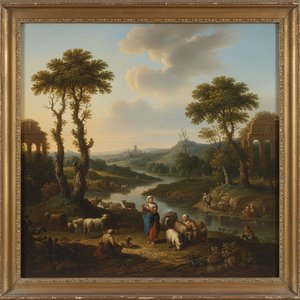
In the quiet expanse of Philips Wouwerman’s "Path through the Dunes," viewers are invited to step into a world where time seems to suspend itself within the rolling contours of the Dutch landscape. Painted during the height of the Dutch Golden Age, between approximately 1650 and 1668, this masterpiece is far more than a mere topographical record; it is an evocative window into a bygone era of tranquility. The composition centers on a winding path that meanders through sun-drenched dunes, acting as a visual guide that draws the eye deep into the heart of the scene. As one follows this trail, a solitary figure emerges—a subtle, human heartbeat within the vastness of nature—reminding us of our own small yet profound place within the grandeur of the earth.
The atmosphere of the painting is defined by a masterful interplay of light and shadow. Wouwerman, a virtuoso of the era, utilizes a dramatic sky filled with soft, drifting clouds to cast a shifting mosaic of light across the landscape. This luminosity breathes life into the textures of the dunes, where the artist’s loose, confident brushstrokes capture the tactile quality of sand, scrub, and wild vegetation. The horizon is graced by a tranquil body of water, reflecting the overcast heavens and providing a sense of infinite depth that expands the viewer's perspective far beyond the immediate foreground.
Mastery of Technique and Earthy Elegance
To behold this work is to witness the technical brilliance of one of Haarlem’s most celebrated sons. Wouwerman’s approach to the medium of oil on oak allows for a remarkable level of detail that remains grounded in a naturalistic realism. Unlike the more idealized landscapes of his contemporaries, Wouwerman embraced an earthy palette dominated by ochre yellows, deep browns, and muted greens. These tones do not merely represent the landscape; they embody its very essence, creating a harmonious visual experience that feels both organic and timeless.
The artist’s technique is particularly noteworthy in his ability to balance precision with movement. While he possesses a keen eye for the minute details of trees and shrubs, his brushwork remains fluid enough to convey the subtle dynamism of a coastal breeze. This duality creates a sense of "atmospheric perspective," where the distant horizon feels soft and ethereal, contrasting beautifully with the more textured, tangible elements of the path in the foreground. For the collector or interior designer, this painting offers a sophisticated balance of complexity and calm, making it an ideal centerpiece for spaces that require a touch of historical prestige and organic warmth.
An Invitation to Timeless Reflection
Beyond its technical merits, "Path through the Dunes" carries a profound emotional resonance. It evokes a sense of nostalgia for a simpler, more contemplative existence. The painting does not demand attention through loud colors or chaotic action; instead, it seduces the viewer through subtlety and grace. There is a certain melancholy in the solitary figure’s journey, yet it is balanced by the enduring peace of the landscape itself. It is a work that speaks to the soul, offering a sanctuary of stillness in an increasingly frenetic modern world.
For those seeking to adorn a curated collection or a refined living space, a high-quality reproduction of this Wouwerman classic serves as more than decoration. It acts as an invitation to pause, to breathe, and to wander through the dunes of history. Whether placed in a sunlit study or a grand gallery, the painting brings with it the enduring spirit of the Dutch Golden Age—a legacy of observation, emotion, and unparalleled artistic innovation.
Pytania i odpowiedzi
Na jaką okazję „Path through the Dunes” – Philips Wouwermański jest polecane jako prezent?
„Path through the Dunes” – Philips Wouwermański to doskonały pomysł na prezent dla Anniversary. Jako podarunek można wręczyć reprodukcję tego dzieła.
Jakie emocje budzi "Path through the Dunes"?
„Path through the Dunes” – Philips Wouwermański emanuje Tranquil emocjonalnym nastrojem.
Jaki nastrój budzi "Path through the Dunes"?
Ogólny nastrój dzieła „Path through the Dunes” – Philips Wouwermański to Serene. Nastrój ten oddaje ogólną atmosferę pracy.
Biografia artysty
Philips Wouwerman: A Master of Dutch Dynamism
Philips Wouwerman, born in Haarlem in 1619 and tragically passing away in the same city in 1668, stands as a pivotal figure within the vibrant tapestry of the Dutch Golden Age. More than just a painter, he was a keen observer of human life – a chronicler of bustling marketplaces, spirited hunts, and the quiet dramas unfolding amidst landscapes both familiar and fantastical. His prolific output, encompassing over a thousand works (though many attributed to his numerous followers), reveals an artist constantly evolving, yet always rooted in the traditions of Haarlem and deeply influenced by the artistic currents of his time.
Early Influences and Artistic Training
Wouwerman’s early life offers intriguing glimpses into his formative years. Born into a family connected to the art world – his father, Pouwels Joostsz Wouwerman, was a painter specializing in historical scenes – he likely received some initial instruction from his father. However, details regarding his formal training remain somewhat elusive. A significant influence on his early work appears to have been the *bamboccianti* tradition, a movement originating in Rome that focused on depicting everyday life and genre scenes populated by peasants, soldiers, and laborers. Artists like Pieter van Laer (1592/99–after 1642), known for his lively depictions of tavern scenes and street life, undoubtedly shaped Wouwerman’s initial approach to composition and subject matter. It's believed that he also studied under Frans Hals (1581/85–1666), a prominent Haarlem portraitist, though the direct impact of Hals’ distinctive style on Wouwerman’s mature work is subtle.
The Emergence of a Unique Style
Wouwerman's artistic development witnessed a remarkable transformation throughout his career. Initially emulating the *bamboccianti*, he gradually developed a distinctly personal style, characterized by a masterful command of light and shadow, dynamic compositions, and an unparalleled ability to render horses in motion. A key element of this evolution was the introduction of the diagonal slope of land – often featuring a strategically placed tree acting as a repoussoir (a device used to create depth and drama) – which became a hallmark of his landscapes. His mid-career works are particularly notable for their carefully constructed scenes, populated by figures engaged in various activities: hunting parties, military encampments, festive gatherings of peasants, and travelers pausing at inns. These compositions were not merely static representations; they conveyed a sense of movement, energy, and narrative complexity.
Mastery of the Horse and Expanding Subject Matter
Perhaps Wouwerman’s most enduring legacy lies in his extraordinary skill as an equestrian painter. He possessed an almost uncanny ability to capture the power, grace, and dynamism of horses – from majestic warhorses charging into battle to spirited hunters pursuing their quarry. Art historian Frederik J. Duparc famously declared him “undoubtedly the most accomplished and successful 17th-century Dutch painter of horses,” a testament to his meticulous observation, anatomical accuracy, and understanding of equine movement. Beyond his equestrian paintings, Wouwerman broadened his subject matter considerably, venturing into landscapes with travelers, cavalry battles, military encampments, and even depictions of everyday life – all rendered with remarkable detail and a keen eye for storytelling. His later works often featured a softer palette and a more subdued atmosphere, reflecting a shift in artistic sensibilities.
Historical Significance and Lasting Influence
Philips Wouwerman’s paintings enjoyed immense popularity during his lifetime, securing him a prominent place within the Dutch art market. His work was highly sought after by collectors throughout Europe, including princely houses in Dresden and St. Petersburg, demonstrating its enduring appeal. The fact that many of his works were copied and imitated by artists like Jan van Huchtenburgh and Pieter van Bredael underscores his significant influence on subsequent generations of painters. Wouwerman’s legacy extends beyond individual masterpieces; he represents a pivotal moment in the development of Dutch painting – a synthesis of observation, technique, and narrative skill that continues to captivate viewers today. His paintings offer a vibrant window into the social, cultural, and artistic landscape of the Dutch Golden Age.

Philips Wouwermański
1619 - 1668 , Holandia
Krótka nota
- Artistic Movement Or Style: Złota Era Holenderska
- Artists Or Movements Influenced By This Artist: ['Jan Wijnants']
- Artists Who Influenced This Artist:
- Frans Hals
- Pieter van Laer
- Date Of Birth: 24 maja 1619
- Date Of Death: 19 maja 1668
- Full Name: Philips Wouwerman
- Nationality: Holender
- Notable Artworks:
- Dwie konie
- Dwoje jeźdźców na psach
- Krajobraz z wydm
- Place Of Birth: Haarlem, Holandia
Powiązane artykuły

Golden Light & Dutch Skies: Bringing the Magic of Dutch Golden Age Landscapes into Your Home
Transform your home with the breathtaking light of Dutch Golden Age landscapes. Discover how hand-painted oil reproductions of masterworks like Ruisdael and Vermeer bring timeless elegance, atmosphere, and soulful texture to modern interiors. Elevate your space with museum-quality art.

Mastering Light & Shadow: A Journey Through the Dutch Golden Age's Luminous Legacy
Embark on a cultural journey through the Dutch Golden Age. Explore the masterful interplay of light and shadow in 17th-century masterpieces, from Rembrandt to Vermeer, and discover how this era of profound realism continues to inspire fine art collectors today.

Golden Light & Dutch Skies: The Timeless Magic of Dutch Golden Age Landscapes
Discover the breathtaking beauty of Dutch Golden Age landscapes. Explore the mastery of light, chiaroscuro, and 17th-century realism through an expert art history lens, celebrating the enduring legacy of the Dutch Masters for discerning collectors and art lovers.
Nicolaes Berchem: Dutch Golden Age Pastoralism & the Evolution of Landscape Painting
Explore the captivating world of Nicolaes Berchem, a leading Dutch Golden Age painter. Discover his idyllic landscapes, masterful technique & lasting influence on art history. Learn more at OriginalUniqueArt.

Złoty Wiek Holandii: 10 arcydzieł, które zmieniły historię sztuki | OriginalUniqueArt.com
Odkryj 10 arcydzieł Złotego Wieku Holandii! Poznaj historię Rembrandta, Vermeera i innych mistrzów. Reprodukcje obrazów najwyższej jakości do Twojego wnętrza – OriginalUniqueArt.com.

