
 Podgląd w skali
 Wyślij jako kartkę
 Udostępnij
 Szczegóły dzieła

 Pobierz
 Podobne obiekty
 RTG
RTG Pokaz slajdów
Punishment of a Hunter
 Oil On Canvas
- WallArt
- Romanticism
 1647
1647 85.0 x 120.0 cm
 Muzeum Ermitażu
 Rozwiń treść
Giclée / Wydruk artystyczny
Druk giclée lub płótno o jakości muzealnej, szybka realizacja i szeroki wybór opcji wykończenia. ( Zamów ręcznie malowaną reprodukcję Kup obraz wysokiej rozdzielczości)




P118B $10

P118H $10

P118W $10

P438Z $10

P508JH $12

P508YH $12

P805H $10

P805Z $10

P919BZ $10

P919G $10

P919XJ $10

P959ZH $10

P968JZ $12

W106C $8

W218G $10

W218JH $8

W218Y $10

W307PJ $10

W316G $10

W316PJ $8

W316Y $10

W398PJ $8

W4111J $10

W500HY $15

W500JH $15

W692G $12

W849H $8

W940BG $15

W953PJ $8




Wybierz spośród naszych standardowych rozmiarów, które zachowują oryginalne proporcje dzieła sztuki.

Możesz wprowadzić własne wymiary, aby dopasować dzieło do konkretnej ramy lub przestrzeni. Jeśli wybrany rozmiar nie będzie odpowiadał proporcjom oryginalnego obrazu, przytniecie dzieło lub rozszerzymy obraz za pomocą odbicia lustrzanego lub jednolitego wypełnienia krawędzi. Przed rozpoczęciem produkcji prześlemy cyfrową wizualizację do Twojej akceptacji.
Prosimy pamiętać, że podgląd na ekranie nie odzwierciedla faktycznego przycinania ani rozszerzania. Tylko wizualizacja dokładnie pokaże końcową kompozycję.
Mimo dostępności niestandardowych rozmiarów, zalecamy wybór wymiaru z listy zdefiniowanej, aby zachować oryginalne proporcje.
Dostawa na cały świat () w ciągu 2 tygodni zamiast standardowych 4/5 tygodni. (20 Sierpień)

Bezpłatna ekspresowa wysyłka na cały świat

Wysokiej jakości płótno lniane

Pełne ubezpieczenie przesyłki

Gwarancja zwrotu należności celnych i podatków importowych

Gwarancja wiernego odwzorowania kolorów

Polityka 60-dniowego zwrotu (tylko w przypadku wad)

Gwarancja 100% zwrotu kosztów

Zniżka przy zamówieniu wielu produktów
 Opcja ze szkłem jest dostępna wyłącznie w rozmiarach poniżej 110 cm

Punishment of a Hunter
Giclée / Wydruk artystyczny
Wymiary reprodukcji
-


Cena całkowita
$ 80
Opis kolekcjonerski
Punishment of a Hunter: A Symphony of Moral Allegory and Artistic Mastery
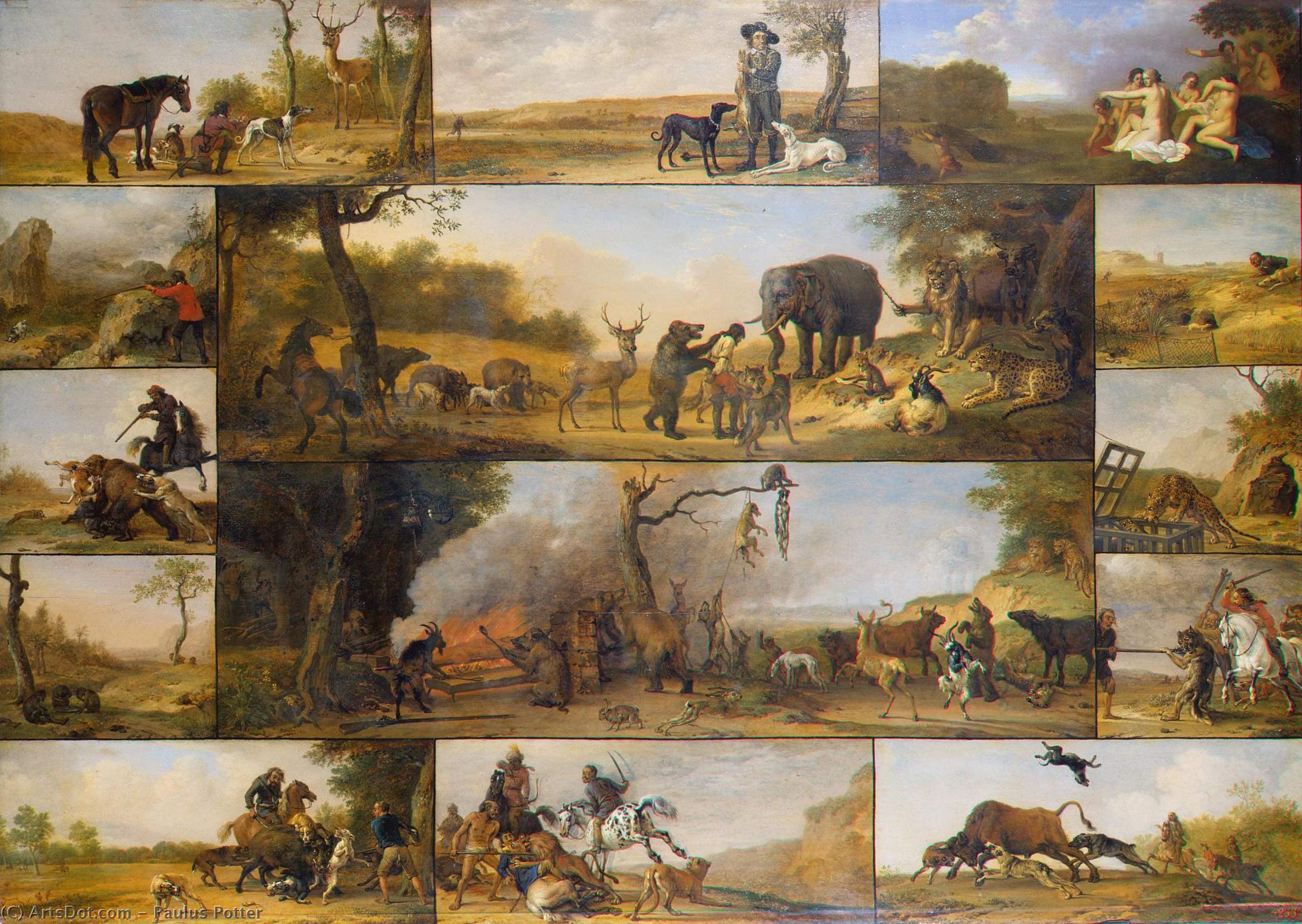
Paulus Potter’s *Punishment of a Hunter* (1647-1652) stands as an extraordinary testament to the Dutch Golden Age's fascination with both meticulous observation of nature and profound philosophical contemplation. More than just a depiction of hunting—a pastime deeply ingrained in aristocratic culture—this monumental wood panel painting operates on multiple levels, delivering a potent critique of social hierarchy alongside breathtaking artistic achievement. Potter’s genius lies not merely in his technical prowess but also in his ability to infuse his canvases with complex symbolic narratives that resonate across centuries.A Landscape Steeped in Moral Judgment
The scene unfolds within an expansive Dutch pasture landscape—a meticulously rendered panorama populated by horses, deer, and birds—yet it is dominated by two central vignettes: a courtroom drama featuring a hunter facing judgment from an animal tribunal and the gruesome spectacle of his execution by burning. This juxtaposition immediately establishes a thematic core – a confrontation between human ambition and natural law – reflecting the anxieties prevalent during the period concerning societal morality and the consequences of unchecked indulgence. Potter’s masterful use of perspective draws the viewer into this dramatic tableau, emphasizing the scale of the event and amplifying its emotional impact. The artist skillfully employs chiaroscuro—the interplay of light and shadow—to sculpt the figures and animals alike, creating a palpable sense of tension and conveying the severity of the punishment meted out.The Animal Court: A Reflection of Cartesian Thought
The animal court itself is populated by creatures embodying various virtues and vices – lions representing justice, foxes recording proceedings with meticulous detail, wolves administering retribution—a deliberate allusion to René Descartes’s groundbreaking philosophical concept of mind-body dualism. Descartes argued that humans possessed reason and consciousness, distinguishing them fundamentally from animals perceived as mere automatons devoid of intellect. Potter's depiction challenges this Cartesian worldview by presenting animals as active participants in a moral drama, questioning the notion of human superiority and suggesting that even the animal kingdom possesses inherent dignity and deserves consideration. The inclusion of figures like Diana—the goddess of hunting—further reinforces this symbolic dimension, embodying both grace and ruthless efficiency.Technique and Artistic Innovation
Potter’s technique is characterized by an unparalleled level of detail and realism—a hallmark of Dutch landscape painting during the Golden Age. He painstakingly captures textures and nuances of light and shadow, achieving a remarkable degree of accuracy in portraying animal anatomy and behavior. The use of oil paint on wood panel allowed for exceptional luminosity and tonal range, enabling Potter to convey the grandeur of the pastoral setting and the visceral horror of the execution scene with equal conviction. Furthermore, Potter’s decision to employ fourteen vignettes—a technique uncommon at the time—created a dynamic visual experience that mirrored the complexity of the narrative itself. This innovative compositional approach distinguishes *Punishment of a Hunter* from its contemporaries and elevates it to the pinnacle of artistic achievement.Emotional Resonance: Beyond Mere Representation
Ultimately, *Punishment of a Hunter* transcends mere representation; it communicates profound emotional resonance. The painting evokes feelings of awe at the beauty of nature alongside unease concerning human folly and moral transgression. Potter’s masterful portrayal captures not only the visual splendor of the landscape but also its underlying ethical implications—a reminder that humanity must acknowledge its responsibility to uphold natural law and temper ambition with compassion. It remains a captivating artwork, prompting viewers to contemplate questions of justice, morality, and the relationship between humankind and the animal kingdom – themes that continue to resonate powerfully today.O artyście
A Brief Life Illuminated: The World of Paulus Potter
Paulus Potter, a name inextricably linked to the heart of the Dutch Golden Age, was an artist whose life, tragically short as it was, left an indelible mark on the landscape of European art. Born in Enkhuizen on November 20, 1625, and baptized that very same day, his artistic journey began within a family already steeped in creative tradition. His father, Pieter Symonsz Potter, was a highly respected painter specializing in the intricate craft of gilded leather hangings and charming genre scenes – depictions of everyday life imbued with warmth and humor. His mother, Aaltje Paulusdr Bartsius, possessed familial ties to Willem Bartsius, another esteemed artist whose legacy continued through her lineage. This rich artistic heritage undoubtedly provided young Paulus with a foundational understanding of technique and aesthetic sensibility. The family’s relocation first to Leiden in 1628, and then to the bustling metropolis of Amsterdam in 1631, proved pivotal, offering him access to a wider world of artistic influence and opportunity – a vibrant hub where diverse styles and techniques converged. It was in Amsterdam that he began his formal training under his father’s guidance, though some scholars suggest potential influences from Claes Moeyaert, a prominent painter known for his atmospheric landscapes.From Delft Guilds to Hague Landscapes
Potter's ambition quickly propelled him towards recognition within the established artistic circles of the Dutch Republic. He joined the prestigious Guild of Saint Luke in Delft, a significant step signifying his commitment to professional standards and access to valuable resources. However, it was his move to The Hague around 1649 that truly cemented his artistic path and opened doors to new patrons and commissions. Establishing himself near the renowned landscape painter Jan van Goyen – whose mastery of atmospheric effects and realistic depictions of nature would subtly permeate Potter’s own style – proved incredibly influential. This period also marked a significant turning point in Potter's personal life. In July 1650, he married Adriana van Balckeneynde, a union that brought him into the orbit of wealthy and influential families, notably through her father, a prominent building contractor. This connection facilitated introductions to members of Dutch high society, including Amalia of Solms-Braunfels, who became a devoted patron of his work, commissioning numerous portraits and landscapes. A brief return to Amsterdam in May 1652, at the invitation of physician and art enthusiast Nicolaes Tulp – who commissioned a portrait of his son Dirck – offered further recognition and validation of his artistic talents. Sadly, this period of burgeoning success was tragically cut short by illness; Paulus Potter succumbed to tuberculosis on January 17, 1654, at the young age of twenty-eight, leaving behind a legacy of breathtaking beauty and profound emotional resonance.The Pastoral Vision: Style and Major Works
Paulus Potter carved a unique niche for himself within the vibrant landscape of Dutch Golden Age painting – he became celebrated for his captivating depictions of animals – particularly cattle – seamlessly integrated into expansive, meticulously rendered landscapes. His compositions are often characterized by a strikingly low vantage point, an artistic choice that dramatically emphasizes the scale and grandeur of nature, dwarfing even the majestic beasts he portrayed. The Young Bull, created around 1647, remains his most iconic work, now housed in the Mauritshuis in The Hague. Initially met with some critical reservation – some found it overly dramatic – it later gained widespread acclaim as a pioneering example of Romanticism’s nascent sensibility – a profound emotional connection to the natural world. Beyond this masterpiece, Potter produced other notable paintings such as Figures with Horses by a Stable (1647), Punishment of a Hunter (circa 1647), Two Pigs in a Sty (1649), and Wolf-hound (approximately 1650–1652). He also demonstrated his versatility through numerous etchings, often focusing on the detailed portrayal of cattle and other animals.Influences and Artistic Techniques
Potter’s artistic style was a complex synthesis of influences. While undeniably influenced by the realism and atmospheric perspective championed by Jan van Goyen, he possessed a distinct sensitivity to light and shadow that set him apart. His meticulous attention to detail – particularly in rendering animal anatomy – reveals a deep understanding of his subjects. The low horizon lines prevalent in many of his works create a sense of vastness and emphasize the scale of the landscape, drawing the viewer’s eye into the scene. Potter's use of muted earth tones – browns, greens, and grays – reflects the natural colors of the Dutch countryside, lending an air of authenticity and tranquility to his paintings. Furthermore, he skillfully employed techniques of chiaroscuro – dramatic contrasts between light and dark – to heighten the emotional impact of his compositions. His work is characterized by a remarkable sense of depth and spatial awareness, achieved through careful observation and masterful execution.Legacy and Lasting Influence
Despite his tragically short life, Paulus Potter’s artistic legacy endures. He is now recognized as a pivotal figure in the transition from Baroque to Romanticism within Dutch art. His work stands as a testament to his exceptional talent and unique vision – a profound exploration of the relationship between humanity and nature. The influence of Jan van Goyen is readily apparent in Potter's landscapes, particularly in the subtle atmospheric effects and commitment to realistic representation. However, Potter transcended mere imitation; he infused his scenes with an emotional depth that resonated deeply with viewers then, and continues to do so today. He is honored with a statue in his birthplace of Enkhuizen, depicting him sketching a goat – a fitting tribute to an artist who dedicated his life to capturing the beauty and majesty of the natural world. His paintings continue to inspire awe and wonder, reminding us of the enduring power of art to connect us to the world around us.
Paulus Potter
1625 - 1654 , Holandia
Krótka nota
- Artistic Movement Or Style: Romantyzm
- Artists Or Movements Influenced By This Artist: ['Romantyzm']
- Artists Who Influenced This Artist: ['Jan van Goyen']
- Date Of Birth: 20 listopada 1625
- Date Of Death: 17 stycznia 1654
- Full Name: Paulus Pieterszoon Potter
- Nationality: Holender
- Notable Artworks:
- Byk młody
- Postacie z koniami
- Kara myśliwego
- Dwa świnie w stajni
- Wilczy pies
- Place Of Birth: Enkhuizen, Holandia
Powiązane artykuły

Golden Light & Dutch Skies: The Timeless Magic of Dutch Golden Age Landscapes
Discover the breathtaking beauty of Dutch Golden Age landscapes. Explore the mastery of light, chiaroscuro, and 17th-century realism through an expert art history lens, celebrating the enduring legacy of the Dutch Masters for discerning collectors and art lovers.

Złoty Wiek Holandii: 10 arcydzieł, które zmieniły historię sztuki | OriginalUniqueArt.com
Odkryj 10 arcydzieł Złotego Wieku Holandii! Poznaj historię Rembrandta, Vermeera i innych mistrzów. Reprodukcje obrazów najwyższej jakości do Twojego wnętrza – OriginalUniqueArt.com.

Złoty Wiek Niderlandów: Światło, Realizm i Kulturowe Innowacje w Malarstwie Barokowym
Odkryj fascynujący świat malarstwa holenderskiego Złotego Wieku! Poznaj arcydzieła Rembrandta, Vermeera i innych mistrzów. Analiza technik, gatunków i wpływu na sztukę europejską.

Mastering Light & Shadow: A Journey Through the Dutch Golden Age's Luminous Legacy
Embark on a cultural journey through the Dutch Golden Age. Explore the masterful interplay of light and shadow in 17th-century masterpieces, from Rembrandt to Vermeer, and discover how this era of profound realism continues to inspire fine art collectors today.

Blask Złotej Ery Niderlandów: Studium Innowacji w Malarstwie XVII Wieku
Odkryj fascynujący świat malarstwa holenderskiego Złotej Ery! Analiza innowacyjnych technik Rembrandta, Vermeera i innych mistrzów. Poznaj historię, gatunki i wpływ tego wyjątkowego okresu na sztukę.



