

 Podgląd w skali 1:1
 Wyślij jako kartkę
 Udostępnij
 Szczegóły dzieła
 Przewodnik

 Pobierz obraz
 Podobne obiekty
 RTG
RTG Pokaz slajdów
 Statystyki
LE CHEVAL PIE


 Rozwiń treść
Ręcznie malowana reprodukcja olejowa
Ręcznie malowany obraz olejny na płótnie, wykonany na zamówienie przez naszych artystów w wybranym przez Ciebie wymiarze i oprawie. ( Przełącz na wydania drukowane Przejdź do wersji cyfrowej)




P118B zł10

P118H zł10

P118W zł10

P438Z zł10

P508JH zł12

P508YH zł12

P805H zł10

P805Z zł10

P919BZ zł10

P919G zł10

P919XJ zł10

P959ZH zł10

P968JZ zł12

W106C zł8

W218G zł10

W218JH zł8

W218Y zł10

W307PJ zł10

W316G zł10

W316PJ zł8

W316Y zł10

W398PJ zł8

W4111J zł10

W500HY zł15

W500JH zł15

W692G zł12

W849H zł8

W940BG zł15

W953PJ zł8




Wybierz spośród naszych standardowych rozmiarów, które zachowują oryginalne proporcje dzieła sztuki.

Wpisz wymaganą szerokość i wysokość, aby obraz pasował do Twojej ramy lub ściany. Ponieważ jest to dzieło malowane ręcznie, w przypadku rozmiaru o innych proporcjach artysta może domalować nieco więcej wokół obrazu lub przyciąć jego fragmenty — wybór należy do Ciebie. Przed rozpoczęciem pracy prześlemy Ci cyfrową wizualizację do zatwierdzenia. Obraz widoczny na tej stronie nie przedstawia rzeczywistego efektu — jedynie wizualizacja oddaje realny rezultat.
Po złożeniu zamówienia zespół OriginalUniqueArt.com skontaktuje się z klientem drogą mailową w celu uzyskania instrukcji i prześle wizualizację projektu
Dostawa na całym świecie () w ciągu 3–4 tygodni zamiast standardowych 5 tygodni. (25 Październik). Bez kompromisów w kwestii jakości.

Bezpłatna ekspresowa wysyłka na cały świat

Wysokiej jakości płótno lniane

Pełne ubezpieczenie przesyłki

Gwarancja zwrotu należności celnych i podatków importowych

Gwarancja wiernego odwzorowania kolorów

100-dniowa polityka zwrotów (tylko w przypadku wad)

Gwarancja 100% zwrotu pieniędzy

Zniżka przy zakupie wielu sztuk
 Opcja ze szkłem jest dostępna wyłącznie w rozmiarach poniżej 110 cm

LE CHEVAL PIE
Technika reprodukcji
Wymiary reprodukcji
-


Cena całkowita
zł 1151
A Window into Dutch Golden Age: Paulus Potter’s “Le Cheval Pie”
Paulus Potter's "Le Cheval Pie," painted around 1649, isn’t merely a depiction of an animal; it’s a profound meditation on the relationship between man and nature, a cornerstone of the burgeoning Romantic movement within the Dutch Golden Age. This remarkable work, now housed in the Louvre Museum, offers a glimpse into a world where meticulous observation, technical mastery, and a deep appreciation for the natural world converged to create an enduring masterpiece. The painting immediately draws the viewer in with its carefully orchestrated composition – a dappled grey horse, strikingly reminiscent of a “piebald” stallion, stands poised within a subtly rendered landscape. Potter’s genius lies not just in his ability to capture the animal's physicality—the texture of its coat, the musculature beneath its skin—but also in conveying an underlying sense of quiet dignity and alertness. The horse isn’t presented as a symbol of power or conquest, but rather as a creature intimately connected to its environment, a participant in the rhythms of life and light.The Painter's Hand: Technique and Style
Potter’s artistic approach is deeply rooted in the traditions of Flemish painting, yet he transcends mere imitation, forging his own distinctive style. The work exemplifies the meticulous detail characteristic of the Dutch Golden Age, particularly the influence of artists like Jan Both and Frans Hals. He employed a rich, layered technique using oil paints on canvas, building up surfaces with countless thin glazes to achieve an astonishing level of realism. Notice the subtle variations in tone – the way light catches the horse’s coat, creating a shimmering effect; the delicate rendering of foliage, each leaf meticulously defined. The use of atmospheric perspective—the gradual softening and lightening of distant elements—creates a convincing sense of depth, pulling the viewer into the scene. The composition itself is deceptively simple, yet expertly balanced. The horse occupies a slightly off-center position, guiding our gaze while the surrounding landscape provides context and anchors the image within its natural setting. Potter’s mastery of line work is also noteworthy; the smooth curves of the horse's body contrast beautifully with the more angular forms of the trees and branches.A Symbol of Nobility and Freedom
Horses held a complex and layered significance in 17th-century Dutch society, representing not only wealth and status but also notions of freedom, strength, and nobility. Potter’s choice to depict a “piebald” horse—a breed known for its distinctive spotted coat—adds another layer of meaning. These horses were often associated with the Spanish court, symbolizing both exoticism and aristocratic lineage. The horse's alert posture suggests a readiness for action, yet it also conveys a sense of calm contemplation. The inclusion of a distant herd of deer further reinforces the theme of harmony between man and nature – a core value in Dutch art during this period. Beyond its symbolic weight, “Le Cheval Pie” can be interpreted as a celebration of the beauty and wonder of the natural world, reflecting a growing appreciation for the landscapes surrounding Amsterdam.Historical Context and Artistic Legacy
Paulus Potter’s tragically short life – he died at just 28 – belies the profound impact he had on the course of Dutch art. Born into an artistic family, he quickly surpassed his father's skill, becoming a leading figure in the animal genre. His work anticipated many of the key developments in Romanticism, with its emphasis on emotional response and the sublime beauty of nature. While contemporaries like Rembrandt focused primarily on portraiture and dramatic lighting, Potter’s paintings offered a more intimate and contemplative experience. His legacy extends far beyond his own lifetime, influencing generations of artists who followed. Reproductions of “Le Cheval Pie,” such as those offered by OriginalUniqueArt.com, allow us to appreciate the enduring power of this remarkable work – a testament to the skill, vision, and profound understanding of nature possessed by one of the Dutch Golden Age’s greatest masters.Pytania i odpowiedzi
Czy „LE CHEVAL PIE” – Paulus Potter znajduje się w domenie publicznej?
„LE CHEVAL PIE” – Paulus Potter znajduje się w domenie publicznej (należy do domeny publicznej – autorskie prawa majątkowe wygasły). Status ten określa zasady reprodukcji obrazu tego dzieła.
W jakiej technice wykonano „LE CHEVAL PIE” – Paulus Potter?
Paulus Potter wykorzystał/a technikę Oil On Canvas w pracy „LE CHEVAL PIE”. Technika ta definiuje materię oryginalnego dzieła.
Do jakiego pomieszczenia polecane jest dzieło „LE CHEVAL PIE” – Paulus Potter?
Reprodukcja "LE CHEVAL PIE" doskonale pasuje do Living Room.
Biografia artysty
A Brief Life Illuminated: The World of Paulus Potter
Paulus Potter, a name inextricably linked to the heart of the Dutch Golden Age, was an artist whose life, tragically short as it was, left an indelible mark on the landscape of European art. Born in Enkhuizen on November 20, 1625, and baptized that very same day, his artistic journey began within a family already steeped in creative tradition. His father, Pieter Symonsz Potter, was a highly respected painter specializing in the intricate craft of gilded leather hangings and charming genre scenes – depictions of everyday life imbued with warmth and humor. His mother, Aaltje Paulusdr Bartsius, possessed familial ties to Willem Bartsius, another esteemed artist whose legacy continued through her lineage. This rich artistic heritage undoubtedly provided young Paulus with a foundational understanding of technique and aesthetic sensibility. The family’s relocation first to Leiden in 1628, and then to the bustling metropolis of Amsterdam in 1631, proved pivotal, offering him access to a wider world of artistic influence and opportunity – a vibrant hub where diverse styles and techniques converged. It was in Amsterdam that he began his formal training under his father’s guidance, though some scholars suggest potential influences from Claes Moeyaert, a prominent painter known for his atmospheric landscapes.From Delft Guilds to Hague Landscapes
Potter's ambition quickly propelled him towards recognition within the established artistic circles of the Dutch Republic. He joined the prestigious Guild of Saint Luke in Delft, a significant step signifying his commitment to professional standards and access to valuable resources. However, it was his move to The Hague around 1649 that truly cemented his artistic path and opened doors to new patrons and commissions. Establishing himself near the renowned landscape painter Jan van Goyen – whose mastery of atmospheric effects and realistic depictions of nature would subtly permeate Potter’s own style – proved incredibly influential. This period also marked a significant turning point in Potter's personal life. In July 1650, he married Adriana van Balckeneynde, a union that brought him into the orbit of wealthy and influential families, notably through her father, a prominent building contractor. This connection facilitated introductions to members of Dutch high society, including Amalia of Solms-Braunfels, who became a devoted patron of his work, commissioning numerous portraits and landscapes. A brief return to Amsterdam in May 1652, at the invitation of physician and art enthusiast Nicolaes Tulp – who commissioned a portrait of his son Dirck – offered further recognition and validation of his artistic talents. Sadly, this period of burgeoning success was tragically cut short by illness; Paulus Potter succumbed to tuberculosis on January 17, 1654, at the young age of twenty-eight, leaving behind a legacy of breathtaking beauty and profound emotional resonance.The Pastoral Vision: Style and Major Works
Paulus Potter carved a unique niche for himself within the vibrant landscape of Dutch Golden Age painting – he became celebrated for his captivating depictions of animals – particularly cattle – seamlessly integrated into expansive, meticulously rendered landscapes. His compositions are often characterized by a strikingly low vantage point, an artistic choice that dramatically emphasizes the scale and grandeur of nature, dwarfing even the majestic beasts he portrayed. The Young Bull, created around 1647, remains his most iconic work, now housed in the Mauritshuis in The Hague. Initially met with some critical reservation – some found it overly dramatic – it later gained widespread acclaim as a pioneering example of Romanticism’s nascent sensibility – a profound emotional connection to the natural world. Beyond this masterpiece, Potter produced other notable paintings such as Figures with Horses by a Stable (1647), Punishment of a Hunter (circa 1647), Two Pigs in a Sty (1649), and Wolf-hound (approximately 1650–1652). He also demonstrated his versatility through numerous etchings, often focusing on the detailed portrayal of cattle and other animals.Influences and Artistic Techniques
Potter’s artistic style was a complex synthesis of influences. While undeniably influenced by the realism and atmospheric perspective championed by Jan van Goyen, he possessed a distinct sensitivity to light and shadow that set him apart. His meticulous attention to detail – particularly in rendering animal anatomy – reveals a deep understanding of his subjects. The low horizon lines prevalent in many of his works create a sense of vastness and emphasize the scale of the landscape, drawing the viewer’s eye into the scene. Potter's use of muted earth tones – browns, greens, and grays – reflects the natural colors of the Dutch countryside, lending an air of authenticity and tranquility to his paintings. Furthermore, he skillfully employed techniques of chiaroscuro – dramatic contrasts between light and dark – to heighten the emotional impact of his compositions. His work is characterized by a remarkable sense of depth and spatial awareness, achieved through careful observation and masterful execution.Legacy and Lasting Influence
Despite his tragically short life, Paulus Potter’s artistic legacy endures. He is now recognized as a pivotal figure in the transition from Baroque to Romanticism within Dutch art. His work stands as a testament to his exceptional talent and unique vision – a profound exploration of the relationship between humanity and nature. The influence of Jan van Goyen is readily apparent in Potter's landscapes, particularly in the subtle atmospheric effects and commitment to realistic representation. However, Potter transcended mere imitation; he infused his scenes with an emotional depth that resonated deeply with viewers then, and continues to do so today. He is honored with a statue in his birthplace of Enkhuizen, depicting him sketching a goat – a fitting tribute to an artist who dedicated his life to capturing the beauty and majesty of the natural world. His paintings continue to inspire awe and wonder, reminding us of the enduring power of art to connect us to the world around us.
Paulus Potter
1625 - 1654 , Holandia
Krótka nota
- Artistic Movement Or Style: Romantyzm
- Artists Or Movements Influenced By This Artist: ['Romantyzm']
- Artists Who Influenced This Artist: ['Jan van Goyen']
- Date Of Birth: 20 listopada 1625
- Date Of Death: 17 stycznia 1654
- Full Name: Paulus Pieterszoon Potter
- Nationality: Holender
- Notable Artworks:
- Byk młody
- Postacie z koniami
- Kara myśliwego
- Dwa świnie w stajni
- Wilczy pies
- Place Of Birth: Enkhuizen, Holandia
Powiązane artykuły

John Constable: 25 Najlepszych Obrazów Mistrza Angielskiego Krajobrazu | OriginalUniqueArt
Odkryj 25 arcydzieł Johna Constable'a – mistrza angielskiego krajobrazu! Poznaj romantyczne pejzaże, technikę malarską i inspiracje z Dedham Vale. Reprodukcje obrazów najwyższej jakości na OriginalUniqueArt.com. Eksploruj pełną kolekcję online!

Masterpieces of Light: A Definitive Guide to the Landscapes of the Dutch Golden Age
Discover the luminous mastery of Dutch Golden Age landscapes. Our expert guide explores the atmospheric realism of masters like Van Goyen and Cuyp. Elevate your space with museum-quality, hand-painted oil reproductions from OriginalUniqueArt.com. Art history, beautifully realized.

Golden Light & Dutch Skies: Bringing the Magic of Dutch Golden Age Landscapes into Your Home
Transform your home with the breathtaking light of Dutch Golden Age landscapes. Discover how hand-painted oil reproductions of masterworks like Ruisdael and Vermeer bring timeless elegance, atmosphere, and soulful texture to modern interiors. Elevate your space with museum-quality art.
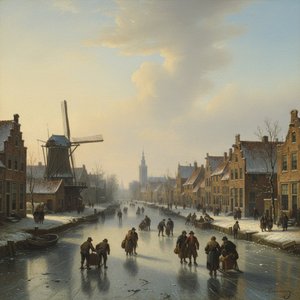
Charles Leickert: Capturing the Dutch Golden Age Light – A Comprehensive Study of Technique, Context, and Legacy
Explore the captivating winter landscapes of Charles Leickert, a master of Dutch Golden Age light & atmosphere. Discover his techniques, symbolism, and lasting legacy – a comprehensive study for art enthusiasts and collectors.

Golden Light & Dutch Skies: The Timeless Magic of Dutch Golden Age Landscapes
Discover the breathtaking beauty of Dutch Golden Age landscapes. Explore the mastery of light, chiaroscuro, and 17th-century realism through an expert art history lens, celebrating the enduring legacy of the Dutch Masters for discerning collectors and art lovers.

