
 Podgląd w skali 1:1
 Wyślij jako kartkę
 Udostępnij
 Szczegóły dzieła
 Przewodnik

 Pobierz obraz
 Podobne obiekty
 RTG
RTG Pokaz slajdów
 Pytania i odpowiedzi
 Statystyki
London Cries: A Man with a Bottle

- 19.0 x 14.0 cm


 Rozwiń treść
Giclée / Wydruk artystyczny
Wydruki giclée lub płótna o jakości muzealnej, szybka realizacja i szeroki wybór opcji wykończenia. ( Zamów ręcznie malowaną reprodukcję Przejdź do wersji cyfrowej)




P118B zł10

P118H zł10

P118W zł10

P438Z zł10

P508JH zł12

P508YH zł12

P805H zł10

P805Z zł10

P919BZ zł10

P919G zł10

P919XJ zł10

P959ZH zł10

P968JZ zł12

W106C zł8

W218G zł10

W218JH zł8

W218Y zł10

W307PJ zł10

W316G zł10

W316PJ zł8

W316Y zł10

W398PJ zł8

W4111J zł10

W500HY zł15

W500JH zł15

W692G zł12

W849H zł8

W940BG zł15

W953PJ zł8




Wybierz spośród naszych standardowych rozmiarów, które zachowują oryginalne proporcje dzieła sztuki.

Wpisz wymaganą szerokość i wysokość, aby dopasować grafikę do ramy lub ściany. Wydruk można jedynie przyciąć, nigdy nie powiększając go poza oryginalny obraz, dlatego format o innych proporcjach spowoduje utratę części kompozycji. Przed rozpoczęciem druku prześlemy Ci cyfrowy podgląd do zatwierdzenia. Obraz wyświetlany na tej stronie nie pokazuje rzeczywistego przycięcia — jedynie podgląd oddaje ten efekt.
Dostawa na cały świat () w ciągu 2 tygodni zamiast standardowych 4/5 tygodni. (6 Listopad)

Bezpłatna ekspresowa wysyłka na cały świat

Wysokiej jakości płótno lniane

Pełne ubezpieczenie przesyłki

Gwarancja zwrotu należności celnych i podatków importowych

Gwarancja wiernego odwzorowania kolorów

100-dniowa polityka zwrotów (tylko w przypadku wad)

Gwarancja 100% zwrotu pieniędzy

Zniżka przy zakupie wielu sztuk
 Opcja ze szkłem jest dostępna wyłącznie w rozmiarach poniżej 110 cm

London Cries: A Man with a Bottle
Giclée / Wydruk artystyczny
Wymiary reprodukcji
-


Cena całkowita
zł 317
A Snapshot of London Life: Paul Sandby’s “London Cries”
Paul Sandby's "London Cries: A Man with a Bottle," painted in 1759, isn’t merely a depiction of a street scene; it’s a vibrant, almost theatrical window into the bustling heart of eighteenth-century London. This watercolor, now meticulously reproduced as a hand-painted artwork by OriginalUniqueArt, captures a moment of everyday commerce and perhaps, a touch of wry observation, offering a glimpse into the lives of ordinary people within the grand tapestry of the city.
The scene unfolds in a shadowed alleyway, dominated by a weathered brick wall – a common feature of London’s densely packed streets. A man, dressed in a simple brown coat and hat, stands center stage, holding a bottle and a small bag. His posture suggests a practiced routine, a familiar dance with the city's commerce. The details are remarkably precise for the era: the folds of his clothing, the worn texture of the brick, even the subtle shadows cast by the light – all speak to Sandby’s keen eye for observation and his commitment to realistic representation. The background hints at a tavern or public space, filled with figures engaged in conversation, further immersing the viewer within the scene.
A Master of Watercolor Technique
Sandby was a pioneer in watercolor painting, particularly known for his ability to capture light and atmosphere with remarkable subtlety. This work exemplifies his mastery of the medium. Notice how he uses washes of color – delicate blues and greens for the shadows, muted browns for the brickwork – to create depth and volume. The loose, expressive brushstrokes contribute to a sense of immediacy and spontaneity, as if Sandby were capturing the scene in real-time. He employed a technique known as ‘grisaille,’ using monochrome washes to establish the tonal values before adding color, ensuring accuracy and balance within the composition.
The choice of paper – slightly textured laid paper – is also significant. It provides an ideal surface for watercolor, allowing the pigment to flow freely while maintaining a certain toothiness that enhances the visual impact of the brushstrokes. The overall effect is one of luminous quality, with light dancing across the figures and surfaces.
Historical Context: London in Transition
"London Cries" offers a fascinating insight into the social and economic landscape of 18th-century London. The title itself refers to the practice of street vendors hawking their wares – bottles of ale, small bags of goods, and various other items – to passersby. These “criers” were an integral part of the city’s economy and daily life. Sandby's painting isn’t simply a portrait of a vendor; it’s a representation of a vital urban activity.
Painted during a period of significant social change, London was experiencing rapid growth and transformation. The city was becoming increasingly crowded and diverse, with new industries emerging and traditional trades evolving. Sandby's work reflects this dynamism, capturing the energy and complexity of a rapidly changing metropolis. The painting also provides a poignant reminder of the lives of ordinary people – often overlooked in grand historical narratives – who contributed to the vibrant pulse of the city.
Symbolism and Emotional Resonance
Beyond its documentary value, “London Cries” possesses a subtle emotional resonance. The man’s expression is ambiguous—is he weary, hopeful, or simply focused on his trade? The shadows and muted colors contribute to a sense of quiet melancholy, suggesting the hardships and uncertainties of urban life. Yet, there's also an undeniable charm in the scene – a testament to the resilience and adaptability of Londoners.
As a hand-painted reproduction by OriginalUniqueArt, this artwork retains Sandby’s original spirit while offering exceptional clarity and detail. It’s more than just a print; it’s a tangible connection to a pivotal moment in British art history—a captivating glimpse into the soul of London itself.
Pytania i odpowiedzi
Kto stworzył "London Cries: A Man with a Bottle" i w jakim stylu jest to dzieło?
Paul Sandby stworzył "London Cries: A Man with a Bottle", reprezentujące nurt Neoclassicism.
W jakiej technice wykonano „London Cries: A Man with a Bottle” – Paul Sandby?
Technika wykonania dzieła „London Cries: A Man with a Bottle” – Paul Sandby to Acrylic On Canvas. Reprodukcje mają na celu wierne oddanie wyglądu tej techniki.
Co przedstawia „London Cries: A Man with a Bottle” – Paul Sandby?
Tematyka obecna w „London Cries: A Man with a Bottle” – Paul Sandby obejmuje 18th century london, street performer scene, british portraiture, vintage print art, historical figure, urban life 1759, ink drawing style. Razem stanowią one podsumowanie tematyki dzieła.
Biografia artysty
Paul Sandby RA: The Father of Modern Landscape Painting
Paul Sandby (1731 – 7 listopada 1809) stanowi kluczową postać w historii malarstwa krajobrazowego brytyjskiego, rozpoznawalnego nie tylko ze względu na jego artystyczne umiejętności, ale również za wprowadzenie nowej tradycji estetycznej, która głęboko wpłynęła na kolejne pokolenia. Urodzony w Nottingham u Thomasa Sandby’ego, tkacza, młodość Paula była naznaczona samodzielną edukacją i naturalnym zamiłowaniem do obserwacji – cechy, które okazały się kluczowe dla kształtowania się jego niezwykiej kariery jako mapomawcy i malarza. W odróżnieniu od wielu artystów jego czasu, którzy dążyli do formalnego szkolenia, Sandby doskonalił swoje umiejętności niezależnie, zanurzając się w świat natury i precyzyjnie dokumentując jej piękno za pomocą akwareli.- Wczesne lata i edukacja: Formujące lata Paula wykształciły w nim głębokie zrozumienie szczegółów i dokładności – umiejętności, które później bezproblemowo przełożyły się na jego działalność kartograficzną. Jego brat Thomas, również rysownik, wspierał tę artystyczną skłonność, zachęcając do eksperymentowania i budowania współpracy.
- Usługi wojskowe i badania krajobrazu szkockiego: Zaangażowanie Sandby’ego w dział departamentu rysunków wojskowych w Pałacu Lwowskim wpłynęło na niego, otwierając drogę do poznania potęgi Szkocji podczas rebelii jacobitów. Misja ta powierzyła mu tworzenie map topograficznych i szkiców krajobrazów Wysp Szkockich – projektu, który umocnił jego reputację jako wizualnego rejestratora historii i uczynił jednym z czołowych malarzy krajobrazowych tamtej epoki.
- Współpraca i styl artystyczny: Współpraca Sandby’ego z Thomasem była kluczowa dla jego rozwoju artystycznego. Razem założyli oni akademię w Nottingham, przyciągając ambitnych artystów pragnących uczyć się od ich doświadczenia. Ich charakterystyczny styl – charakteryzujący się lśniącymi warstwami koloru i mistrzowskim oddaniem atmosferycznej perspektywy – natychmiast stał się rozpoznawalny i głęboko wpływowy.
- Patronat królewski i wkład architektoniczny: Pozycja Sandby’ego, dzięki wsparciu George'a III, podniosła jego status w środowisku artystycznym, zapewniając mu stanowiska w Akademii Wojskowej w Woolwich oraz w Parku Wielkim Windsor. Jego projekty architektoniczne, takie jak Pałac Cumberlanda, świadczyły o jego wszechstronności i umocniły jego dziedzictwo jako wizjonera budującego harmonię między sztuką a naturą.
- Dziedzictwo i wpływ: Precyzyjne obserwacje Sandby’ego Szkocji – uchwycone w ikonicznych akwarelach, takich jak „The Light Steps” i „West View of the City of Edinburgh” – uczyniły go pionierem malarstwa romantycznego krajobrazu. Jego dzieła promują moc ekspresji koloru i światła, inspirując artystów we wszystkich krajach Wielkiej Brytanii do przyjęcia nowego poczucia estetyki, które stawiało na emocjonalne oddanie ponad dokładność wizualną.
The Early Years and Military Service
Born in Nottingham, Paul Sandby's early life was marked by a strong connection to the natural world. His father, Thomas Sandby, was a textile worker, and Paul’s education was largely self-directed, fueled by an innate curiosity and a keen eye for detail. This foundation proved crucial to his later success as both a mapmaker and a landscape painter. In 1743, at the age of 12, Sandby joined the military drawing department at the Tower of London, where he was tasked with creating topographical maps and sketches of various locations in England and Scotland. This experience exposed him to the techniques of cartography and provided him with valuable training in observation and representation. During his time at the Tower, Sandby also began to develop his artistic skills, experimenting with watercolor and learning from other artists working in the department. He quickly demonstrated a talent for capturing the nuances of light and shadow, as well as an understanding of perspective and composition. The Jacobite Rebellion and Highland Surveys Sandby’s military service coincided with the Jacobite Rebellion (1745-1746), a period of intense political upheaval in Scotland. The British government commissioned Sandby to document the events of the rebellion, including the Battle of Culloden, one of the most decisive battles in Scottish history. As part of his duties, Sandby traveled extensively throughout the Highlands, sketching and painting landscapes, buildings, and people. He meticulously recorded the devastation caused by the rebellion, as well as the beauty and resilience of the Highland culture. His work during this period is considered to be some of his finest, capturing a sense of drama and emotion that was rare for landscape painters at the time. The Importance of Observation Sandby’s military service instilled in him a deep appreciation for observation and detail – skills that would later prove invaluable in his work as a mapmaker and painter. He learned to see the world with a critical eye, paying attention to every aspect of the landscape, from the smallest details to the grandest vistas. This meticulous approach is evident in all of his paintings, which are characterized by their realism and accuracy.Collaboration and Artistic Style
Sandby’s artistic style was shaped by his close collaboration with his brother, Thomas Sandby, a renowned architect and draughtsman. Together, they established an academy in Nottingham, attracting aspiring artists eager to learn from their expertise. Their distinctive style—characterized by luminous washes of color and a masterful depiction of atmospheric perspective—became instantly recognizable and profoundly influential. The Influence of the Royal Academy Sandby’s partnership with Thomas was crucial to his artistic development. Together, they established an academy in Nottingham, attracting aspiring artists eager to learn from their expertise. Their distinctive style—characterized by luminous washes of color and a masterful depiction of atmospheric perspective—became instantly recognizable and profoundly influential. In 1768, Sandby and Thomas became founding members of the Royal Academy, a prestigious institution that would become a center for artistic innovation in Britain. A Pioneer of Watercolor Sandby’s work helped to popularize watercolor as a medium for landscape painting. He was one of the first artists to publish his watercolors in print, making them accessible to a wider audience. His innovative use of color and technique inspired other painters to experiment with watercolor, contributing to its growing popularity throughout the 18th century.Legacy and Influence
Paul Sandby’s legacy as “the father of English watercolor” is secure. His meticulous observations of Scotland—captured in iconic watercolors like “The Light Steps” and “West View of the City of Edinburgh”—established him as a pioneer of Romantic landscape painting. His work championed the expressive power of color and light, inspiring artists throughout Britain and beyond to embrace a new aesthetic sensibility that prioritized emotional resonance alongside visual accuracy. Sandby’s influence can be seen in the works of subsequent generations of landscape painters, who adopted his stylistic principles and embraced his commitment to portraying nature with uncompromising honesty. Sandby remains regarded as “the father of modern landscape painting,” a title justly earned for his pioneering role in shaping British artistic culture and establishing a visual language that continues to resonate with audiences today.
Paul Sandby
1798 - 1863 , Wielka Brytania
Krótka nota
- Artistic Movement Or Style: Malarski krajobrazowy
- Artists Or Movements Influenced By This Artist: ['Romantyzm']
- Artists Who Influenced This Artist: ['Thomas Gainsborough']
- Date Of Birth: 1731
- Date Of Death: 1809
- Full Name: Paul Sandby RA
- Nationality: Angielski
- Notable Artworks:
- The Light Steps
- Widok zachód
- Edinburgh
- Place Of Birth: Nottingham, Wielka Brytania
Powiązane artykuły
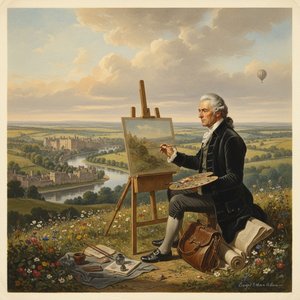
Thomas Sandby: Pioneering Watercolourist & Topographer of Georgian England
Explore the life & art of Thomas Sandby (1721-1798), a pioneering English watercolourist and architect. Discover his innovations, role in founding the Royal Academy, and lasting legacy at OriginalUniqueArt.

Paul Klee: 25 Arcydzieł Koloru i Formy | Reprodukcje Obrazów Online - OriginalUniqueArt
Odkryj 25 arcydzieł Paula Klee – od abstrakcji po ekspresjonizm. Poznaj historie, techniki i inspiracje malarza. Reprodukcje obrazów najwyższej jakości na OriginalUniqueArt.com. Eksploruj pełną kolekcję online!

Paul Cézanne: 25 Arcydzieł, które Zrewolucjonizowały Świat Sztuki | OriginalUniqueArt
Odkryj 25 arcydzieł Paula Cézanne'a – od impresjonizmu po postimpresjonizm. Poznaj historie, techniki i inspiracje malarza, który zrewolucjonizował sztukę. Reprodukcje obrazów najwyższej jakości na OriginalUniqueArt.com!

25 Arcydzieł Brytyjskiego Muzeum: Historia Sztuki w Twoim Domu | OriginalUniqueArt
Odkryj 25 arcydzieł Brytyjskiego Muzeum! Poznaj historie słynnych obrazów, rzeźb i artefaktów od antyku po współczesność. Reprodukcje najwyższej jakości na OriginalUniqueArt.com – inspiracje dla Twojego wnętrza. Eksploruj pełną kolekcję online!

25 Arcydzieł National Gallery w Londynie: Sztuka dla Twojego Domu | OriginalUniqueArt
Odkryj 25 arcydzieł National Gallery w Londynie! Poznaj historie Van Gogha, Moneta i Rembrandta. Reprodukcje obrazów najwyższej jakości dla Twojego wnętrza – inspiracje i dekoracje na OriginalUniqueArt.com.