

 Podgląd w skali
 Wyślij jako kartkę
 Udostępnij
 Szczegóły dzieła

 Pobierz
 Podobne obiekty
 RTG
RTG Pokaz slajdów
Morphine Addicts
 Acrylic On Canvas
- WallArt
- Impressionism
 1887
1887 24.0 x 37.0 cm
 Metropolitan Museum of Art
 Rozwiń treść
Kup wysokiej rozdzielczości, ulepszony obraz cyfrowy o znacznie wyższej jakości niż podgląd online.
Każdy plik jest starannie przygotowywany przez naszych specjalistów przy użyciu zaawansowanych narzędzi oraz profesjonalnej, ręcznej retuszy. Dbamy o to, aby każdy obraz cechował się wyjątkową ostrością, precyzyjnym odwzorowaniem kolorów i subtelnymi detalami.
Ostateczny plik dostarczany jest drogą mailową w ciągu 72 godzin, zoptymalizowany do natychmiastowego wykorzystania w profesjonalnych zastosowaniach redakcyjnych i poligraficznych. To ta sama jakość, której ufają czołowe studia projektowe, wydawnictwa oraz galerie sztuki.
Obraz cyfrowy
Pobierz plik o wysokiej rozdzielczości do osobistego wyświetlania, druku oraz projektów kreatywnych. ( Zamów wydruk Zamów ręcznie malowaną reprodukcję)
W każdym zamówieniu na obraz cyfrowy znajduje się
Profesjonalna dostawa cyfrowa z gwarancją
Wybierając OriginalUniqueArt.com, nie otrzymujesz jedynie obrazu – otrzymujesz profesjonalnie udoskonalone cyfrowe dzieło sztuki, stworzone z najwyższą precyzją i objęte gwarancją satysfakcji. Oto wszystko, co automatycznie dołączane jest do Twojego zamówienia:

Błyskawiczna wysyłka e-mailowa
Plik z obrazem cyfrowym w wysokiej rozdzielczości zostanie przesłany na Twój adres e-mail w ciągu 72 godzin od złożenia zamówienia – gotowy do natychmiastowego użycia.

Plik cyfrowy wzbogacony przez AI
Twoja grafika została profesjonalnie zoptymalizowana przy użyciu zaawansowanych narzędzi AI oraz ręcznej edycji, co zapewnia maksymalną szczegółowość, klarowność i wierność kolorów.

Dożywotnia darmowa ponowna dostawa
Przypadkowo usunąłeś lub zgubiłeś swój plik? Bez obaw – prześlemy go Tobie ponownie w dowolnym momencie, bez żadnych opłat.

Bez opłat importowych – zawsze
Ciesz się swoją sztuką natychmiast, bez żadnych opłat celnych, należności ani kosztów dostawy – pliki cyfrowe są zawsze wolne od podatku.

Gwarancja wierności kolorów
Dzięki zastosowaniu profesjonalnych narzędzi i procesów zarządzania barwą zapewniamy, że Twoje cyfrowe zdjęcie odzwierciedla oryginalne kolory tak wiernie, jak to tylko możliwe.

100-dniowa gwarancja satysfakcji
Jeśli nie będziesz zadowolony ze swojego cyfrowego obrazu, poprawimy go lub zwrócimy 100% kosztów w ciągu 100 dni – bez zbędnych pytań.

100% Gwarancja zwrotu pieniędzy
Nie jesteś zadowolony? Otrzymaj pełny zwrot kosztów w ciągu 100 dni od otrzymania pliku cyfrowego – bez zbędnych pytań.

Rabaty przy zamówieniach hurtowych
Kup 3 obrazy, oszczędź 10% - Kup 5, oszczędź 15% - Kup 10+, oszczędź 20%. Idealne do projektów kreatywnych, galerii i agencji.
Paul Albert Besnard - Morphine Addicts
Paul Albert Besnard (1849-1934) stands as a singular figure in French art of the late nineteenth and early twentieth centuries—a painter who stubbornly resisted categorization while simultaneously achieving remarkable success across diverse artistic mediums. Born in Paris, he possessed an innate talent nurtured by formal training at the École des Beaux-Arts under Jean Bremond and profoundly shaped by the pioneering spirit of Alexandre Cabanel, whose meticulous realism served as a cornerstone for Besnard’s initial artistic explorations. His academic grounding provided a disciplined foundation upon which he would later forge his own distinctive path, one characterized by an unwavering fascination with color and light—concepts championed by the Impressionists. Despite eschewing the overtly dramatic aesthetic favored by his contemporaries, Besnard skillfully adapted Impressionistic techniques to monumental decorative pro Besnard’s oeuvre is marked by a profound sensitivity to human emotion and psychological nuance, particularly evident in his portraits of women – figures rendered with exquisite detail and imbued with an aura of melancholy. “Morphine Addicts,” completed in 1887, exemplifies this artistic approach, presenting two women presented in a starkly lit laboratory setting—a juxtaposition that immediately invites contemplation on themes of illness, addiction, and the complexities of human experience. The artist’s masterful command of etching technique contributes significantly to the artwork's expressive power, capturing subtle tonal variations and textural nuances with remarkable precision. The composition itself is deliberately restrained, focusing intently on the faces and upper bodies of the subjects—a stylistic choice that underscores Besnard’s commitment to realism while simultaneously conveying a sense of intimacy. The figures are positioned slightly off-center, creating visual balance and drawing the viewer's gaze towards their expressive eyes. A table laden with scientific glassware serves as a grounding element, anchoring the scene within its clinical context and subtly hinting at the underlying narrative. Besnard’s meticulous hatching and crosshatching techniques—inherited from Cabanel’s influence—are employed to build up areas of shadow, enhancing depth and creating an atmosphere of quiet contemplation. Color plays a crucial role in conveying emotion, though Besnard eschews vibrant hues characteristic of Impressionism, opting instead for a monochrome palette dominated by shades of grey and white. This tonal scheme amplifies the artwork’s melancholic mood, emphasizing the vulnerability of the subjects and fostering a connection with the viewer on an emotional level. The artist skillfully utilizes light and shadow to sculpt the forms of the women's faces, highlighting their expressions and conveying subtle nuances of emotion—a testament to Besnard’s artistic prowess. Ultimately, “Morphine Addicts” transcends mere visual representation; it functions as a poignant meditation on human suffering and resilience. Besnard’s stylistic blend of academic realism with Impressionistic sensibilities captures the essence of his era—a period marked by intellectual curiosity and an exploration of psychological states. The artwork's enduring appeal lies in its ability to provoke reflection on themes of addiction, vulnerability, and the profound beauty found within moments of quiet introspection. It remains a compelling example of Besnard’s artistic vision and a testament to the power of art to communicate complex emotions with grace and subtlety.Biografia artysty
świetliste dziedzictwo Paula Alberta Besnarda
Paul Albert Besnard (1849-1934) jawi się jako postać niezwykła w samej tkance sztuki francuskiej, malarz, który przemierzał zmieniające się prądy przełomu dziewiętnastego i dwudziestego wieku z unikalną, nie dającą się jednoznacznie sklasyfikować gracją. Urodzony w Paryżu, rozpoczął swoją artystyczną wędrówkiem w surowych murach École des Beaux-Arts, gdzie kształcił się pod okiem Jeana Bremonda. Jego wczesny rozwój został głęboko naznaczony przez skrupulatny realizm Alexandre Cabanela – wpływ ten zapewnił Besnardowi zdyscyplinowane, akademickie fundamenty. Jednak pod tą klasyczną formacją biło serce modernizatora, artysty, który ostatecznie odważył się wyjść poza sztywne granice tradycji, by objąć ulotne piękno światła i atmosfery.
W miarę dojrzewania swojej kariery, Besnard zaczął niwelować przepaść między ustrukturyzowanym światem malarstwa akademickiego a pełnymi zmysłów eksploracjami impresjonizmu. Choć nie porzucił formy całkowicie na rzecz czystej abstrakcji, stał się mistrzem koloru, posługującym się paletą, która wydawała się jednocześnie świetlista i głęboko emocjonalna. Jego twórczość charakteryzuje niezachwiana fascynacja tym, jak światło oddziałuje na powierzchnie – czy to delikatną skórę w portrecie, czy rozległe, architektoniczne przestrzenie jego najwspanialszych zamówień. Ta zdolność do łączenia monumentalizmu z intymnością pozwoliła mu przekroczyć etykiety swojej epoki, tworząc styl, który wydaje się zarazem ponadczasowy i uderzająco współczesny.
Mistrz skali i ducha
Prawdziwy geniusz Besnarda objawił się być może najpełniej w jego umiejętności przeniesienia nowoczesnej wrażliwości na wielką, dekoracyjną skalę. On nie tylko malował obrazy; on transformował przestrzenie. Jego ambitne freski, zdobiące niektóre z najbardziej prestiżowych instytucji we Francji, stanowią świadectwo jego wizji sztuki jako doświadczenia publicznego i immersyjnego. Dzieła te można odnaleźć w takich miejscach jak:
- Sorbona, gdzie jego pociągnięcia pędzla tchną życie w akademicki przepych.
- École de Pharmacie, prezentująca jego zdolność do integrowania sztuki z funkcjonalną architekturą.
- Salle des Sciences w Comédie Française, będąca triumfem dekoracyjnej narracji.
- Hôtel de Ville, odzwierdzające obywatelską dumę i estetyczną wyrafinowanie Paryża.
- kaplica szpitala w Berck, gdzie jego Droga Krzyżowa reinterpretuje ikonografię religijną przez nowoczesny, humanistyczny pryzmat.
W tych potężnych przedsięwzięciach Besnard unikał nadmiernie dramatycznej czy teatralnej estetyki, tak lubianej przez wielu jego współczesnych. Zamiast tego stosował bardziej subtelne, atmosferyczne podejście, pozwalające światłu prowadzić wzrok widza, dzięki czemu nawet najbardziej masywne kompozycje zachowywały poczucie poetyckiej intymności i duchowej głębi.
Portret i intymność formy
Poza rozległymi panoramami swoich fresków, Besnard był płodnym twórcą dzieł znacznie bardziej osobistych. Posiadał niezwykłą zdolność chwytania psychologicznej esencji swoich modeli za pomocą olejów, akwareli, pasteli i miedziorytu. Jego portrety są celebrowane nie tylko za techniczną precyzję, ale przede wszystkim za głęboki rezonans emocjonalny. W przedstawieniu Madame Georges Rodenbach odnajdujemy śmiałą eksplorację piękna, która rzuca wyzwanie konwencjonalnym normom, ukazując jego kunszt w oddawaniu tekstury i charakteru z równie wielkim żarem.
Jego wszechstronność jako grafika i rysownika pozwoliła mu eksperymentować z grą cienia i światła w znacznie delikatniejszej skali. Bez względu na to, czy utrwalał królewską obecność Króla i Królowej Belgii, czy ciszę krajobrazu, twórczość Besnarda pozostaje zakotwiczona w wpływach przypominających styl Thomasa Gainsborough – pewnej elegancji i rytmicznego przepływu, który podnosi rangę tematu. Ostatecznie znaczenie Paula Alberta Besnarda tkwi właśnie w tej dwoistości: był artystą, który potrafił władać największymi salami Francji, jednocześnie chwytając najbardziej ulotne, delikatne szept światła.
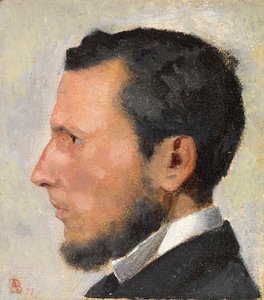
Paul Albert Besnard
1849 - 1934 , Francja
Krótka nota
- Artistic Movement Or Style: Impresjonizm
- Artists Or Movements Influenced By This Artist: ['Malarstwo akademickie']
- Artists Who Influenced This Artist:
- Alexandre Cabanel
- Thomas Gainsborough
- Date Of Birth: Paryż, Francja (1849)
- Date Of Death: 1934
- Full Name: Paul Albert Besnard
- Nationality: Francuz
- Notable Artworks:
- Śmierć Timofanesa
- Pokój przez arbitraż
- Portret Madame Georges Rodenbach
- Place Of Birth: Paryż