Przełącz na wydania drukowane
 Rozwiń treść







































 W przypadku dzieł sztuki lub reprodukcji, których którykolwiek z boków przekracza 105 cm (około 41 cali), rama zostanie wysłana w formie zestawu do samodzielnego montażu. Metoda ta zapewnia bezpieczną dostawę i zapobiega uszkodzeniom podczas transportu.


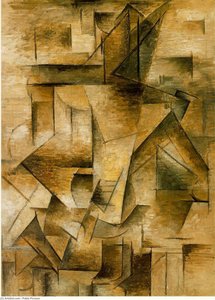
Pablo Picasso – Saltimbanques: A Symphony of Isolation and Performance
Pablo Picasso’s “Saltimbanques” (The Family of Saltimbanques), painted in 1905, isn't merely a depiction of circus performers; it’s a profound meditation on loneliness, identity, and the transient nature of existence. This monumental work, measuring an impressive 213 x 230 cm, marks a pivotal shift within Picasso’s artistic journey – a transition from the melancholic introspection of his Blue Period to the warmer, more hopeful hues of the Rose Period. More than just a snapshot of a traveling troupe, “Saltimbanques” is a carefully constructed tableau brimming with symbolism and reflecting the artist's own experiences as an outsider navigating the vibrant yet often isolating world of Parisian art.
The painting immediately captivates with its crowded composition – five figures clustered together in a desolate landscape. There’s no traditional familial structure here; instead, we encounter a collection of individuals seemingly adrift, each lost within their own thoughts and emotions. The central figure, a harlequin dressed in a striking diamond-patterned costume, dominates the scene, reaching towards a young girl – often interpreted as Picasso's beloved sister, Conchita, who tragically died from diphtheria. This poignant gesture underscores the painting’s underlying themes of loss and remembrance. The other figures—a jester with a melancholic expression, a young acrobat, a boy in blue attire, and a woman adorned with a flowered hat—add layers of complexity to this intimate gathering.
A Rose-Tinted Transition: Style and Technique
“Saltimbanques” exemplifies Picasso’s evolving style during the Rose Period. The palette is dominated by warm tones – soft pinks, oranges, purples, and golds—a deliberate departure from the somber blues of his earlier work. However, this isn't a simple shift to optimism; rather, it’s a nuanced exploration of melancholy interwoven with hints of hope. Picasso masterfully employs a blend of geometric and organic forms, creating a dynamic tension between rigid lines and softer curves. This interplay contributes significantly to the painting’s unsettling yet captivating atmosphere.
The use of flattened perspective is characteristic of early Cubism, though it's less rigidly defined than in his later works. Picasso deliberately distorts depth, suggesting space through overlapping forms and careful positioning of figures. The textural elements are suggested rather than explicitly rendered; the paint itself seems to shimmer with a loose, expressive quality. Notice how he uses impasto – thick application of paint – in certain areas, adding tactile richness and drawing attention to specific details.
Symbolism and the World of the Saltimbanques
The title itself—"Saltimbanques"—refers to itinerant circus performers, a group often marginalized by society. Picasso found kinship with these figures, viewing them as artists living on the fringes, much like himself. The painting can be interpreted as an allegory for the artist’s own position – an outsider observing and reflecting upon the human condition. The desolate landscape serves as a powerful metaphor for isolation and uncertainty.
Each figure carries its own weight of emotion. The harlequin's gesture, the jester's somber expression, and the woman's detached gaze all invite interpretation. Some scholars suggest that Picasso deliberately painted over earlier versions of the composition, experimenting with different arrangements and tonal shifts to capture the elusive essence of his subjects. The painting’s enduring power lies in its ability to evoke a sense of mystery and introspection – prompting viewers to contemplate their own experiences of loneliness, identity, and the search for connection.
A Reproduction Worth Cherishing
OriginalUniqueArt offers meticulously crafted hand-painted reproductions of “Saltimbanques,” allowing you to bring this iconic masterpiece into your home or office. Our skilled artists faithfully recreate Picasso’s unique style and emotional depth, ensuring that every detail—from the vibrant colors to the subtle textural nuances—is captured with exceptional accuracy. Whether you're an art enthusiast, a collector, or simply seeking a stunning piece of décor, a OriginalUniqueArt reproduction of “Saltimbanques” is a timeless investment that will enrich your space and spark conversation for years to come.
Pytania i odpowiedzi
Jak technika i ruch łączą się w "Rodzinni Saltimbanques"?
"Rodzinni Saltimbanques" powstało przy użyciu Obraz olejny na płótnie, w stylu Cubist Proto-Cubism.
Czy mogę użyć rozszerzonej rzeczywistości, aby zobaczyć „Rodzinni Saltimbanques” – Pablo Picasso w swoim pokoju?
„Rodzinni Saltimbanques” posiada podgląd w rozszerzonej rzeczywistości: strona Podgląd w AR pozwala zobaczyć dzieło w Twojej własnej przestrzeni na kompatybilnym urządzeniu.
Co przedstawia i jaką atmosferę oddaje „Rodzinni Saltimbanques” – Pablo Picasso?
„Rodzinni Saltimbanques” – Pablo Picasso przedstawia circus performers, landscape, geometric forms, isolation, color palette, family group, rose period, wprowadzając Dramatyczny nastrój. Tematyka i atmosfera wspólnie definiują to dzieło.
 Podgląd w skali 1:1
 Wyślij jako kartkę
 Udostępnij
 Szczegóły dzieła
 Przewodnik

 Pobierz obraz
 Podobne obiekty
 RTG
RTG Pokaz slajdów
 Q&A
Q&A Statystyki