
 Zobacz w skali 1:1
 Wyślij
 Udostępnij
 Szczegóły
 Przewodnik

 Pobierz plik obrazu
 Podobne obiekty
 RTG
RTG Pokaz slajdów
 Statystyki
Flandria


 Czytaj więcej
Dzieło sztuki prezentowane na tej stronie podlega ochronie prawem autorskim, co oznacza, że nie mamy prawa do tworzenia ani sprzedaży jego identycznej reprodukcji. Ochrona ta jest egzekwowana na mocy umów międzynarodowych, takich jak Konwencja berneńska oraz przez przepisy prawa krajowego, w tym te określone w Prawo autorskie USA – Tytuł 17.
Metoda ta jest w pełni zgodna z przepisami prawa autorskiego, ponieważ nie polega na kopiowaniu ani powielaniu chronionego dzieła. Stanowi ona kreatywną reinterpretację – nowy obraz, który czerpie inspirację z oryginału, ale nie jest z nim tożsamy.
Giclée / Wydruk artystyczny
Wydruki giclée lub płótna o jakości muzealnej, szybka realizacja i szeroki wybór opcji wykończenia. ( Kup ręcznie malowany obraz Przełącz na wersję cyfrową)




P118B zł10

P118H zł10

P118W zł10

P438Z zł10

P508JH zł12

P508YH zł12

P805H zł10

P805Z zł10

P919BZ zł10

P919G zł10

P919XJ zł10

P959ZH zł10

P968JZ zł12

W106C zł8

W218G zł10

W218JH zł8

W218Y zł10

W307PJ zł10

W316G zł10

W316PJ zł8

W316Y zł10

W398PJ zł8

W4111J zł10

W500HY zł15

W500JH zł15

W692G zł12

W849H zł8

W940BG zł15

W953PJ zł8




Wybierz spośród naszych standardowych rozmiarów, które zachowują oryginalne proporcje dzieła sztuki.

Wpisz wymaganą szerokość i wysokość, aby dopasować grafikę do ramy lub ściany. Wydruk można jedynie przyciąć, nigdy nie powiększając go poza oryginalny obraz, dlatego format o innym proporcji spowoduje utratę części kompozycji. Przed rozpoczęciem druku prześlemy Ci cyfrowy podgląd do zatwierdzenia. Obraz wyświetlany na tej stronie nie pokazuje rzeczywistego przycięcia — jedynie podgląd oddaje ten efekt.
Dostawa na cały świat () w ciągu 2 tygodni zamiast standardowych 4/5 tygodni. (21 Październik)

Bezpłatna ekspresowa wysyłka na cały świat

Wysokiej jakości płótno lniane

Pełne ubezpieczenie transportowe

Gwarancja zwrotu należności celnych i podatków importowych

Gwarancja idealnego odwzorowania barw

100-dniowy okres na zwrot dzieła w przypadku wykrycia wad produkcyjnych

Gwarancja 100% zwrotu pieniędzy

Oferta przy zakupie wielu sztuk
 Opcja ze szkłem jest dostępna wyłącznie w rozmiarach poniżej 110 cm

Flandria
Giclée / Wydruk artystyczny
Rozmiar reprodukcji
-


Suma do zapłaty
zł 304
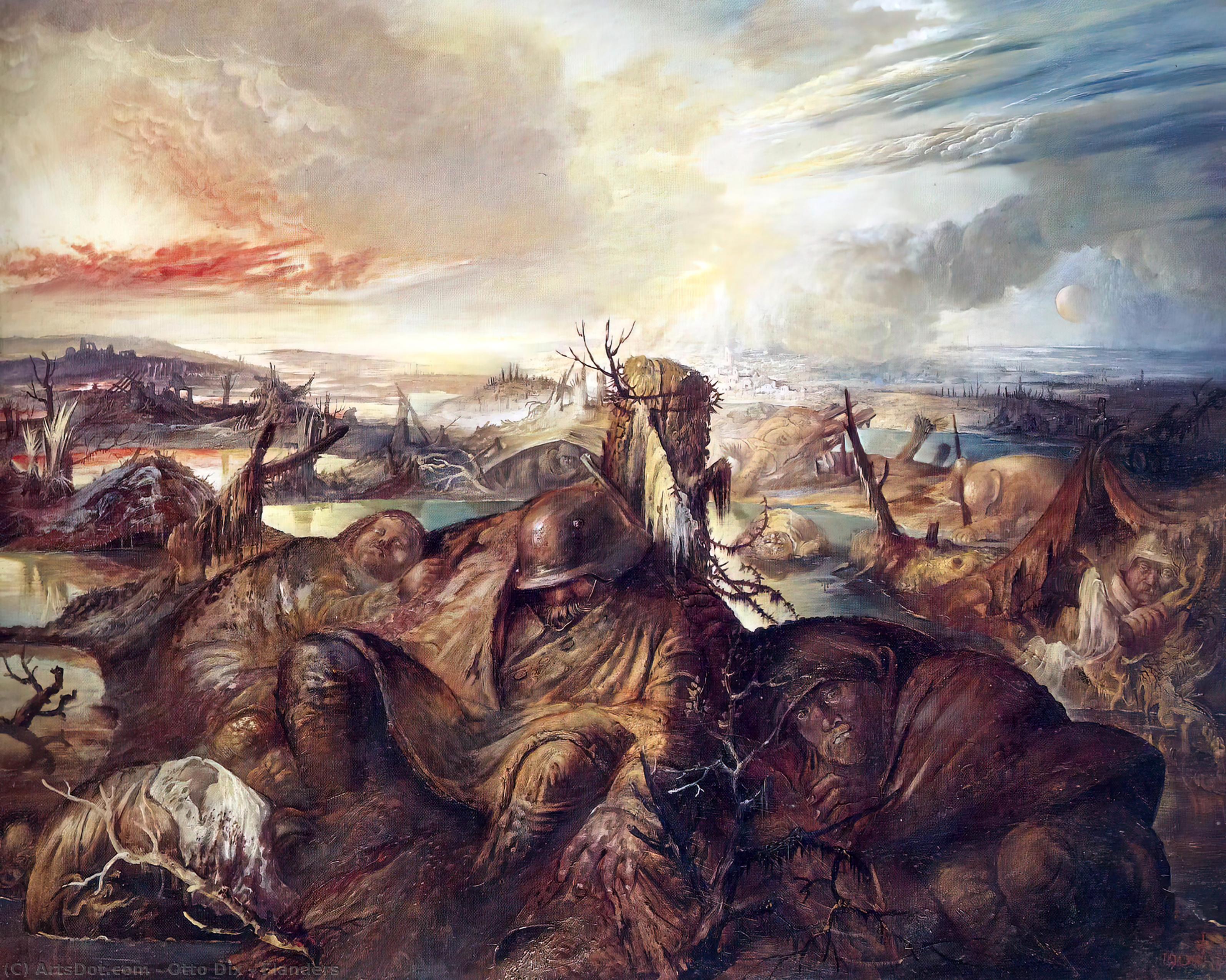
Potężne przedstawienie wojennej pożogi
To przejmujące dzieło uwiecznia surowy chaos i głęboką rozpacz postapokaliptycznego krajobrazu, przywołując brutalną rzeczywistość wojny oraz ludzkiego cierpienia. Scena jest rozległa i pełna niepokoju, wypełniona zrujnowanymi strukturami, poległymi żołnierzami i szczątkami szkieletów rozrzuconymi po opustoszałym terenie. Postacie są zdeformowane i przepełnione udręką, stanowiąc ucieleśnienie emocjonalnych kosztów konfliktu i straty. Poprzez swoją poruszającą tematykę, płótno zaprasza widza do refleksji nad niszczycielskimi skutkami przemocy oraz nad niezłomnością ludzkiego ducha w obliczu całkowitej destrukcji.Wyrazisty styl i technika
Łącząc elementy realizmu z ekspresjonizmem, artysta stosuje swobodne, ekspresyjne pociągnięcia pędzla oraz wielowarstwowe tekstury, aby wzmocnić intensywność emocjonalną przekazu. Ciemna, przygaszona paleta barw — przeplatana akcentami jaśniejszych odcieni — tworzy surowy kontrast, który podkreśla skalę zniszczenia, jednocześnie sugerując subtelne momenty odporności. Bogata faktura i warstwowe nakładanie farby nadają dziełu niemal fizyczną, dotykową jakość, zanurzając widza w chaosie i rozpaczy przedstawionej sceny. Szeroka perspektywa i nachodzące na siebie formy prowadzą wzrok przez rozległy krajobraz, potęgując poczucie głębi oraz ogromu tragedii.Kontekst historyczny i symbolika
Choć dokładna data powstania pozostaje nieznana, dzieło to głęboko rezonuje z tematami wojny, zniszczenia i społecznych niepokojów, które naznaczyły początek XX wieku. Stanowi ono echo brutalnej rzeczywistości przedstawianej w pracach takich artystów jak Otto Dix, którzy dążyli do skonfrontowania odbiorców z horrorami wojny i jej następstwami. Poszarpane linie i pęknięte kształty symbolizują chaos i przemoc, podczas gdy szczątki szkieletów i zrujnowane budowle służą jako surowe przypomnienie o śmiertelności i kruchości ludzkiego życia. Rozproszone, ponure oświetlenie podkreśla nastrój żałoby i zadumy, zapraszając do kontemplacji trwałych blizn pozostawionych przez konflikt.Oddziaływanie emocjonalne i znaczenie artystyczne
To dzieło to coś więcej niż tylko wizualna reprezentacja; to emocjonalna podróż, która stawia widza twarzą w twarz z bolesną prawdą o wojnie i ludzkim cierpieniu. Jego wizceralna obrazowość i warstwowa technika wywołują poczucie beznadziei, straty i refleksji, czyniąc je potężnym manifestem dla kolekcjonerów oraz projektantów wnętrz poszukujących sztuki o silnym przekazie, która prowokuje do dyskusji. Bez względu na to, czy zostanie wyeksponowane w galerii, nowoczesnej przestrzeni mieszkalnej, czy w miejscu sprzyjającym kontemplacji, praca ta oferuje głębokie doświadczenie wizualne, które porusza każdego, kto ceni sztukę o historycznej głębi i emocjonalnym rezonansie.Pytania i odpowiedzi
Czy mogę zamówić olejną reprodukcję "Flandria"?
Ręcznie malowane kopie dzieła „Flandria” autorstwa Otto Dix można nabyć na stronie ta strona: ręcznie malowana reprodukcja olejowa na płótnie lnianym, zamawiając je bezpośrednio przez zakładkę Ręcznie malowana reprodukcja.
Do jakiego nurtu i do której epoki zalicza się „Flandria” autorstwa Otto Dix?
"Flandria" należy do nurtu Neue Sachlichkeit, a jego twórca tworzył w epoce Nowoczesność.
Jakie miejsce w dorobku twórczym Otto Dix zajmuje dzieło "Flandria"?
"Flandria" należy do nurtu Neue Sachlichkeit w twórczości Otto Dix, której rozpoznawalne motywy obejmują dix’s expressionist vision, wwi trauma reflection, social critique artwork, german art legacy, war’s psychological impact.
Biografia artysty
Early Life and the Shadow of War
Wilhelm Heinrich Otto Dix, born in 1891 in Untermhaus, Germany, emerged from a world steeped in industrial labor and quiet artistic yearning. His father, Franz Dix, toiled as an iron foundry worker, while his mother, Louise, née Amann, nurtured a poetic spirit, creating a domestic landscape that subtly fostered young Otto’s creative inclinations. Crucially, it was the influence of his cousin, the painter Fritz Amann, that truly ignited Dix's ambition. Hours spent in Amann’s studio weren’t merely lessons in technique; they were an immersion into a world where artistic expression held tangible power. This early exposure led to an apprenticeship with Carl Senff and subsequent studies at the Kunstgewerbeschule in Dresden, though initially focused on applied arts rather than fine painting. However, it was the cataclysm of World War I that irrevocably shaped Dix’s artistic trajectory. Volunteering for service, he experienced the brutal realities of trench warfare firsthand, a trauma that would haunt his work for decades to come. The horrors witnessed during battles like the Somme and in Flanders left an indelible mark, transforming him from a promising landscape painter into a chronicler of human suffering and societal decay.The Weimar Republic and Neue Sachlichkeit
Returning from the war profoundly changed, Dix channeled his experiences into unflinching depictions of its aftermath. His early post-war work reflected Expressionist tendencies, but he soon gravitated towards a new aesthetic—*Neue Sachlichkeit*, or New Objectivity. This movement rejected emotional abstraction in favor of stark realism and critical social commentary. Dix became one of its leading figures alongside George Grosz and Max Beckmann. Paintings like The Trench (1923) caused public outrage with their graphic portrayal of dismembered bodies, forcing museums to hide the work from view. This wasn’t merely shock value; it was a deliberate attempt to confront viewers with the brutal truth of war, stripping away any romanticized notions of heroism or glory. He didn't shy away from depicting the physical and psychological wounds inflicted upon soldiers, nor did he ignore the societal indifference towards their plight. His series of paintings War Cripples further underscored this theme, portraying veterans marginalized and forgotten by a society eager to move on. Beyond war, Dix turned his gaze toward the excesses and moral bankruptcy of Weimar Germany. *Metropolis* (1928) is a scathing indictment of urban life, filled with scenes of debauchery, prostitution, and social alienation. His portraits from this period are equally unflinching, capturing the cynicism and decadence of the era’s elite.Political Turmoil and Later Years
As Germany descended into political turmoil in the 1930s, Dix found himself increasingly targeted by the Nazi regime. His art was deemed “degenerate,” and he was dismissed from his teaching position at the Dresden Academy of Fine Arts in 1933. Facing persecution and censorship, Dix gradually shifted away from overtly political themes, turning instead to landscapes and religious subjects—a strategic move for self-preservation. However, even these later works retained a sense of underlying tension and unease. During World War II, he was conscripted into the German army once more, an experience that further solidified his anti-war stance. After the war, Dix found renewed recognition and acclaim, though the trauma of both conflicts continued to resonate in his art. He became a respected figure in post-war Germany, but never fully escaped the shadow of his wartime experiences.Legacy and Artistic Impact
Otto Dix’s artistic legacy is multifaceted and enduring. He remains one of the most important German painters of the 20th century, renowned for his uncompromising realism, scathing social critique, and unflinching portrayal of human suffering. His influence can be seen in the work of subsequent generations of artists who have sought to confront difficult truths and challenge societal norms. Dix’s ability to blend technical skill with emotional intensity sets him apart; he wasn't simply documenting reality, but interpreting it through a lens of profound empathy and moral outrage. His exploration of themes such as war, trauma, social injustice, and the human condition continues to resonate with audiences today. He demonstrated that art could be both aesthetically powerful and politically engaged, serving as a potent force for social change.- Dix’s work is featured in major museums worldwide, including the Museum of Modern Art in New York and the Suermondt-Ludwig-Museum in Germany.
- His etchings, particularly *The Trench*, are considered masterpieces of graphic art.
- He remains a pivotal figure in understanding the artistic and social landscape of Weimar Germany.

Otto Dix
1891 - 1969 , Niemcy
Najważniejsze informacje
- Artistic Movement Or Style: Neue Sachlichkeit
- Artists Or Movements Influenced By This Artist: ['George Grosz']
- Date Of Birth: 2 grudnia 1891
- Date Of Death: 25 lipca 1969
- Full Name: Wilhelm Heinrich Otto Dix
- Nationality: Niemiecki
- Notable Artworks:
- The Trench
- Metropolis
- War Cripples
- Place Of Birth: Untermhaus, Niemcy
Zobacz także powiązane artykuły

Echoes of Trauma & Hope: Representing Transformation in Artworks of 1918
Explore the profound artistic responses to World War I's trauma & hope. Discover Expressionist masterpieces by Bacon, de Kooning & more. Expert insights for collectors & art enthusiasts at OriginalUniqueArt.
Henry Wolf: A Legacy of Abstract Expressionism & Emotional Resonance in Post-War Art
Explore the profound legacy of Henry Wolf, a pivotal figure in Abstract Expressionism and post-war visual culture. Discover his impact on graphic design, photography, and art collecting with OriginalUniqueArt.

William Owen: A Poetic Vision of War & Landscape in British Modernism
Explore the poignant war poetry of Wilfred Owen, a key figure in British Modernism. Discover his innovative style, themes of loss & camaraderie, and lasting impact on 20th-century literature. Analysis & historical context included.

Otto Dix: Trauma, Society & Artistic Rebellion in Weimar Germany
Explore the powerful and unsettling art of Otto Dix, a key figure of Neue Sachlichkeit. Discover his unflinching depictions of Weimar Germany's trauma, society, and war through insightful analysis & iconic masterpieces.
Lech Jankowski: Polish Abstraction & the Materiality of Post-War Identity
Explore the compelling work of Lech Jankowski, a leading figure in Polish post-war abstraction. Discover his unique exploration of materiality, identity, and surreal landscapes – a valuable addition to any discerning art collection.


