

 Podgląd w skali
 Wyślij jako kartkę
 Udostępnij
 Szczegóły dzieła

 Pobierz
 Podobne obiekty
 RTG
RTG Pokaz slajdów
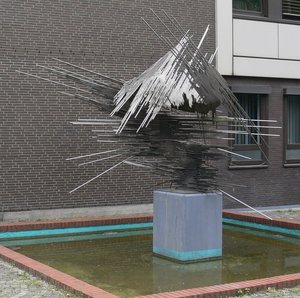
Plastik, (1980)

 Rozwiń treść
Kup wysokiej rozdzielczości, ulepszony obraz cyfrowy o znacznie wyższej jakości niż podgląd online.
Każdy plik jest starannie przygotowywany przez naszych specjalistów przy użyciu zaawansowanych narzędzi oraz profesjonalnej, ręcznej retuszy. Dbamy o to, aby każdy obraz cechował się wyjątkową ostrością, precyzyjnym odwzorowaniem kolorów i subtelnymi detalami.
Ostateczny plik dostarczany jest drogą mailową w ciągu 72 godzin, zoptymalizowany do natychmiastowego wykorzystania w profesjonalnych zastosowaniach redakcyjnych i poligraficznych. To ta sama jakość, której ufają czołowe studia projektowe, wydawnictwa oraz galerie sztuki.
Obraz cyfrowy
Pobierz plik o wysokiej rozdzielczości do osobistego wyświetlania, druku oraz projektów kreatywnych. ( Zamów wydruk Zamów ręcznie malowaną reprodukcję)
W każdym zamówieniu na obraz cyfrowy znajduje się
Profesjonalna dostawa cyfrowa z gwarancją
Wybierając OriginalUniqueArt.com, nie otrzymujesz jedynie obrazu – otrzymujesz profesjonalnie udoskonalone cyfrowe dzieło sztuki, stworzone z najwyższą precyzją i objęte gwarancją satysfakcji. Oto wszystko, co automatycznie dołączane jest do Twojego zamówienia:

Błyskawiczna wysyłka e-mailowa
Plik z obrazem cyfrowym w wysokiej rozdzielczości zostanie przesłany na Twój adres e-mail w ciągu 72 godzin od złożenia zamówienia – gotowy do natychmiastowego użycia.

Plik cyfrowy wzbogacony przez AI
Twoja grafika została profesjonalnie zoptymalizowana przy użyciu zaawansowanych narzędzi AI oraz ręcznej edycji, co zapewnia maksymalną szczegółowość, klarowność i wierność kolorów.

Dożywotnia darmowa ponowna dostawa
Przypadkowo usunąłeś lub zgubiłeś swój plik? Bez obaw – prześlemy go Tobie ponownie w dowolnym momencie, bez żadnych opłat.

Bez opłat importowych – zawsze
Ciesz się swoją sztuką natychmiast, bez żadnych opłat celnych, należności ani kosztów dostawy – pliki cyfrowe są zawsze wolne od podatku.

Gwarancja wierności kolorów
Dzięki zastosowaniu profesjonalnych narzędzi i procesów zarządzania barwą zapewniamy, że Twoje cyfrowe zdjęcie odzwierciedla oryginalne kolory tak wiernie, jak to tylko możliwe.

60-dniowa gwarancja satysfakcji
Jeśli nie będziesz zadowolony ze swojego cyfrowego obrazu, dokonamy jego poprawki lub zwrócimy 100% kosztów w ciągu 60 dni – bez żadnych pytań.

100% Gwarancja zwrotu pieniędzy
Nie jesteś zadowolony? Otrzymaj pełny zwrot kosztów w ciągu 60 dni od otrzymania pliku cyfrowego – bez zbędnych pytań.

Rabaty przy zamówieniach hurtowych
Kup 3 obrazy, oszczędź 10% - Kup 5, oszczędź 15% - Kup 10+, oszczędź 20%. Idealne do projektów kreatywnych, galerii i agencji.
Biografia artysty
Norbert Kricke: Sculpting the Flow of Space and Time
Norbert Kricke (1922-1984) wasn’t merely a sculptor; he was an architect of perception, a pioneer who wrestled with the very essence of space and movement. Born in Düsseldorf during a period of profound societal upheaval following World War II, Kricke’s artistic journey was deeply intertwined with the post-war desire to rebuild—not just physical structures, but also the foundations of human experience. His work, often characterized by its stark minimalism and evocative use of wire, steel, and concrete, represents a pivotal moment in the evolution of abstract sculpture, bridging the gap between the formal rigor of the Constructivists and the expressive freedom of L’Art Informel.
Kricke's early artistic training under Richard Scheibe and Hans Uhlmann at the Hochschule für Bildende Künste in Berlin provided him with a crucial grounding in traditional sculptural techniques. However, he quickly moved beyond mere representation, seeking to capture something far more elusive: the dynamic quality of space itself. This shift was profoundly influenced by his exposure to the theories of John Anthony Thwaites, particularly their exploration of “Forms of Water,” which posited that space and time were inextricably linked—a concept Kricke sought to embody in his sculptures.
The Dawn of Raumplastik
Kricke’s breakthrough came with the development of what he termed *Raumplastiken* – ‘spatial sculptures.’ These weren't static objects; they were investigations into the very fabric of space, utilizing wire as a primary medium. Unlike earlier sculptors who focused on mass and volume, Kricke concentrated on line—the fundamental element that defines form and creates the illusion of depth. He meticulously crafted these lines, often employing complex geometric patterns, to suggest movement and dynamism within a confined space. This approach was revolutionary, challenging conventional notions of sculpture as a three-dimensional object and instead presenting it as an active participant in shaping our perception.
Early examples like *Raumplastik Gelb* (1951) demonstrate this shift powerfully. The work’s seemingly simple arrangement of wire immediately draws the eye, inviting viewers to trace the lines and contemplate their relationship to the surrounding space. This focus on line continued to evolve throughout his career, culminating in works that appeared almost fluid, capturing the essence of movement without depicting it literally.
Connections to L'Art Informel and Beyond
Kricke’s work resonated deeply with the burgeoning L’Art Informel movement, a post-war European artistic current characterized by its rejection of formal constraints and embrace of spontaneous expression. However, Kricke distinguished himself within this group through his rigorous intellectual approach and his systematic exploration of spatial relationships. He also maintained close ties with ZERO, a German collective that similarly challenged traditional sculptural conventions, and the Nouveau Réalisme movement in France, demonstrating a broad awareness of international artistic trends.
His collaboration with Yves Klein on exploring the properties of light and space further solidified his position as a key figure in the avant-garde. The influence of Walter Gropius is also notable, particularly in Kricke’s design for water configurations for the new university complex in Baghdad – a project that underscored his belief in the interconnectedness of art, science, and human experience.
Major Works and Legacy
Throughout his career, Kricke created numerous significant works, including the iconic *Water Forest* sculpture outside the Gelsenkirchen Opera House (1957), a testament to his fascination with flowing water and its transformative power. His wire sculptures for Münster Theatre (1955/56) and fountains for the University of Baghdad showcased his versatility and technical skill. Perhaps most notably, Kricke served as director of the Düsseldorf Art Academy from 1972 until his death in 1984, shaping a generation of artists.
Kricke’s legacy extends far beyond his individual creations. He fundamentally altered our understanding of sculpture, demonstrating that form and space are not mutually exclusive but rather inextricably linked. His pioneering use of wire as a medium—a material often associated with industry and construction—transformed it into a tool for exploring the most profound questions about human perception and the nature of reality. His work continues to inspire artists today, reminding us of the power of art to challenge conventions and expand our horizons.
Further Exploration
- Plastik, (2) (1980): Explore Norbert Kricke’s ‘Plastik, (2)’ (1980) – a striking metal sculpture blending Minimalist and L’Art Informel influences. A unique German artwork for collectors. Link to Artwork Database
- Raumplastik grosse kurve i, (2) (1980): Discover Norbert Kricke’s ‘Raumplastik grosse kurve i,’ a striking Minimalist sculpture in a park setting. Explore this 1980 German artwork's metal form & integration with nature. Link to Artwork Database
- Raum-Zeit-Plastik, (1956): Discover Norbert Kricke’s ‘Raum-Zeit-Plastik’ (1956) – a striking concrete architectural photograph. Minimalist, geometric & evocative of mid-century German art. Link to Artwork Database
- Norbert Kricke - Wikipedia: Link to Wikipedia
norbert kricke
1922 - 1984
Krótka nota
- Artistic Movement Or Style: Minimalist Sculpture, L’Art Informel, ZERO group
- Artists Who Influenced This Artist: ['Richard Scheibe, Hans Uhlmann],\n "Artists or movements influenced by this artist": ["Yves Klein", "John Anthony Thwaites"]\n}']
- Date Of Birth: November 30, 1922
- Date Of Death: June 28, 1984
- Full Name: Norbert Kricke
- Nationality: German
- Notable Artworks:
- Plastik, (2) (1980)
- Raumplastik grosse kurve i, (2) (1980)
- Raum-Zeit-Plastik, (1956)
- Place Of Birth: Düsseldorf, Germany

