

 Zobacz w skali 1:1
 Wyślij
 Udostępnij
 Szczegóły

 Pobierz plik obrazu
 Podobne obiekty
 RTG
RTG Pokaz slajdów
 Statystyki
EGLE ET SILENE

 Czytaj więcej
Ręcznie malowana reprodukcja olejowa
Ręcznie malowany obraz olejny na płótnie, wykonany na zamówienie przez naszych artystów w wybranym przez Ciebie wymiarze i oprawie. ( Przełącz na wersję drukowaną Przełącz na wersję cyfrową)




































Wybierz spośród naszych standardowych rozmiarów, które zachowują oryginalne proporcje dzieła sztuki.

Możesz wprowadzić własne wymiary, aby dopasować obraz do konkretnej ramy lub przestrzeni. Jeśli wybrany rozmiar nie będzie odpowiadał proporcjom oryginału, przytniecie dzieło sztuki lub rozszerzymy je o dodatkowe elementy, ręcznie domalowane przez artystę. Przed rozpoczęciem produkcji wyślemy projekt cyfrowy do Twojej akceptacji.
Należy pamiętać, że podgląd na ekranie nie odzwierciedla rzeczywistego przycinania ani rozszerzania obrazu. Tylko projekt dokładnie pokaże ostateczną kompozycję.
Choć oferujemy możliwość zamówienia niestandardowych rozmiarów, zalecamy wybór wymiaru z gotowej listy, aby zachować oryginalne proporcje dzieła.
Po złożeniu zamówienia zespół OriginalUniqueArt.com skontaktuje się z klientem drogą mailową w celu uzyskania instrukcji i prześle wizualizację projektu
Dostawa na całym świecie () w ciągu 3–4 tygodni zamiast standardowych 5 tygodni. (16 Wrzesień). Bez kompromisów w kwestii jakości.

Bezpłatna ekspresowa wysyłka na cały świat

Wysokiej jakości płótno lniane

Pełne ubezpieczenie transportowe

Gwarancja zwrotu należności celnych i podatków importowych

Gwarancja idealnego odwzorowania barw

100-dniowy okres na zwrot dzieła w przypadku wykrycia wad produkcyjnych

Gwarancja 100% zwrotu pieniędzy

Oferta przy zakupie wielu sztuk
 Opcja ze szkłem jest dostępna wyłącznie w rozmiarach poniżej 110 cm

EGLE ET SILENE
Technika wykonania
Rozmiar reprodukcji
-


Suma do zapłaty
$ 400
Biografia artysty
A Legacy of Grandeur: The Life and Art of Noël Hallé
In the luminous landscape of 18th-century French painting, few names evoke the intersection of classical reverence and royal splendor quite like Noël Hallé. Born in Paris in 1711 into a family steeped in the traditions of the brush, Hallé was destined for a life defined by the pursuit of aesthetic perfection. As the son of the painter Claude-Guy Hallé, his early years were an immersion in the nuances of color and composition, providing him with a foundational mastery that would later allow him to navigate the complex demands of the French court. His journey was not merely one of inherited skill, but of profound intellectual expansion, driven by a desire to capture the monumental weight of history through the delicate lens of the Baroque style.
The defining chapter of Hallé’s artistic development began with his triumph in 1736, when he secured the prestigious Prix de Rome. This achievement served as his gateway to the eternal city, where from 1737 until 1744, he resided within the hallowed halls of the Académie Royale Française. It was in Rome that Hallé’s artistic soul truly encountered its greatest inspirations. The sheer scale of Roman architecture and the dramatic tension found in classical sculpture left an indelible mark upon his psyche. Under the guidance of masters like Jean-François de Troy, he learned to synthesize the rigorous discipline of classical technique with a burgeoning sense of theatricality. His works from this period reflect a deep fascination with mythological narratives and historical epochs, rendered with a meticulous attention to detail that breathes life into ancient stone and legend.
Mastery of Technique and Royal Patronage
Upon his return to France, Hallé’s reputation preceded him, leading to an illustrious career characterized by high-stakes commissions and royal recognition. During the reign of Louis XV, he became a sought-after talent for the most prestigious institutions in Europe. His ability to weave complex historical narratives into visually arresting compositions made him an ideal choice for the Gobelins Manufactory and the opulent halls of Versailles. Hallé possessed a rare gift for portraying the grandeur of aristocratic life, capturing the quiet dignity of the elite amidst settings of unparalleled luxury. Whether decorating the Grand Trianon or the Petit Trianon, his brushwork served to reinforce the prestige of the French monarchy, blending the monumental with the intimate.
The technical brilliance of Hallé’s oeuvre lies in his sophisticated use of light and color. He did not merely paint scenes; he constructed atmospheres. His palettes were often vibrant yet controlled, capable of conveying both the intellectual rigor required by academic standards and the emotional intensity necessary to engage the viewer's heart. In his historical paintings, one can observe a seamless integration of:
- Classical Precision: A dedication to anatomical accuracy and architectural integrity derived from his Roman studies.
- Baroque Drama: The use of chiaroscuro and dynamic movement to elevate historical events into epic spectacles.
- Narrative Depth: An ability to imbue even the smallest figure with a sense of purpose and emotional resonance.
Historical Significance and Enduring Impression
As the 18th century progressed, Hallé’s work stood as a testament to the enduring power of classical ideals in an era of shifting tastes. While the art world began to move toward new sensibilities, his commitment to the grandeur of the past provided a sense of continuity and cultural stability for the French state. His contributions to the decorative arts and historical painting helped define the visual identity of the Louis XV era, leaving behind a legacy that celebrates the marriage of scholarly knowledge and artistic intuition.
Today, the works of Noël Hallé remain vital windows into a lost world of elegance and epic storytelling. He remains a pivotal figure for scholars and art enthusiasts alike, representing a moment in history when the brush was used to bridge the gap between the ancient glories of Rome and the contemporary splendor of Paris. His life, spanning from his birth in 1711 to his passing in 1781, serves as a complete arc of an artist who mastered the art of making history live again on canvas.

noël hallé
1711 - 1781 , France
Najważniejsze informacje
- Artistic Movement Or Style: Baroque
- Artists Or Movements Influenced By This Artist: ['Classical Paintings']
- Artists Who Influenced This Artist: ['Jean-François de Troy']
- Date Of Birth: September 2, 1711
- Full Name: Noël Hallé
- Nationality: French
- Notable Artworks:
- The Death of Seneca
- Cornelia, Mother of the Gracchi
- Justice of Trajan
- Place Of Birth: Paris, France
Zobacz także powiązane artykuły

Baroque Classicism: The Grandeur of Order and Drama in 17th-Century Art History
Explore the profound elegance of Baroque Classicism. Discover how 17th-century masters synthesized dramatic emotion with classical order through the lens of the Counter-Reformation and the works of legends like Carlo Maratta and Andrea Sacchi.
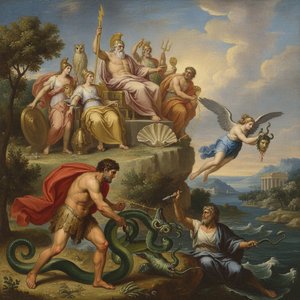
Gods and Heroes: A Definitive Guide to the Eternal Masterpieces of Greek Mythology
Explore the profound beauty of Greek mythology through art history. From Baroque masterpieces to Renaissance classics, discover how gods and heroes have inspired the world's greatest painters in this expert guide for collectors and history lovers.
Baroque Classicism: A Professional Guide to Integrating Timeless Grandeur into Luxury Hotel Interiors
Elevate luxury hospitality with Baroque Classicism. Our guide for hotel designers explores integrating grand, classical oil reproductions into professional interiors. Discover efficient bulk procurement, custom sizing, and large-format murals to create timeless, high-impact spaces.

Urok Nagiego Ciała w Sztuce: Historyczna i Artystyczna Eksploracja Aktu
Poznaj fascynującą historię aktu w sztuce – od starożytnych korzeni po współczesne interpretacje. Analiza technik, wybitnych artystów i wpływu anatomii na przedstawianie ludzkiego ciała. Ekskluzywne artykuły dla miłośników sztuki.
Barokowy Klasycyzm: Synteza Dramatu i Porządku w Sztuce XVII Wieku
Poznaj fascynujący świat barokowego klasycyzmu! Analiza ideologii kontrreformacji, syntezy antyku z dramatyzmem oraz mistrzowskich technik malarskich. Ekspercka wiedza o sztuce XVII wieku.