
 Podgląd w skali 1:1
 Wyślij jako kartkę
 Udostępnij
 Szczegóły dzieła
 Przewodnik

 Pobierz obraz
 Podobne obiekty
 RTG
RTG Pokaz slajdów
 Pytania i odpowiedzi
 Statystyki
Giraffe

- 139.0 x 111.0 cm


 Rozwiń treść
Giclée / Wydruk artystyczny
Wydruki giclée lub płótna o jakości muzealnej, szybka realizacja i szeroki wybór opcji wykończenia. ( Zamów ręcznie malowaną reprodukcję Przejdź do wersji cyfrowej)




P118B zł10

P118H zł10

P118W zł10

P438Z zł10

P508JH zł12

P508YH zł12

P805H zł10

P805Z zł10

P919BZ zł10

P919G zł10

P919XJ zł10

P959ZH zł10

P968JZ zł12

W106C zł8

W218G zł10

W218JH zł8

W218Y zł10

W307PJ zł10

W316G zł10

W316PJ zł8

W316Y zł10

W398PJ zł8

W4111J zł10

W500HY zł15

W500JH zł15

W692G zł12

W849H zł8

W940BG zł15

W953PJ zł8




Wybierz spośród naszych standardowych rozmiarów, które zachowują oryginalne proporcje dzieła sztuki.

Wpisz wymaganą szerokość i wysokość, aby dopasować grafikę do ramy lub ściany. Wydruk można jedynie przyciąć, nigdy nie powiększając go poza oryginalny obraz, dlatego format o innych proporcjach spowoduje utratę części kompozycji. Przed rozpoczęciem druku prześlemy Ci cyfrowy podgląd do zatwierdzenia. Obraz wyświetlany na tej stronie nie pokazuje rzeczywistego przycięcia — jedynie podgląd oddaje ten efekt.
Dostawa na cały świat () w ciągu 2 tygodni zamiast standardowych 4/5 tygodni. (4 Listopad)

Bezpłatna ekspresowa wysyłka na cały świat

Wysokiej jakości płótno lniane

Pełne ubezpieczenie przesyłki

Gwarancja zwrotu należności celnych i podatków importowych

Gwarancja wiernego odwzorowania kolorów

100-dniowa polityka zwrotów (tylko w przypadku wad)

Gwarancja 100% zwrotu pieniędzy

Zniżka przy zakupie wielu sztuk
 Opcja ze szkłem jest dostępna wyłącznie w rozmiarach poniżej 110 cm

Giraffe
Giclée / Wydruk artystyczny
Wymiary reprodukcji
-


Cena całkowita
zł 315
A Vision of Primitivism: The Soulful Simplicity of Niko Pirosmani’s Giraffe
In the vast landscape of early 20th-century art, few works possess the quiet, arresting power of Niko Pirosmani’s Giraffe. Created in 1905, this oil on canvas masterpiece serves as a profound window into the world of Georgian Primitivism, a movement that finds extraordinary beauty in the unadorned and the essential. The painting presents a singular, majestic figure—a giraffe standing poised within a dreamlike expanse. With its long neck reaching toward a soft blue sky and its gaze turned thoughtfully to the side, the creature becomes more than just an animal; it becomes a symbol of silent dignity. The composition is strikingly minimalist, stripping away the clutter of the natural world to focus entirely on the silhouette and presence of the subject, creating a profound sense of stillness that invites the viewer into a meditative state.
The technique employed by Pirosmani is a masterclass in the beauty of the "naive" style. Eschewing the complex anatomical shading and perspective found in academic traditions, the artist utilizes bold lines and flat, vibrant areas of color to define form. The ground is rendered in a warm, sun-drenched yellow that contrasts brilliantly against the expansive blue of the sky, punctuated by soft, drifting clouds. This use of high-contrast, saturated hues lends the work a surreal, almost whimsical quality, as if the giraffe exists in a realm between reality and folklore. For collectors and interior designers, this aesthetic offers a unique versatility; the painting’s clean lines and striking color palette allow it to serve as a sophisticated focal point in both contemporary minimalist spaces and more eclectic, traditional settings.
The Heart of a Visionary: Context and Emotion
To understand the emotional depth of Giraffe, one must look to the life of the man behind the brush. Niko Pirosmani was a self-taught artist, a peasant from the village of Mirzaani who faced a life of profound hardship and poverty. Lacking formal training, he relied on an intuitive connection to his subject matter, often depicting everyday scenes of Georgian life with a raw, honest intensity. His works, frequently executed on oilcloth, showcase a unique compositional consideration and a frontal placement of figures that feels both ancient and modern. This piece, through its stylized representation and use of vivid colors, captures the essence of the giraffe's form while imbuing it with an element of whimsy and grace.
Beyond its visual appeal, the painting resonates with a deep-seated emotional truth. There is a certain loneliness in the vastness of the landscape, yet it is not a sorrowful solitude; rather, it is a peaceful coexistence with the infinite. The giraffe stands as a sentinel of nature, unbothered by the passage of time or the complexities of the human world. For those seeking to bring a piece of this historical soul into their homes, a high-quality reproduction of Giraffe offers more than mere decoration. It provides an opportunity to anchor a room with a sense of wonder, inviting conversation and reflection through its timeless, primitive charm.
Pytania i odpowiedzi
Czy dostępna jest prezentacja w formie pokazu slajdów dla „Giraffe” – Ніко Піросмані?
Prezentację slajdów utworu "Giraffe" można obejrzeć na stronie Prezentacja slajdów tego dzieła.
Czy „Giraffe” – Ніко Піросмані to znane dzieło sztuki?
"Giraffe" jest klasyfikowane jako Iconic.
Czy dzieło „Giraffe” – Ніко Піросмані jest jasne czy ciemne?
Postrzegana jasność dzieła „Giraffe” – Ніко Піросмані wynosi balanced. Można ją dopasować do oświetlenia w docelowym pomieszczeniu.
Biografia artysty
Early Life and Artistic Beginnings
Niko Pirosmani, a name now synonymous with Georgian primitivism, was born in 1862 in the small village of Mirzaani, nestled within the Kakheti province of Georgia. His origins were humble; his parents, Aslan Pirosmanashvili and Tekle Toklikishvili, were farmers who cultivated a modest vineyard – their livelihood centered around the land. Tragedy struck early in Niko’s life: orphaned at a young age, he was entrusted to the care of his two elder sisters, Mariam and Pepe. This formative experience, marked by loss and dependence, undoubtedly shaped his artistic vision, imbuing it with a poignant sense of solitude and resilience. He moved to Tbilisi, the capital city, in 1870, seeking opportunities beyond the confines of his rural upbringing. There, he found work as a servant within wealthy households, an experience that exposed him to Georgian and Russian languages, laying the groundwork for his later artistic endeavors. It was during this period, amidst the bustling streets and grand estates of Tbilisi, that Pirosmani began his journey into the world of art – a path forged entirely through self-taught dedication.Artistic Style and Recurring Themes
Pirosmani’s distinctive style is immediately recognizable as a cornerstone of Georgian primitivism. His paintings are characterized by an intensely naive approach, a directness of expression that bypasses conventional artistic techniques. He primarily worked on oilcloth – a relatively inexpensive material – creating textured surfaces that contribute significantly to the raw emotional impact of his work. His compositions often feature figures placed prominently in the foreground, drawing the viewer directly into the scene with an almost confrontational intensity. Unlike many artists who sought inspiration in urban landscapes or historical narratives, Pirosmani’s gaze remained firmly fixed on the everyday realities of Georgian rural life – a world of farmers, peasants, and simple rituals. His paintings are imbued with a deep reverence for nature and the rhythms of agricultural existence, rarely venturing into the realm of cityscapes or grand allegories. Recurring motifs include depictions of women engaged in domestic tasks, animals—particularly deer and stags—and scenes of rural festivals and celebrations. These images, rendered with bold colors and simplified forms, offer a powerful glimpse into the soul of Georgian culture during Pirosmani’s lifetime.Notable Works and Recognition
Among Pirosmani's most celebrated works are several paintings that have secured his place in art history. “Musha with a Wineskin” (1890) is perhaps his most iconic image, capturing the essence of Georgian hospitality and rural simplicity. “Georgian Wedding” (circa 1894-1896), a vibrant depiction of a traditional wedding ceremony, showcases Pirosmani’s ability to convey both joy and solemnity. A particularly intriguing portrait, “Portrait of Zhdanevich” (1897), depicts the Russian poet Mikhail Lermontov, commissioned by Kirill and Ilia Zdanevich – prominent figures in Georgian intellectual circles. This work gained considerable attention within Russia, solidifying Pirosmani’s reputation as a talented artist. These paintings, along with numerous others, were exhibited at prestigious venues such as the Museum of Regional Art in Ryazan (Russia) and the Lugansk Regional Art Museum (Ukraine), further cementing his place on the map of primitivist art.Posthumous Legacy and Enduring Influence
Despite facing considerable hardship throughout his life – marked by poverty and a lack of formal recognition – Niko Pirosmani’s legacy has blossomed dramatically in the decades following his death in 1918, during the devastating Spanish flu pandemic. His work was initially appreciated primarily within Georgia, but it gained international acclaim after the first major exhibition of Georgian painters took place in 1918. Today, his paintings are proudly displayed at the Art Museum of Georgia and the Historical-Ethnographic Museum of Sighnaghi, attracting over 350,000 visitors annually. Pirosmani’s art has been interpreted as a poignant reflection of Georgian identity—a celebration of rural life, tradition, and resilience in the face of adversity. His work continues to resonate deeply with audiences worldwide, solidifying his status as one of Georgia's most beloved artistic figures.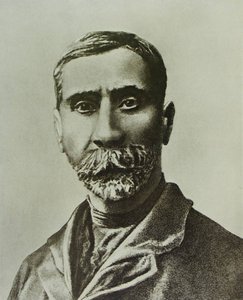
Ніко Піросмані
1862 - 1918 , Γεωργία
Krótka nota
- Artistic Movement Or Style: Prymitywizm Art
- Artists Who Influenced This Artist: ['Vladimir Lado Gudiashvili']
- Date Of Birth: 5 maja 1862
- Date Of Death: 9 kwietnia 1918
- Full Name: Nikoloz Aslanis Dze Pirosmanashvili
- Nationality: Gruzinski
- Notable Artworks:
- Musha z winogronem
- Ślub gruziński
- Portret Zdaniewicza
- Place Of Birth: Mirzaani, Kakheti
Powiązane artykuły

Top 10 Sławnych Obrazów w Odcieniach Szaroniebieskiego – Inspiracje dla Wnętrz | OriginalUniqueArt.com
Odkryj 10 najsłynniejszych obrazów w odcieniach szaroniebieskiego! Poznaj historie Claude Moneta, Degasa i Van Gogha. Inspiracje wnętrzarskie i reprodukcje najwyższej jakości na OriginalUniqueArt.com – sztuka dla Twojego domu.

Odważne Wizje: 10 Arcydzieł Pełnych Mocy i Ekspresji | OriginalUniqueArt
Odkryj 10 odważnych arcydzieł sztuki, które definiują moc i ekspresję! Poznaj historie Van Gogha, Picassa i Muncha. Reprodukcje obrazów najwyższej jakości na OriginalUniqueArt.com – inspiracje do wnętrz i galeria online.

Błękit w Sztuce: Symbolika, Historia i Psychologiczne Oddziaływanie Koloru
Odkryj fascynującą historię błękitu w sztuce! Poznaj symbolikę, psychologię i wpływ tego koloru na arcydzieła renesansu i współczesne trendy. Ekspercka analiza dla miłośników sztuki.

Bunt Przeciw Konwencji: Odkrywanie Naiwnego Sztuki i Prymitywizmu jako Wyraz Odwrócenia Akademickich Tradycji
Odkryj fascynujący świat sztuki naiwnej i prymitywizmu! Analiza porównawcza, historia, wpływ na awangardę oraz współczesne interpretacje. Ekspercka wiedza dla kolekcjonerów i miłośników sztuki.
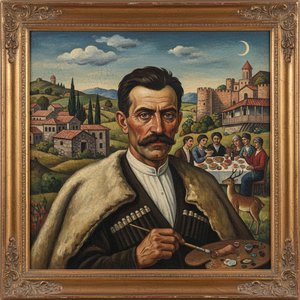
Niko Pirosmani: A Georgian Visionary – Life, Legacy, and the Poetics of Outsider Art
Discover the captivating life & art of Niko Pirosmani, Georgia’s celebrated primitivist painter. Explore his unique oilcloth paintings, lasting influence, and enduring legacy with OriginalUniqueArt.
