

 Zobacz w skali 1:1
 Wyślij
 Udostępnij
 Szczegóły
 Przewodnik

 Pobierz plik obrazu
 Podobne obiekty
 RTG
RTG Pokaz slajdów
 Statystyki
Gethsemane
 Oil On Board
- Neo-Romanticism
 1926
1926- Modern
 42.0 x 32.0 cm
 Bergen Kunstmuseum
 Czytaj więcej
Giclée / Wydruk artystyczny
Wydruki giclée lub płótna o jakości muzealnej, szybka realizacja i szeroki wybór opcji wykończenia. ( Kup ręcznie malowany obraz Przełącz na wersję cyfrową)




P118B zł10

P118H zł10

P118W zł10

P438Z zł10

P508JH zł12

P508YH zł12

P805H zł10

P805Z zł10

P919BZ zł10

P919G zł10

P919XJ zł10

P959ZH zł10

P968JZ zł12

W106C zł8

W218G zł10

W218JH zł8

W218Y zł10

W307PJ zł10

W316G zł10

W316PJ zł8

W316Y zł10

W398PJ zł8

W4111J zł10

W500HY zł15

W500JH zł15

W692G zł12

W849H zł8

W940BG zł15

W953PJ zł8




Wybierz spośród naszych standardowych rozmiarów, które zachowują oryginalne proporcje dzieła sztuki.

Wpisz wymaganą szerokość i wysokość, aby dopasować grafikę do ramy lub ściany. Wydruk można jedynie przyciąć, nigdy nie powiększając go poza oryginalny obraz, dlatego format o innym proporcji spowoduje utratę części kompozycji. Przed rozpoczęciem druku prześlemy Ci cyfrowy podgląd do zatwierdzenia. Obraz wyświetlany na tej stronie nie pokazuje rzeczywistego przycięcia — jedynie podgląd oddaje ten efekt.
Dostawa na cały świat () w ciągu 2 tygodni zamiast standardowych 4/5 tygodni. (21 Październik)

Bezpłatna ekspresowa wysyłka na cały świat

Wysokiej jakości płótno lniane

Pełne ubezpieczenie transportowe

Gwarancja zwrotu należności celnych i podatków importowych

Gwarancja idealnego odwzorowania barw

100-dniowy okres na zwrot dzieła w przypadku wykrycia wad produkcyjnych

Gwarancja 100% zwrotu pieniędzy

Oferta przy zakupie wielu sztuk
 Opcja ze szkłem jest dostępna wyłącznie w rozmiarach poniżej 110 cm

Gethsemane
Giclée / Wydruk artystyczny
Rozmiar reprodukcji
-


Suma do zapłaty
zł 304
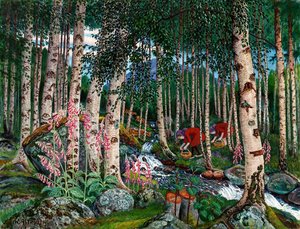
A Visionary Encounter in the Norwegian Garden
In the quiet, evocative depths of Nikolai Astrup’s 1926 masterpiece, Gethsemane, the boundaries between biblical history and the intimate landscapes of Norway begin to dissolve. While the title refers to the sacred garden in Jerusalem where Christ faced his darkest hour, Astrup performs a profound act of artistic localization. He transports this monumental moment of spiritual agony into the familiar, lush surroundings of the parsonage garden in Ålhus. This is not merely a religious illustration; it is a dreamlike fusion of the divine and the terrestrial. The viewer is invited into a space where the heavy atmosphere of the crucifixion narrative meets the verdant, mystical textures of the West Norwegian landscape, creating a scene that feels both ancient and deeply personal.
The composition breathes with a sense of quiet drama, capturing a moment of profound transition. As the eye wanders through the painting, one encounters a scene that oscillates between a somber historical event and a visionary hallucination. The presence of figures—some appearing caught in the weight of the narrative, others seemingly lost in a trance-like state—suggests a world where the veil between reality and the supernatural is perilously thin. This sense of mystery is heightened by the scattered birds that drift through the sky and perch upon the landscape, acting as silent witnesses to the unfolding drama. For the collector or designer, this piece offers more than just a subject; it offers an atmosphere of contemplative depth that can anchor a room with its soulful, introspective energy.
Technique and the Language of Light
Astrup’s technical mastery is evident in his use of oil on cardboard, a medium that allows for a rich, concentrated application of pigment. His style, rooted in Neo-Romanticism, eschews clinical realism in favor of an intense, emotive color palette. The textures are tactile and layered, reflecting the artist's lifelong obsession with the "visual language" of his homeland. He employs light not just to illuminate form, but to evoke mood; the shadows are deep and heavy, yet they are pierced by a spectral luminosity that suggests the presence of a divine vision. This interplay of light and shadow creates a rhythmic movement across the canvas, guiding the viewer through the dense foliage and toward the heart of the spiritual struggle.
The brushwork possesses a certain raw, organic vitality that mirrors the ruggedness of the Norwegian fjords. There is no sterile perfection here; instead, there is a deliberate, expressive quality that celebrates the natural world's untamed spirit. For those seeking to incorporate fine art into a sophisticated interior, a high-quality reproduction of Gethsemane provides a centerpiece of immense character. The painting’s ability to command attention through its complex textures and brooding tones makes it an ideal choice for spaces designed for reflection, such as libraries, study alcoves, or quiet sitting rooms where the interplay of history and nature can be fully appreciated.
A Legacy of Spiritual and National Identity
To understand Gethsemane is to understand Nikolai Astrup’s broader mission: to capture the very soul of Norway. By situating a universal Christian narrative within his own local topography, he elevates the Norwegian landscape to a stage for the eternal. This technique of "sacralizing" the everyday—turning a simple garden patch into a site of cosmic significance—is what makes his work so enduringly powerful. The painting serves as a bridge between the theological and the topographical, making the profound accessible through the familiar.
For the discerning art lover, owning a reproduction of this work is an opportunity to possess a fragment of this visionary legacy. It is a piece that invites continuous re-examination, revealing new layers of symbolism and emotion with every viewing. Whether one is drawn to its historical weight, its masterful use of color, or its ability to evoke the misty, magical atmosphere of a Norwegian night, Gethsemane remains a breathtaking testament to the power of art to transform the world we see into a world we feel.
Pytania i odpowiedzi
Czy dzieło „Gethsemane” autorstwa Nikolai Astrup znajduje się w domenie publicznej i dlaczego?
Status praw autorskich do dzieła „Gethsemane” – stanowi domenę publiczną – autorskie prawa majątkowe wygasły – wynika z daty śmierci artysty, która przypada na 1928.
Jakie tematy pojawiają się w „Gethsemane” autorstwa Nikolai Astrup?
„Gethsemane” autorstwa Nikolai Astrup przedstawia: biblical scene, religious, jesus christ, gethsemane, norway landscape, night scene, visionary.
Jakie miejsce w historii sztuki zajmuje "Gethsemane"?
Pod względem historycznym „Gethsemane” to dzieło z nurtu Neo-Romanticism, powstałe w szerszej epoce Modern.
Biografia artysty
Nikolai Astrup: Wizjoner Vestlandet
Nikolai Astrup (1880–1928) jawi się jako postać niezwykła w historii sztuki norweskiej – malarz, którego głęboka więź z krajobrazem i tradycjami regionu Vestlandet zapewniła mu miejsce wśród najbardziej wyrazistych artystów neoromantycznych swoich czasów. Urodzony w Bremanger, w Sogn og Fjordane, Astrup dorastał wśród surowych fiordów i spokojnych dolin, co w sposób fundamentalny ukształtowało jego wrażliwość artystyczną. To właśnie to otoczenie popchnęło go ku stylowi charakteryzującemu się intensywną paletą barw oraz niezłomnym oddaniem w portretowaniu codziennego życia wiejskiej Norwegii. Jego dziedzictwo nie sprowadza się jedynie do estetycznie zachwycających płócien, lecz tkwi także w pionierskim wysiłku uchwycenia „narodowego języka wizualnego”, który przywoływał tradycje i folklor jego ojczyzny.- Wczesne lata i edukacja: Formacyjne lata Astrupa zostały naznaczone rodzinną pobożnością, zaszczepioną przez jego ojca, Christiana Astrupa, proboszcza, który zachęcał syna do studiów teologicznych. Mimo początkowych skłonności ku posługi kapłańskiej, pasja do rysunku i malarstwa ostatecznie skłoniła go do porzucenia katedry w Trondheim na rzecz artystycznych poszukiwań w Kristianii (dzisiejszym Oslo), gdzie szlifował swoje umiejętności pod okiem Harriet Backer.
- Paryskie wpływy: Krótki pobyt w Paryżu zetknął Astrupa z rodzącym się ruchem awangardowym, co pozwoliło mu nawiązać relacje z innymi artystami, takimi jak Christian Krohg, i wzbogaciło jego zrozumienie technik impresjonistycznych. Okres ten umocnił jego zamiłowanie do eksperymentu i poszerzył horyzonty twórcze.
- Powrót do Jølster i rozwój artystyczny: Powracając w 1902 roku do rodzinnego domu w Jølster, Astrup założył rodzinę wraz z żoną, Engel Sunde, z którą miał ośmioro dzieci. Trudności ekonomiczne ich codziennego życia stały się paliwem dla jego artystycznej ambicji i skłoniły go do pełnego zanurzenia się w przedstawianiu otaczającego go świata – krajobrazu, który służył mu jako niewyczerpane źródło inspiracji.
- Ważne wystawy: Renoma artystyczna Astrupa systematycznie rosła dzięki trzem znaczącym wystawom odbywającym się w Kristianii (1905), Bergen (1908) oraz Oslo (1911). Prezentacje te zdobyły uznanie krytyki i ugruntowały jego pozycję jako jednego z czołowych głosów na norweskiej scenie artystycznej.
- Główne osiągnięcia i dziedzictwo: Trwały wkład Astrupa w sztukę norweską opiera się na niezachwianym dążeniu do autentyczności – oddaniu piękna i ducha Vestlandet z bezkompromisową szczerością. Jego malarstwo do dziś rezonuje z odbiorcami, służąc jako potężny symbol narodowego dziedzictwa i ucieleśniając ideały neoromantyzmu.
Nikolai Astrup
1880 - 1928 , Norwegia
Najważniejsze informacje
- Artistic Movement Or Style: Neo-romantyzm
- Artists Or Movements Influenced By This Artist: ['Sztuka skandynawska']
- Artists Who Influenced This Artist: ['Christian Krohg']
- Date Of Birth: 1880
- Date Of Death: 1928
- Full Name: Nikolai Johannes Astrup
- Nationality: Norweski
- Notable Artworks:
- Zuchwały zalotnik
- Nagi drzewa
- Dziewczyna przędąca
- Place Of Birth: Bremanger, Norwegia
Zobacz także powiązane artykuły

Johan Christian Dahl: Pioneering Norwegian Romantic Landscape Painting
Explore the life & art of Johan Christian Dahl, Norway's first great Romantic painter. Discover his iconic landscapes, cultural impact, and lasting legacy with OriginalUniqueArt.

Romantyczny Krajobraz w Malarstwie: 10 Arcydzieł, Które Zdefiniowały Epokę | OriginalUniqueArt.com
Odkryj 10 arcydzieł romantyzmu w malarstwie! Poznaj historie Caspara Davida Friedricha, Turnera i innych mistrzów. Inspiracje wnętrzarskie & reprodukcje obrazów najwyższej jakości na OriginalUniqueArt.com. Eksploruj kolekcję online!

John Constable: 25 Najlepszych Obrazów Mistrza Angielskiego Krajobrazu | OriginalUniqueArt
Odkryj 25 arcydzieł Johna Constable'a – mistrza angielskiego krajobrazu! Poznaj romantyczne pejzaże, technikę malarską i inspiracje z Dedham Vale. Reprodukcje obrazów najwyższej jakości na OriginalUniqueArt.com. Eksploruj pełną kolekcję online!

Evocations of Place: A Historical Journey Through Landscape Art
Explore the rich history of landscape art with OriginalUniqueArt. Discover renowned artists, movements like Impressionism & Romanticism, and expert guidance for collecting timeless pieces. Find your perfect serene escape today!

Sublime i malowniczość w krajobrazie romantycznym: Emocje, natura i duchowość w sztuce XIX wieku
Odkryj fascynujący świat romantycznego krajobrazu! Poznaj filozofię Sublime, arcydzieła Friedricha i Turnera oraz wpływ tego nurtu na sztukę. Inspiracje i reprodukcje najwyższej jakości – OriginalUniqueArt.