

 Podgląd w skali
 Wyślij jako kartkę
 Udostępnij
 Szczegóły dzieła

 Pobierz
 Podobne obiekty
 RTG
RTG Pokaz slajdów
Nature Untamed


 Rozwiń treść
Kup wysokiej rozdzielczości, ulepszony obraz cyfrowy o znacznie wyższej jakości niż podgląd online.
Każdy plik jest starannie przygotowywany przez naszych specjalistów przy użyciu zaawansowanych narzędzi oraz profesjonalnej, ręcznej retuszy. Dbamy o to, aby każdy obraz cechował się wyjątkową ostrością, precyzyjnym odwzorowaniem kolorów i subtelnymi detalami.
Ostateczny plik dostarczany jest drogą mailową w ciągu 72 godzin, zoptymalizowany do natychmiastowego wykorzystania w profesjonalnych zastosowaniach redakcyjnych i poligraficznych. To ta sama jakość, której ufają czołowe studia projektowe, wydawnictwa oraz galerie sztuki.
Obraz cyfrowy
Pobierz plik o wysokiej rozdzielczości do osobistego wyświetlania, druku oraz projektów kreatywnych. ( Zamów wydruk Zamów ręcznie malowaną reprodukcję)
W każdym zamówieniu na obraz cyfrowy znajduje się
Profesjonalna dostawa cyfrowa z gwarancją
Wybierając OriginalUniqueArt.com, nie otrzymujesz jedynie obrazu – otrzymujesz profesjonalnie udoskonalone cyfrowe dzieło sztuki, stworzone z najwyższą precyzją i objęte gwarancją satysfakcji. Oto wszystko, co automatycznie dołączane jest do Twojego zamówienia:

Błyskawiczna wysyłka e-mailowa
Plik z obrazem cyfrowym w wysokiej rozdzielczości zostanie przesłany na Twój adres e-mail w ciągu 72 godzin od złożenia zamówienia – gotowy do natychmiastowego użycia.

Plik cyfrowy wzbogacony przez AI
Twoja grafika została profesjonalnie zoptymalizowana przy użyciu zaawansowanych narzędzi AI oraz ręcznej edycji, co zapewnia maksymalną szczegółowość, klarowność i wierność kolorów.

Dożywotnia darmowa ponowna dostawa
Przypadkowo usunąłeś lub zgubiłeś swój plik? Bez obaw – prześlemy go Tobie ponownie w dowolnym momencie, bez żadnych opłat.

Bez opłat importowych – zawsze
Ciesz się swoją sztuką natychmiast, bez żadnych opłat celnych, należności ani kosztów dostawy – pliki cyfrowe są zawsze wolne od podatku.

Gwarancja wierności kolorów
Dzięki zastosowaniu profesjonalnych narzędzi i procesów zarządzania barwą zapewniamy, że Twoje cyfrowe zdjęcie odzwierciedla oryginalne kolory tak wiernie, jak to tylko możliwe.

60-dniowa gwarancja satysfakcji
Jeśli nie będziesz zadowolony ze swojego cyfrowego obrazu, dokonamy jego poprawki lub zwrócimy 100% kosztów w ciągu 60 dni – bez żadnych pytań.

100% Gwarancja zwrotu pieniędzy
Nie jesteś zadowolony? Otrzymaj pełny zwrot kosztów w ciągu 60 dni od otrzymania pliku cyfrowego – bez zbędnych pytań.

Rabaty przy zamówieniach hurtowych
Kup 3 obrazy, oszczędź 10% - Kup 5, oszczędź 15% - Kup 10+, oszczędź 20%. Idealne do projektów kreatywnych, galerii i agencji.
Opis kolekcjonerski
Nature Untamed: A Portrait of Romantic Idealism
Nicolai Abraham Abildgaard’s “Nature Untamed,” completed in 1784, stands as a cornerstone of Danish neoclassical art and embodies the burgeoning spirit of Romantic idealism. This captivating painting depicts a woman seated upon a rock amidst a dramatic landscape—a deliberate juxtaposition designed to elevate her figure against the grandeur of the natural world.
The artist’s meticulous observation is evident in every detail, from the flowing drapery of the woman's gown to the expressive gaze directed towards the viewer. Abildgaard skillfully employs chiaroscuro – dramatic contrasts between light and shadow – to sculpt the form of the woman and imbue the scene with an atmosphere of profound serenity and contemplation.
Style and Technique: Neoclassical Influence Meets Romantic Sensibility
While firmly rooted in neoclassical principles, “Nature Untamed” transcends mere stylistic imitation. Abildgaard’s training at the Royal Danish Academy instilled him with a reverence for classical forms and idealized beauty—particularly those championed by artists like Claude Lorrain and Nicolas Poussin. However, he wasn't solely bound to these conventions; his travels to Rome exposed him to influences from Michelangelo and Raphael, fostering a burgeoning appreciation for expressive emotion.
The painting’s technique showcases Abildgaard’s mastery of oil paint on canvas. He achieved remarkable tonal gradation through layering thin glazes—a hallmark of neoclassical painting—yet infused the composition with a palpable sense of dynamism conveyed by the wind-swept hair and the posture of the woman. This blending of classical precision with Romantic fervor distinguishes “Nature Untamed” as a pivotal work bridging two artistic movements.
Historical Context: Reflecting Enlightenment Ideals
Created during the Enlightenment, “Nature Untamed” reflects the intellectual currents of its time—a fascination with reason and observation tempered by an increasing awareness of human emotion and spirituality. The depiction of a woman in communion with nature aligns perfectly with the Romantic movement’s emphasis on individualism, imagination, and the sublime.
Furthermore, Abildgaard's commission to decorate the Knights’ Room at Christiansborg Palace underscored the importance of artistic patronage within Danish society. This monumental undertaking demanded an artist capable of conveying complex ideas through visual symbolism—a task Abildgaard accomplished brilliantly by employing allegorical figures representing historical epochs and highlighting the virtues of nobility.
Symbolism: Woman, Nature, and Spiritual Harmony
The woman herself serves as a central symbol within “Nature Untamed,” embodying feminine grace, purity, and resilience. Her solitary presence atop the rock signifies independence and contemplation—a deliberate contrast to the societal constraints imposed upon women during the eighteenth century.
Surrounded by lush foliage and illuminated by dappled sunlight, the landscape represents the untamed beauty of the natural world—a realm perceived as both inspiring and restorative. The inclusion of a black dog adds an element of primal instinct and reinforces the painting’s overarching theme: the harmonious coexistence between humanity and nature.
Finally, the bird perched above the woman symbolizes aspiration and divine grace—suggesting that true enlightenment lies in recognizing the transcendent power of beauty and contemplation. “Nature Untamed” remains a testament to Abildgaard's artistic vision and his ability to capture the essence of Romantic idealism within a meticulously crafted neoclassical framework.
Biografia artysty
Early Life and Artistic Foundations
Nicolai Abraham Abildgaard, born in Copenhagen on September 11th, 1743, emerged from a family deeply immersed in the world of art and scholarship. His father, Søren Abildgaard, was a respected antiquarian draughtsman, instilling in young Nicolai an early appreciation for classical forms and meticulous observation. This familial influence proved foundational as Abildgaard embarked on his artistic journey, receiving initial training with a local painting master before formally enrolling at the New Royal Danish Academy of Art in 1764. His talent quickly became apparent; from 1764 to 1767, he consistently earned accolades and medallions recognizing his burgeoning skill. These early successes culminated in a travel stipend awarded in 1767 – a pivotal opportunity that would shape the course of his artistic development, though it was five years before he could finally utilize it. During these formative years at the Academy, Abildgaard benefited from the tutelage of Johan Edvard Mandelberg and Johannes Wiedewelt, absorbing their techniques and perspectives while simultaneously forging his own unique path. He diligently studied anatomy alongside painting, mastering the human form with an accuracy that would characterize much of his later work. This dedication to scientific observation was not merely a technical skill; it reflected a broader intellectual curiosity—a desire to understand the world through both artistic expression and rigorous analysis.The Roman Awakening: A Shift in Perspective
In 1772, Nicolai Abildgaard finally realized his long-awaited dream of traveling to Rome. This five-year sojourn proved transformative, marking a crucial turning point in his artistic evolution. Immersed in the heart of classical antiquity, he dedicated himself not only to studying sculpture but also architecture, decoration, and the magnificent frescoes adorning Palazzo Farnese. A visit to Naples in 1776 with fellow artist Jens Juel further broadened his horizons. Rome wasn’t merely a place for technical study; it was an intellectual awakening. Abildgaard delved into history painting, seeking to master its complexities and narrative power. He drew inspiration from the masters – Annibale Carracci, Raphael, Titian, and Michelangelo – absorbing their compositional strategies, dramatic use of light, and profound understanding of human anatomy. However, his exposure wasn’t limited to strict classicism. The influence of artists like Johan Tobias Sergel and Johann Heinrich Füssli began to subtly shift his aesthetic sensibilities, introducing a nascent Romantic sensibility into his work. He meticulously documented the ruins of Pompeii and Herculaneum, capturing their grandeur and decay with remarkable precision—a testament to his commitment to both observation and artistic representation. This meticulous attention to detail would become a hallmark of his style, informing his approach to portraying historical scenes and mythological narratives alike.Royal Commissions and National Narratives
Returning to Copenhagen in December 1777, Abildgaard was immediately recognized as a rising star. He swiftly secured a professorship at the Academy in 1778 and soon after, around 1780, ascended to the prestigious position of royal historical painter. This appointment brought with it a monumental commission from the Danish government: to create a series of paintings depicting the history of Denmark for the Knights’ Room (Riddersal) at Christiansborg Palace. This project became the defining undertaking of his career. These weren’t simply historical illustrations; they were carefully constructed narratives designed to glorify the monarchy and instill a sense of national pride. Abildgaard masterfully combined accurate historical depictions with allegorical elements and mythological references, creating visually stunning and intellectually stimulating compositions. He employed a palette rich in color—particularly crimson and gold—to convey grandeur and majesty, reflecting the aspirations of the Danish court. His meticulous attention to detail extended beyond mere visual representation; he painstakingly researched archival documents and consulted with historians to ensure that his paintings accurately reflected the events and personalities of Denmark’s past. The resulting murals were a triumph of artistic ambition and scholarly rigor—a symbol of Denmark's cultural heritage and its commitment to preserving its traditions.A Synthesis of Styles: Neoclassicism and Romanticism
Nicolai Abildgaard's artistic style represents a fascinating synthesis of Neoclassical rigor and emerging Romantic sensibilities. While grounded in the principles of classical composition, clarity, and anatomical accuracy—influenced by artists like Michelangelo and Raphael—his works are infused with dramatic lighting, rich color palettes, and meticulous attention to detail that hint at a deeper emotional undercurrent. Notable paintings such as “Christian I Elevates Holstein to a Duchy in 1474” exemplify this blend – a stately historical scene rendered with classical precision yet imbued with a sense of grandeur and theatricality. He skillfully utilized chiaroscuro—the interplay of light and shadow—to heighten the emotional impact of his compositions, creating dramatic contrasts that drew viewers into the narrative. Simultaneously, Abildgaard embraced elements of Romanticism, exploring themes of emotion, imagination, and spirituality—a departure from the rational idealism of earlier artistic movements. His exploration extended beyond history painting; “The Nightmare” showcases his skill in portraying supernatural events with dramatic intensity, capturing the terror and apprehension of the human psyche. Pieces like “The Wounded Philoctetes” reveal a sensitivity to human suffering and vulnerability, reflecting the Romantic preoccupation with moral dilemmas and psychological complexity. He wasn’t merely replicating historical or mythological scenes; he was interpreting them through the lens of his own artistic vision, imbuing them with layers of symbolic meaning accessible to a refined audience. His pictorial allegory became a hallmark of his style, using symbols as visual shorthand for complex ideas and emotions.Legacy and Enduring Influence
Abildgaard served as director of the Academy during 1789–1791 and again from 1795 until his death in Frederiksdal near Copenhagen on November 14th, 1809. Throughout his career, he nurtured a generation of talented artists, including Asmus Jacob Carstens, Bertel Thorvaldsen, J. L. Lund, and perhaps most significantly, Christoffer Wilhelm Eckersberg—who would become Denmark’s foremost painter. Eckersberg, often hailed as the “father of Danish painting,” built upon Abildgaard's foundational principles, establishing a new aesthetic tradition that continues to inspire artists today. Abildgaard’s influence extended beyond his direct students; he fundamentally shaped the artistic landscape of Denmark, bridging the gap between Neoclassicism and Romanticism. His work not only reflected the cultural values of his time but also anticipated future artistic trends—a testament to his enduring legacy as one of Denmark's most celebrated artists. He remains a pivotal figure in understanding the transition from Enlightenment ideals to the emotional intensity of the 19th century, securing his place among the giants of European art history.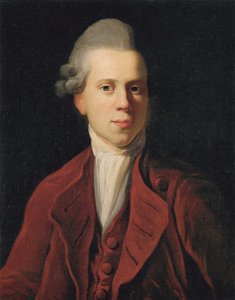
Nikolai Abraham Abildgaard
1743 - 1809 , Dania
Krótka nota
- Artistic Movement Or Style: Neoclassical & Romanticism
- Artists Who Influenced This Artist:
- Annibale Carracci
- Raphael
- Titian
- Michelangelo
- Date Of Birth: September 11, 1743
- Date Of Death: November 14, 1809
- Full Name: Nicolai Abraham Abildgaard
- Nationality: Danish
- Notable Artworks:
- Christian I Elevates Holstein to a Duchy in 1474
- The Nightmare
- Culmin's Ghost Appears to his Mother
- Wounded Philoctetes
- Place Of Birth: Copenhagen, Denmark

