Surrealism
Le oiseau (Nick James)
Nick James (1980) stworzył Le oiseau. Należy do nurtu Surrealism. Przechowywane jest w Coventry University w Coventry, United Kingdom. Wymiary to 183 × 133 cm.
- 183 × 133 cm
- Coventry University

 Podgląd w skali 1:1

 Ręcznie malowany obraz olejny
 Wyślij jako kartkę
 Udostępnij
 Karta informacyjna


 Pobierz obraz
 Podobne obiekty
 RTG
 Pokaz slajdów
 Pytania i odpowiedzi

 Statystyki
Le oiseau w skrócie
- Tytuł
- Le oiseau
- Artysta
- Nick James (1980)
- Wymiary
- 183 × 133 cm
- Gdzie można je zobaczyć
- Coventry University, Coventry, United Kingdom
- Ruch
- Surrealism
- Temat
- surreal wildlife, bold line art, dreamlike imagery, abstract animal, vibrant color palette, folk art style
W którym muzeum znajduje się Le oiseau?
Coventry University
Coventry, United Kingdom
A Tapestry of Innovation and Heritage In the heart of England’s West Midlands, Coventry University emerges not merely as an academic institution but as a vibrant sanctuary where scholarly rigor meets the boundless possibilities of public accessibility. Its story is one of profound metamorphosis, tracing a lineage that began in 1843 with the prestigious Coventry School of Design. This evolution—from its origins as a specialized design school to the era of Lanchester Polytechnic and finally attaining university status in 1992—mirrors the very resilience and adaptability of Coventry itself.

Zdjęcia w wysokiej rozdzielczości dzieła Le oiseau
Chronione prawem autorskim: pliki te służą wyłącznie do osobistego wglądu i nie stanowią licencji na ich powielanie.
Nick James, Le oiseau, Coventry University.
Odpowiedzi na pytania dotyczące Le oiseau
Gdzie można obecnie zobaczyć dzieło „Le oiseau” – Nick James?
„Le oiseau” – Nick James znajduje się w zbiorach Coventry University, Coventry, United Kingdom. Informacja o muzeum dotyczy oryginału, a nie reprodukcji.
Jakie są wymiary oryginalnego dzieła „Le oiseau” – Nick James?
Oryginalne wymiary dzieła „Le oiseau” to 183 x 133 cm. Znajomość pierwotnej skali może być pomocna przy wyborze odpowiedniego rozmiaru reprodukcji.
Co przedstawia „Le oiseau” – Nick James?
Tematyka obecna w „Le oiseau” – Nick James obejmuje surreal wildlife, bold line art, dreamlike imagery, abstract animal, vibrant color palette, folk art style, symbolic composition. Razem stanowią one podsumowanie tematyki dzieła.
Czy obraz „Le oiseau” – Nick James można swobodnie reprodukować?
Status praw autorskich dla „Le oiseau” – Nick James: dzieło znajduje się w nadal objęte ochroną prawa autorskiego. Określa to, czy reprodukcje obrazu mogą być sporządzane swobodnie.
Kto stworzył "Le oiseau"?
Autorstwo dzieła "Le oiseau" przypisuje się Nick James.
Do jakiego nurtu w sztuce należy „Le oiseau” – Nick James?
„Le oiseau” – Nick James należy do nurtu Surrealism. Nurt ten stanowi stylistyczny kontekst dzieła.
Do którego okresu twórczości Nick James należy dzieło "Le oiseau"?
„Le oiseau” pochodzi z okresu Mature Period w twórczości Nick James. Klasyfikacja ta wiąże dzieło z rozwojem artysty.
Jakie miejsce w dorobku twórczym Nick James zajmuje dzieło "Le oiseau"?
"Le oiseau" wpisuje się w nurt Surrealism w twórczości Nick James, której charakterystyczne motywy obejmują exploration of the unconscious, recurring animal motifs, bold visual language, personal mythology, folk art traditions, naive painting style, surrealist symbolism, graphic design roots.
W jaki sposób tematyka dzieła "Le oiseau" odnosi się do typowych motywów twórczości Nick James?
Wśród motywów charakterystycznych dla twórczości Nick James – takich jak exploration of the unconscious, recurring animal motifs, bold visual language, personal mythology, folk art traditions, naive painting style, surrealist symbolism, graphic design roots – dzieło „Le oiseau” wprowadza własne skupienie na surreal wildlife, bold line art, dreamlike imagery, abstract animal, vibrant color palette, folk art style, symbolic composition.
O artyście: Nick James
1980
Nick James
The Poetics of Salvage: Introducing Nick James Nick James is an artist who doesn’t so much *create* sculpture as he exhumes it, breathing new life into the discarded fragments of our collective past. Emerging from a foundation at WahooArt, his work isn't rooted in traditional artistic training but rather in a deeply intuitive understanding of material and memory. He operates not within the pristine realm of untouched canvas or virgin clay, but amongst the detritus of everyday existence – forgotten toys, corroded metal, chipped porcelain, and weathered wood. These aren’t simply objects repurposed; they are vessels carrying echoes of previous lives, carefully assembled into hauntingly beautiful wearable assemblages that explore themes of vulnerability, loss, and the surreal nature of recollection.
Inne prace Nick James
 Peligro, enfermo, no pasar
 Se estremeció solo de pensarlo
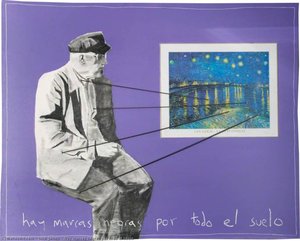 Hay marcas negras por todo el suelo
 Pruneau
Eseje o Le oiseau
 James Abbott McNeill Whistler: 25 Arcydzieł Sztuki Pejzażowej i Portretowej | OriginalUniqueArtOdkryj 25 arcydzieł Jamesa Abbotta McNeilla Whistler'a! Poznaj historię impresjonistycznych pejzaży, portretów i słynnych 'Nokturnów'. Repr…
 Awe vs. Charm: Understanding the Sublime and the PicturesqueMaster the distinction between the Sublime and the Picturesque through Romantic era art. Explore the beauty of awe and charm today.
 Jacques-Laurent Agasse: Pioneering Animalier Painting & Romantic NaturalismExplore the captivating animal paintings of Jacques-Laurent Agasse (1767-1849). Discover his pioneering realism, Romantic influences & lega…