
 Zobacz w skali 1:1
 Wyślij
 Udostępnij
 Szczegóły
 Przewodnik

 Pobierz plik obrazu
 Podobne obiekty
 RTG
RTG Pokaz slajdów
 Statystyki
Portret
 Akryl na płótnie
- Sztuka ścienna
- Japanese Kanō School
 1909
1909 610.0 x 806.0 cm
 Artizon Museum
 Czytaj więcej
Giclée / Wydruk artystyczny
Wydruki giclée lub płótna o jakości muzealnej, szybka realizacja i szeroki wybór opcji wykończenia. ( Kup ręcznie malowany obraz Przełącz na wersję cyfrową)




P118B zł10

P118H zł10

P118W zł10

P438Z zł10

P508JH zł12

P508YH zł12

P805H zł10

P805Z zł10

P919BZ zł10

P919G zł10

P919XJ zł10

P959ZH zł10

P968JZ zł12

W106C zł8

W218G zł10

W218JH zł8

W218Y zł10

W307PJ zł10

W316G zł10

W316PJ zł8

W316Y zł10

W398PJ zł8

W4111J zł10

W500HY zł15

W500JH zł15

W692G zł12

W849H zł8

W940BG zł15

W953PJ zł8




Wybierz spośród naszych standardowych rozmiarów, które zachowują oryginalne proporcje dzieła sztuki.

Wpisz wymaganą szerokość i wysokość, aby dopasować grafikę do ramy lub ściany. Wydruk można jedynie przyciąć, nigdy nie powiększając go poza oryginalny obraz, dlatego format o innym proporcji spowoduje utratę części kompozycji. Przed rozpoczęciem druku prześlemy Ci cyfrowy podgląd do zatwierdzenia. Obraz wyświetlany na tej stronie nie pokazuje rzeczywistego przycięcia — jedynie podgląd oddaje ten efekt.
Dostawa na cały świat () w ciągu 2 tygodni zamiast standardowych 4/5 tygodni. (23 Październik)

Bezpłatna ekspresowa wysyłka na cały świat

Wysokiej jakości płótno lniane

Pełne ubezpieczenie transportowe

Gwarancja zwrotu należności celnych i podatków importowych

Gwarancja idealnego odwzorowania barw

100-dniowy okres na zwrot dzieła w przypadku wykrycia wad produkcyjnych

Gwarancja 100% zwrotu pieniędzy

Oferta przy zakupie wielu sztuk
 Opcja ze szkłem jest dostępna wyłącznie w rozmiarach poniżej 110 cm

Portret
Giclée / Wydruk artystyczny
Rozmiar reprodukcji
-


Suma do zapłaty
zł 307
“Samoportret” – A Window Into Japanese Artistic Soul
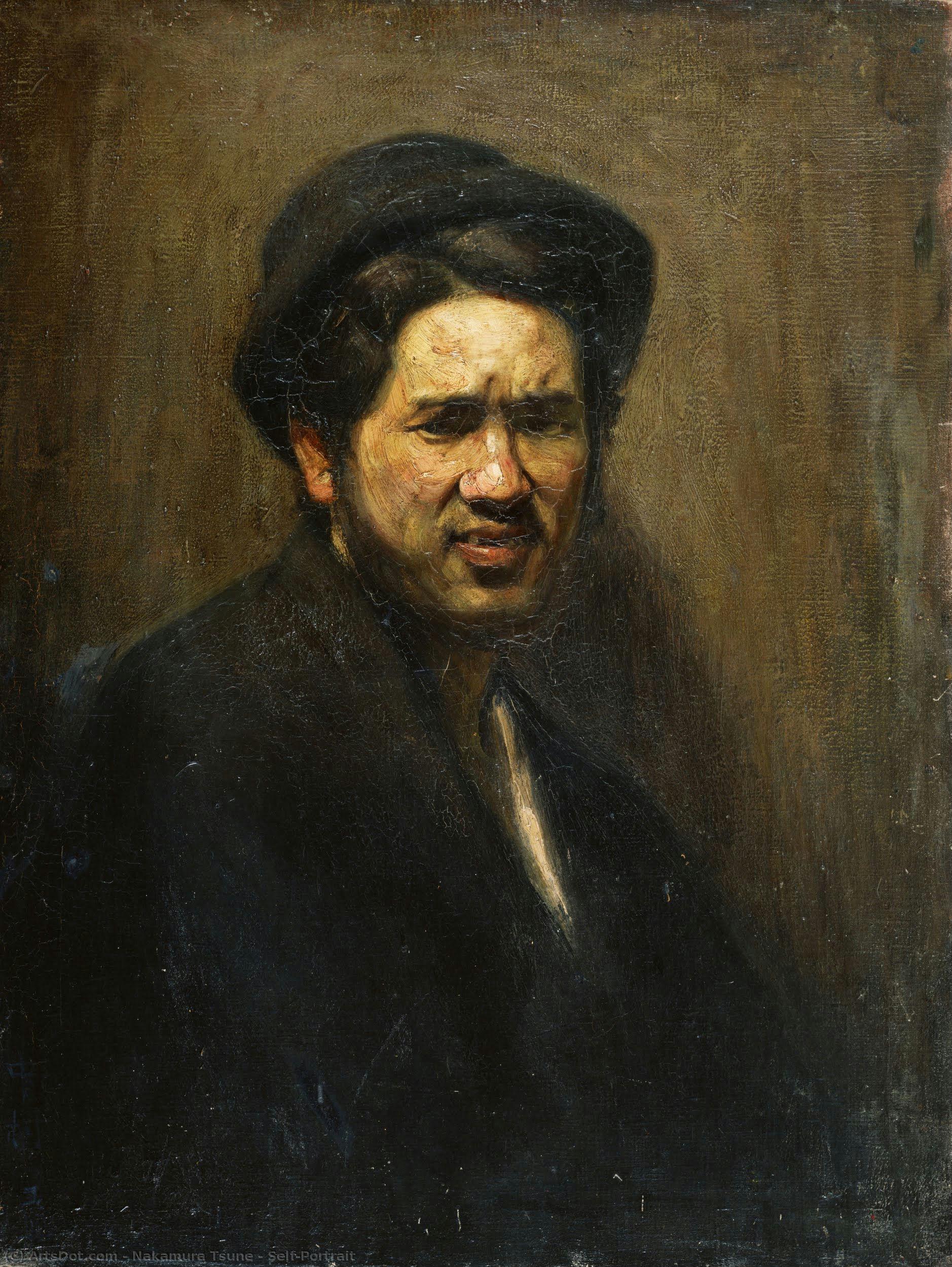
“Samoportret” (Self-Portrait) by Nakamura Tsune is more than just a depiction of an individual; it’s a poignant reflection of the artist's inner world and a testament to the enduring power of Kanō School aesthetics. Created in 1909, this monumental canvas – measuring 610 x 806 cm – commands attention with its masterful execution and profound emotional resonance. The photograph captures a striking black and white image that highlights Tsune’s dedication to capturing subtle nuances of expression and form.The Artist's Vision: Kanō School Influence
Nakamura Tsune’s artistic journey began amidst considerable hardship, shaped by the premature loss of his parents and later diagnosed with tuberculosis. However, this adversity fueled a fervent passion for painting, propelling him towards a transformative encounter with art. His formative years were spent studying at Nagoya Army Cadet School before he discovered his true calling – a dedication to capturing beauty through meticulous observation and skillful brushwork. This commitment aligns perfectly with the principles of the Kanō School, a dominant artistic movement in Japan during Tsune’s time. Known for its emphasis on idealized realism and serene landscapes infused with spiritual symbolism, the Kanō School profoundly influenced Tsune's stylistic choices.Detailed Examination: Composition & Technique
The painting’s composition is deliberately simple yet remarkably effective. Tsune positions himself centrally within the frame, gazing directly at the viewer – a gesture that establishes an intimate connection between artist and observer. The upper left corner is illuminated with a powerful light source, casting dramatic shadows across his face and torso, emphasizing contours and conveying a sense of vulnerability. Tsune’s meticulous brushstrokes demonstrate exceptional control and precision, capturing textures and tonal variations with remarkable subtlety. Notice the careful layering of paint—a technique characteristic of Kanō School artists—creating depth and dimensionality that transcends mere representation. The canvas itself contributes to the artwork's impact, providing a substantial surface area for expansive vistas of color and form.Symbolism & Emotional Resonance
Beyond its technical brilliance, “Samoportret” speaks volumes about Tsune’s psychological state. The open mouth—a gesture often interpreted as contemplation or perhaps even unspoken emotion—suggests an inner dialogue, inviting viewers to ponder the complexities of human experience. The hat worn by Tsune symbolizes dignity and composure amidst personal struggle – a visual representation of resilience and perseverance. Furthermore, the painting's monochromatic palette reinforces its contemplative mood, stripping away extraneous distractions to focus on the core essence of self-representation. It’s a portrait not merely of a man, but of an artist grappling with illness and striving for artistic fulfillment—a poignant reminder of the human spirit's capacity for beauty and introspection.A Legacy Preserved: Reproduction & Appreciation
Today, “Samoportret” resides in a museum setting, allowing visitors to experience its grandeur firsthand. However, OriginalUniqueArt offers exceptional reproductions that bring this masterpiece into homes worldwide. These high-quality prints capture the painting’s luminous quality and textural richness, ensuring that Tsune's vision continues to inspire generations of art lovers. Explore the beauty and depth of Japanese artistic tradition – discover “Samoportret” and its captivating story at OriginalUniqueArt.com!Pytania i odpowiedzi
Jaka paleta barw została wykorzystana w „Portret” autorstwa Nakamura Tsune?
Paleta dzieła „Portret” autorstwa Nakamura Tsune jest opisywana jako Barwy ziemi. Stanowi ona zwięzłe zestawienie barw użytych w pracy.
W którym roku powstało dzieło "Portret"?
Dzieło „Portret” autorstwa Nakamura Tsune powstało w 1909.
Jaką tematykę i atmosferę łączy „Portret” autorstwa Nakamura Tsune?
„Portret” autorstwa Nakamura Tsune łączy w sobie japanese landscape, self-representation, white horse society, tuberculosis patient, painting technique, benten exhibition, art deco influence z Elegancki styl atmosferą.
Biografia artysty
Nakamura Tsune: Life and Legacy
Early Life and Struggles
Nakamura Tsune, a Japanese artist, was born in 1887 in what is now Mito City, Japan. His life began amidst hardship; his father passed away when he was just one year old, followed by the loss of his mother when he was eleven. Despite this tumultuous start, he persevered and pursued his artistic aspirations.
Artistic Aspirations and Training
After graduating from the Nagoya Army Cadet School in 1904, Tsune’s plans for a military career were thwarted by tuberculosis. During his convalescence, he discovered a passion for painting. In 1906, he joined the research institute of the White Horse Society, where he honed his artistic skills and began to develop his unique style.
Notable Works and Exhibitions
Nakamura Tsune’s talent quickly gained recognition. Some of his most celebrated works include:
- Cloudy Morning and Cliffs – Featured in the third Bunten exhibition in 1909, with Cliffs receiving a commendation. This work is now part of the Museum of the Imperial Collections.
- Girl – Awarded a prize at the eighth Bunten exhibition in 1914.
- Other significant works include Dr. Tanakadate and Nude, showcased at the eleventh Bunten exhibition in 1916.
Personal Life and Relationships
In 1913, Sōma Toshiko, daughter of Aizō and Kokkō, became his model. His proposal to her in 1915 faced opposition from her parents, adding another layer of complexity to his personal life. Despite these challenges, he continued to dedicate himself to his art.
Artistic Style and Influences
Nakamura Tsune’s work demonstrates influences from the Kanō School, a traditional Japanese painting style known for its detailed brushwork and classical themes. However, he also incorporated elements of Western artistic techniques, resulting in a unique blend of tradition and modernity. His paintings often feature evocative landscapes and intimate portraits.
Legacy and Passing
Nakamura Tsune’s life was marked by both adversity and artistic achievement. He passed away in 1924 at the age of 37 in his studio in Shimo-ochiai, Shinjuku. His remains were interred at Gion-ji (祇園寺) in Mito the following year. Though his career was cut short, his artistic legacy continues to inspire and captivate art enthusiasts today.
Historical Significance
Tsune’s work provides a glimpse into early 20th-century Japan, reflecting the social changes and artistic experimentation of the era. His ability to blend traditional Japanese aesthetics with Western influences makes him a significant figure in the history of Japanese art.

Nakamura Tsune
1887 - 1924 , Japan
Najważniejsze informacje
- Name: Nakamura Tsune
- Movement: Kanō School
- Birth Date: 1887
- Death Date: 1924
- Birth Place: Mito, Japan
- Nationality: Japanese
- Date Of Birth: 1887
- Date Of Death: 1924
- Notable Works:
- Cloudy Morning and Cliffs
- Girl
- Dr. Tanakadate
- Nude
- Place Of Birth: Mito, Japan
Zobacz także powiązane artykuły

Evocations of Place: A Historical Journey Through Landscape Art
Explore the rich history of landscape art with OriginalUniqueArt. Discover renowned artists, movements like Impressionism & Romanticism, and expert guidance for collecting timeless pieces. Find your perfect serene escape today!

Romantyczny Krajobraz w Malarstwie: 10 Arcydzieł, Które Zdefiniowały Epokę | OriginalUniqueArt.com
Odkryj 10 arcydzieł romantyzmu w malarstwie! Poznaj historie Caspara Davida Friedricha, Turnera i innych mistrzów. Inspiracje wnętrzarskie & reprodukcje obrazów najwyższej jakości na OriginalUniqueArt.com. Eksploruj kolekcję online!
Evoking Nature's Sublime: A Comprehensive Exploration of 19th-Century Landscape Painting
Explore the captivating world of 19th-century landscape painting! Discover renowned artists like Friedrich & Monet, key movements, and find the perfect artwork to bring nature's serenity into your home. Expert insights at OriginalUniqueArt.

Katsushika Hokusai: 25 Arcydzieł Sztuki Japońskiej dla Kolekcjonerów i Miłośników Dekoracji
Odkryj 25 arcydzieł Katsushika Hokusai, mistrza ukiyo-e! Poznaj historię Wielkiej Fali i innych ikonicznych drzeworytów. Inspiracje wnętrzarskie i reprodukcje obrazów najwyższej jakości na OriginalUniqueArt.com – sztuka japońska dla Twojego domu.
Zen on Canvas: The Timeless Artistry and Spiritual Depth of Japanese Landscape Painting
Explore the profound beauty of Japanese landscape painting. From Hokusai's iconic vistas to Zen-inspired compositions, discover the spiritual depth and historical mastery of Ukiyo-e art in this expert cultural retrospective.
