Podgląd w skali 1:1
 Wyślij jako kartkę
 Udostępnij
 Szczegóły dzieła
 Przewodnik

 Pobierz obraz
 Podobne obiekty
 RTG
RTG Pokaz slajdów
 Q&A
Q&A Statystyki
Przejście
 Akryl na płótnie
- Sztuka ścienna
- Contemporary Urban Expression
 2011
2011 40.0 x 40.0 cm
 Contemporary Art Platform
 Rozwiń treść
Dzieło sztuki prezentowane na tej stronie podlega ochronie prawem autorskim, co oznacza, że nie mamy prawa do tworzenia ani sprzedaży jego identycznej reprodukcji. Ochrona ta jest egzekwowana na mocy umów międzynarodowych, takich jak Konwencja berneńska oraz przez przepisy prawa krajowego, w tym te określone w Prawo autorskie USA – Tytuł 17.
Metoda ta jest w pełni zgodna z przepisami prawa autorskiego, ponieważ nie polega na kopiowaniu ani powielaniu chronionego dzieła. Stanowi ona kreatywną reinterpretację – nowy obraz, który czerpie inspirację z oryginału, ale nie jest z nim tożsamy.
Giclée / Wydruk artystyczny
Wydruki giclée lub płótna o jakości muzealnej, szybka realizacja i szeroki wybór opcji wykończenia. ( Zamów ręcznie malowaną reprodukcję Przejdź do wersji cyfrowej)




P118B zł10

P118H zł10

P118W zł10

P438Z zł10

P508JH zł12

P508YH zł12

P805H zł10

P805Z zł10

P919BZ zł10

P919G zł10

P919XJ zł10

P959ZH zł10

P968JZ zł12

W106C zł8

W218G zł10

W218JH zł8

W218Y zł10

W307PJ zł10

W316G zł10

W316PJ zł8

W316Y zł10

W398PJ zł8

W4111J zł10

W500HY zł15

W500JH zł15

W692G zł12

W849H zł8

W940BG zł15

W953PJ zł8




Wybierz spośród naszych standardowych rozmiarów, które zachowują oryginalne proporcje dzieła sztuki.

Wpisz wymaganą szerokość i wysokość, aby dopasować grafikę do ramy lub ściany. Wydruk można jedynie przyciąć, nigdy nie powiększając go poza oryginalny obraz, dlatego format o innych proporcjach spowoduje utratę części kompozycji. Przed rozpoczęciem druku prześlemy Ci cyfrowy podgląd do zatwierdzenia. Obraz wyświetlany na tej stronie nie pokazuje rzeczywistego przycięcia — jedynie podgląd oddaje ten efekt.
Dostawa na cały świat () w ciągu 2 tygodni zamiast standardowych 4/5 tygodni. (29 Październik)

Bezpłatna ekspresowa wysyłka na cały świat

Wysokiej jakości płótno lniane

Pełne ubezpieczenie przesyłki

Gwarancja zwrotu należności celnych i podatków importowych

Gwarancja wiernego odwzorowania kolorów

100-dniowa polityka zwrotów (tylko w przypadku wad)

Gwarancja 100% zwrotu pieniędzy

Zniżka przy zakupie wielu sztuk
 Opcja ze szkłem jest dostępna wyłącznie w rozmiarach poniżej 110 cm

Przejście
Giclée / Wydruk artystyczny
Wymiary reprodukcji
-


Cena całkowita
zł 308
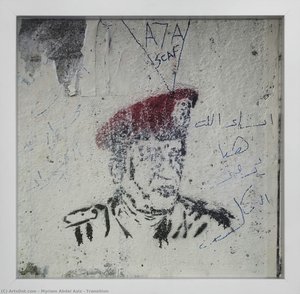
Transition – A Reflection of Egyptian Identity Amidst Change
“Transition” by Myriam Abdel Aziz isn’t merely a painting; it's a visual chronicle of a pivotal moment in Egyptian history—the February 11th uprising that ousted President Mubarak and ushered in an era fraught with uncertainty. Captured on canvas, this artwork embodies the spirit of resilience and the urgent need for artistic expression during times of upheaval.
The piece’s dominant aesthetic is documentary photography blended with stylistic elements reminiscent of cinematic art, specifically drawing inspiration from Pakistani film posters like “Aandhi Shakar.” Abdel Aziz meticulously recreated these posters as a painting, demonstrating her commitment to capturing visual narratives and conveying emotion through carefully considered composition. This initial influence instilled in her a distinctive approach characterized by dramatic perspectives and stylized map designs.
Composition & Symbolism: The Weight of History
At the artwork’s core is a portrait of a man wearing a striking red hat—a figure representing military authority, instantly anchoring the viewer to the political landscape of Egypt. Surrounding him are layers of graffiti art in Arabic script and other markings, creating a dynamic yet deliberately chaotic scene. This visual layering isn't accidental; it mirrors the fractured nature of Egyptian society during the transition period.
The textured wall serves as more than just a backdrop—it symbolizes the scarred surface of Egypt’s past, reflecting the challenges faced by its citizens as they navigated the turbulent shifts brought about by the revolution. The red hat itself carries significant symbolic weight, representing leadership and perhaps allegiance to forces shaping the nation's future.
Technique & Material: Ephemeral Beauty
Abdel Aziz skillfully employs spray paint—a technique commonly used in urban art—to achieve a raw and immediate visual impact. The textured surface of the wall complements this method, enhancing the artwork’s authenticity and conveying its fleeting existence. Graffiti, traditionally viewed as transient forms of expression, underscore the ephemeral nature of artistic endeavors during periods of social transformation.
The muted color palette—primarily shades of grey, black, and white—contributes to the artwork's solemn mood. Subtle tonal variations suggest depth and texture within the graffiti layers, inviting contemplation on the complexities of Egyptian identity and the enduring legacy of political struggle. The overall impression is one of tension, conflict, and a poignant awareness of history’s passage.
Rawiya Collective & Artistic Vision
Myriam Abdel Aziz's artistic journey solidified her dedication to portraying Arab women's stories with sensitivity and nuance—a mission embraced by Rawiya Collective. This collective’s ethos encouraged exploration of themes like vulnerability, resilience, and the subtle shifts occurring within communities—elements that consistently permeate her photographic oeuvre.
“Transition” exemplifies Abdel Aziz’s skill in conveying emotion through visual storytelling, mirroring the spirit of her artistic endeavors. It stands as a testament to the power of art to capture moments of profound significance and provoke reflection on societal change.
Pytania i odpowiedzi
Jaki klimat wnosi „Przejście” – Myriam Abdel Aziz do wnętrza?
Dzięki swojemu Dramatyczny nastrojowi, "Przejście" idealnie sprawdzi się w Salon lub strefa dzienna.
Kto stworzył "Przejście" i w jakim stylu jest to dzieło?
"Przejście" powstało autorstwa Myriam Abdel Aziz w stylu Contemporary Urban Expression. Artysta oraz nurt definiują tradycję tego dzieła.
Czy mogę zobaczyć podgląd „Przejście” – Myriam Abdel Aziz przed złożeniem zamówienia?
Podgląd dzieła „Przejście” – Myriam Abdel Aziz można znaleźć na stronie Podgląd w pomieszczeniu.
Biografia artysty
Myriam Abdel Aziz: A Voice of Resilience Through Photographic Narrative
Myriam Abdel Aziz, born in Cairo, Egypt in 1976, stands as a compelling figure within the burgeoning landscape of documentary photography originating from the Middle East. Her artistic journey began amidst the transformative fervor of the Egyptian Revolution of 2011, propelling her into membership with Rawiya Collective—a collective dedicated to showcasing the narratives of Arab women through powerful visual storytelling. This formative experience profoundly shaped her artistic vision and cemented her commitment to capturing the complexities of identity and societal change.- Early Influences: Abdel Aziz’s fascination with photography stemmed from a desire to document human experiences authentically, fueled by an appreciation for cinematic artistry—particularly Pakistani film posters like “Aandhi Shakar,” which she meticulously recreated as a painting. This initial inspiration instilled in her a stylistic approach characterized by dramatic compositions and stylized map designs.
- Rawiya Collective & Artistic Focus: Joining Rawiya Collective solidified Abdel Aziz’s dedication to portraying Arab women's stories with sensitivity and nuance. The collective’s ethos encouraged exploration of themes like vulnerability, resilience, and the subtle shifts occurring within communities—elements that consistently permeate her photographic oeuvre.
Notable Works & Exhibitions
Among Abdel Aziz’s most celebrated pieces is “Master and Student,” a striking painting inspired by Pakistani film posters, housed at Fukuoka Asian Art Museum in Japan. This artwork exemplifies her ability to distill complex narratives into visually arresting images—a testament to her artistic prowess. Furthermore, her photograph "Transition" powerfully documents the pivotal moment of Egypt's government change in 2011, capturing the palpable tension and anticipation surrounding this historical juncture. Her work has garnered recognition for its insightful portrayal of Arab women’s perspectives and its contribution to documenting significant cultural shifts.- "Transition" exemplifies Abdel Aziz’s skill in conveying emotion through visual storytelling, mirroring the spirit of her artistic endeavors.

Myriam Abdel Aziz
1976 - , Egypt
Krótka nota
- Full Name: Myriam Abdel Aziz
- Nationality: Egyptian
- Date Of Birth: 1976
- Place Of Birth: Cairo, Egypt
- Notable Artworks:
- Master and Student
- Transition
- Artistic Movement Or Style: Documentary Photography
Powiązane artykuły

Monochromatyczne Wizje: Estetyka i Historyczne Znaczenie Fotografii Czarno-Białej
Odkryj fascynujący świat fotografii czarno-białej! Poznaj historię, techniki i arcydzieła monochromatycznej sztuki. Inspiracje, porady i analiza wpływu na współczesną estetykę. OriginalUniqueArt.com.
The Lens of Truth: A Comprehensive History and Legacy of Documentary Photography
Explore the profound history of documentary photography. From early daguerreotypes to social reform movements, discover how the lens captures truth, preserves vanishing cultures, and shapes our global visual narrative through an expert art-historical lens.

Piktorializm w Polsce: Poszukiwanie Duszy Fotografii i Estetyki Malarskiej
Poznaj historię piktorializmu w Polsce – nurtu fotografii artystycznej dążącego do estetyki malarskiej. Odkryj kluczowe postacie, techniki i wpływ na polską sztukę. Ekspercka analiza i fascynujące fakty!

Witnessing History Through Lens & Light: Documentary Photography's Enduring Legacy
Explore the powerful history of documentary photography – from its origins to contemporary masters like Gordon Parks & W. Eugene Smith. Discover how this art form shapes our understanding of society and witness pivotal moments in time.

Beyond the Lens: Photography's Enduring Influence on Modern & Contemporary Art
Explore photography's pivotal role in shaping modern & contemporary art. Discover key movements, influential artists like Stieglitz, and expert collecting advice from OriginalUniqueArt.