Color Field Painting · 1961
Delta Lambda (Morris Louis, 1961)
Morris Louis (1912–1962) stworzył Delta Lambda. Dzieło pochodzi z 1961. Należy do nurtu Color Field Painting. Wykonano w technice Acrylic On Canvas. Przechowywane jest w Cleveland Museum of Art w Cleveland, Stany Zjednoczone Ameryki. Wymiary to 260 × 449 cm.
- 1961
- Acrylic On Canvas
- 260 × 449 cm
- Cleveland Museum of Art

 Podgląd w skali 1:1

 Ręcznie malowany obraz olejny
 Wyślij jako kartkę
 Udostępnij
 Karta informacyjna


 Pobierz obraz
 Podobne obiekty
 RTG
 Pokaz slajdów
 Pytania i odpowiedzi

 Statystyki
Delta Lambda w skrócie
- Tytuł
- Delta Lambda
- Artysta
- Morris Louis (1912–1962)
- Miejsce urodzenia artysty
- Baltimore, Stany Zjednoczone
- Data powstania
- 1961
- Technika wykonania
- Acrylic On Canvas
- Wymiary
- 260 × 449 cm
- Gdzie można je zobaczyć
- Cleveland Museum of Art, Cleveland, Stany Zjednoczone Ameryki
- Temat
- color, flowing lines, abstraction, layers, transparency, acrylic
Co przedstawia Delta Lambda?
A Dance of Light and Transparency – Exploring ‘Delta Lambda’
Morris Louis's “Delta Lambda,” painted in 1961, isn’t merely a canvas adorned with color; it’s an invitation to lose oneself within a flowing, ethereal landscape. This monumental work, measuring nearly six feet tall and over four and a half feet wide, embodies the core tenets of Color Field painting – a movement that sought to elevate color itself to the status of subject matter, divorced from representational imagery. Louis, a pivotal figure in this aesthetic revolution, masterfully employed a technique he pioneered: staining thin washes of acrylic paint directly onto unprimed canvas, allowing the colors to bleed and mingle organically, creating an illusion of depth and movement that defies traditional perspective.
The painting’s composition is strikingly asymmetrical. Two distinct streams of color – vibrant yellows, greens, blues, and reds – emerge from the lower corners, gracefully ascending towards a central point before subtly dissolving into the surrounding white expanse. This deliberate imbalance isn't haphazard; it generates a dynamic tension, drawing the viewer’s eye along the converging pathways while simultaneously suggesting an infinite space beyond the confines of the canvas. The stark contrast between the saturated colors and the pristine white background amplifies the luminosity of each hue, creating a visual experience that is both intense and serene.
The Alchemy of Color: Technique and Material
Louis’s process was remarkably unconventional for its time. He rejected the traditional layering of paint, opting instead to apply multiple thin washes directly onto the canvas, allowing them to interact and bleed into one another. This technique, coupled with his use of Magna acrylic paint – a revolutionary medium developed specifically for him by Leo Sebak – resulted in a remarkable transparency. The colors don’t simply cover the surface; they seem to float within it, revealing glimpses of the underlying white canvas beneath. Close inspection might reveal subtle variations in the layering process, but the overall effect is one of seamless fluidity and effortless grace.
The artist's deliberate choice to work on unprimed canvas was crucial to achieving this ethereal quality. The paint penetrated the fibers of the fabric, creating a unique textural interplay that further enhanced the sense of depth and movement. It’s a testament to Louis’s intuitive understanding of material properties – he wasn’t simply applying color; he was conducting an alchemical experiment, transforming the very essence of pigment into light and atmosphere.
Symbolism and Emotional Resonance
While “Delta Lambda” resists definitive interpretation, its evocative power lies in its ability to tap into primal emotions. The flowing colors can be seen as representing natural phenomena – water currents, shifting skies, or the dappled light filtering through leaves. However, Louis himself resisted assigning specific meanings to his works, preferring that viewers derive their own interpretations from the experience of looking at them. The asymmetrical composition and the sense of infinite space suggest a journey inward, inviting contemplation and reflection.
Furthermore, the painting’s origins within the context of 1960s America – a period of social upheaval and artistic experimentation – imbue it with an added layer of significance. Louis's work can be viewed as a rejection of traditional representational art, embracing instead the pure sensory experience of color. It reflects a desire to break free from the constraints of the past and explore new possibilities for artistic expression.
A Legacy of Transparency – Reproductions and Beyond
OriginalUniqueArt’s meticulously crafted reproductions capture the essence of “Delta Lambda” with remarkable fidelity, allowing art lovers to experience its beauty and complexity in their own homes. The careful attention to detail ensures that the transparency and luminosity of Louis's original technique are faithfully reproduced, creating a stunning visual statement. Whether displayed as a centerpiece or incorporated into a broader interior design scheme, this iconic work continues to inspire and captivate audiences worldwide.
W którym muzeum znajduje się Delta Lambda?
Cleveland Museum of Art
Cleveland, Stany Zjednoczone Ameryki
Początki i historia muzeum Cleveland Museum of Art został założony w 1913 roku. Jego fundamenty opierają się na filantropijnej wizji, zorganizowanej w formie fundacji, aby zapewnić instytucji długowieczność. Pierwszy impuls dla rozwoju tej placówki zapewniły hojne wsparcie finansowe ze strony Hinmana Hurlbuta, Johna Huntingtona oraz Horace'a Kelleya.


Zdjęcia w wysokiej rozdzielczości dzieła Delta Lambda

Protected by copyright: these files are for personal reference, not a licence to republish.
Morris Louis, Delta Lambda (1961), Cleveland Museum of Art.
Odpowiedzi na pytania dotyczące Delta Lambda
Gdzie można zobaczyć oryginał „Delta Lambda” – Morris Louis?
„Delta Lambda” – Morris Louis znajduje się w zbiorach Cleveland Museum of Art, Cleveland, Stany Zjednoczone Ameryki. Informacja o muzeum dotyczy oryginału, a nie reprodukcji.
W którym roku powstało dzieło „Delta Lambda” – Morris Louis?
"Delta Lambda" powstało w 1961 roku. Data ta pozwala umiejscowić dzieło w kontekście twórczości Morris Louis oraz epoki, w której powstało.
W jakiej technice wykonano „Delta Lambda” – Morris Louis?
Technika wykonania dzieła „Delta Lambda” – Morris Louis to Acrylic On Canvas. Reprodukcje mają na celu wierne oddanie wyglądu tej techniki.
Jakie są wymiary oryginału "Delta Lambda"?
Oryginalny utwór „Delta Lambda” – Morris Louis ma wymiary 260 x 449 cm.
Co przedstawia „Delta Lambda” – Morris Louis?
„Delta Lambda” – Morris Louis przedstawia: color, flowing lines, abstraction, layers, transparency, acrylic, harmony, composition.
Czy obraz „Delta Lambda” – Morris Louis można swobodnie reprodukować?
„Delta Lambda” – Morris Louis znajduje się w domenie publicznej (nadal objęte ochroną prawa autorskiego). Status ten określa zasady reprodukcji obrazu tego dzieła.
Któremu artyście przypisuje się "Delta Lambda"?
Autorstwo dzieła "Delta Lambda" przypisuje się Morris Louis.
Do jakiego nurtu w sztuce należy „Delta Lambda” – Morris Louis?
„Delta Lambda” to dzieło należące do nurtu Color Field Painting. Nurt ten określa tradycję artystyczną, w której osadzone jest dzieło.
Do którego etapu twórczości Morris Louis należy dzieło „Delta Lambda”?
„Delta Lambda” pochodzi z okresu Mid-Career Period w twórczości Morris Louis. Klasyfikacja ta wiąże dzieło z rozwojem artysty.
O artyście: Morris Louis

1912–1962, Stany Zjednoczone
Morris Louis
Morris Louis: Taniec Koloru i Eteryczność Powłok Morris Louis, urodzony jako Morris Louis Bernstein w 1912 roku w Baltimore, był jednym z najważniejszych twórców amerykańskiej sztuki abstrakcyjnej drugiej połowy XX wieku. Jego życie, choć stosunkowo krótkie – artysta zmarł w 1962 roku w wieku 49 lat – pozostawiło po sobie trwały ślad w historii malarstwa, definiując nurt zwany Color Field Painting i wprowadzając rewolucyjne podejście do koloru i płaskości. Wychowany w rodzinie o skromnych środkach, Louis od najmłodszych lat wykazywał talent plastyczny, jednak jego edukacja artystyczna była fragmentaryczna – ukończył Maryland Institute of Fine and Applied Arts, ale nie zdobył formalnego dyplomu. Początkowe lata twórczości poświęcił eksperymentom i poszukiwaniu własnego języka wizualnego, pracując na różnych stanowiskach zarobkowych, by móc realizować swoje artystyczne ambicje.
Inne prace Morris Louis
 Seal1959
 Ambi I1960
 Number 281961
 Para III1959
Eseje o Delta Lambda
 The Curated Legacy: Mastering Art Investment Through Fine Art ReproductionsDiscover the sophisticated art of building a timeless collection. Learn how premium, hand-painted Old Master reproductions serve as resilie…
 Morris Louis: Pioneering Color Field Painting & Abstract Expressionism's LegacyExplore the groundbreaking abstract expressionism of Morris Louis, a pioneer of Color Field painting. Discover his innovative techniques, i…
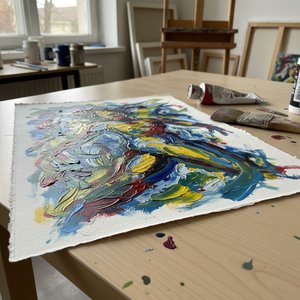 Akryl na papierze: Nowoczesny nośnik ekspresji artystycznej – historia, techniki i konserwacja dziełPoznaj historię, techniki i konserwację akrylu na papierze – nowoczesnego medium sztuki współczesnej. Poradnik dla kolekcjonerów i inwestor…