

 Podgląd w skali
 Wyślij jako kartkę
 Udostępnij
 Szczegóły dzieła

 Pobierz
 Podobne obiekty
 RTG
RTG Pokaz slajdów
Boating beneath Echo Hill


 Rozwiń treść
Ręcznie malowana reprodukcja olejowa
Ręcznie malowany obraz olejny na płótnie, wykonany na zamówienie przez naszych artystów w wybranym przez Ciebie wymiarze i oprawie. ( Zamów wydruk Kup obraz wysokiej rozdzielczości)




































Wybierz spośród naszych standardowych rozmiarów, które zachowują oryginalne proporcje dzieła sztuki.

Możesz wprowadzić własne wymiary, aby dopasować obraz do konkretnej ramy lub przestrzeni. Jeśli wybrany rozmiar nie będzie odpowiadał proporcjom oryginału, przytniecie dzieło sztuki lub rozszerzymy je o dodatkowe elementy, ręcznie domalowane przez artystę. Przed rozpoczęciem produkcji wyślemy projekt cyfrowy do Twojej akceptacji.
Należy pamiętać, że podgląd na ekranie nie odzwierciedla rzeczywistego przycinania ani rozszerzania obrazu. Tylko projekt dokładnie pokaże ostateczną kompozycję.
Choć oferujemy możliwość zamówienia niestandardowych rozmiarów, zalecamy wybór wymiaru z gotowej listy, aby zachować oryginalne proporcje dzieła.
Po złożeniu zamówienia zespół OriginalUniqueArt.com skontaktuje się z klientem drogą mailową w celu uzyskania instrukcji i prześle wizualizację projektu
Dostawa na całym świecie () w ciągu 3–4 tygodni zamiast standardowych 5 tygodni. (29 Sierpień). Bez kompromisów w kwestii jakości.

Bezpłatna ekspresowa wysyłka na cały świat

Wysokiej jakości płótno lniane

Pełne ubezpieczenie przesyłki

Gwarancja zwrotu należności celnych i podatków importowych

Gwarancja wiernego odwzorowania kolorów

Polityka 60-dniowego zwrotu (tylko w przypadku wad)

Gwarancja 100% zwrotu kosztów

Zniżka przy zamówieniu wielu produktów
 Opcja ze szkłem jest dostępna wyłącznie w rozmiarach poniżej 110 cm

Boating beneath Echo Hill
Technika reprodukcji
Wymiary reprodukcji
-


Cena całkowita
$ 350
O artyście
The Ethereal Landscapes of Mei Qing: A Legacy of Ink and Spirit
In the turbulent transition between the Ming and Qing dynasties, a period marked by profound political upheaval and cultural shifting, the art of Mei Qing (ca. 1623–1697) emerged as a serene sanctuary of continuity. Born in Xuancheng, Anhui Province, Mei Qing was more than a mere chronicler of nature; he was a scholar-artist whose life’s trajectory mirrored the broader cultural currents of his era. His existence was defined by an unwavering devotion to Daoist ideals and a deep-seated commitment to the literati tradition, allowing him to weave a visual language that spoke of harmony even amidst the chaos of a changing empire. Through his mastery of the brush, he captured not just the physical majesty of the Chinese landscape, and but the very breath of the mountains themselves.
The foundation of Mei Qing’s artistic soul was laid through rigorous classical training and a profound connection to the earth of Anhui. Under the mentorship of the respected calligrapher and painter Wang Meng, Mei Qing inherited a lineage of technical excellence and a deep appreciation for the Huangshan School aesthetic. This early instruction instilled in him the ability to translate complex geological forms into poetic expressions. His travels through the legendary Huangshan Mountains—a landscape of mist-shrouded peaks and ancient pines—became the primary wellspring of his inspiration. Drawing from the venerable precedents of masters like Huang Gongwang and Ni Zan, Mei Qing embraced a minimalist yet powerful approach, utilizing angular rock formations and sparsely rendered vegetation to evoke a sense of profound solitude and spiritual clarity.
Technique and the Philosophy of Effortless Action
To observe a work by Mei Qing is to witness the delicate dance between ink and void. His technique was characterized by a sophisticated use of the dry brush, a method that allowed him to render the rugged, weathered textures of granite cliffs with startling realism while maintaining an ethereal lightness. Often executing his visions on satin—a medium cherished by the masters of the Ming dynasty—he employed subtle tonal variations to create atmospheric depth, making the viewer feel as though they were peering through layers of mountain mist. This mastery of tonality was not merely a technical feat but a philosophical one; it embodied the Daoist concept of wu wei, or effortless action. In his compositions, every stroke felt deliberate yet natural, as if the landscape had simply manifested itself upon the silk.
His artistic repertoire extended beyond the purely visual into the realms of poetry and calligraphy, creating a holistic experience of the literati spirit. His works often integrated calligraphic inscriptions that complemented the mood of his landscapes, such as his evocative Poem on Boating on the Qinhuai River. In such pieces, the dramatic variations of ink tonality reveal a painterly sensibility that transcends simple representation. Whether he was depicting the tranquil waters of a mountain lake or the jagged heights of a precipice, Mei Qing’s work remained anchored in a sense of balance and tranquility, inviting the observer into a state of meditative contemplation.
Historical Significance and Enduring Resonance
The historical importance of Mei Qing lies in his role as a bridge between eras. As a "loyalist" painter, his work carried the weight of cultural preservation, maintaining the aesthetic integrity of the Ming tradition even as the Qing dynasty rose to power. His friendships with other luminaries, such as the great monk-artist Shitao, placed him at the very heart of a vibrant intellectual circle that sought to find beauty and meaning in a fractured world. His ability to synthesize the ruggedness of the Huangshan landscape with the refined elegance of scholarly painting ensured his place in the canon of Chinese art history.
Today, the legacy of Mei Qing continues to resonate through his celebrated masterpieces, such as Boating beneath Echo Hill and his various depictions of the peaks of Mount Huang. His ability to capture the "spirit resonance" of nature remains a benchmark for landscape painters. Through his eyes, we see a world where the mountains are not merely stone and tree, but living entities imbued with Daoist wisdom, reminding us that even in times of great change, the essence of nature and the purity of the artistic spirit remain eternal.

mei qing
1623 - 1697
Krótka nota
- Artistic Movement Or Style: Huangshan School
- Artists Or Movements Influenced By This Artist:
- Huang Gongwang
- Ni Zan
- Artists Who Influenced This Artist: ['Wang Meng']
- Date Of Death: 1697
- Full Name: Mei Qing
- Nationality: Chinese
- Notable Artworks: ['Strolling in a Misty Valley']
- Place Of Birth: Xuancheng, Anhui Province
Powiązane artykuły

Katsushika Hokusai: 25 Arcydzieł Sztuki Japońskiej dla Kolekcjonerów i Miłośników Dekoracji
Odkryj 25 arcydzieł Katsushika Hokusai, mistrza ukiyo-e! Poznaj historię Wielkiej Fali i innych ikonicznych drzeworytów. Inspiracje wnętrzarskie i reprodukcje obrazów najwyższej jakości na OriginalUniqueArt.com – sztuka japońska dla Twojego domu.

Romantyczny Krajobraz w Malarstwie: 10 Arcydzieł, Które Zdefiniowały Epokę | OriginalUniqueArt.com
Odkryj 10 arcydzieł romantyzmu w malarstwie! Poznaj historie Caspara Davida Friedricha, Turnera i innych mistrzów. Inspiracje wnętrzarskie & reprodukcje obrazów najwyższej jakości na OriginalUniqueArt.com. Eksploruj kolekcję online!

Evocations of Place: A Historical Journey Through Landscape Art
Explore the rich history of landscape art with OriginalUniqueArt. Discover renowned artists, movements like Impressionism & Romanticism, and expert guidance for collecting timeless pieces. Find your perfect serene escape today!
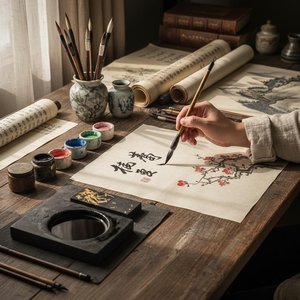
The Alchemy of Ink: Mastering the Timeless Beauty and Art History of Paper and Brush
Embark on a sophisticated exploration of ink wash painting and Sumi-e. Uncover the profound historical lineages, Zen philosophies, and technical mastery behind this timeless medium in our authoritative guide for fine art enthusiasts.

John Constable: 25 Najlepszych Obrazów Mistrza Angielskiego Krajobrazu | OriginalUniqueArt
Odkryj 25 arcydzieł Johna Constable'a – mistrza angielskiego krajobrazu! Poznaj romantyczne pejzaże, technikę malarską i inspiracje z Dedham Vale. Reprodukcje obrazów najwyższej jakości na OriginalUniqueArt.com. Eksploruj pełną kolekcję online!

