Surrealist Expressionism · 1927
The Forest (Max Ernst, 1927)
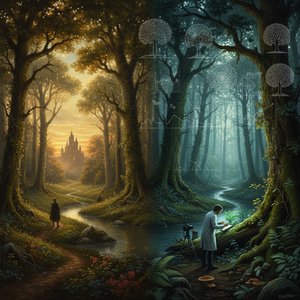
Max Ernst (1891–1976) stworzył The Forest. Dzieło pochodzi z 1927. Należy do nurtu Surrealist Expressionism. Wykonano w technice Acrylic On Canvas. Przechowywane jest w Muzeum Sztuki w Tel Awiwie w Tel Awiw, Izrael. Wymiary to 25 × 36 cm.
- 1927
- Acrylic On Canvas
- 25 × 36 cm
- Muzeum Sztuki w Tel Awiwie

 Podgląd w skali 1:1

 Ręcznie malowany obraz olejny
 Wyślij jako kartkę
 Udostępnij
 Karta informacyjna


 Pobierz obraz
 Podobne obiekty
 RTG
 Pokaz slajdów
 Pytania i odpowiedzi

 Statystyki
The Forest w skrócie
- Tytuł
- The Forest
- Artysta
- Max Ernst (1891–1976)
- Miejsce urodzenia artysty
- Brühl, Niemcy
- Data powstania
- 1927
- Technika wykonania
- Acrylic On Canvas
- Wymiary
- 25 × 36 cm
- Gdzie można je zobaczyć
- Muzeum Sztuki w Tel Awiwie, Tel Awiw, Izrael
- Epoka
- Early Modern
- Temat
- moonlit cityscape, surreal forest, urban night, max ernst, german art, 1927 painting
Co przedstawia The Forest?
A Nocturne of Dreams: Max Ernst’s “The Forest”
Max Ernst's "The Forest," painted in 1927, isn’t merely a depiction of a landscape; it’s an immersion into the subconscious, a carefully constructed dreamscape rendered with the unsettling beauty characteristic of the artist’s early Surrealist explorations. This intimate canvas – measuring just 25 x 36 cm – holds within its borders a potent collision of natural and urban elements, inviting viewers to contemplate the anxieties and aspirations simmering beneath the surface of modern life. The painting immediately draws the eye upward to a luminous moon dominating the sky, casting an ethereal glow upon the sprawling cityscape below. Buildings rise from the darkness, not as symbols of progress or order, but as strangely distorted monoliths, hinting at a world both familiar and profoundly alien.
Ernst’s technique is deliberately evocative, employing a layered approach that anticipates techniques he would later refine in his collage work. He utilizes loose, expressive brushstrokes, building up the forms of trees and buildings with a sense of urgency and movement. The color palette leans heavily into cool blues and greens, punctuated by the stark white of the moon and the muted tones of the city lights – colors that contribute to the painting’s nocturnal atmosphere and imbue it with a feeling of quiet mystery. Notice how he doesn't meticulously render detail; instead, he favors suggestion and mood, allowing the viewer’s imagination to fill in the gaps.
The Seeds of Surrealism: Ernst’s Intellectual Landscape
Understanding “The Forest” requires acknowledging Max Ernst’s unique artistic trajectory. Born in Brühl, Germany, in 1891, Ernst wasn't a traditional painter; his path was forged through rigorous academic study – philosophy, art history, literature, psychology, and psychiatry at the University of Bonn. This intellectual grounding profoundly shaped his approach to art, moving him beyond mere representation towards exploring the realm of dreams, memory, and the irrational. His father, a teacher of the deaf, instilled in him a sensitivity to the world and a rebellious spirit – qualities that would become central to Ernst’s artistic vision. He was deeply influenced by thinkers like Freud and Jung, particularly their theories on the unconscious mind, which he sought to translate into visual form.
The year 1927 is crucial within this context. It represents a pivotal moment in Ernst's development as a Surrealist, a period marked by experimentation with automatism – a technique of spontaneous creation designed to bypass conscious control and tap directly into the subconscious. "The Forest," therefore, can be seen as a product of this process, a visual manifestation of his inner world.
Symbolic Echoes: Nature Versus Urbanity
The juxtaposition of the forest and the city is laden with symbolic weight. The forest, traditionally associated with nature, instinct, and the primal, stands in stark contrast to the rigid geometry and artificial light of the urban landscape. This isn’t a harmonious blend; rather, it's a tension – a suggestion that the encroachment of modernity threatens to overwhelm the natural world. The moon itself is a potent symbol, often linked to cycles, intuition, and the hidden realms of the unconscious. Its presence elevates the scene beyond a simple cityscape, transforming it into a dreamlike tableau.
Furthermore, consider the distorted forms of the buildings. They aren’t simply architectural structures; they seem to lean inward, almost collapsing under their own weight, mirroring perhaps a sense of unease or anxiety about the future. The trees, though present, are somewhat obscured by the city's glow, hinting at a diminishing connection with nature.
A Timeless Resonance: Reproduction and Artistic Legacy
"The Forest" continues to resonate with viewers today because it taps into fundamental human experiences – the longing for escape, the anxieties of urban life, and the enduring power of the subconscious. OriginalUniqueArt’s meticulously crafted hand-painted reproductions capture not only the visual details of Ernst's original but also its emotional depth and atmospheric quality. Each reproduction is created with the same attention to texture and color as the original, ensuring a faithful representation of this iconic Surrealist masterpiece. Whether you are an art collector seeking to expand your collection or an interior designer searching for a unique piece to elevate a space, a OriginalUniqueArt reproduction of “The Forest” offers a captivating glimpse into the mind of one of 20th-century’s most visionary artists.
W którym muzeum znajduje się The Forest?
Muzeum Sztuki w Tel Awiwie
Tel Awiw, Izrael
Latarnia Kreatywności na Brzegu Morza Śródziemnego W samym sercu tętniącego życiem Tel Awiwu, miasta pulsującego artystyczną energią i historycznym znaczeniem, wznosi się Muzeum Sztuki w Tel Awiwie —prawdziwe świadectwo rozkwitu izraelskiego krajobrazu kulturowego. Więcej niż tylko skarbnica arcydzieł, TAMA, jak jest czule nazywane, tchnie życie w sztukę, stymulując dialog, inspirując pokolenia i służąc jako żywy łącznik między przeszłością narodu a jego dynamiczną teraźniejszością. Jego historia nie zaczyna się jednak w monumentalnych salach, lecz w skromnych murach domu pierwszego burmistrza Tel Awiwu – przestrzeni przesiąkniętej echem narodu budującego swoją tożsamość.


Zdjęcia w wysokiej rozdzielczości dzieła The Forest

Chronione prawem autorskim: pliki te służą wyłącznie do osobistego wglądu i nie stanowią licencji na ich powielanie.
Max Ernst, The Forest (1927), Muzeum Sztuki w Tel Awiwie.
Odpowiedzi na pytania dotyczące The Forest
Gdzie można obecnie zobaczyć dzieło „The Forest” – Max Ernst?
Oryginał dzieła „The Forest” można zobaczyć w Muzeum Sztuki w Tel Awiwie, Tel Awiw, Izrael.
W którym roku powstało dzieło „The Forest” – Max Ernst?
Powstanie „The Forest” – Max Ernst datuje się na 1927.
Z jakiej techniki wykorzystano "The Forest"?
Max Ernst wykorzystał/a technikę Acrylic On Canvas w pracy „The Forest”. Technika ta definiuje materię oryginalnego dzieła.
Jakie są wymiary oryginalnego dzieła „The Forest” – Max Ernst?
Wymiary dzieła „The Forest” – Max Ernst to 25 x 36 cm. Reprodukcje można zamówić w innych rozmiarach, zachowując te same proporcje.
Co przedstawia "The Forest"?
Tematyka obecna w „The Forest” – Max Ernst obejmuje moonlit cityscape, surreal forest, urban night, max ernst, german art, 1927 painting, dreamlike scene. Razem stanowią one podsumowanie tematyki dzieła.
Czy obraz „The Forest” – Max Ernst można swobodnie reprodukować?
Jeśli chodzi o prawa autorskie, "The Forest" znajduje się w nadal objęte ochroną prawa autorskiego.
Kto jest autorem dzieła "The Forest"?
Autorstwo dzieła "The Forest" przypisuje się Max Ernst.
Do jakiego nurtu należy "The Forest"?
Nurt związany z „The Forest” – Max Ernst to Surrealist Expressionism. Ta klasyfikacja sytuuje dzieło wśród pokrewnych artystów i dzieł sztuki.
Do którego okresu twórczości Max Ernst należy dzieło "The Forest"?
W dorobku artystycznym Max Ernst dzieło „The Forest” przypada na Early Surrealism. Ten etap pozwala zestawić je z innymi pracami twórcy.
O artyście: Max Ernst

1891–1976, Niemcy
Max Ernst
Życie i korzenie Maxa Ernsta Max Ernst przyszedł na świat 2 kwietnia 1891 roku w Brühl w Niemczech. Wychowywał się w katolickiej rodzinie klasy średniej jako trzecie z dziewięciorga dzieci. Jego dzieciństwo kształtowała spokojna, zdyscyplinowana atmosfera domowego ogniska, w którym jego ojciec, Philipp, pracował jako nauczyciel osób niesłyszących. Philipp był również malarzem-amatorem i to właśnie dzięki niemu chłopiec po raz pierwszy zetknął się z narzędziami oraz praktyką tworzenia sztuki.
Inne prace Max Ernst
 Célèbes lub Elefant Célèbes1921
 Elefant Celebes1921
 Europe Po Regen II1942
 O To Tim Nie Pozna Nikt1923
Eseje o The Forest
 Symphony of Sunlight: The Luminous Legacy of Pine Tree Landscapes in Art HistoryExplore the luminous history of pine landscapes through Sorolla and Shishkin. Discover the magic of forest art today.
 Unlocking the Unconscious: The Top 25 Surrealist Masterpieces by Max ErnstStep into the dreamscapes of Max Ernst. Explore 25 iconic Surrealist masterpieces, from pioneering collages to haunting landscapes. Find in…
 Urokliwe korony drzew: Las w sztuce od romantyzmu do ekologicznej świadomościOdkryj fascynującą historię lasu w sztuce – od romantycznych pejzaży Fryderyka po współczesne interpretacje ekologiczne. Inspiracje, analiz…