

 Podgląd w skali 1:1
 Wyślij jako kartkę
 Udostępnij
 Szczegóły dzieła
 Przewodnik

 Pobierz obraz
 Podobne obiekty
 RTG
RTG Pokaz slajdów
 Statystyki
John Henry Green
 Realism
 65.0 x 49.0 cm
 The Hepworth Wakefield
 Rozwiń treść
Giclée / Wydruk artystyczny
Wydruki giclée lub płótna o jakości muzealnej, szybka realizacja i szeroki wybór opcji wykończenia. ( Zamów ręcznie malowaną reprodukcję Przejdź do wersji cyfrowej)




































Wybierz spośród naszych standardowych rozmiarów, które zachowują oryginalne proporcje dzieła sztuki.

Wpisz wymaganą szerokość i wysokość, aby dopasować grafikę do ramy lub ściany. Wydruk można jedynie przyciąć, nigdy nie powiększając go poza oryginalny obraz, dlatego format o innych proporcjach spowoduje utratę części kompozycji. Przed rozpoczęciem druku prześlemy Ci cyfrowy podgląd do zatwierdzenia. Obraz wyświetlany na tej stronie nie pokazuje rzeczywistego przycięcia — jedynie podgląd oddaje ten efekt.
Dostawa na cały świat () w ciągu 2 tygodni zamiast standardowych 4/5 tygodni. (26 Październik)

Bezpłatna ekspresowa wysyłka na cały świat

Wysokiej jakości płótno lniane

Pełne ubezpieczenie przesyłki

Gwarancja zwrotu należności celnych i podatków importowych

Gwarancja wiernego odwzorowania kolorów

100-dniowa polityka zwrotów (tylko w przypadku wad)

Gwarancja 100% zwrotu pieniędzy

Zniżka przy zakupie wielu sztuk
 Opcja ze szkłem jest dostępna wyłącznie w rozmiarach poniżej 110 cm

John Henry Green
Giclée / Wydruk artystyczny
Wymiary reprodukcji
-


Cena całkowita
zł 307
Biografia artysty
Marmaduke C. William Flower: A Yorkshire Visionary
Marmaduke C. William Flower (c. 1849 – 1910) stands as a singular figure in the annals of Victorian portraiture, an artist whose meticulous observation and masterful technique captured not merely likenesses but also the very essence of his subjects. Primarily focused on the prominent figures of Yorkshire society, Flower possessed a rare ability to translate the dignity of the era onto canvas. Born into a noble lineage, his upbringing instilled within him a profound appreciation for detail and precision—qualities that would become the indelible hallmarks of his artistic endeavors. While biographical records remain somewhat sparse, scholarly research suggests he honed his skills initially in Newcastle upon Tyne before establishing himself as a resident artist in York, where he cultivated lasting connections with the city's intellectual and academic elite.
The breadth of Flower’s work is perhaps best understood through his intimate connection to the academic and industrial leaders of his time. His portfolio serves as a visual record of Victorian progress, featuring portraits of influential figures such as Professor John James Hummel, the first Professor of Dyeing at Yorkshire College, and Obadiah Nussey, a pivotal chairman in the textile industries. Through these commissions, Flower did more than paint faces; he documented the architects of Northern England's industrial and educational landscape. His approach was deeply influenced by a burgeoning fascination with scientific observation and anatomy. Unlike many contemporaries who sought to present an idealized or softened version of beauty, Flower relentlessly pursued anatomical accuracy, painstakingly reconstructing facial features to achieve an unparalleled realism that reflected his deep intellectual curiosity about the human form.
Technique, Style, and the Art of Realism
Flower’s artistic style was profoundly shaped by the prevailing trends of the late 19th century, yet he possessed a distinctive vision that transcended mere imitation. His canvases are celebrated for their subtle gradations of tone and rich textures, achieved through a painstaking layering of oil paints. This meticulous technique allowed him to convey not only the surface appearance of his subjects but also the underlying musculature and bone structure, lending his portraits a lifelike, sculptural quality. This dedication to precision extended beyond the human face into his broader artistic output.
In addition to his celebrated portraiture, Flower demonstrated a profound sensitivity to the natural world through his landscape paintings. His work in this genre mirrored the same meticulous attention to detail found in his portraits, capturing the rugged beauty of the Yorkshire countryside with an observant eye. This duality in his work—the ability to navigate both the structured, formal world of the academic portrait and the organic, sprawling essence of the English landscape—highlights his versatility as a painter. His legacy remains that of a master observer, an artist who used the medium of oil to bridge the gap between scientific accuracy and emotional resonance.
Key aspects of his artistic contribution include:
- Anatomical Precision: A commitment to capturing the true physical structure of his subjects through rigorous observation.
- Social Documentation: Providing a vital historical record of Yorkshire's intellectual, academic, and industrial leaders.
- Mastery of Oil Technique: Utilizing complex layering to create depth, texture, and realistic light effects.
- Landscape Sensitivity: Translating the character of the Yorkshire terrain with the same care applied to his human subjects.

Marmaduke C William Flower
1849 - 1910
Krótka nota
- Full Name: Marmaduke C. William Flower
- Nationality: British
- Date Of Birth: 1849
- Date Of Death: 1910
- Place Of Birth: Yorkshire
- Notable Artworks: ['Mayor John Atkinson Grimshaw']
- Artistic Movement Or Style: Victorian Portraiture
- Artists Who Influenced This Artist: ['Sir Thomas Lawrence']
- Artists Or Movements Influenced By This Artist: ['Romanticism']
Powiązane artykuły
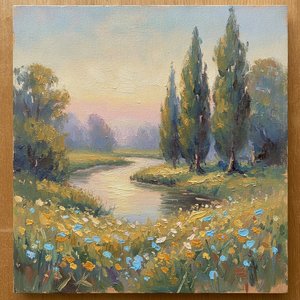
The Timeless Charm of Oil on Board: Reimagining Texture and Light through the Impressionist Lens
Discover the profound intimacy of oil on panel. Explore how Impressionist masters used rigid supports to capture light, texture, and impasto depth through exquisite, handmade oil reproductions for discerning collectors.

The Enduring Power of Painting: A Historical & Contemporary Exploration of Form and Emotion
Explore the rich history & enduring techniques of oil painting with OriginalUniqueArt. Discover masterpieces, learn about art collecting, and find authentic handmade reproductions crafted by skilled artists.

Trwała Spuścizna Malarstwa Olejnego: Technika, Historia i Estetyczny Wpływ
Poznaj historię i technikę malarstwa olejnego! Eksperckie artykuły o konserwacji, renowacji oraz współczesnych zastosowaniach. Dowiedz się więcej o mistrzach i trwałości obrazów olejnych.

Arcydzieła XIX Wieku: 10 Obrazów Opowiadających Epokę | OriginalUniqueArt
Odkryj 10 arcydzieł XIX wieku! Poznaj historię Monet, Van Gogha i Courbeta. Imesjonizm, realizm, romantyzm – obrazy pełne emocji i piękna czekają na OriginalUniqueArt.com. Znajdź idealny obraz do swojego wnętrza!

Olej na płótnie: Historia, techniki i ponadczasowy urok malarskiego medium
Poznaj historię i techniki malarstwa olejowego! Od renesansowych mistrzów po współczesne zastosowania – wszystko o oleju na płótnie. Poradniki, konserwacja i inspiracje dla pasjonatów sztuki.