
 Podgląd w skali 1:1
 Wyślij jako kartkę
 Udostępnij
 Szczegóły dzieła
 Przewodnik

 Pobierz obraz
 Podobne obiekty
 RTG
RTG Pokaz slajdów
 Pytania i odpowiedzi
 Statystyki
Skulls


 Rozwiń treść
Otrzymaj plik gotowy do druku, którego jakość znacznie przewyższa podgląd internetowy. Każdy sprzedawany przez nas obraz cyfrowy pochodzi z wysokorozdzielczego pliku wzorcowego w naszej bazie — zazwyczaj o szerokości od 5 000 do 15 000 pikseli — dzięki czemu możesz drukować w dużym formacie, mocno kadrować lub z pełnym przekonaniem odwzorowywać najdrobniejsze detale.
Żaden plik nie opuszcza naszego studia bez odpowiedniej obróbki. Ekspert ds. cyfrowej edycji sprawdza zgodność kolorów z oryginałem i w razie potrzeby je koryguje, a następnie za pomocą profesjonalnych narzędzi do retuszu poprawia ostrość oraz szczegółowość — zawsze zachowując wierność pociągnięciom pędzla i stylowi artysty. Rezultatem jest obraz, który wygląda jak prawdziwe dzieło, a nie jak przefiltrowany skan.
Zatwierdzasz przed finalizacją zamówienia: nasz ekspert prześle obraz drogą mailową w ciągu 72 godzin do Twojego wglądu. Nie jesteś zadowolony? Poproś o poprawki lub korektę, bądź o zwrot kosztów, jeśli jakość nie spełnia oczekiwań.
To jakość, na której polegają wydawcy, studia projektowe, galerie oraz drukarnie.
Obraz cyfrowy
Pobierz plik o wysokiej rozdzielczości do osobistego użytku, druku oraz projektów kreatywnych. ( Przełącz na wydania drukowane Zamów ręcznie malowaną reprodukcję)
W każdym zamówieniu na obraz cyfrowy znajduje się
Profesjonalna dostawa cyfrowa z gwarancją
Wybierając OriginalUniqueArt.com, nie otrzymujesz jedynie obrazu – otrzymujesz profesjonalnie udoskonalone cyfrowe dzieło sztuki, stworzone z najwyższą precyzją i objęte gwarancją satysfakcji. Oto wszystko, co automatycznie dołączane jest do Twojego zamówienia:

Błyskawiczna wysyłka e-mailowa
Plik z obrazem cyfrowym w wysokiej rozdzielczości zostanie przesłany na Twój adres e-mail w ciągu 72 godzin od złożenia zamówienia – gotowy do natychmiastowego użycia.

Plik cyfrowy wzbogacony przez AI
Twoja grafika została profesjonalnie zoptymalizowana przy użyciu zaawansowanych narzędzi AI oraz ręcznej edycji, co zapewnia maksymalną szczegółowość, klarowność i wierność kolorów.

Darmowe ponowne przesyłki dożywotnio
Przypadkowo usunąłeś lub zgubiłeś swój plik? Bez obaw – prześlemy go Tobie ponownie w dowolnym momencie, bez żadnych opłat.

Bez opłat importowych – zawsze
Ciesz się swoją sztuką natychmiast, bez żadnych opłat celnych, należności ani kosztów dostawy – pliki cyfrowe są zawsze wolne od podatku.

Gwarancja wierności kolorów
Dzięki zastosowaniu profesjonalnych narzędzi i procesów zarządzania barwą zapewniamy, że Twoje cyfrowe zdjęcie odzwierciedla oryginalne kolory tak wiernie, jak to tylko możliwe.

Gwarancja satysfakcji przez 100 dni
Jeśli nie będziesz zadowolony ze swojego cyfrowego obrazu, dokonamy jego poprawki lub zwrócimy 100% kosztów w ciągu 100 dni – bez zbędnych pytań.

100% Gwarancja zwrotu pieniędzy
Nie jesteś zadowolony? Otrzymaj pełny zwrot kosztów w ciągu 100 dni od otrzymania pliku cyfrowego – bez zbędnych pytań.

Rabaty przy zamówieniach hurtowych
Kup 3 obrazy, oszczędź 10% - Kup 5, oszczędź 15% - Kup 10+, oszczędź 20%. Idealne do projektów kreatywnych, galerii i agencji.
Marlene Dumas: Confronting Mortality Through Fragmented Portraits
Marlene Dumas’s paintings are instantly recognizable for their stark simplicity—often consisting of just a few figures rendered in muted tones against sparsely populated backgrounds. Yet, beneath this deceptively calm surface lies an unsettling exploration of human vulnerability and the inescapable presence of death. Born in Cape Town, South Africa, in 1953, Dumas’s artistic vision has been profoundly shaped by her upbringing amidst the turbulent legacy of apartheid, fostering a deep sensitivity to social injustice and the complexities inherent in defining identity.
Her formative years on her father’s vineyard instilled within her an acute awareness of the divisions that characterized South African society—a landscape simultaneously beautiful and scarred by history. This early exposure fueled her artistic impulse to grapple with themes of race, sexuality, and the psychological burden of existence. Dumas honed her skills at the University of Cape Town before relocating to Amsterdam, where she pursued studies in painting and psychology concurrently.
Dumas’s distinctive technique—characterized by loose brushstrokes, dripping paint, and a deliberate rejection of meticulous detail—serves as a conduit for conveying profound emotional resonance. She draws inspiration from a private archive of photographs, meticulously curated to encompass subjects ranging from children to erotic nudes, corpses, torture victims, and terrorists. This selection reflects her unwavering commitment to confronting uncomfortable truths about human experience and challenging conventional perceptions.
- Style: Dumas’s style aligns with the Pictures Generation movement, prioritizing photographic references as a springboard for artistic interpretation rather than striving for literal representation.
- Technique: She employs a fluid approach utilizing watercolor, acrylics, and ink—often blending mediums to achieve textural variations that heighten emotional impact.
- Historical Context: Dumas’s work engages directly with pivotal moments in history – apartheid and the September 11 attacks – acknowledging their enduring influence on societal consciousness.
The recurring motif of skulls—a symbol of mortality and contemplation—dominates her oeuvre, prompting viewers to confront existential questions about life's fragility and impermanence. Dumas’s paintings don’t merely depict death; they invite us to consider it as an integral component of the human condition. Her aim isn’t to showcase gruesome imagery but rather to reveal underlying anxieties and vulnerabilities—to illuminate the profound psychological dimensions of confronting mortality.
Her artistic process deliberately disrupts photographic sources, reclaiming corporeality within the visual realm. The resulting images evoke a palpable sense of unease alongside empathy, prompting reflection on issues of gender, race, and ethnicity. Dumas’s paintings stand as powerful testimonies to the enduring capacity for art to provoke dialogue and challenge ingrained biases—a legacy rooted in her formative experiences amidst South Africa's turbulent past.
Consider commissioning a high-quality reproduction from OriginalUniqueArt.com to bring Dumas’s evocative imagery into your home or studio, allowing you to appreciate the subtle nuances of her masterful technique and profound artistic vision.
Pytania i odpowiedzi
Ile lat miał Marlene Dumas, gdy powstało dzieło „Skulls”?
Gdy w 2015 roku powstało dzieło „Skulls”, Marlene Dumas – urodzony/a w 1953 – miał/a 62 lat.
Gdzie mogę kupić ręcznie malowaną reprodukcję dzieła „Skulls” – Marlene Dumas?
Ręcznie malowane reprodukcje dzieła „Skulls” – Marlene Dumas można nabyć na stronie niniejsza strona: ręcznie malowana reprodukcja olejowa na płótnie lnianym, zamawiając je bezpośrednio w zakładce Ręcznie malowana reprodukcja.
Jak opisany jest nastrój dzieła „Skulls” – Marlene Dumas?
Nastrój dzieła „Skulls” – Marlene Dumas opisuje się jako Romantic. Klasyfikacja ta może pomóc w dopasowaniu pracy do konkretnego wnętrza.
Biografia artysty
A Life Shaped by Landscape and Sociopolitical Currents
Marlene Dumas, born in 1953 in Cape Town, South Africa, is a painter whose work resonates with an emotional depth rarely encountered in contemporary art. Her upbringing amidst the stark realities of apartheid profoundly shaped her artistic vision, instilling within her a keen awareness of social injustice and the complexities of human identity. Growing up on her father’s vineyard in Kuils River, she witnessed firsthand the divisions and inequalities that defined South African society during those years—a landscape both beautiful and burdened by history. This early exposure to a fractured world would become a recurring theme throughout her career, informing her exploration of race, sexuality, and the psychological weight of existence. Dumas’s formal artistic journey began at the University of Cape Town in 1972, where she pursued a Bachelor of Fine Arts degree alongside studies in ethics. This combination proved crucial, laying the groundwork for an art practice deeply concerned with moral questions and the human condition. She later continued her education at Ateliers '63 in Haarlem, Netherlands, relocating to Amsterdam in 1976—a move that marked a significant shift in both her geographical location and artistic perspective. Further academic pursuits in psychology at the University of Amsterdam between 1979-1980 would further refine her ability to portray inner states with remarkable sensitivity.The Evolution of a Distinctive Style
Dumas’s artistic development has been characterized by a constant questioning of representation and a willingness to confront difficult subjects. Her early work directly addressed the political climate of apartheid, reflecting her identity as a white woman grappling with the moral implications of living within a system of racial segregation. However, she quickly moved beyond purely political statements, delving into more universal themes of human vulnerability, desire, and loss. Influenced by the emotional intensity of Romanticism—particularly artists like Egon Schiele and Francis Bacon—Dumas developed a distinctive style marked by loose brushstrokes, distorted figures, and an evocative use of color. She often begins her paintings with source material gathered from diverse origins: Polaroid photographs, magazine clippings, even pornographic imagery. These images are not simply copied but rather serve as starting points for explorations of feeling and memory. Her technique is notable for its layering—a wet-on-wet approach that builds depth and texture through the interplay of thin and thick paint. This creates a sense of fluidity and ambiguity, mirroring the complexities of the emotions she seeks to convey. The resulting images are often hauntingly beautiful, simultaneously alluring and unsettling.Themes of Identity, Sexuality, and the Human Condition
At the heart of Dumas’s work lies an unwavering commitment to exploring the intricacies of human experience. Her subjects range widely—from portraits of friends and lovers to depictions of children, strippers, and figures drawn from popular culture. However, these are never mere representations; they are vehicles for investigating deeper psychological states. Race, sexuality, identity, violence, guilt, innocence – these are all recurring themes in her oeuvre, approached with a rare degree of honesty and nuance. Dumas’s paintings often challenge conventional notions of beauty and desirability, exposing the vulnerabilities and contradictions inherent in human relationships. She is particularly interested in the ways in which bodies are constructed and perceived—how they become sites of both pleasure and pain, power and oppression. Her work frequently engages with issues of representation, questioning who has the right to look at whom and what implications arise from that gaze. This critical perspective extends to her own artistic practice, as she acknowledges the inherent limitations and ethical challenges of portraying others.Recognition and Lasting Impact
Marlene Dumas’s contributions to contemporary art have been widely recognized through numerous exhibitions and accolades. A significant milestone was her first major American museum exhibition, “Measuring Your Own Grave,” which opened at the Museum of Contemporary Art, Los Angeles in 2008 and subsequently traveled to the Museum of Modern Art, New York City. This retrospective solidified her position as a leading figure in contemporary painting. Her market success has also been remarkable; in 2004, *Jule-die Vrou* (1985) sold for over $1 million, establishing her as one of only three living female artists to achieve such a price point at the time. More recently, *The Schoolboys* (1986–87) reached an astounding $9 million at Art Basel Miami Beach in 2023, and *Miss January* (1997) shattered records in May 2025, selling for $13.6 million at Christie’s—a new high for a living female artist. Represented by the prestigious David Zwirner Gallery since 2008, Dumas continues to exhibit internationally and inspire a new generation of artists. Her influence extends beyond the realm of painting; she has challenged conventional notions of portraiture and encouraged a more critical engagement with social and political issues within art. Dumas’s legacy lies in her ability to create works that are both deeply personal and universally resonant—paintings that confront us with our own vulnerabilities, desires, and prejudices.- Born: Cape Town, South Africa (1953)
- Education: University of Cape Town (BFA), Ateliers ‘63 (Haarlem)
- Notable Exhibitions: Measuring Your Own Grave (LACMA), Tate Modern, Fondation Beyeler
- Awards: Düsseldorf Art Prize, Rolf Schock Prize in the Visual Arts
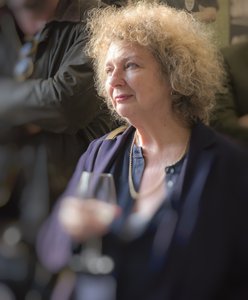
Marlene Dumas
1953 - , Południowa Afryka
Krótka nota
- Artistic Movement Or Style: Romanticizm, Malarstwo figuralne
- Artists Or Movements Influenced By This Artist: ['Contemporary painters']
- Artists Who Influenced This Artist:
- Egon Schiele
- Francis Bacon
- Date Of Birth: 1953
- Full Name: Marlene Dumas
- Nationality: Południowa Afryka
- Notable Artworks:
- Young Boys
- The Cover Up
- Snow Flake
- Suspect
- Feather Stola
- Place Of Birth: Cape Town, South Africa